rifanmuazin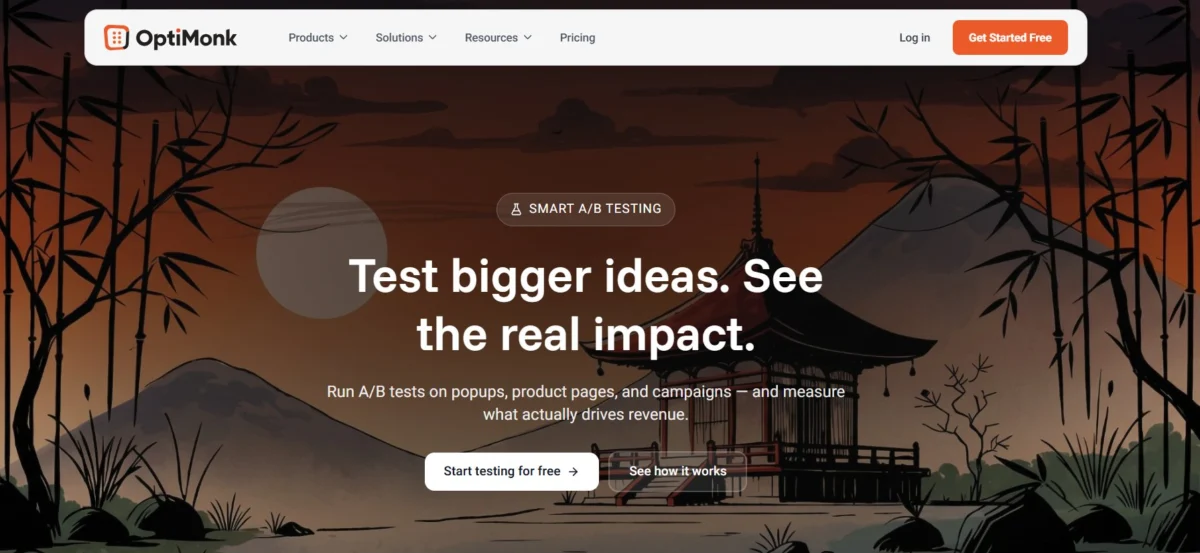
Digital experimentation has evolved far beyond the era of simple cosmetic adjustments. As global e-commerce and SaaS markets reach new heights of maturity in 2026, the demand for sophisticated testing methodologies has surged. While traditional A/B testing—which utilizes JavaScript to swap elements on a single page—remains a staple for minor optimizations, it often falls short when organizations undergo radical transformations. For teams executing full-scale landing page redesigns, migrating to new backend architectures, or overhauling complex checkout flows, split URL testing has emerged as the definitive standard for data-driven decision-making.
Split URL testing, also known as redirect testing, operates by hosting the control version and the experimental variation on entirely separate URLs. Unlike standard A/B tests that modify the Document Object Model (DOM) in real-time, split URL testing redirects traffic at the server or browser level. This approach eliminates the "flicker effect"—the brief flash of original content before the variation loads—and allows for the comparison of two fundamentally different user experiences without the constraints of a single-page structure.
The Strategic Shift Toward Redirect Testing in 2026
The shift toward split URL testing is driven by the increasing complexity of web applications. In 2026, the average enterprise tech stack involves a hybrid of headless CMS architectures and edge computing. In this environment, testing a new "experience" rather than just a "button" requires a platform capable of handling complete URL redirects seamlessly.
Industry data suggests that high-performing growth teams are now allocating approximately 40% of their experimentation budgets to split URL tests, up from just 15% in 2021. This trend reflects a broader move toward "big swing" experiments that can yield double-digit conversion lifts, rather than the incremental gains associated with minor UI tweaks.

Top 8 Split URL Testing Platforms for 2026: An Analytical Review
As organizations evaluate their experimentation needs for the current fiscal year, the following eight platforms have established themselves as market leaders based on their technical robustness, statistical accuracy, and integration capabilities.
1. VWO (Visual Website Optimizer)
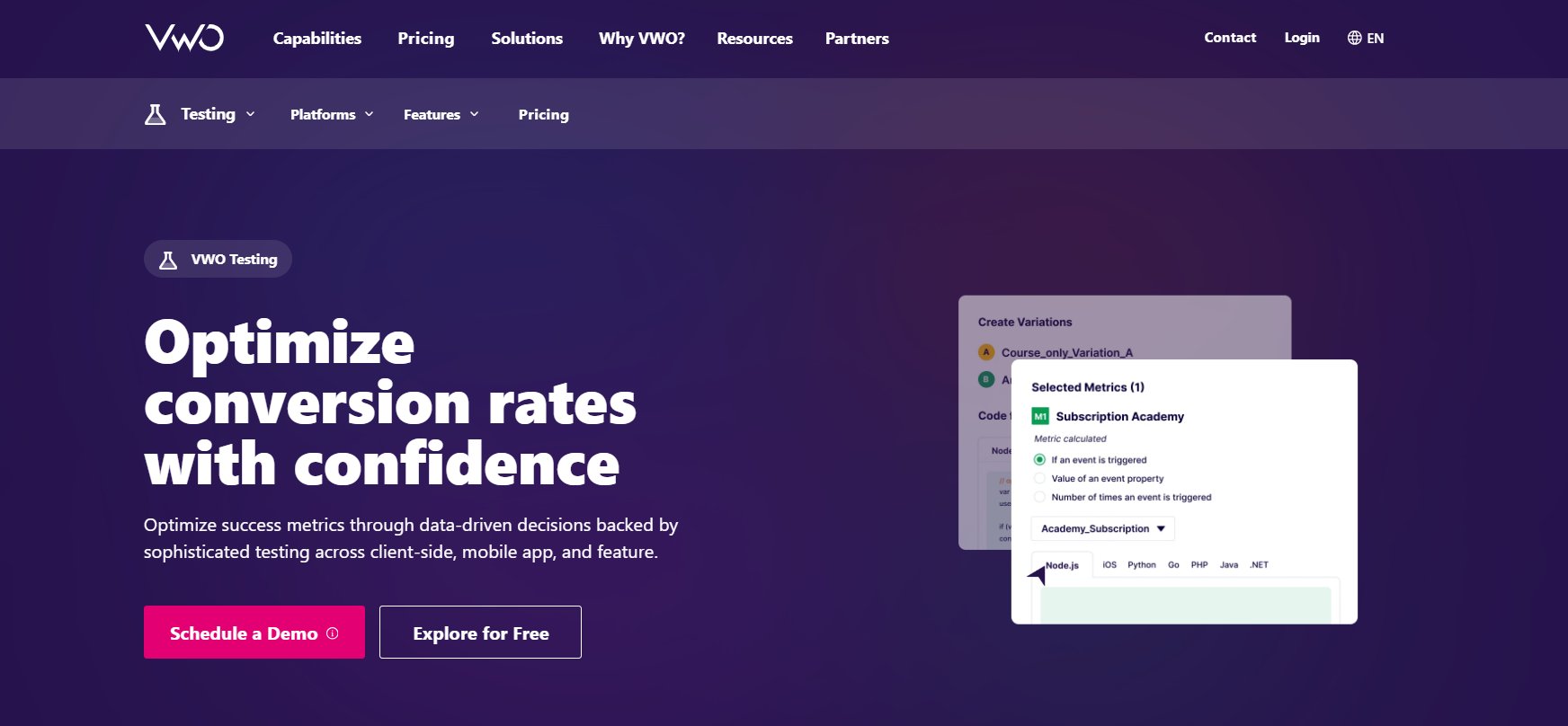
VWO remains a cornerstone of the experimentation industry, offering a comprehensive suite that balances ease of use with enterprise-grade power. Its split URL testing capabilities are specifically designed to handle high-traffic environments where performance is non-negotiable.
- Key Features: VWO provides a unified platform for A/B testing, multivariate testing, and split URL experiments. Notable additions in 2026 include an AI Copilot for automated variation generation and advanced heatmapping that correlates directly with split test results.
- Pros: The platform is praised for its intuitive interface and robust segmentation, allowing teams to analyze how different demographics interact with a new URL redesign.
- Cons: For highly specialized use cases involving custom API integrations, there is a steeper learning curve.
- Case Study: Hubstaff utilized VWO’s split URL testing to validate a complete homepage redesign. By combining redirect testing with behavioral heatmaps, they achieved a 49% increase in visitor-to-trial conversions and a 34% lift in form submissions.
2. Webtrends Optimize
Positioned as an enterprise-grade solution, Webtrends Optimize focuses on "flicker-free" delivery and deep behavioral targeting.
- Key Features: It offers a "No Code" widget library and a WYSIWYG editor alongside its powerful server-side redirect engine.
- Pricing: Custom quotes following a 30-day trial.
- Analysis: This platform is ideal for organizations that require high-touch support and a well-structured workflow that highlights actionable insights quickly.
3. Convert Experiences
Convert has carved out a niche as the "privacy-first" choice for teams operating under strict GDPR and CCPA environments.
- Key Features: It offers both Bayesian and Frequentist statistical engines, allowing data scientists to choose the methodology that fits their internal standards.
- Performance: Known for being exceptionally lightweight, Convert minimizes the impact on page load speeds during redirects.
- Pricing: Plans typically start at $299/month, making it accessible for mid-market growth teams.
4. Optimizely
As one of the most recognizable names in the industry, Optimizely has transitioned into a full "Digital Experience Platform" (DXP).

- Key Features: Its split URL testing is powered by a sophisticated "Stats Engine" that uses sequential testing to provide results faster without compromising statistical significance.
- AI Integration: In 2026, Optimizely’s AI-powered traffic allocation (Multi-Armed Bandit) automatically shifts traffic to the winning URL variation in real-time, maximizing revenue during the experiment.
5. Kameleoon
Kameleoon is distinguished by its "prompt-based" experimentation, which allows teams to build tests using natural language commands.
- Key Features: It features a multi-stat engine with CUPED (Controlled-experiment using Pre-Experiment Data) to reduce variance and speed up testing cycles.
- Pros: It bridges the gap between marketing teams (who use the no-code editor) and developers (who use the robust SDKs).
6. Omniconvert
Specializing in e-commerce, Omniconvert integrates deeply with customer data platforms (CDPs) to offer personalized split URL tests.
- Key Features: Stacked tests and advanced segmentation based on purchase history.
- Pricing: Offers a generous free tier for up to 50,000 visitors, with paid plans starting at $245/month.
7. OptiMonk
While traditionally known for on-site messaging, OptiMonk has expanded into a full-site experimentation platform by 2026.
- Key Features: AI-driven suggestions for layout changes and high-impact messaging.
- Analysis: Best suited for agile teams that need to launch tests quickly without heavy developer involvement.
8. ABsmartly
ABsmartly is the preferred choice for engineering-heavy organizations that prioritize data ownership and scalability.
- Key Features: An API-first approach with zero-lag SDKs. It utilizes Group Sequential Testing (GST) to allow for early stopping of experiments if a winner is found.
- Pricing: Targeted at the high enterprise level, with plans starting around €60,000 per year.
Technical Chronology: The Evolution of Redirect Testing
The path to the 2026 testing landscape has been marked by several key technical milestones:
- 2018–2020: The rise of Client-Side testing. Most tools relied on JavaScript snippets, which often caused "flicker" and SEO concerns.
- 2021–2023: The Server-Side Revolution. To combat privacy restrictions (like Apple’s ITP) and performance issues, platforms began moving logic to the server.
- 2024–2025: Edge Computing Integration. Testing platforms began deploying "Edge Workers" (Cloudflare, Akamai) to handle redirects in milliseconds at the nearest data center to the user.
- 2026: AI-Autonomous Experimentation. Platforms now not only host the tests but suggest the variations and predict the outcome using historical data.
Core Requirements for Selecting a Platform in 2026
When evaluating these platforms, procurement and growth leaders must look beyond the feature list and assess "fit-for-purpose" across several critical domains:
Conversion and Revenue Visibility
A platform is only as valuable as the data it produces. In 2026, it is no longer enough to track clicks. Top-tier tools must provide funnel analysis and revenue-linked metrics. This ensures that a new URL variation isn’t just "engaging" users but actually driving "Average Order Value" (AOV) or "Lifetime Value" (LTV).
Statistical Reliability
With the increase in data privacy regulations, the "signal-to-noise" ratio in web analytics has decreased. Platforms like VWO and Optimizely have invested heavily in Bayesian statistics and CUPED to ensure that the "winning" version is truly superior and not just a result of statistical noise.
Environment Flexibility
Modern web architecture is rarely uniform. A robust platform must support client-side testing for quick UI changes and server-side testing for complex logic changes (such as testing a new search algorithm or pricing structure).
Expert Analysis: The Impact of AI and Privacy
The experimentation landscape is currently facing a dual-force shift. Dom Light, a noted industry strategist, suggests that the future of testing lies in reducing the friction between "insight" and "execution."

"To truly support fast-growing businesses, testing tools need to go beyond basic execution," Light notes. "Seamless integration with analytics platforms ensures that experimentation contributes to a broader understanding of customer interactions. The goal is to reduce the time it takes to set up, run, and analyze experiments so businesses can iterate at the speed of their customers’ behavior."
Furthermore, as third-party cookies have become obsolete, split URL testing has gained favor because it can be managed via first-party server-side redirects, which are more resilient to tracking preventions and offer better data integrity.
Conclusion: Navigating the Future of CRO
As we move through 2026, the distinction between "marketing" and "product development" continues to blur. Split URL testing sits at the center of this convergence, providing a safe, scalable way to validate major product shifts before they are hard-coded into the production environment.
For organizations starting their journey, the choice of platform should be dictated by their current traffic volume and the complexity of their tech stack. While VWO and Optimizely offer the most comprehensive feature sets for large-scale enterprises, platforms like Convert and Omniconvert provide specialized value for privacy-conscious or e-commerce-focused teams. Regardless of the tool chosen, the objective remains the same: transforming gut feeling into verified, revenue-generating reality through the power of the redirect.