The landscape of artificial intelligence has undergone a fundamental shift as of 2026, moving away from a total reliance on massive, cloud-hosted proprietary models toward a decentralized, local-first approach. While the raw power of trillion-parameter models remains a cornerstone for enterprise-level research, the emergence of highly configurable, locally hosted Large Language Models (LLMs) has empowered individual developers and privacy-conscious professionals. Central to this revolution is the Apple Mac mini, which has transitioned from a compact desktop computer to a premier "AI edge node." Thanks to the continued evolution of Apple Silicon and its unified memory architecture, the Mac mini now provides the necessary throughput and capacity to run sophisticated reasoning and coding models entirely on-device.
The transition to local AI is driven by three primary factors: data sovereignty, reduced latency, and cost-efficiency. By running models on local hardware, users eliminate the risks associated with transmitting sensitive data to third-party servers. Furthermore, local execution bypasses the queue times and API costs associated with cloud providers. As Apple’s M-series chips—specifically the M4 and M5 generations—have integrated increasingly powerful Neural Engines and expanded memory bandwidth, the Mac mini has become the benchmark for consumer-grade AI hardware.
The Technological Foundation: Why the Mac mini Dominates Local AI
To understand why the Mac mini has become the preferred choice for local LLMs, one must look at the evolution of Apple Silicon’s unified memory. Unlike traditional PC architectures, where the CPU and GPU have separate memory pools (RAM and VRAM), Apple’s unified memory allows the GPU—which handles the bulk of LLM processing—to access the entire system memory. In 2026, a Mac mini configured with 64GB of unified memory can effectively utilize nearly all of that capacity for model weights, a feat that would require an expensive, high-end dedicated workstation GPU in the Windows ecosystem.
Furthermore, the software ecosystem has matured significantly. Tools like Ollama and LM Studio have democratized access, allowing users to deploy complex models with single-line commands or intuitive graphical interfaces. These platforms leverage Apple’s MLX framework, an open-source library specifically designed for efficient machine learning on Apple Silicon, ensuring that models run with optimal energy efficiency and speed.
Top 5 Local LLMs for the Mac mini in 2026
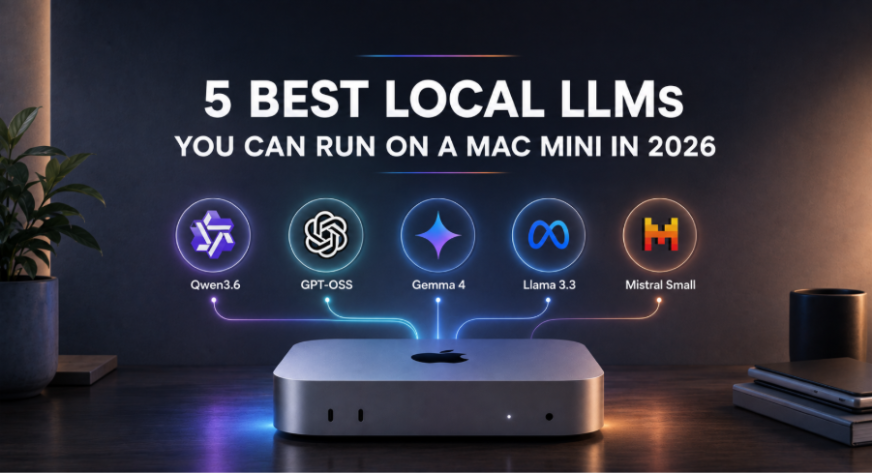
The following models represent the pinnacle of open-weight AI development as of late 2026, categorized by their specific strengths and hardware requirements.
1. Qwen3.6 35B: The Versatile Powerhouse
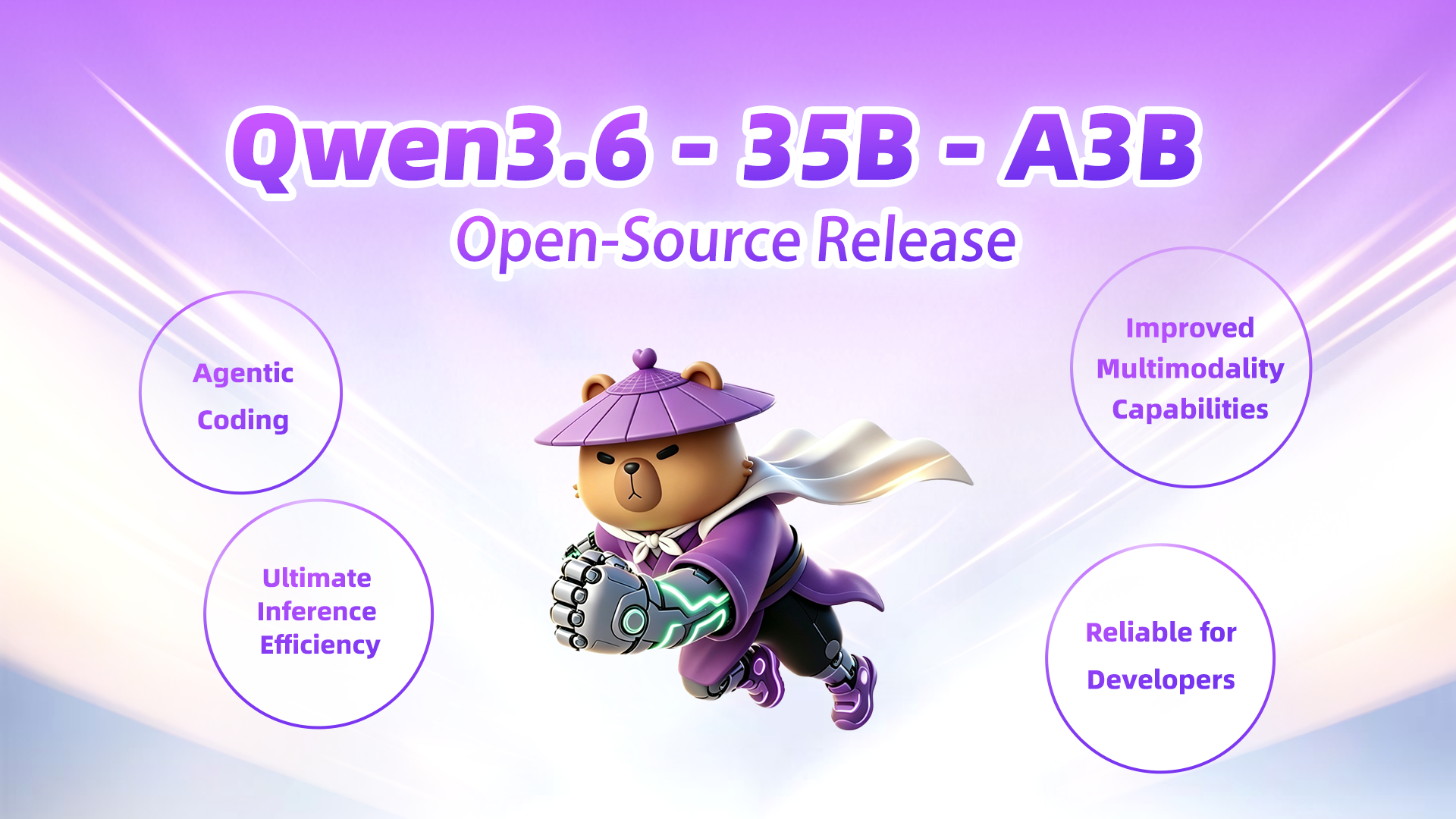
Developed by Alibaba’s Qwen team, the Qwen3.6 35B has emerged as the most balanced model for the modern Mac mini. It offers a high parameter count that provides deep reasoning capabilities without requiring the astronomical memory overhead of 100B+ models.
Technical Specifications and Performance:
The 35B version, typically distributed via Ollama at a size of approximately 23GB, features a 256K context window. This massive context window allows the model to "read" and analyze entire books or large codebases in a single prompt. It supports multimodal inputs, meaning it can process both text and images, making it an ideal candidate for local visual analysis and complex document OCR.
Ideal Use Cases:
Qwen3.6 35B excels in agentic coding—where the AI acts as an autonomous collaborator—and repository-level reasoning. It is the preferred choice for users who need a "jack-of-all-trades" model that can handle creative writing, logical deduction, and technical troubleshooting with equal proficiency.
Recommended Hardware:
To run the 35B model comfortably alongside other applications, a Mac mini with at least 32GB of unified memory is recommended. Users with 24GB machines may find the 27B variant a more fluid experience.
2. Gemma 4 26B A4B: The Efficiency Leader
Google’s Gemma 4 series represents the state-of-the-art in Mixture-of-Experts (MoE) architecture. The 26B A4B variant is particularly noteworthy for its "sparse" execution. While it possesses 25.2 billion total parameters, it only activates roughly 3.8 billion parameters during any single inference step.
The MoE Advantage:
This architecture allows the model to maintain the knowledge base of a large model while operating with the speed and low compute requirements of a much smaller one. For the Mac mini user, this translates to faster token generation (words per second) and lower heat output. Despite its smaller active footprint, it maintains a 256K context window and robust multimodal capabilities.
Recommended Hardware:
Due to its efficient design, the Gemma 4 26B A4B is highly performant on 24GB Mac mini configurations, offering a flagship-level experience on mid-tier hardware.
3. gpt-oss-20b: OpenAI’s Open-Weight Breakthrough
In a significant pivot from its previous "closed" strategy, OpenAI’s release of the gpt-oss line in late 2025 changed the industry trajectory. The gpt-oss-20b is a dedicated reasoning model designed specifically for local infrastructure.
Strategic Implications:
Distributed under the Apache 2.0 license, this model was built to compete directly with Meta’s Llama and Google’s Gemma. It is optimized for "chain-of-thought" reasoning, where the model internalizes a series of logical steps before providing a final answer. At approximately 14GB to 16GB in size, it is the most capable model available for users with entry-level 16GB Mac minis.
Recommended Hardware:
16GB+ unified memory. Its 128K context window and focus on tool-use make it the best model for building local AI agents that can interact with the MacOS file system or perform automated research.
4. Qwen3-Coder 30B: The Developer’s Choice
For software engineers, the Qwen3-Coder 30B is the gold standard for local development. This model is not a general-purpose chatbot; it is a specialized instrument trained on an unprecedented corpus of code and technical documentation.
Architectural Focus:
Like its Gemma counterpart, the Qwen3-Coder 30B utilizes a sparse architecture (30B total, 3.3B active parameters). It is designed to understand "long-horizon" coding tasks, such as refactoring a multi-file project or identifying architectural flaws across a whole repository. Its native support for the 256K context window ensures that it rarely "forgets" the beginning of a code file during long sessions.
Recommended Hardware:
A 24GB or 32GB Mac mini is the "sweet spot" for this model, providing enough headroom for the KV-cache (the model’s short-term memory) to function at full capacity during complex coding tasks.
5. Llama 3.3 70B: The High-Memory Standard
While newer models have emerged, Meta’s Llama 3.3 70B remains the "heavyweight" champion for those with high-end Mac mini configurations. It serves as a testament to the longevity of well-trained, dense models.
Performance on High-End Hardware:
A quantized version of the 70B model requires roughly 43GB of memory. This places it exclusively in the domain of the 48GB and 64GB Mac mini M5 Pro or M6 Pro models. For users with this hardware, the 70B model offers a level of nuance, multilingual fluency, and sophisticated prose that smaller models struggle to replicate.
Recommended Hardware:
48GB to 64GB of unified memory. It is best suited for complex creative writing, deep policy analysis, and large-scale data summarization.
Chronology of the Local AI Movement (2023–2026)
- Late 2023: The release of Llama 2 and the rise of
llama.cppallowed the first generation of Apple Silicon users to run LLMs locally with reasonable performance. - 2024: Apple releases the MLX framework, significantly optimizing AI workloads for the M3 chip. Google enters the open-weight fray with Gemma.
- 2025: OpenAI releases
gpt-oss, signaling a move toward a "hybrid" AI ecosystem. Apple’s M4 and M5 chips double the Neural Engine’s performance. - 2026: The Mac mini is redesigned with a focus on thermal management for sustained AI workloads, and 16GB becomes the base memory standard, enabling local AI for all users.
Strategic Analysis: The Impact on Privacy and Industry
The ability to run these models locally has profound implications for several sectors. In the legal and medical professions, where data privacy is mandated by law, local LLMs on Mac minis allow for automated document review without violating confidentiality. In the creative sector, writers and developers can use these models as "second brains" without fearing that their intellectual property will be used to train a competitor’s cloud model.
Industry analysts suggest that the "AI PC" market, led by Apple’s Mac mini, is effectively cannibalizing the low-to-mid-tier cloud API market. As local models become "good enough" for 90% of daily tasks, the reliance on subscription-based AI services is expected to shift toward specialized, high-compute tasks only.
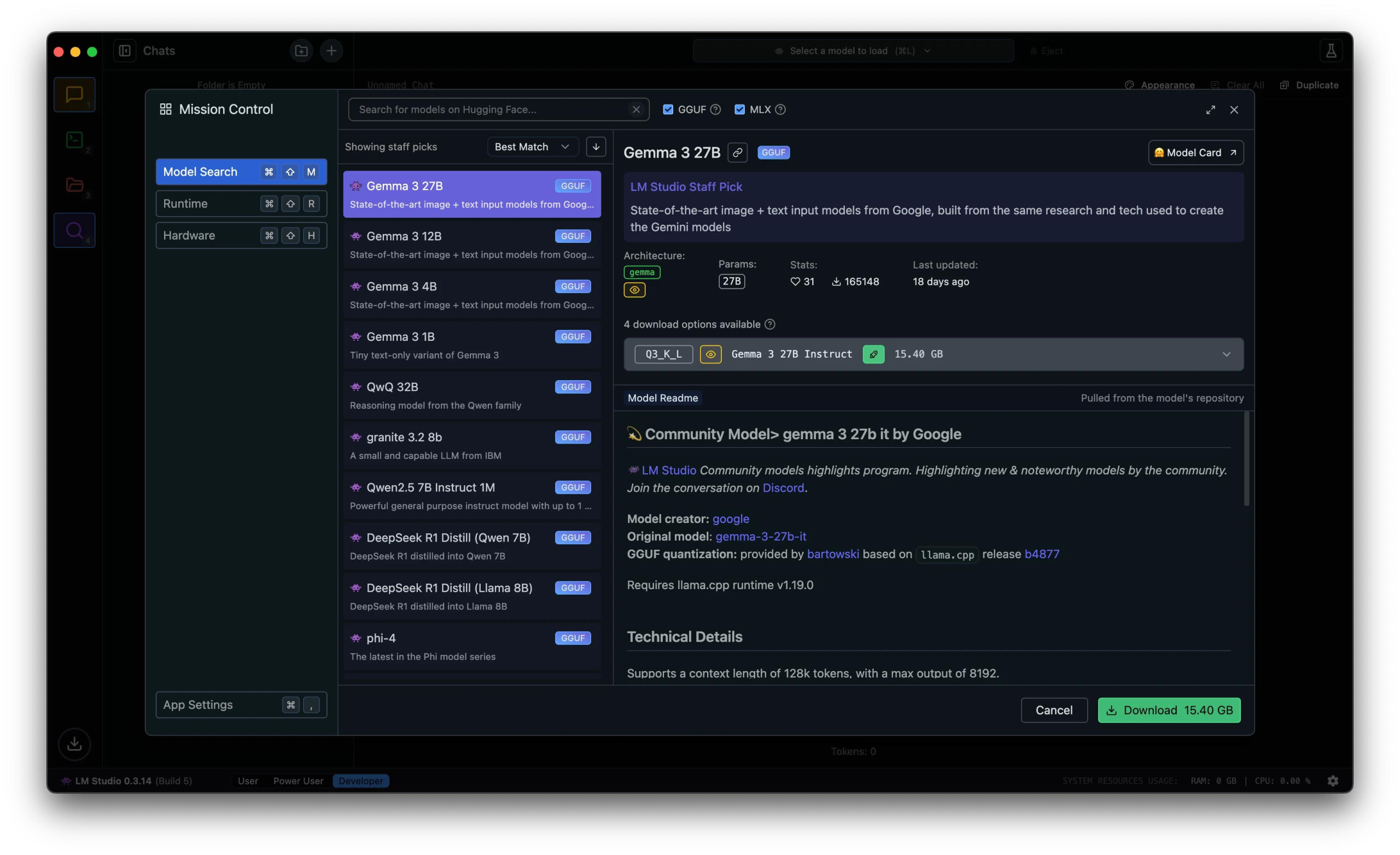
How to Deploy: Ollama vs. LM Studio
For those looking to begin their local AI journey, two primary tools dominate the ecosystem:
- Ollama: A command-line focused tool that is favored by developers. It manages model versions and provides a background service that can be called by other applications via an API.
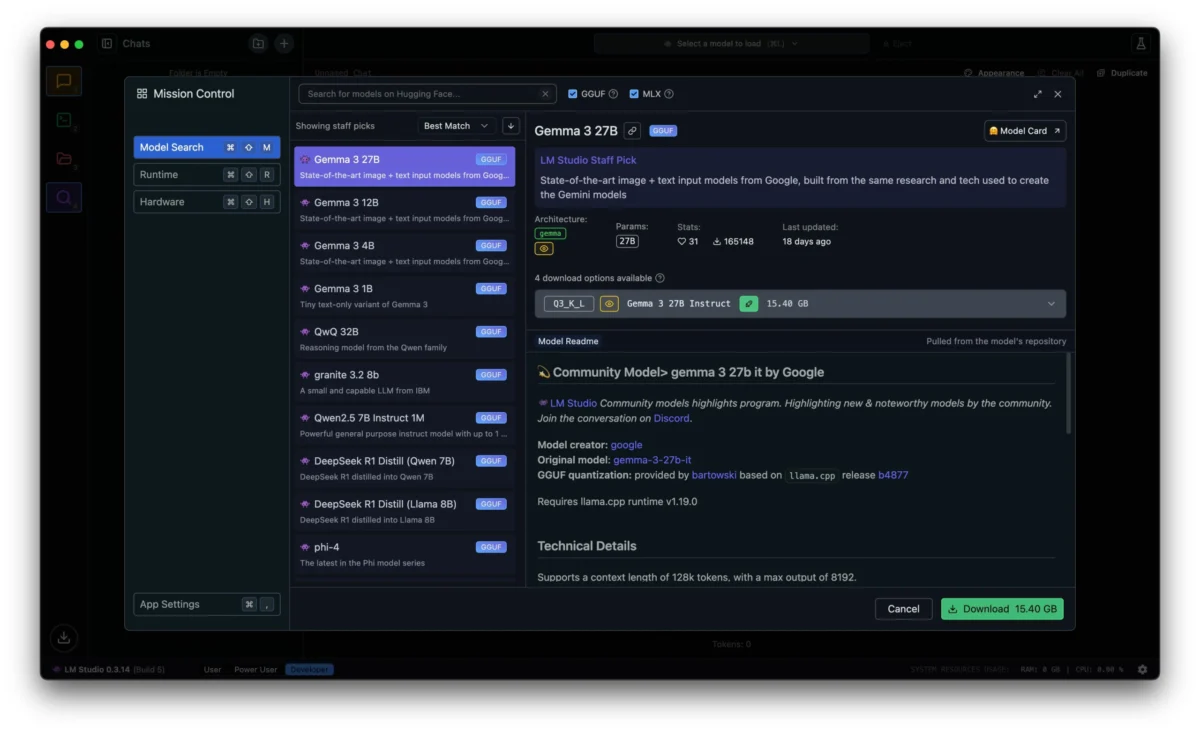
- LM Studio: A GUI-based application that offers a more visual experience. It includes a "Discovery" tab to find new models on Hugging Face and provides detailed hardware telemetry, showing exactly how much unified memory and CPU/GPU resources are being utilized.
Final Perspective
The Mac mini has successfully shed its reputation as a "budget" Mac to become a sophisticated workstation for the AI era. In 2026, the question for a prospective buyer is no longer whether the machine can handle artificial intelligence, but rather how much memory they are willing to purchase to unlock the full potential of these open-weight models. With a properly configured Mac mini, the future of AI is not in the cloud—it is on your desk.


 Neng Nana
 Nana Muazin