Nana
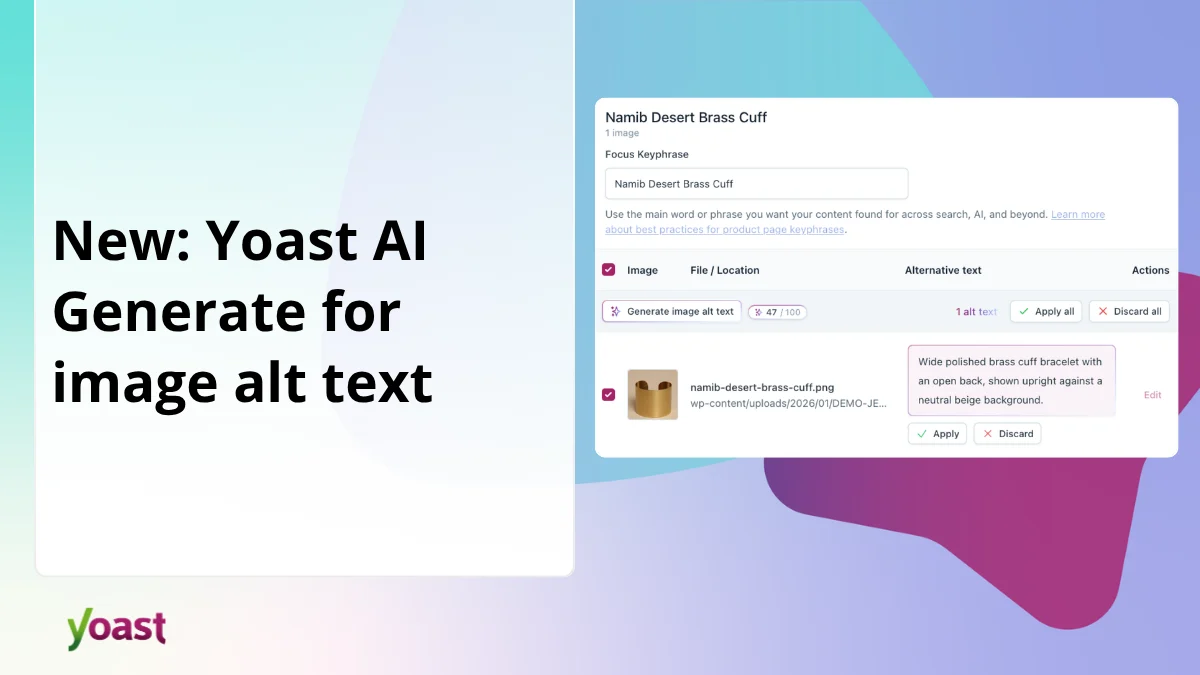
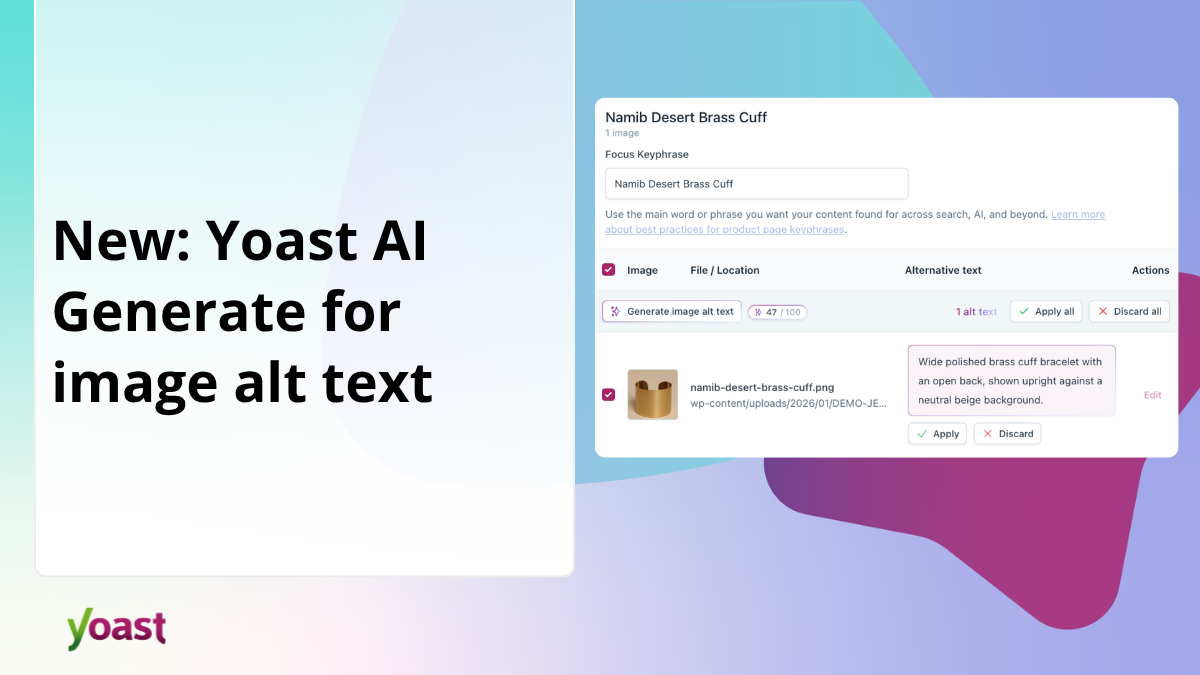
Yoast has announced a significant advancement in e-commerce search engine optimization and web accessibility with the release of Yoast WooCommerce SEO 17.0, introducing a groundbreaking AI-powered feature designed to generate accurate and descriptive image alt text. This new capability, launched concurrently with Yoast SEO and Yoast SEO Premium 28.8, directly addresses a long-standing challenge for online store owners: efficiently optimizing product images for both search engines and users with visual impairments. The integration of "Yoast AI Generate for image alt text" marks a pivotal moment, enabling e-commerce businesses to automate a critical, yet often neglected, aspect of their digital presence, promising enhanced discoverability and improved inclusivity across their product catalogs.
The Genesis of AI-Driven Image Optimization
For years, Yoast SEO has been a cornerstone for website owners seeking to improve their search engine rankings and overall online visibility. Its comprehensive suite of tools has guided millions through the intricacies of on-page SEO, content analysis, and technical optimization. A recurring pain point identified by the platform, particularly for e-commerce sites managing vast inventories, has been the widespread absence or inadequacy of image alt text. While Yoast’s existing features could flag missing alt attributes, the onus remained on the user to manually craft descriptions for each image – a daunting and time-consuming task, especially for stores with hundreds or thousands of products.
This new AI-driven solution represents a natural evolution of Yoast’s commitment to user efficiency and best practices. By leveraging artificial intelligence, Yoast aims to transform a laborious manual process into a streamlined, semi-automated workflow. The underlying philosophy is not to entirely replace human input but to augment it, providing a robust foundation that users can review, refine, and apply with confidence. This strategic pivot towards AI assistance reflects a broader industry trend where intelligent automation is increasingly being deployed to tackle repetitive yet critical digital marketing tasks, thereby freeing up valuable human resources for more strategic initiatives.
Diving Deep into Yoast AI Generate
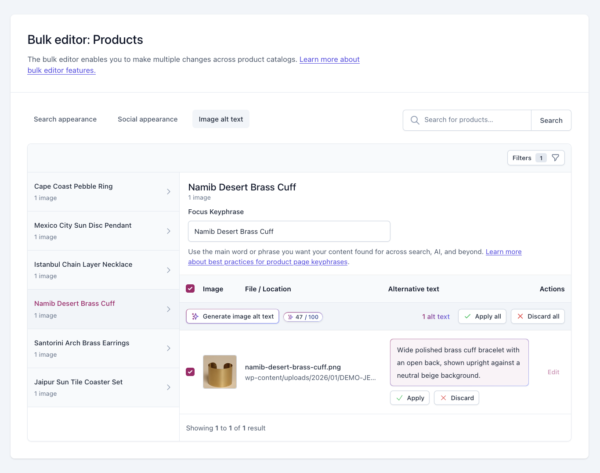
The core functionality of Yoast AI Generate for image alt text lies in its sophisticated ability to synthesize information from multiple sources to create contextually relevant descriptions. The AI constructs each alt text suggestion by drawing upon a site’s existing product data, incorporating the defined focus keyphrase for the product, and meticulously analyzing the image itself. This multi-faceted approach ensures that the generated alt text is not only visually descriptive but also semantically aligned with the product’s identity and optimized for relevant search queries. For instance, an image of a "men’s brown leather lace-up boots, side view" would likely generate an alt text closely mirroring this description, providing rich detail for both accessibility tools and search engine algorithms.
The user experience is designed for simplicity and control. Once the AI generates suggestions, store owners are presented with options to review and either apply or dismiss the proposed alt text. This human-in-the-loop approach is crucial, allowing businesses to maintain oversight and ensure brand consistency and accuracy. For e-commerce sites grappling with extensive backlogs of images lacking alt text, this feature offers an unprecedented opportunity to clear these deficiencies without the prohibitive effort of manual intervention. A store with hundreds or even thousands of unoptimized product images can now initiate a bulk generation process, significantly reducing the time and resources required to achieve full compliance and optimization. The integration within Yoast WooCommerce SEO 17.0 means this functionality is seamlessly woven into the existing workflow, accessible directly within the product editor for individual items or via a dedicated bulk editor for larger-scale operations.
Why Alt Text Remains Paramount in the Digital Age
The importance of alt text has never been more pronounced, serving a dual role that is increasingly critical in today’s digital landscape. On one hand, it is an indispensable tool for web accessibility, enabling screen readers to verbally describe images to individuals who are blind or have low vision. Without accurate alt text, visual content becomes an impenetrable barrier, effectively excluding a significant portion of the online population from fully engaging with a website’s offerings. According to the World Health Organization, approximately 2.2 billion people globally have a vision impairment, underscoring the vast demographic reliant on accessibility features. For an e-commerce store, this directly translates to a segment of potential customers who cannot perceive product photos, making alt text their sole textual description of an item. Compliance with accessibility standards like the Americans with Disabilities Act (ADA) in the US, the EU Accessibility Act, and the Web Content Accessibility Guidelines (WCAG) is not merely a matter of good practice but often a legal imperative, with non-compliance potentially leading to costly lawsuits and reputational damage.
On the other hand, alt text plays a crucial role in search engine optimization and digital discoverability. As search engines, particularly Google, continue to evolve their understanding of visual content, descriptive alt text provides a clear and unambiguous signal about an image’s subject matter. This is particularly vital in an era characterized by the explosive growth of image search and AI-driven discovery mechanisms. When users search for products using visual cues or natural language queries, well-optimized alt text can significantly improve the chances of an image appearing in relevant search results, driving organic traffic to product pages. Furthermore, alt text contributes to the overall semantic understanding of a webpage, reinforcing its relevance for specific keywords and improving its ranking potential. Studies consistently show that images with proper alt text are more likely to rank in Google Images, which can be a significant source of traffic for e-commerce sites.
A Chronology of Innovation at Yoast
Yoast’s journey began with a mission to simplify SEO for everyone, evolving from a personal blog into a global leader in SEO software. Over the years, the company has consistently introduced features that empower website owners, from basic meta description optimization to advanced schema markup integration. The gradual introduction of AI capabilities into its product suite reflects a strategic adaptation to the changing technological landscape and the increasing demand for intelligent automation in digital marketing.
The latest releases, Yoast WooCommerce SEO 17.0 and Yoast SEO/Premium 28.8, represent a significant milestone in this evolution. While the core Yoast SEO plugin has long provided fundamental SEO tools, the dedicated WooCommerce SEO add-on has focused on tailoring these optimizations for the unique needs of online stores. The integration of AI-powered alt text generation in version 17.0 for WooCommerce SEO builds directly on previous functionalities that identified missing alt text, moving from problem identification to automated solution provision. The simultaneous update to Yoast SEO 28.8 for the broader user base also includes incremental improvements, such as enhanced content analysis for specific languages and refinements to existing features, demonstrating Yoast’s continuous commitment to refining its core offerings. This layered approach ensures that both general website owners and specialized e-commerce platforms benefit from ongoing innovations.
Implementation and Requirements for Store Owners
To leverage the power of Yoast AI image alt text, store owners operating on the WooCommerce platform have specific requirements. The feature is exclusively available within Yoast WooCommerce SEO, which can be acquired as a standalone product or as part of the Yoast SEO AI+ bundle. Crucially, it is not a separate add-on that incurs additional costs; rather, it is included within the existing subscription price for these products, ensuring that current users can immediately benefit without incurring unforeseen expenses. Yoast’s "Sparks counter" mechanism allows users to monitor their AI usage, providing transparency on resource consumption.
The AI features are designed to be globally accessible, supporting all languages. While performance may exhibit slight variations for less widely used languages due to the nature of AI model training, the commitment to broad linguistic support underscores Yoast’s global user base. Store owners can access and utilize the Yoast AI image alt text functionality in two primary locations: directly within the individual product editor interface for targeted optimization, or through a comprehensive bulk editor, which is ideal for addressing large volumes of images simultaneously. This dual access point offers flexibility, catering to both granular control and large-scale efficiency needs. It is important to note that this specific AI feature is currently not available for Yoast SEO for Shopify, indicating a platform-specific rollout strategy.
Industry Reactions and Expert Perspectives
The introduction of AI-powered alt text generation is poised to elicit positive reactions across various stakeholders within the digital ecosystem. From Yoast’s leadership, this move is likely presented as a testament to their unwavering commitment to empowering users and fostering a more accessible web. Joost de Valk, CEO and founder of Yoast, or Product Marketing Manager Beth Parker, the author of the original release, would likely emphasize how this feature bridges the gap between complex SEO requirements and practical implementation, making advanced optimization accessible to even the smallest businesses. Their vision would highlight the blend of technological innovation with a user-centric design, aiming to save countless hours for e-commerce managers while simultaneously elevating the quality and accessibility of product listings.
Within the e-commerce community, particularly among small to medium-sized businesses (SMBs) that often operate with limited resources, the feature is expected to be met with significant enthusiasm. The prospect of automating a previously arduous task, especially for stores with vast product catalogs, represents a substantial gain in operational efficiency. Many store owners struggle to keep up with SEO best practices due to time constraints, and this tool directly addresses one of those major bottlenecks. Accessibility advocates are also likely to commend Yoast for taking a proactive step towards making the web more inclusive. While stressing the continued need for human oversight to ensure absolute accuracy and cultural sensitivity in descriptions, they would likely view this as a powerful tool to significantly improve baseline accessibility across millions of e-commerce sites. SEO professionals, ever on the lookout for tools that streamline workflows, will recognize the strategic value of this AI integration. It frees up their time from repetitive tasks, allowing them to focus on higher-level strategic SEO initiatives, such as competitive analysis, keyword research, and link building.
Broader Implications for the Digital Ecosystem
The launch of Yoast’s AI-powered alt text generation carries significant broader implications for the digital ecosystem. Firstly, it contributes to the ongoing democratization of SEO. By automating a technically demanding and time-consuming task, Yoast empowers small businesses and individual entrepreneurs to compete more effectively with larger enterprises that might have dedicated SEO teams. This levels the playing field, making high-quality image optimization achievable for a wider audience.
Secondly, this development exemplifies the evolving model of AI-human collaboration. Rather than replacing human creativity and judgment, the AI acts as an intelligent assistant, generating initial drafts that humans then review and refine. This hybrid approach leverages the speed and processing power of AI while retaining the critical nuanced understanding and quality control that only human oversight can provide. This model is likely to become increasingly prevalent across various digital marketing domains.
Thirdly, it signals a trajectory for the future of e-commerce SEO. As AI becomes more sophisticated, we can anticipate further integration into product listing optimization, content generation for product descriptions, and even personalized customer experiences. The ability of AI to analyze vast datasets and generate contextually relevant content will redefine how online stores manage their digital assets and engage with customers. This also sets a new benchmark for competitors in the SEO tool market, likely spurring further innovation in AI-driven optimization solutions.
Finally, there are ethical considerations that will continue to shape the development and deployment of such AI tools. Ensuring the AI’s accuracy, preventing biases in generated content, and maintaining transparency about its capabilities and limitations will be paramount. Yoast’s approach of including a review step underscores the responsibility associated with deploying powerful AI, ensuring that users retain ultimate control and accountability for their website content.
In conclusion, Yoast’s introduction of AI-powered alt text generation in Yoast WooCommerce SEO 17.0 represents a monumental leap forward for e-commerce businesses. It addresses the dual imperatives of web accessibility and search engine optimization with an intelligent, efficient, and scalable solution. By automating a previously arduous task, Yoast not only empowers online store owners to enhance their digital discoverability but also fosters a more inclusive online environment for all users. This innovation solidifies Yoast’s position at the forefront of SEO technology and heralds a future where AI plays an increasingly vital role in crafting a more accessible and optimized web.

 Suro Senen

 Azzam Bilal Chamdy