Azzam Bilal Chamdy

In an increasingly visual digital landscape, the effective description of images has transitioned from a mere technical detail to a critical strategic imperative for web publishers and businesses alike. Beyond enhancing content engagement, properly described images significantly improve a website’s visibility across traditional search engines, advanced visual search platforms, and emerging AI-powered results. Central to this description are alt text and, to a lesser extent, title attributes, which serve as textual proxies for visual content, bridging the gap between human perception and machine understanding.
Understanding Alt and Title Attributes in HTML
An HTML image tag is typically structured as follows: <img src="image.jpg" alt="image description" title="image tooltip">. While commonly referred to as "alt tags" or "title tags," these are technically attributes within the <img> tag. These attributes allow developers and content creators to embed descriptive text directly into the image’s code, offering crucial information that aids both accessibility and search engine optimization (SEO).
The alt attribute, or alternative text, is primarily designed for accessibility. It provides a textual description of an image for users who cannot see it, such as individuals using screen readers. Screen readers, assistive technologies employed by people with visual impairments, vocalize the alt text, allowing users to understand the image’s content and context. However, the utility of alt text extends far beyond accessibility. Search engines, including Google, leverage this information to comprehend an image’s subject matter and its relevance to the surrounding page content. This understanding is vital for indexing images correctly and matching them with user queries in image search, general web search, and now, AI-driven results. Neglecting alt text means potentially excluding a significant portion of the audience and sacrificing valuable SEO opportunities.
In contrast, the title attribute, often referred to as title text, typically appears as a tooltip when a user hovers their mouse cursor over an image. Its practical application is far more limited than alt text. Screen readers do not reliably announce title attributes, and mobile users, who interact with touchscreens, cannot access these tooltips at all. Consequently, for most images, the title attribute is largely redundant. Any information deemed important enough to be shared should ideally be incorporated into the surrounding page text, ensuring it is accessible to all users across all devices. The only notable exception where the title attribute remains crucial is for embedded frames (<iframe>), where it serves as the accessible name for the frame, allowing screen reader users to identify its content. For standard images, the alt attribute sufficiently fulfills the descriptive role.
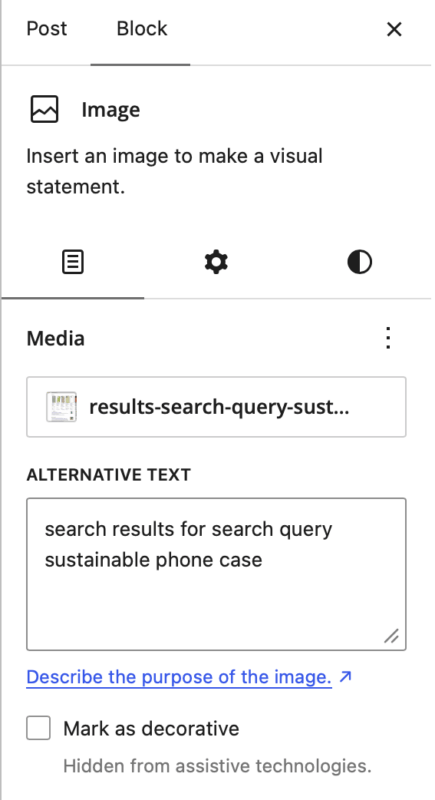
For images that are purely decorative and do not convey any meaningful information to the user or search engines, it is best practice to handle them via CSS. If, for design or technical reasons, decorative images must remain in the HTML, they should be given an empty alt attribute: <img src="image.png" alt="">. An empty alt attribute instructs screen readers to skip over the image, preventing unnecessary interruptions for visually impaired users. In content management systems like WordPress, this means leaving the "Alt text" field blank in the image settings.
The Critical Role of Alt Text: Accessibility and SEO

The importance of alt text cannot be overstated, particularly in light of global accessibility standards and evolving search algorithms. According to the World Health Organization, at least 2.2 billion people have a vision impairment, underscoring the vast population reliant on assistive technologies like screen readers. The Web Content Accessibility Guidelines (WCAG), widely adopted international standards for web accessibility, explicitly require alt text for non-text content to ensure that information conveyed visually is also available in text format. Compliance with WCAG not only fosters inclusivity but can also mitigate potential legal risks associated with inaccessible websites.
From an SEO perspective, Google has consistently highlighted the value of descriptive filenames, titles, and alt text. In their official guidelines for images, Google emphasizes using "useful, information-rich content that uses keywords appropriately and is in context of the content of the page." This directive is not coincidental. Google’s algorithms analyze alt text to understand what an image depicts and how it relates to the textual content around it. This contextual understanding contributes to the overall relevance and authority of a page, influencing its ranking in search results. For e-commerce sites, where product images are paramount, well-optimized alt text can significantly improve product discoverability, driving traffic from image search and potentially increasing conversion rates. A study by Statista revealed that product images are the most influential factor for online shoppers, making their proper optimization indispensable.
However, the key is quality over quantity. Keyword stuffing—the practice of excessively loading alt attributes with keywords—is detrimental. Google explicitly warns against it, stating it "results in a negative user experience and may cause your site to be seen as spam." Modern SEO tools, such as Yoast SEO, are designed to flag such practices, encouraging a natural and descriptive approach. The goal is to provide a concise yet comprehensive description that genuinely reflects the image’s content and purpose, incorporating relevant keywords only where they naturally fit and add value. For product images, including the full product name and product ID in the alt text can be highly beneficial for granular search queries. Similarly, ensuring image filenames are descriptive (e.g., red-waterproof-running-shoe.jpg instead of IMG_1234.jpg) further reinforces the image’s context for search engines.
The Rise of Visual Search and AI: A New Imperative
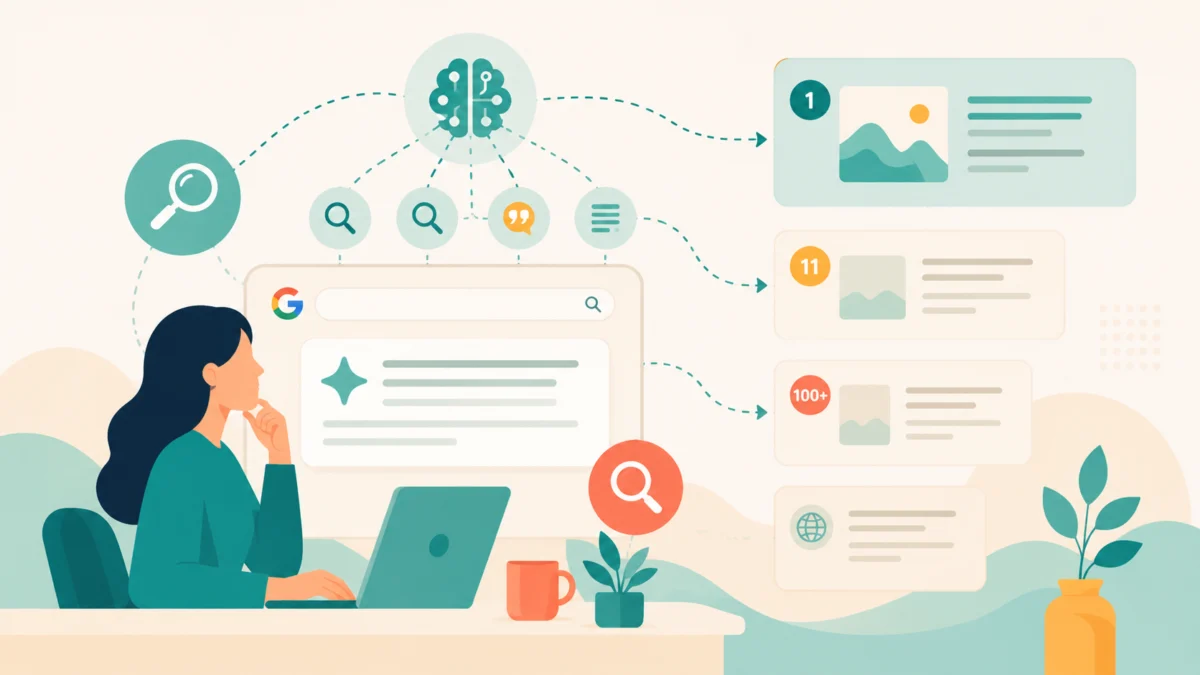
The landscape of search is rapidly evolving beyond traditional text queries. The proliferation of smartphones and advancements in artificial intelligence have ushered in the era of visual search and AI-powered results. Platforms like Google Lens allow users to point their smartphone cameras at real-world objects—a pair of shoes, a piece of furniture, a landmark—and receive instant, relevant search results. AI Modes in search engines now accept photos as direct input, and Google’s AI Overviews frequently integrate images from across the web to illustrate their summarized answers.
This paradigm shift elevates the importance of alt text to unprecedented levels. While AI-driven computer vision is highly adept at recognizing objects, colors, and basic patterns, it often struggles with nuanced context, specific product details, or the abstract meaning an image conveys. This is where alt text becomes invaluable. It serves as a human-curated textual layer that augments the AI’s visual understanding. For instance, if a user employs Google Lens on a red running shoe, and the image’s alt text reads "red waterproof running shoe, size 10, breathable mesh upper," the AI can combine its visual recognition of a red shoe with the textual description to provide highly specific and accurate results. This synergy increases the likelihood of an image appearing in relevant visual search queries and within AI-generated content summaries.
Optimizing for this new visual search paradigm involves several key practices:
- Descriptive Alt Text: Focus on answering "what is this and why does it matter?" Include product names, features, colors, and contextual information, always maintaining a natural language flow.
- Structured Data: Implement structured data (e.g., Schema.org markup) around images to provide search engines and AI platforms with explicit, machine-readable information about the image and its content. This helps categorize and understand images more effectively.
- Descriptive File Names: As mentioned, move beyond generic filenames to those that accurately describe the image’s content.
- Testing: Utilize tools like Google Lens to test how your images are interpreted. Adjust
alttext and other descriptive elements if the results are not satisfactory.
The goal remains consistent: to help machines understand images as humans do. By doing so, content creators can unlock new avenues for visibility and engagement across an ever-expanding array of AI-powered search interfaces.
Leveraging AI for Alt Text Generation: Efficiency vs. Accuracy
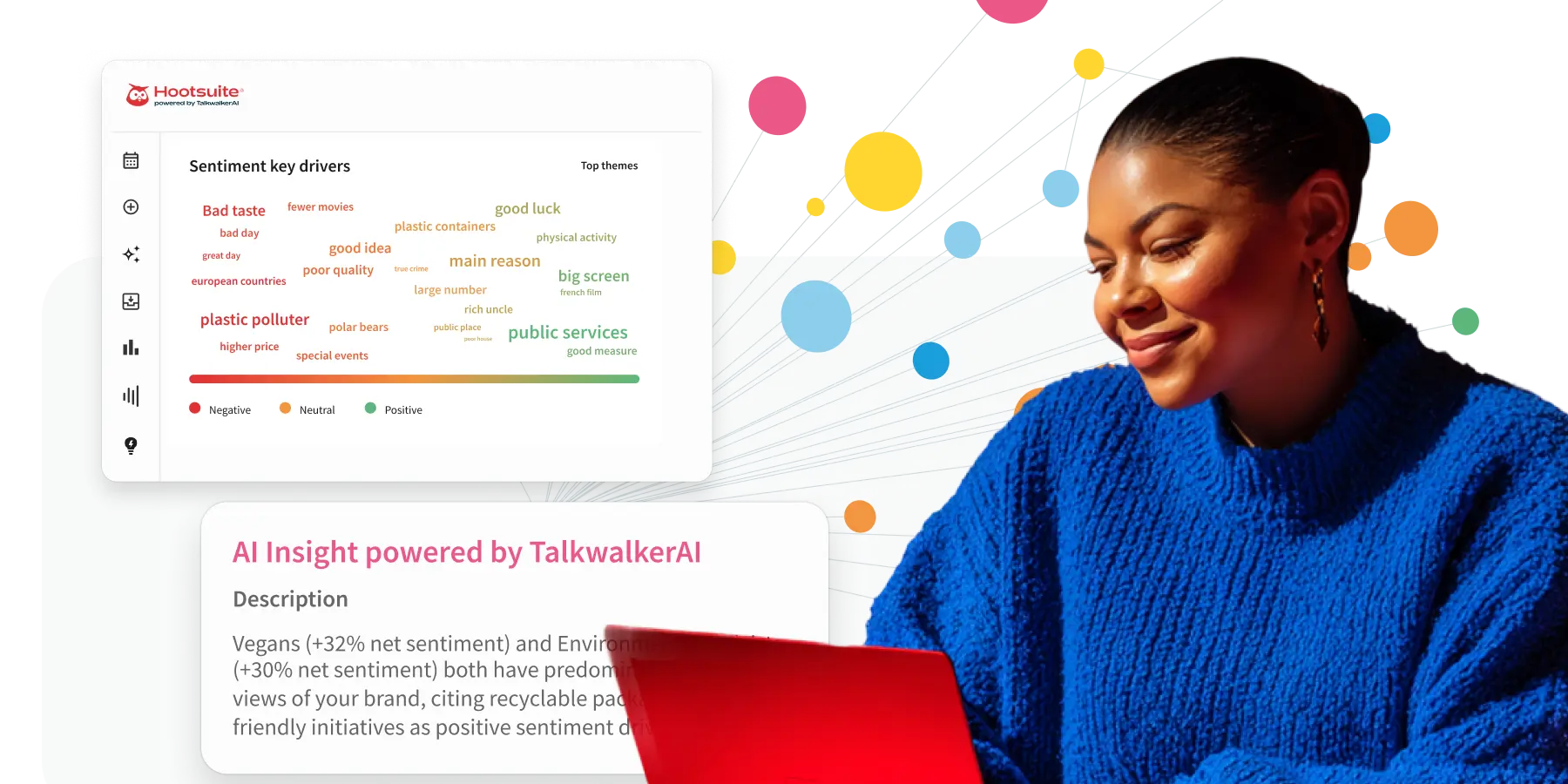
The task of manually writing alt text for hundreds or thousands of images, especially for large e-commerce catalogs, can be incredibly time-consuming. This is where artificial intelligence tools are emerging as a powerful solution. AI alt text generators use computer vision and natural language processing to analyze images and automatically produce descriptive text. For example, uploading a photo of a coffee mug might yield alt text like "blue ceramic mug with handle on wooden table."
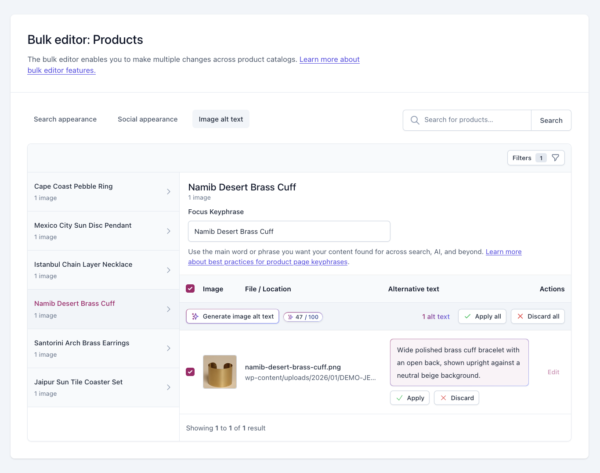
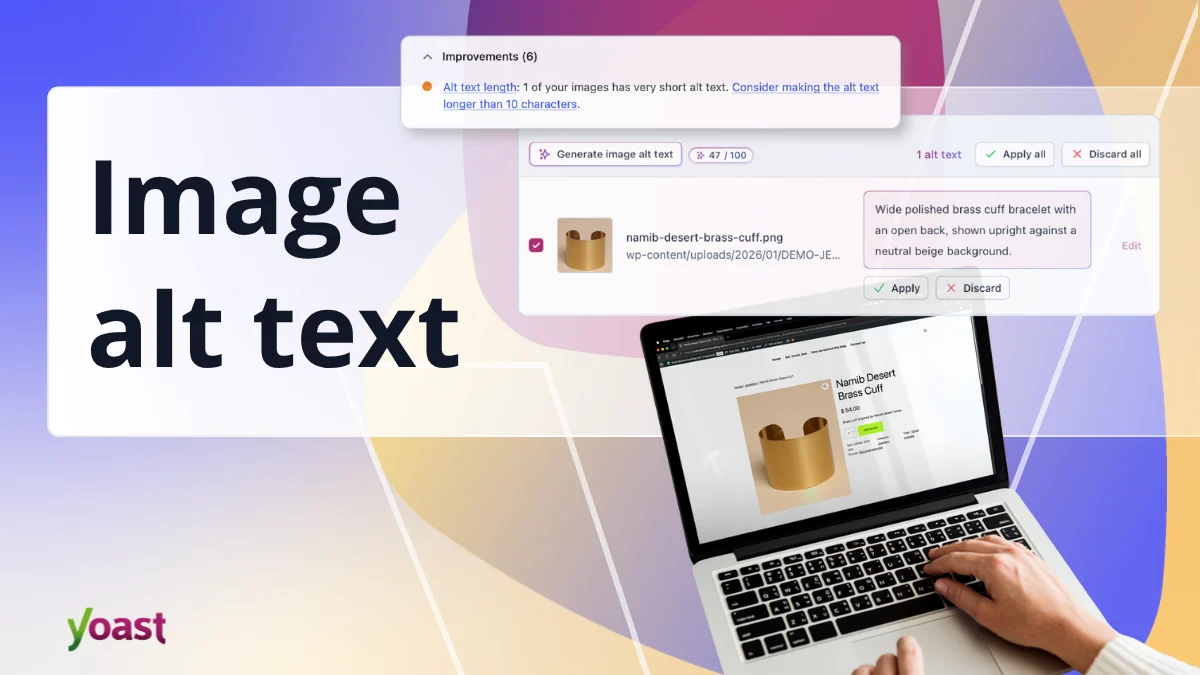
Tools like Yoast AI Generate for image alt text, integrated within platforms like WordPress via Yoast SEO and Yoast WooCommerce SEO, can significantly streamline this process. They can read product data and context to generate more relevant descriptions, saving businesses immense amounts of time. The technology has advanced rapidly, with current tools capable of accurately identifying products, colors, settings, and even actions. For sites with extensive product inventories, this capability can help clear backlogs and ensure a baseline level of alt text coverage that would be impractical to achieve manually.
However, it is crucial to recognize that AI is not yet perfect. Generic AI models, while capable, often lack the nuanced understanding of a specific product’s unique selling points, brand voice, or the subtle emotional cues an image might convey. For instance, AI might describe a "navy shirt" as simply "blue" or miss the significance of a model’s subtle smile. It cannot inherently distinguish between an image that is purely decorative and one that carries crucial statistical data. Most importantly, AI cannot fully grasp whether its generated description genuinely helps a human user who cannot see the image.
Therefore, human oversight remains indispensable. AI-generated alt text should be viewed as a strong starting point, not a final solution. Content creators and marketers must review and edit these suggestions, ensuring accuracy, contextual relevance, and adherence to brand guidelines. For critical images, such as homepage hero shots, landing page visuals, or images explaining complex ideas (charts, infographics, screenshots), manual crafting of alt text is almost always superior. These images often require a depth of explanation and specific phrasing that AI tools struggle to produce generically.
The strategic approach involves using AI for volume – tackling the bulk of product images or historical content lacking alt text – while reserving human expertise for high-impact or complex visuals. This hybrid model maximizes efficiency without compromising quality, ensuring that every image serves its purpose for both human users and search algorithms.
WordPress Integration and Tools
WordPress, as a leading content management system, facilitates the addition of alt text. When uploading an image to the media library, users are prompted to fill in an "Alt Text" field. While WordPress may default to copying the filename if this field is left blank, it is always recommended to take a moment to write a proper, descriptive alt text. WordPress also offers the option to mark an image as decorative, which essentially creates an empty alt attribute.
Advanced SEO plugins, such as Yoast SEO, further enhance alt text management within WordPress. Yoast SEO includes specific assessments that analyze the alt text of images within posts, pages, and products. These assessments are designed to catch common mistakes, such as missing alt text, excessively long descriptions, or keyword stuffing. Rather than providing a "green light" for every image, these checks appear only when an issue is detected, guiding users to make necessary improvements. For sites with a large volume of images, the Bulk Editor in Yoast SEO allows users to filter for images lacking alt text across the entire site, streamlining the optimization process. For e-commerce businesses utilizing Yoast WooCommerce SEO or Yoast SEO AI+, the integration allows for AI-generated alt text suggestions directly within the product editor or the Yoast SEO bulk editor, further accelerating the creation and review process.
Broader Implications and Future Outlook
The consequences of neglecting alt text extend beyond immediate SEO gains or accessibility compliance. In a competitive digital environment, poor image optimization can lead to lost visibility, reduced organic traffic, and a suboptimal user experience. As visual search and AI continue to mature, the foundational role of alt text will only grow. Future AI models are likely to become even more sophisticated, but they will still rely on clear, structured data and accurate textual descriptions to fully understand and contextualize visual information.
In essence, alt text is no longer a niche technical detail relevant only to a small segment of web development. It is a fundamental pillar of inclusive, discoverable, and future-proof web content. By investing time and resources into mastering alt text and leveraging smart tools, content creators can ensure their visual content resonates with the widest possible audience, enhances search engine performance, and remains relevant in an increasingly AI-driven digital world.

 Suro Senen
 Siti Muinah