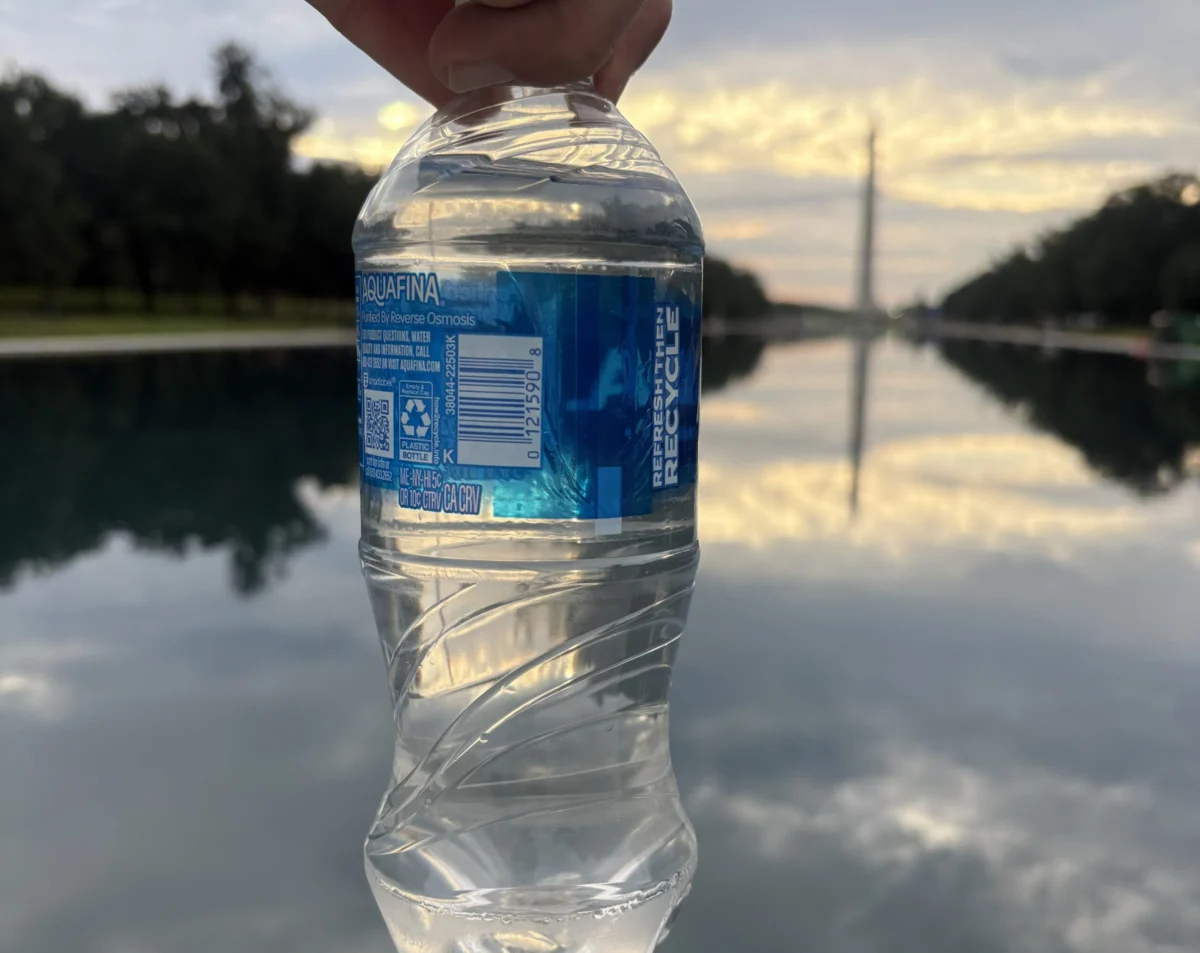
For several days during a sweltering Washington, D.C. summer, Erin Kramer could be found pacing the perimeter of the Lincoln Memorial Reflecting Pool. To the thousands of tourists passing by, she might have looked like just another visitor, but Kramer was a woman on a mission. Armed with a deep understanding of nanobubble ozone technology and a bottle of crystal-clear water drawn directly from the pool, she was prepared to engage with anyone—reporters, politicians, or skeptical citizens—who would listen. Back at her home in North Carolina, she had joked about setting up a table with a sign that read, “Ask me about the algae.” This was more than a joke; it was the front line of a complex crisis management operation.
Kramer, the founder of Erin Kramer Consulting, had been brought in by Greenwater Services, a small Ohio-based company that found itself at the center of a national firestorm. The controversy was a volatile mix of high-stakes infrastructure, partisan aesthetics, and the shadow of political donor history. At the heart of the issue was the Lincoln Memorial Reflecting Pool, which had recently undergone a renovation pushed by the administration of President Donald Trump in preparation for the United States’ 250th anniversary. When the water turned an unappealing shade of green, the pool became a metaphorical and literal lightning rod for political division.
The Context of the Reflecting Pool Renovation
The Lincoln Memorial Reflecting Pool is one of the most iconic landmarks in the United States. Spanning approximately 2,029 feet in length and holding roughly 6.75 million gallons of water, it serves as a centerpiece for the National Mall. Historically, the pool has struggled with water quality issues, including stagnant water, debris, and persistent algae growth.
As part of a broader effort to revitalize national monuments ahead of the country’s semiquincentennial, the Trump administration fast-tracked renovations. This project included a controversial decision to paint the floor of the pool a dark blue to enhance reflections and the installation of a new, chemical-free water treatment system. Greenwater Services was contracted to provide this technology: a nanobubble ozone system designed to remediate algae and bacteria without the use of harsh chemicals like chlorine, which can damage the structural integrity of the historic basin and harm local wildlife.
However, the project faced immediate hurdles. Shortly after the renovation, the blue paint began to peel, leading to accusations of shoddy craftsmanship. President Trump alleged the damage was an act of vandalism, while critics pointed to rushed construction. Amidst this chaos, a technical request from the National Park Service (NPS) led to the Greenwater units being taken offline for a single night. In the humid, stagnant heat of a D.C. summer, that window was all the algae needed to bloom, turning the landmark into a “green swamp” almost overnight.
A Career Forged in Crisis and Science
When Greenwater Services realized they were being blamed for the green water, they turned to Kramer. Her background was uniquely suited for a crisis that sat at the intersection of political scandal and scientific complexity. Kramer’s career began in journalism before she transitioned into high-pressure political communications.
Her entry into the world of crisis PR was a trial by fire. Only five weeks after she started working in the New York Governor’s office as a deputy press secretary, Governor Eliot Spitzer resigned amidst a high-profile scandal. “That was kind of my first crisis,” Kramer recalled. She later spent a decade in the New York District Attorney’s Office, honing her ability to navigate legal and public narratives. Later, a tenure at Duke University allowed her to work closely with research professors, translating complex scientific data into accessible public information. This rare combination of skills—crisis management and scientific literacy—made her the ideal advocate for Greenwater’s technology.
The “Rorschach Test” of Political Perception
Upon arriving in Washington, D.C., Kramer discovered that the reality of the water quality was being filtered through the lens of political affiliation. By the time she reached the National Mall, the Greenwater units had been back online for days, and the water was once again clear. However, the narrative in the media and among the public had not caught up.
“I just started walking around the pool, talking to people and listening to people,” Kramer said. “And it was like a Rorschach test. If you looked at the pool and said it was clear, you were very likely of one political affiliation. If you looked at it and said it was dirty, you were very likely of another.”
This phenomenon extended to major news outlets. Kramer observed reporters standing next to clear, sparkling water while their broadcasts featured week-old footage of the algae bloom. For Kramer, a lifelong Democrat, it was a sobering moment to see trusted news sources prioritize a narrative over the physical evidence standing right in front of them. The challenge was no longer just about cleaning the water; it was about cleaning the perception of the water.
Strategic Pillars: Science, Fact-Stipulation, and Persistence
To combat the “green” narrative, Kramer deployed a three-pronged strategy designed to bypass political bias and return the conversation to objective reality.
1. A Focus on Science and Technology
Kramer’s primary goal was to shift the conversation from “Is the pool green?” to “How does this technology work?” The technology in question—nanobubble ozone—is a cutting-edge method of water remediation. It involves injecting billions of microscopic bubbles (nanobubbles) filled with ozone into the water. These bubbles stay suspended for long periods, providing a high surface area for oxygen transfer and ozone reaction, which effectively destroys algae and pathogens on contact.
This strategy bore fruit during a chance encounter with Congressman Suhas Subramanyam, a Democrat from Virginia. The Congressman had arrived at the pool with a snorkel and water wings, intending to film a satirical TikTok video mocking the “dirty” pool. Kramer intervened, engaging him and his staff in a conversation about the environmental benefits of the technology. She reminded him that as a Democrat, he belonged to the party that champions scientific advancement and environmental protection.
The move worked. Impressed by the technology’s potential for cleaning polluted rivers and lakes, Subramanyam pivoted. He filmed a new TikTok that featured Kramer explaining the science, ultimately showcasing the water as clear and the technology as a success.
2. Stipulation of Facts
In any crisis, certain facts are non-negotiable. One of the primary criticisms against Greenwater Services was its financial link to J.J. Cafaro, an Ohio businessman and Trump donor who had been convicted of bribing a congressman in the early 2000s.
Rather than attempting to bury or minimize this connection, Kramer drew on her experience in trial consulting. “In court, you stipulate to certain things, and it kind of takes them off the table,” she explained. By acknowledging the facts—that Cafaro was an investor but not involved in daily operations—she removed the “gotcha” element from the story. This allowed her to pivot the conversation back to the efficacy of the water treatment system, a tactic that was eventually reflected in coverage by major outlets like The Wall Street Journal.
3. Physical Presence and Persistence
Perhaps the most grueling part of the strategy was Kramer’s physical presence. Day after day, she braved the Washington heat to act as a human billboard for the truth. She carried a clear bottle of water drawn from the pool to provide a tactile, undeniable proof of clarity. By being available to every reporter and passerby, she ensured that the “clear water” narrative had a constant, vocal advocate on-site.
The Technical Reality: How Nanobubbles Saved the Pool
The efficacy of the nanobubble system is supported by significant environmental data. Traditional water treatment often relies on chemical additives that can create harmful byproducts or damage infrastructure. In contrast, nanobubbles provide a mechanical and oxidative solution.
Research indicates that nanobubbles (defined as bubbles smaller than 200 nanometers) do not rise to the surface and burst like larger bubbles. Instead, they remain submerged, following Brownian motion. This allows for a much higher “gas-to-liquid” transfer efficiency. When combined with ozone—a powerful oxidant—the system can neutralize organic contaminants and algae without leaving any chemical residue. For a shallow, high-surface-area body of water like the Reflecting Pool, this technology is significantly more sustainable than previous methods.
The algae bloom that sparked the controversy was not a failure of this technology, but rather a result of its absence. When the NPS requested the units be turned off, the natural biological processes of the pond took over. The rapid recovery of the water once the units were restarted served as a real-world validation of the system’s power.
Broader Implications for Public Infrastructure PR
The Greenwater Services case study offers several vital lessons for the future of public relations and infrastructure management. In an era of extreme political polarization, even a pool of water can become a partisan symbol. Kramer’s success highlights the importance of:
- Translating Science: In a “post-truth” environment, practitioners must be able to explain the “how” and “why” behind technical solutions to build trust.
- The Power of Tangibility: In the age of digital misinformation, physical evidence—like a bottle of clear water—remains a potent tool for persuasion.
- Decoupling Narratives: Effective crisis management often requires separating a product or service from the political baggage of its stakeholders.
Kramer’s work helped shift the media cycle from one of mockery to one of scientific interest. Outlets such as CNN, Spectrum News, and The Conversation eventually published pieces detailing the nanobubble technology, moving the needle of public opinion toward an objective assessment of the project.
Conclusion
As the Lincoln Memorial Reflecting Pool continues to serve as a backdrop for American democracy, its clarity remains a testament to the intersection of innovative technology and strategic communication. For Erin Kramer, the goal was never about winning a political argument, but about ensuring that a piece of national heritage was preserved through sound science.
“We’re not going to change people’s political minds,” Kramer noted. “What we can change is the piece that people are talking about.”
If the pool remains clear for the country’s 250th-anniversary celebrations and beyond, the “algae controversy” will likely be remembered not as a failure of construction, but as a landmark case in how persistence and scientific integrity can overcome the noise of political discord. Kramer’s efforts ensured that when the world looks at the Lincoln Memorial, they see a clear reflection of the monument, rather than the murky green of a PR disaster.