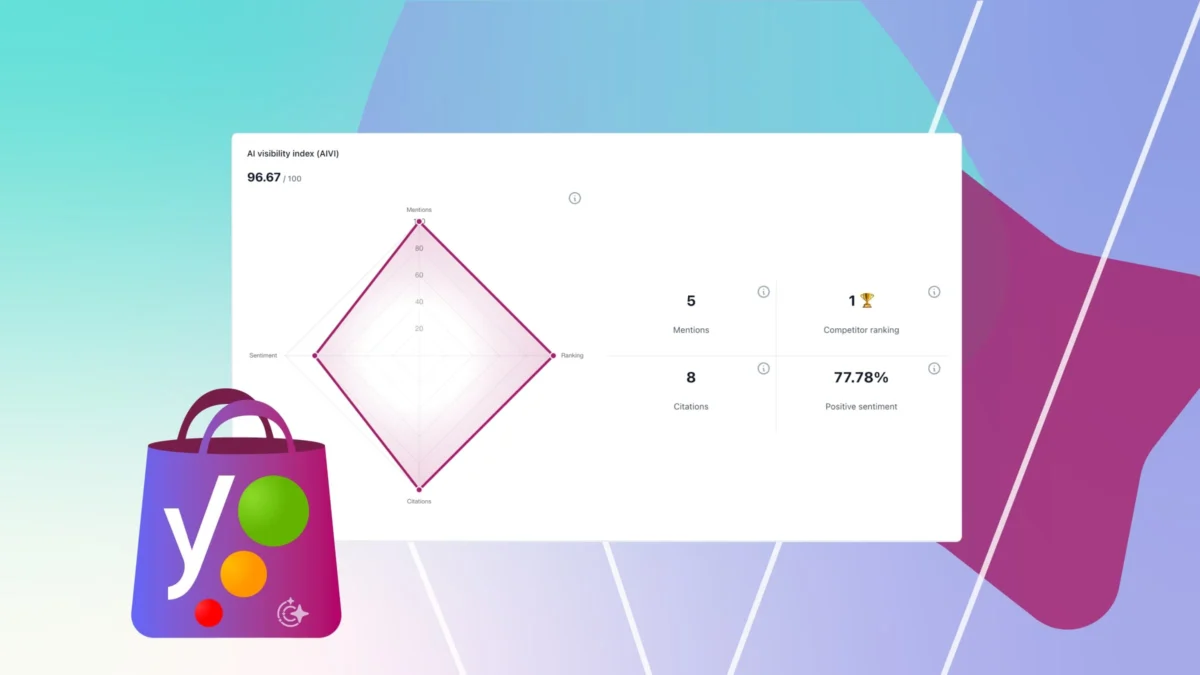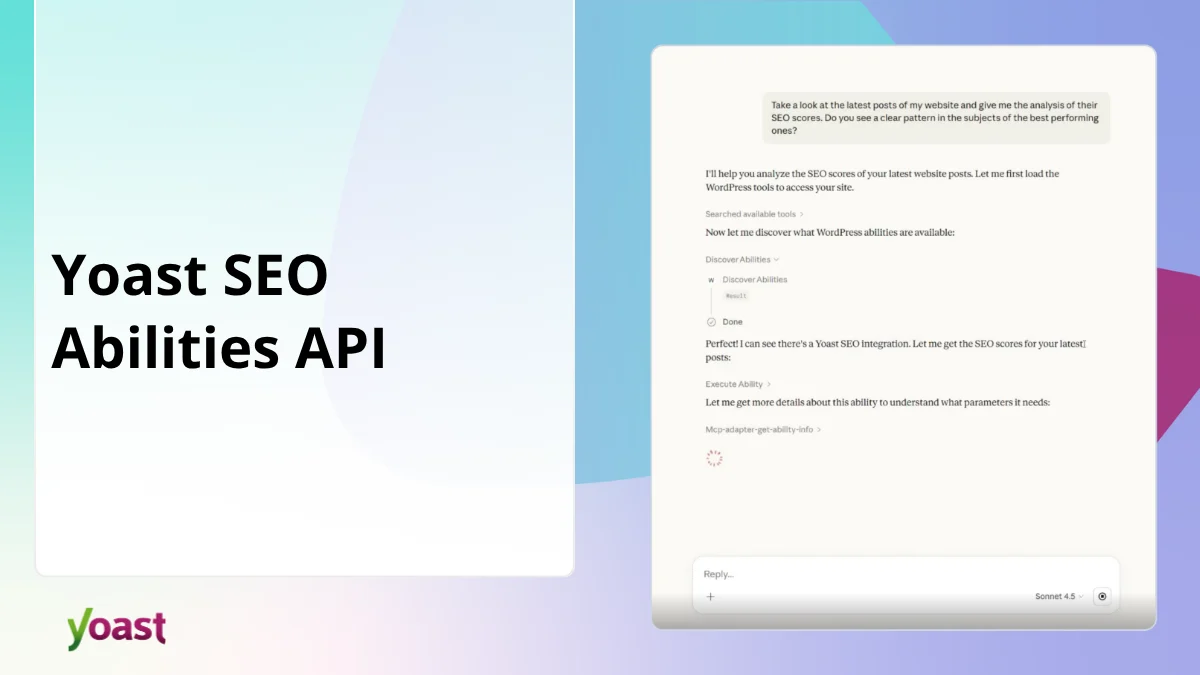
The landscape of digital marketing and search engine optimization (SEO) has undergone a significant transformation with the announcement that Yoast SEO, a ubiquitous plugin for WordPress, can now directly interface with artificial intelligence (AI) tools, custom dashboards, and automated workflows. This pivotal integration is facilitated by a newly developed connector to the WordPress Abilities API, meticulously engineered to synchronize with the capabilities introduced in WordPress 6.9. This development signifies a proactive evolution for Yoast SEO, aligning its functionalities with the accelerating pace of technological advancement within the WordPress ecosystem and the broader digital sphere.
Understanding the Yoast SEO Abilities Connector
At its core, this new connector, dubbed the “Yoast SEO Abilities,” empowers external AI assistants, automated workflow systems, and bespoke analytics dashboards to seamlessly access critical SEO data generated by Yoast SEO. Traditionally, integrating such specific data points often necessitated the development of custom API connections, intricate data parsing scripts, or manual data extraction, processes that were both time-consuming and resource-intensive. The primary innovation here is the elimination of this friction: “It just works,” as highlighted by Yoast. This direct, out-of-the-box compatibility significantly lowers the barrier to entry for leveraging Yoast SEO data within advanced AI-driven systems.
Once a compatible tool establishes a connection, it can instantly retrieve a wealth of information from a user’s most recent posts. While the initial announcement did not explicitly list all accessible data points, the implied scope includes critical SEO performance indicators such as content scores, readability assessments, keyword usage metrics, meta descriptions, and potentially internal linking suggestions, all without requiring intricate configurations. This move is poised to democratize sophisticated SEO automation, making it accessible to a wider array of users, from individual content creators to large digital marketing agencies.
The WordPress Abilities API and WordPress 6.9: A Foundation for Innovation
The enablement of this direct integration is rooted in the WordPress Abilities API, a forward-thinking initiative by the WordPress core development team. Introduced as part of WordPress 6.9, this API is designed to create a standardized, machine-readable interface for WordPress installations, allowing external systems, particularly AI agents and automated services, to understand and interact with the CMS in a more structured and intelligent manner. WordPress 6.9 itself represents a significant leap forward in the platform’s adaptability, particularly in its capacity to interact with and be controlled by AI systems. The “WordPress MCP Adapter” (which likely refers to a Master Control Program adapter, a conceptual layer for AI interaction) mentioned in developer communications underscores this strategic direction.
WordPress, powering over 43% of all websites on the internet, has consistently evolved to meet the demands of its vast user base. Its continued dominance is not just a testament to its flexibility and open-source nature but also to its commitment to integrating cutting-edge technologies. The introduction of the Abilities API with WordPress 6.9 signals a clear intent to position WordPress as a robust and future-proof platform in an AI-dominated landscape. Yoast SEO’s immediate embrace and extension of these new capabilities through its own connector exemplify the agility and foresight required of leading plugin developers within this ecosystem.
A New Era for SEO Automation
This development marks a significant paradigm shift in how SEO is managed and optimized. For years, SEO tools, while powerful, often operated in silos or required complex manual data transfers. The direct integration offered by the Yoast SEO Abilities connector promises to streamline numerous tasks that were previously cumbersome.
Consider the burgeoning market for AI in digital marketing. Reports indicate that the AI in marketing market size is projected to grow from USD 22.8 billion in 2023 to USD 107.5 billion by 2028, at a Compound Annual Growth Rate (CAGR) of 36.3%. A substantial portion of this growth is attributed to AI’s ability to automate content creation, personalize user experiences, and, critically, optimize for search engines. By providing direct access to its core data, Yoast SEO is positioning itself at the forefront of this AI-driven evolution, ensuring its continued relevance and utility.
Transformative Use Cases and Practical Applications
The implications of this direct connectivity are vast and varied, promising to unlock new levels of efficiency and insight for digital marketers and content creators. Here are some expanded examples of what is now possible:
- Automated Content Audits and Optimization: AI tools can now automatically scan newly published or existing content, retrieve Yoast SEO scores (readability, SEO score, keyphrase density), and flag articles that fall below predefined thresholds. This enables immediate identification of underperforming content, prompting AI systems to suggest specific improvements or even automatically generate revised meta descriptions and titles based on the Yoast data and current SEO best practices.
- Intelligent Content Calendar Management: Marketing teams can deploy AI agents to monitor the SEO performance of their content pipeline. For instance, an AI could identify a drop in a specific article’s Yoast SEO score after an algorithm update, then automatically re-prioritize it for review or update, even assigning it to a content writer and scheduling a follow-up.
- Personalized SEO Dashboards: Custom dashboards, previously reliant on manual data input or complex API configurations, can now pull real-time Yoast SEO data for an entire website. This allows for granular tracking of content performance, identification of trends, and visualization of SEO health across hundreds or thousands of pages, all without human intervention in data collection.
- Proactive Issue Detection and Resolution: An automated workflow could be configured to alert an SEO manager if multiple posts consistently receive low readability scores from Yoast, suggesting a systemic issue with content guidelines or writer training. Similarly, a sudden drop in Yoast SEO scores across a category of posts could trigger an alert for potential technical SEO problems or content decay.
- AI-Driven Content Brief Generation: Before a writer even begins, an AI could analyze competitor content and existing site content, then generate a content brief that includes target keywords, suggested internal links, and expected Yoast SEO readability and SEO score targets, ensuring content is optimized from inception.
- Streamlined A/B Testing: AI can monitor the Yoast SEO performance of different versions of headlines or meta descriptions being A/B tested, automatically identifying the most effective variants and implementing them across the site.
- Enhanced Reporting and Analytics: Marketing automation platforms can now integrate Yoast SEO data directly into their reporting, providing a more holistic view of content marketing performance alongside traffic, conversions, and user engagement metrics.
In essence, Yoast SEO is now a readily available data source for any compatible AI or automation platform, significantly reducing the manual effort required to maintain and improve a website’s search engine visibility.
Yoast SEO’s Strategic Evolution and Industry Context
Yoast SEO has long been a cornerstone of the WordPress ecosystem, guiding millions of website owners through the complexities of search engine optimization. Since its inception, Yoast has consistently adapted to the ever-changing algorithms of search engines and the evolving needs of its user base. This latest integration is not an isolated event but a continuation of Yoast’s commitment to staying at the forefront of SEO technology.
“As WordPress evolves, we evolve with it,” stated a spokesperson for Yoast SEO, underscoring the company’s philosophy of symbiotic development with the core CMS. “The release of the Yoast SEO Abilities is a direct extension of these new capabilities within WordPress 6.9, designed to empower our users with more intelligent and automated workflows.” This move solidifies Yoast’s position not just as a plugin provider but as a key enabler of advanced digital marketing strategies within the WordPress environment.
The broader digital marketing industry is increasingly recognizing the indispensable role of AI. From natural language processing (NLP) for content creation and analysis to machine learning for predictive analytics and audience segmentation, AI is reshaping every facet of the marketing funnel. By opening its data to AI, Yoast SEO is facilitating a deeper, more intelligent level of SEO integration, moving beyond mere suggestions to active, automated optimization.
Implications for SEO Professionals and Businesses
For SEO professionals and digital marketing agencies, this development presents a significant opportunity to scale their operations and deliver more sophisticated services. Automation of routine SEO tasks frees up valuable human capital to focus on strategic planning, creative content development, and complex problem-solving. Agencies can now manage larger portfolios of clients with greater efficiency, leveraging AI to monitor, analyze, and even initiate optimizations across multiple websites.
Small to medium-sized businesses (SMBs) and individual content creators also stand to benefit immensely. With limited resources, SMBs often struggle to keep up with SEO best practices. The ability to integrate Yoast SEO data into affordable AI tools or even basic automated workflows means they can achieve a level of optimization previously only accessible to larger enterprises with dedicated SEO teams. This levels the playing field, making advanced SEO more attainable.
However, this also implies a need for SEO professionals to adapt their skill sets. While automation handles the grunt work, understanding how to configure, monitor, and interpret AI outputs becomes paramount. The role shifts from execution to strategic oversight and the ethical application of AI.
Challenges and Future Outlook
While the integration is overwhelmingly positive, potential challenges and future considerations exist. Data privacy and security, especially when AI tools access sensitive website data, will remain a critical concern. Yoast and WordPress will need to ensure robust security protocols are in place for the Abilities API. Furthermore, the accuracy and ethical use of AI-generated content or optimization suggestions will require careful human oversight. Relying solely on AI without human review could lead to unintended consequences, such as content that lacks genuine human insight or inadvertently triggers search engine penalties.
Looking ahead, this integration is likely just the beginning. The open nature of the WordPress Abilities API and Yoast’s commitment to evolving with WordPress suggest a future where AI plays an even more profound role in content creation, optimization, and user experience. We might see AI agents not just pulling data but actively making contextual changes, learning from user engagement, and continuously refining a website’s SEO strategy in real-time. The potential for AI to personalize SEO based on individual user intent and behavior, rather than just broad keywords, could redefine how we approach search marketing.
Technical Deep Dive for Developers
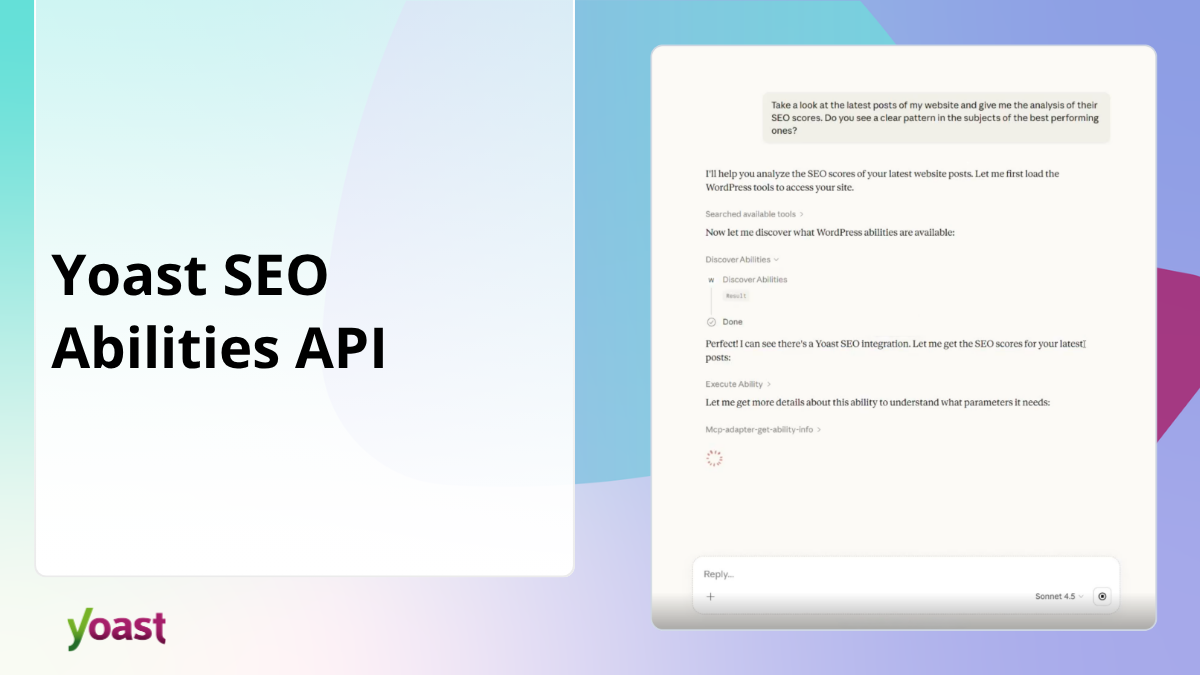
For developers eager to leverage these new capabilities, Yoast SEO has provided comprehensive documentation. The developer documentation for the Yoast SEO Abilities offers insights into the code, data schema, and full technical details on how to utilize these new endpoints. This transparency ensures that developers can build custom integrations, extend existing tools, and innovate upon the foundation laid by Yoast, further accelerating the adoption of AI-driven SEO solutions within the WordPress ecosystem.
In conclusion, Yoast SEO’s direct integration with AI tools via the WordPress Abilities API marks a significant milestone in the journey towards fully automated and intelligent SEO. It not only streamlines existing workflows but also paves the way for a new generation of AI-powered digital marketing strategies, promising unprecedented efficiency, insights, and growth for WordPress users worldwide. As WordPress continues to open up new capabilities, Yoast SEO remains committed to being at the forefront, ensuring its users are equipped with the most advanced tools for navigating the ever-evolving digital landscape.