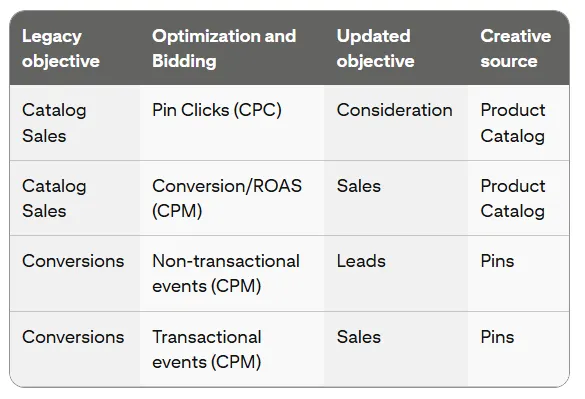
Pinterest has implemented a significant update to its Ads Manager, renaming several core campaign objectives to simplify the advertising experience and more intuitively align with advertisers’ diverse business goals. This strategic recalibration, detailed in recent updates to the platform’s business resources, primarily redefines the "Conversions" and "Catalog Sales" objectives, recasting them into more precise categories: "Leads," "Sales," and "Consideration" within various contexts. The overarching aim is to demystify the campaign setup process, making it more accessible and efficient for businesses of all sizes looking to leverage Pinterest’s unique visual discovery platform for their marketing initiatives.
This move by Pinterest is not an isolated incident but rather reflective of a broader industry trend among leading digital advertising platforms to streamline and optimize their offerings. In an increasingly complex digital advertising ecosystem, platforms like Meta, Google, and TikTok have continually refined their objective frameworks to better guide advertisers through the marketing funnel, from brand awareness to direct response. The challenge for these platforms is to offer robust targeting and optimization capabilities without overwhelming users with an overly granular or confusing array of options. Pinterest’s decision to consolidate and rename its objectives speaks to this balance, aiming to provide clarity without sacrificing sophistication.
A Deeper Dive into the Refined Objectives
The core of this update lies in the re-categorization of what were previously broad objectives into more actionable, intent-driven definitions.
-
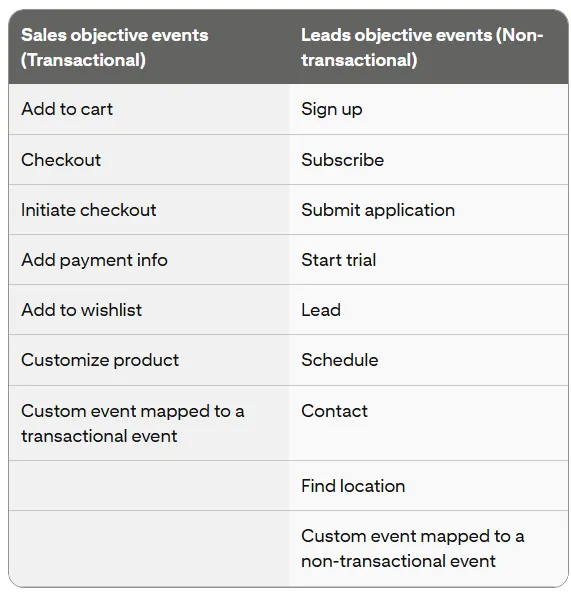
Leads Campaigns: These are now explicitly designed to drive non-transactional outcomes. This includes a wide array of actions such as email sign-ups, newsletter subscriptions, content downloads (e.g., e-books, whitepapers), webinar registrations, and form submissions for inquiries or consultations. For businesses operating in B2B sectors, service industries, or those focused on content marketing and audience building, the "Leads" objective provides a clear pathway to generate qualified prospects without requiring an immediate purchase. It aligns with the top-to-mid funnel stages, where the goal is to capture interest and nurture potential customers over time. The emphasis here is on building a robust pipeline of interested individuals who can then be moved down the sales funnel through subsequent marketing efforts.
-
Sales Campaigns: This objective is now precisely focused on driving transactional outcomes. This encompasses direct revenue-generating actions such as "add-to-carts," initiating "checkouts," and ultimately completing "purchases." This objective is the cornerstone for e-commerce businesses, direct-to-consumer (DTC) brands, and retailers aiming to convert browsing users into paying customers. By explicitly naming this "Sales," Pinterest provides an unambiguous goal for advertisers whose primary metric is immediate revenue. It directly targets the bottom of the marketing funnel, optimizing for users most likely to make a purchase, leveraging Pinterest’s visual discovery and shopping features. The platform’s strong association with product discovery and planning makes it a particularly fertile ground for this type of campaign, as users often arrive with a purchasing intent or are actively seeking inspiration for future buys.
-
Consideration Campaigns: While "Consideration" isn’t explicitly listed as a direct replacement for "Conversions" or "Catalog Sales" in the same way "Leads" and "Sales" are, it emerges as a critical objective in the updated framework, often serving as a refined context for driving deeper engagement prior to a direct transaction. This objective is geared towards stimulating user interest, encouraging clicks to websites or product pages, increasing engagement with Pins, and driving video views. It acts as a vital bridge between initial awareness and direct conversion, allowing advertisers to nurture potential customers who are exploring options but not yet ready to commit to a purchase. For brands looking to build product familiarity, drive traffic to specific collections, or engage users with rich media content, "Consideration" campaigns are essential. They leverage Pinterest’s visual nature to capture attention and guide users further down the path to conversion.
Strategic Rationale and Advertiser Benefits
Pinterest’s move to simplify its campaign objectives is underpinned by several strategic advantages for both the platform and its advertisers:
-
Enhanced Clarity and Ease of Use: The most immediate benefit is improved comprehension for advertisers. By using plain language that directly maps to common business goals, Pinterest reduces ambiguity and helps advertisers quickly identify the most suitable campaign type for their specific marketing strategy. This is particularly beneficial for small and medium-sized businesses (SMBs) who may not have dedicated marketing teams or extensive experience with complex ad platforms.

-
Streamlined Campaign Setup: A clearer objective framework translates into a more intuitive and faster campaign setup process. Advertisers can spend less time deciphering technical jargon and more time focusing on creative strategy and audience targeting. This efficiency can lead to higher adoption rates for Pinterest Ads, especially among new advertisers.
-
Improved Strategic Alignment: The renamed objectives encourage advertisers to think more critically about their marketing funnel and how each campaign contributes to overall business growth. Whether the goal is to build an email list, drive immediate sales, or foster brand engagement, there’s now a clearly labeled objective that aligns directly with that strategic intent.
-
Accessibility for New Advertisers: For businesses new to the Pinterest advertising ecosystem, the simplified objectives lower the barrier to entry. They make the platform less intimidating and more approachable, encouraging a wider range of businesses to explore Pinterest as a viable advertising channel.
-
No Performance Impact, Seamless Transition: Crucially, Pinterest has assured advertisers that these nomenclature changes will not affect campaign performance or ramp-up times. The underlying optimization algorithms and delivery mechanisms remain consistent; only the labels have been updated. This minimizes disruption and instills confidence in advertisers that their ongoing efforts will not be negatively impacted.
Implementation and Timeline for Advertisers
Pinterest has outlined a clear transition plan for existing campaigns. Current "Conversions" and "Catalog Sales" campaigns will remain editable and operational until April 30, 2027. After this date, these legacy campaigns will be archived. This extended transition period provides advertisers with ample time to gradually migrate their campaigns to the new objective framework without any immediate pressure. It also allows for careful planning and testing of new campaigns under the "Leads," "Sales," and "Consideration" objectives, ensuring a smooth and optimized transition. The long lead time demonstrates Pinterest’s commitment to supporting its advertisers through this change, allowing them to adapt at their own pace.
Pinterest’s Unique Position in the Digital Ad Landscape
This strategic update reinforces Pinterest’s commitment to strengthening its position as a vital advertising platform. Unlike other social media platforms primarily focused on social interaction, Pinterest operates as a visual discovery engine where users actively seek inspiration, plan future purchases, and explore ideas related to their interests—be it home decor, fashion, recipes, DIY projects, or travel. This inherent "intent-driven" behavior of its user base makes Pinterest an exceptionally valuable platform for advertisers.
Pinterest’s user demographics often skew towards individuals with higher purchase intent, actively researching products and services. According to various industry reports, a significant percentage of Pinterest users view the platform as a shopping destination, directly influencing their purchasing decisions. This unique context means that campaigns optimized for "Leads" or "Sales" on Pinterest can often tap into a highly receptive audience, potentially leading to higher conversion rates compared to platforms where users are primarily in a passive consumption mode.
The platform has also steadily expanded its advertising capabilities, moving beyond simple promoted pins to offer sophisticated tools for catalog integration, dynamic retargeting, and detailed audience segmentation. Its growth in active users and advertising revenue over recent years underscores its increasing importance in the digital marketing mix. By simplifying its objectives, Pinterest aims to make these powerful tools more accessible and understandable, thereby attracting an even broader base of advertisers.
Implications for Marketers and Agencies
The refined objective framework carries several significant implications for various stakeholders in the advertising ecosystem:
-
For Brands: Brands can now more precisely align their Pinterest ad spend with specific marketing funnel stages. A brand launching a new product line might focus on "Consideration" to drive initial interest and product page views, then transition to "Sales" to convert that interest into purchases. Simultaneously, they might run "Leads" campaigns to build an email list for future promotions or loyalty programs. This clarity enables more strategic and integrated campaign planning.
-
For Marketing Agencies: Agencies will benefit from streamlined workflows and clearer communication with clients. When presenting campaign strategies, agencies can directly tie proposed Pinterest campaigns to client KPIs (Key Performance Indicators) using the new, intuitive objective names. This can simplify reporting and demonstrate direct value, as the campaign objectives now mirror standard marketing terminology more closely. It also reduces the time spent on educating clients about platform-specific jargon.
-
For Small and Medium-Sized Businesses (SMBs): SMBs, often constrained by limited resources and marketing expertise, will find it easier to navigate Pinterest Ads. The simplified objectives empower them to set up and manage their own campaigns with greater confidence, reducing reliance on external consultants or complex learning curves. This democratization of advertising tools is crucial for SMB growth in the digital age.
-
For the Future of Pinterest Advertising: This update positions Pinterest for continued innovation in its advertising products. By establishing a clear, foundational framework for campaign objectives, the platform can more effectively integrate new features, targeting options, and measurement tools, ensuring they fit seamlessly into an understandable structure. It reflects a maturing advertising platform that is responsive to advertiser feedback and evolving industry standards.
Potential Considerations and Forward Outlook
While the simplification is overwhelmingly positive, advertisers should still invest time in understanding the nuances of each objective and how Pinterest’s algorithms optimize for them. Although the names have changed, the underlying best practices for creative, targeting, and bidding remain paramount for success. Advertisers are encouraged to experiment with the new objectives, leverage Pinterest’s extensive creative best practices, and continuously monitor performance to refine their strategies.
The long transition period until April 2027 is a significant advantage, allowing advertisers to gradually shift their campaigns and conduct A/B testing between old and new campaign types if desired, without the pressure of an immediate deadline. This thoughtful approach ensures minimal disruption and maximum opportunity for advertisers to adapt and optimize.
In conclusion, Pinterest’s decision to rename and simplify its ad campaign objectives marks a significant step towards enhancing user experience and driving more effective advertising outcomes. By aligning its objectives more closely with universal marketing funnel stages and business goals, Pinterest is not only making its platform more accessible but also reinforcing its value proposition as a powerful visual commerce and discovery engine. This strategic refinement is poised to benefit a broad spectrum of advertisers, from large enterprises to burgeoning SMBs, fostering greater clarity, efficiency, and ultimately, success on the platform.