Laily UPN
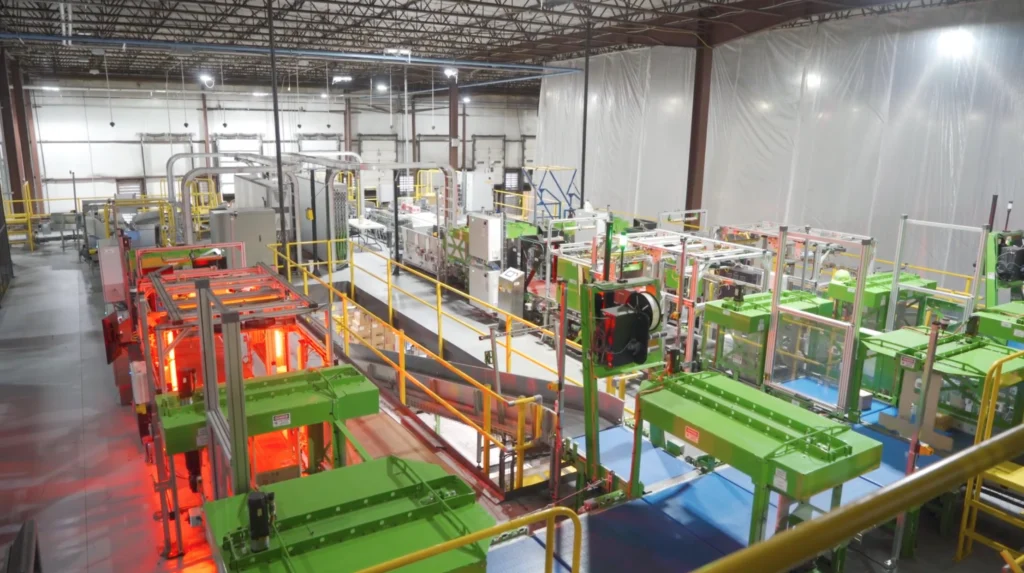
Walmart Inc. and Symbotic Inc. have jointly announced a monumental expansion of their commercial agreement, a strategic investment valued at an additional $6 billion. This significant escalation of their collaboration, building upon Symbotic’s prior acquisition of Walmart’s robotics business, signals a deep commitment to leveraging advanced automation to transform Walmart’s U.S. supply chain operations. The agreement will see Symbotic’s cutting-edge automation technology deployed across 25 of Walmart’s regional distribution centers throughout the United States.
This latest development underscores Walmart’s ongoing strategy to enhance its operational efficiency and customer service capabilities in an increasingly competitive retail landscape. The retail giant, a consistent leader in e-commerce, as evidenced by its No. 2 ranking in Digital Commerce 360’s Top 1000 Database, is doubling down on technological investments to maintain its market dominance. Furthermore, Walmart’s position at No. 37 in the AI Commerce Rankings, developed by Digital Commerce 360 and ReFiBuy, highlights its forward-thinking approach to integrating artificial intelligence and automation into its business model.
The expanded agreement extends beyond mere hardware deployment. Symbotic is set to introduce new capabilities designed to support Walmart’s burgeoning e-commerce operations on a global scale. These enhancements are specifically tailored to bolster upstream inventory management, significantly increase storage capacity within distribution centers, and optimize the overall flow of products throughout Walmart’s complex supply chain. This comprehensive approach aims to address the growing demand for faster, more efficient fulfillment of online orders, as well as to improve the in-store replenishment process.
"At Walmart, we’re focused on bringing more items to more customers and members, faster than ever," stated Rob Montgomery, Executive Vice President for Walmart U.S. Supply Chain Operations. "Our investments in the physical and digital supply chain help us serve them however they choose to shop, whether in stores, at the curbside or at home." This quote encapsulates Walmart’s customer-centric philosophy and its understanding that a robust and technologically advanced supply chain is fundamental to meeting diverse consumer shopping habits.
The partnership between Walmart and Symbotic is not a nascent one. It has evolved over more than a decade, with Symbotic’s technology gradually being integrated into Walmart’s fulfillment centers. This extended period of collaboration has provided both companies with invaluable insights, allowing them to refine solutions and build a foundation of trust and proven success. The current expansion is a direct testament to the positive outcomes observed from these earlier deployments, particularly in improving the efficiency of Walmart’s online sales fulfillment.
"Our work with Symbotic over the years, including this expanded agreement, helps us improve service, grow capacity, simplify work for our associates, and lower costs," Montgomery further elaborated. This statement highlights the multifaceted benefits Walmart expects to derive from the enhanced automation, emphasizing not only cost reduction and efficiency gains but also the potential to improve the working environment for its employees by automating more strenuous or repetitive tasks.
Symbotic’s technological offerings are central to this strategic advancement. The company specializes in providing comprehensive automation solutions for warehouses and distribution centers. Key among these are its BreakPack systems, designed to efficiently handle smaller, mixed-inventory orders, and SymMicro, a micro-fulfillment solution specifically engineered for the demands of e-commerce order processing. These systems are complemented by sophisticated software that orchestrates the seamless operation of the automated hardware, ensuring a high degree of accuracy and throughput.
Rick Cohen, Chairman and CEO of Symbotic, expressed his enthusiasm for the deepening relationship. "Our partnership with Walmart started with a single product over a decade ago, and now we offer a full end-to-end solution to help power Walmart’s growth across its supply chain for years to come," Cohen remarked. "This expanded agreement reflects the strength of that collaboration – a partnership defined by trust and shared ambition." Cohen’s statement underscores the long-term vision and the mutual benefit derived from this strategic alliance, positioning Symbotic as a critical enabler of Walmart’s future growth and operational excellence.
The financial commitment from Walmart extends to a significant research and development initiative. According to a Securities and Exchange Commission filing by Symbotic on October 29, Walmart has committed an additional $125 million to fund the joint research and development of next-generation racking technology. This investment is earmarked for advancements in picking, process flow, and inventory management capabilities, indicating a commitment to not just implementing current automation but also co-creating the future of supply chain technology. This forward-looking R&D is crucial for staying ahead in a rapidly evolving retail environment.
Background and Chronology of the Walmart-Symbotic Partnership
The relationship between Walmart and Symbotic has been a gradual but impactful evolution, marked by strategic integration and escalating investment. While the exact date of their initial collaboration is not detailed in the provided text, it is stated to have commenced "over a decade ago" with a "single product." This suggests a cautious, phased approach, allowing Walmart to assess Symbotic’s capabilities and the impact of its technology on a smaller scale before committing to larger deployments.
By the early 2020s, Symbotic’s technology had been integrated into Walmart fulfillment centers, a significant step that proved the viability and effectiveness of their automated solutions within Walmart’s operational context. This period likely involved intensive testing, optimization, and adaptation of Symbotic’s systems to meet Walmart’s specific requirements, which are characterized by immense scale and complexity.
The pivotal moment leading to the current expansion was Symbotic’s acquisition of Walmart’s robotics business. While the article mentions this acquisition as accompanying the strategic investment, it does not provide a specific date for the acquisition itself. However, the announcement of the $6 billion expansion on October 29 signifies a new phase, moving beyond incremental improvements to a systemic overhaul of Walmart’s distribution infrastructure. This substantial financial commitment indicates a high degree of confidence in Symbotic’s technology and its ability to deliver significant ROI.
The timeline can be broadly characterized as follows:
- Over a Decade Ago: Initial collaboration begins with a single Symbotic product.
- Early 2020s (Estimated): Symbotic’s technology is integrated into Walmart fulfillment centers, demonstrating success and paving the way for larger-scale adoption.
- Pre-October 29 (Unspecified Date): Symbotic acquires Walmart’s robotics business, a move that likely streamlined ownership and control of critical automation assets.
- October 29 (Announcement Date): Walmart and Symbotic announce a $6 billion expansion of their commercial agreement, including deployment at 25 U.S. regional distribution centers and a $125 million R&D investment.
This chronological progression highlights a strategic partnership that has matured from a vendor-client relationship to a deep, co-invested collaboration focused on long-term innovation and operational transformation.
Supporting Data and Market Context
Walmart’s investment in advanced automation is happening within a broader context of significant shifts in the retail industry. The rise of e-commerce has fundamentally altered consumer expectations regarding delivery speed and product availability. According to Digital Commerce 360, Walmart ranks as the second-largest online retailer in North America. This position necessitates a highly efficient and scalable supply chain to fulfill the vast volume of online orders.
The Top 1000 Database, which ranks the largest online retailers by annual e-commerce sales, consistently places Walmart at the forefront, underscoring the sheer scale of its online operations. The company’s ability to maintain and grow this position is directly linked to its logistical prowess.
Furthermore, the integration of Artificial Intelligence (AI) into commerce is rapidly becoming a critical differentiator. Walmart’s ranking at No. 37 in the AI Commerce Rankings suggests that while the company is a significant player, there is substantial room for growth and innovation in this area. The expanded agreement with Symbotic, which includes advanced software and intelligent inventory management, is likely to bolster Walmart’s AI capabilities within its supply chain.
The global retail market for warehouse automation is projected to grow substantially. Reports from market research firms indicate a compound annual growth rate (CAGR) of over 10% for warehouse automation solutions in the coming years, driven by factors such as labor shortages, increasing labor costs, and the demand for faster order fulfillment. Walmart’s $6 billion investment is a clear indicator that it aims to capture a significant share of the benefits offered by this growing market.
Symbotic’s specific technologies, such as BreakPack and SymMicro, address critical pain points in modern warehousing:
- BreakPack: This system is crucial for handling the increasing volume of smaller, mixed-SKU orders typical of e-commerce. Traditional methods are often labor-intensive and prone to errors. Automation here can dramatically improve speed and accuracy.
- SymMicro: Designed for micro-fulfillment, this solution allows for faster processing of online orders from smaller, strategically located facilities or within larger distribution centers. This is key to enabling same-day or next-day delivery promises.
The $125 million dedicated to research and development signifies a commitment to future-proofing Walmart’s supply chain. This investment in next-generation racking, picking, and inventory management technologies suggests a focus on areas like:
- Increased Storage Density: Optimizing warehouse space through advanced racking systems.
- Enhanced Robotics Integration: Developing more sophisticated robotic pickers and movers that can work collaboratively and efficiently.
- Predictive Inventory Management: Leveraging AI and machine learning to forecast demand, optimize stock levels, and reduce stockouts or overstocking.
- Improved Process Flow: Streamlining the entire journey of a product from receiving to shipping.
Broader Impact and Implications
The substantial expansion of Walmart’s automation partnership with Symbotic carries significant implications for the retail industry, the labor market, and technological advancement.
For the Retail Industry:
This move sets a new benchmark for operational efficiency and technological adoption in large-scale retail logistics. Competitors will likely face increased pressure to invest in similar automation solutions to remain competitive in terms of speed, cost, and accuracy. The focus on integrating upstream inventory management and optimizing product flow suggests a trend towards more holistic, end-to-end supply chain automation, rather than isolated solutions. It also signals a strategic shift towards building more resilient and agile supply chains capable of withstanding disruptions and adapting to fluctuating consumer demand.
For the Labor Market:
The deployment of advanced automation will undoubtedly lead to a transformation of the workforce within Walmart’s distribution centers. While the article quotes Montgomery mentioning the simplification of work for associates, the long-term impact on employment levels is a complex issue. It is likely that while some manual labor roles may be reduced or eliminated, new roles will emerge in areas such as robot maintenance, system supervision, data analysis, and advanced logistics management. The emphasis on "simplifying work" suggests a focus on augmenting human capabilities rather than outright replacement, allowing human associates to focus on higher-value tasks. However, the scale of this deployment necessitates careful consideration of workforce transition, retraining, and skill development programs.
For Technological Advancement:
The $125 million R&D investment is a powerful indicator of Symbotic and Walmart’s commitment to pushing the boundaries of warehouse automation. The development of "next-generation racking technology and related picking, process flow and inventory management capabilities" suggests a focus on innovations that could redefine warehouse design and operation. This collaborative R&D could lead to breakthroughs in areas such as:
- AI-Powered Decision Making: Systems that can autonomously manage inventory, optimize picking routes, and predict potential bottlenecks.
- Advanced Robotics: More dexterous and intelligent robots capable of handling a wider variety of products and tasks.
- Data Integration and Analytics: Sophisticated platforms for real-time monitoring, performance analysis, and continuous improvement of supply chain operations.
This partnership, therefore, not only bolsters Walmart’s current operational capabilities but also contributes to the broader ecosystem of supply chain innovation, potentially influencing the development of automation technologies across various industries. The successful implementation of these advanced systems at Walmart’s scale could serve as a powerful case study, accelerating the adoption of similar technologies by other major players.
In essence, the $6 billion expansion of the Walmart-Symbotic agreement is more than just an investment in robots; it is a strategic commitment to reshaping the future of retail logistics, with far-reaching implications for efficiency, customer experience, and technological progress.


 Sagoh
 Jia Lissa