

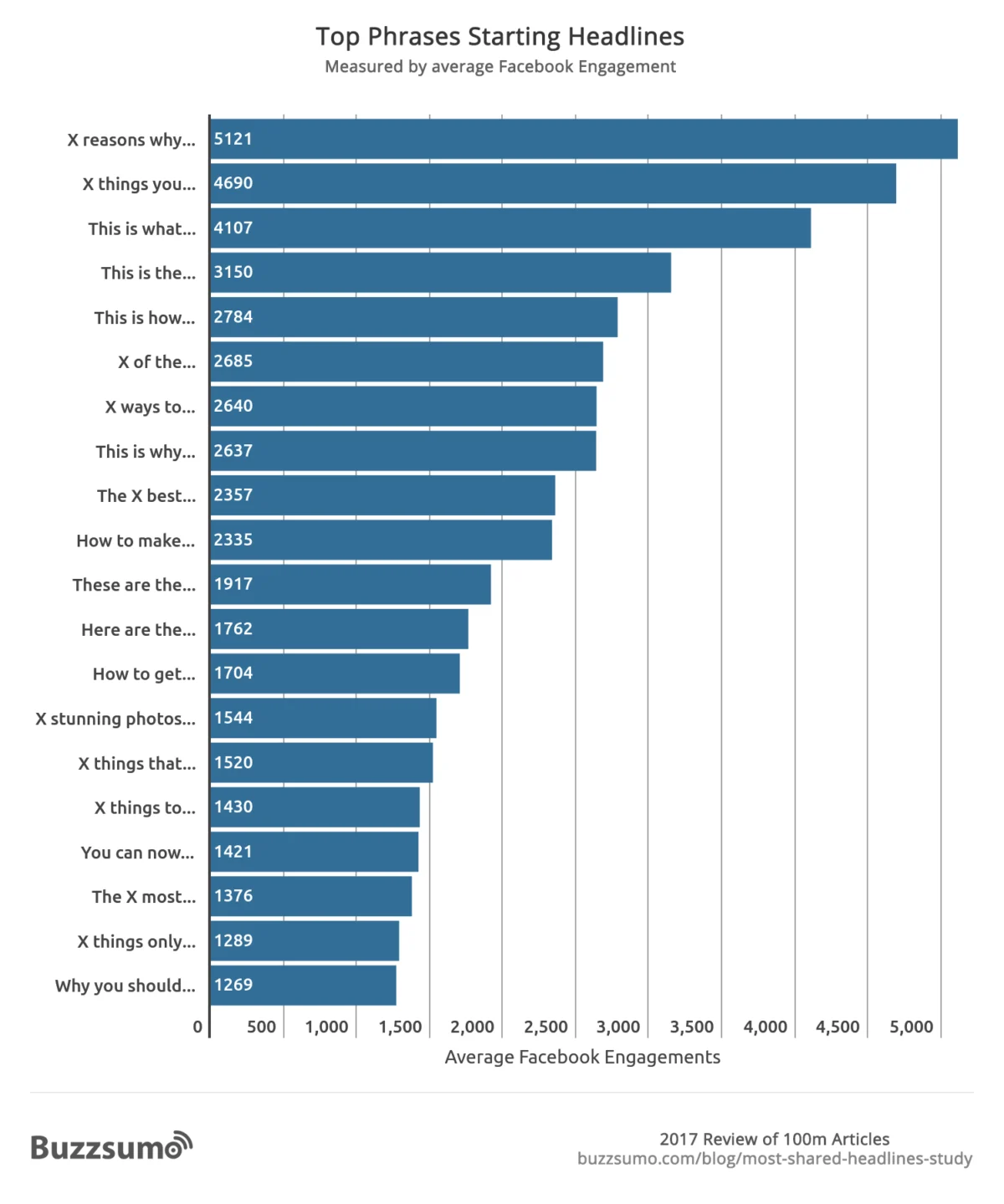
A comprehensive analysis of 100 million article headlines by BuzzSumo reveals a dramatic transformation in what captures audience attention on social media platforms, particularly Facebook and Twitter, between 2017 and 2020. This extensive research, building upon a similar study from 2017, offers critical insights for content creators, publishers, and marketers navigating an increasingly competitive and algorithm-driven digital ecosystem. The findings highlight a definitive shift away from overtly emotional and clickbait-style content towards more informative, instructional, and concise headlines, mirroring significant changes in platform algorithms and evolving audience preferences.
Methodology and Scope of the Research
The foundation of this study involved an in-depth examination of 100 million headlines indexed by BuzzSumo. The initial 2017 research, led by BuzzSumo co-founder Steve Rayson, focused on articles published between March 1 and May 10, 2017. The updated analysis, conducted by Content Manager Louise Linehan and data collected by Co-Founder and CTO Henley Wing Chiu, covered a more recent period, primarily 2019-2020, to identify contemporary trends. To ensure robust and unbiased results, the methodology employed median average shares as the key engagement metric and limited the inclusion of any single headline trigram (three-word phrase) or phrase to one example per domain, mitigating potential skew from highly popular sites. This rigorous approach provides a reliable benchmark for understanding effective headline strategies across mainstream consumer content.
The Shifting Sands of Headline Effectiveness: 2017 vs. 2020
The comparison between the 2017 and 2020 analyses reveals a stark divergence in headline performance, underscoring the dynamic nature of social media engagement.
Emotional and Sensationalism Decline: In 2017, headlines heavily reliant on emotional triggers, such as "will make you," "melt your heart," and "shocked to see," were highly effective on Facebook. These phrases promised a direct, often intense, emotional reaction from the reader. For instance, the top phrase "will make you" garnered an average of 8,691 shares. However, the updated 2020 study found a significant reduction in the prevalence and effectiveness of such explicitly emotional or sensational headlines. "In love with" was the only overtly emotional trigram to appear in the top 60, ranking 55th with an average of 1,723 shares. This decline is directly linked to Facebook’s algorithmic changes, which began demoting "clickbait" style content in May 2017, specifically targeting headlines that "exaggerate the details of a story with sensational language."
Farewell to Quizzes and Tribal Content: Similarly, the popularity of quizzes and "tribal" headlines, which dominated engagement in 2017, has waned considerably. Phrases like "can we guess" (e.g., "Can We Guess Your Real Age?") and "only X in" (e.g., "Only 1 In 50 People Can Identify These 16 Grammar Mistakes. Can You?") were once highly shared. Tribal headlines, such as "25 Things Only Teachers Will Understand," appealed to group identity and belonging. By 2020, these types of headlines were rarely observed in the top-performing content, indicating a maturing audience less susceptible to these engagement tactics and algorithms penalizing such formats.
An Almost Complete Overhaul: The most striking finding is the near-total transformation of top headline phrases. On Facebook, there was a 100% difference between the top 20 headline phrases in 2017 and 2020. On Twitter, only two of the most popular phrases remained consistent. This dramatic shift is attributed to algorithmic maturity, evolving audience preferences, and changes in the publisher landscape. Social media platforms have refined their content delivery, pushing users towards more substantive and credible information.
Snappier Headlines for a Content-Saturated World: The ideal headline length has also evolved. While 2017 favored longer headlines of approximately 15 words and 95 characters, the 2020 study identifies the optimal length as 11 words and 65 characters. This reduction of roughly four words and 30 characters reflects a broader trend of information overload. With online content increasing by 64% since 2016 (based on a study of 1.7 billion articles), users now prefer concise headlines that deliver information rapidly and get straight to the point.
Increased Homogeneity Across Platforms: In 2017, Facebook and Twitter shared only one phrase in common among their top 20 headlines. By 2020, this similarity jumped to eight phrases, moving from 2.5% to 20% crossover. This suggests that certain headline structures or thematic approaches are becoming universally effective across major social networks, potentially simplifying content distribution strategies for some publishers.
Engagement Dynamics: Facebook Up, Twitter Down: The study also reveals a divergent trend in average shares. The most engaging Facebook trigram in 2020 ("of the year") garnered 26,702 average shares, a threefold increase compared to 2017’s top phrase ("will make you"). Conversely, Twitter experienced a significant decrease, with average shares for its top phrases dropping by nearly four times from 2017 to 2020. Despite Twitter’s monthly active users remaining relatively stable, overall shares on the platform declined by 14% during this period, suggesting a dilution of engagement across a wider variety of headlines or a change in user behavior regarding content sharing.
Publisher Landscape Transformed by Trust: Facebook’s algorithmic shifts played a crucial role in shaping the types of publishers that succeed. Following its 2017 demotion of clickbait, Facebook further prioritized "trustworthy news" from reputable sources in January 2018 and later boosted "original and authoritative news reporting" in June 2020. This policy is evident in the top-performing publishers on Facebook, which now predominantly include established news outlets like cnn.com, dailymail.co.uk, nbcnews.com, washingtonpost.com, cbsnews.com, and time.com, a significant change from 2017. This reinforces the idea that credibility and journalistic integrity are increasingly vital for visibility on the platform.
Key Headline Characteristics for 2019-2020
The Magic of Numbers: The number 10 remains the most effective number to feature in headlines, consistent with prior research. Beyond 10, single-digit numbers from three to ten drive the most social media engagement. Interestingly, there’s no strong preference for odd or even numbers within the top shared headlines. The trend suggests a preference for shorter lists, with larger numbers like 15 and 20 falling out of favor, again pointing to an audience seeking quick insights.
Facebook’s Top Headline Phrases and Themes:
The most popular three-word phrases (trigrams) on Facebook in 2019-2020, based on average shares, include:
- "of the year" (e.g., for rankings and awards)
- "in X years" (e.g., for newness, often part of "for the first time in X years")
- "for the first"
- "the first time"
These top phrases highlight themes of Ranking (e.g., "Person of the Year"), Newness (e.g., "For the first time in history"), and Surprise (often conveyed through time-based statistics).
Beyond these, the study categorized the top 60 Facebook trigrams into eight main themes:
- Ranking: Focused on awards or public votes.
- Newness: Centered on unique or rare events.
- Hyperbole: Exaggerated statements, often using superlatives (e.g., "one of the most," "of the best").
- Instructional: Commanding statements or phrases implying obligation/urgency (e.g., "you need to know," "why you should"). This category emerged as a major driver of engagement, invoking a sense of FOMO (Fear Of Missing Out) and promising essential information.
- Surprise: Designed to shock or challenge conventional views.
- Curiosity: Content that promises to reveal, explain, or analyze (e.g., "here are the," "X reasons why").
- Guidance: "How-to" or tutorial-based headlines.
- Story: Centered around a person or topic, akin to case studies.
Instructional and Hyperbolic Headlines Dominate Facebook: Instructional headlines, utilizing modal verbs and phrases like "you need to" or "need to know," were particularly successful on Facebook. They place responsibility on the reader and tease critical information. Hyperbolic phrases, employing superlatives like "one of the most" or "of the best," also generated significant engagement, suggesting that while overt emotionalism is out, a level of positive exaggeration for "exceptional content" can still be effective.
Starting and Ending Phrases on Facebook:
Headlines beginning with numbers (listicles) are highly effective, offering readers clear information and actionable takeaways. Instructional and curiosity phrases also perform well at the start. At the end of headlines, time-centric phrases (e.g., "of the year," "in 2020," "for 2021") were most popular, often reflecting the impact of the pandemic or broader trends. Numbers used at the end often serve to induce surprise or highlight speed-to-insight. Social media trends themselves were found to fuel content headlines, creating a "content-conversation loop" where trending topics become widely shared articles.
Twitter’s Distinctive Engagement Patterns:
Twitter audiences show a strong interest in the "future of" various topics, making this phrase a top performer. Headlines starting with "study" and "report" also gained significant traction, indicating Twitter’s role as a platform for sharing research and data-driven insights. Like Facebook, time-centric phrases, particularly those emphasizing immediacy and current developments (e.g., "in 2020"), dominated the ending phrases on Twitter. This points to Twitter users’ appetite for breaking news and reactive content.
Crossover Success: What Works Everywhere:
Despite platform-specific nuances, eight of the top 20 headline trigrams and ten of the top starting phrases were successful across both Facebook and Twitter. This suggests a common ground in audience psychology, where certain informational and instructional hooks transcend platform differences.
B2B Headlines: A Separate Equation
The study notes that B2B content marketing operates with distinct dynamics. A separate 2017 analysis of 10 million LinkedIn posts revealed significant differences in optimal headline phrases, structures, numbers, and lengths for B2B content compared to B2C. The optimal length for B2B headlines was considerably shorter than for B2C, underscoring the importance of tailoring headline strategies to the specific audience and platform.
Expert Commentary and Implications
Industry experts largely validated the study’s findings, offering further context and advice:
- Heidi Cohen (Actionable Marketing Guide): Emphasized that the shift reflects changes in customer behavior due to the pandemic, including increased information consumption, a focus on "need to know" content, and a preference for visual content. She advises marketers to focus on core marketing basics and continually adapt to evolving customer needs.
- Rand Fishkin (SparkToro): Highlighted the study’s value in contrasting past and present effective strategies, confirming some long-held beliefs while "mythbusting" others, especially regarding clickbait and emotional triggers.
- Ross Simmonds (Foundation): Pointed out the mainstream adoption of "click-friendly" headlines, even by those who initially resisted. He underscored the power of instructional copy (e.g., "you need to") in tapping into human psychology and the "fear of missing out."
- Brian Dean (Backlinko): Noted the "huge shift" on Facebook from BuzzFeed-style clickbait to instructional headlines, indicating that Facebook users now seek content that "will teach them something new."
- Amanda Milligan (Fractl): Attributed the rise of instructional headlines to a growing desire to learn from experts, suggesting that such language inherently demonstrates authority and builds trust.
The overarching implication is clear: content creators must move beyond generic, sensationalist tactics. Success now hinges on providing clear value, whether through instruction, factual information, or well-researched analysis. Understanding algorithmic preferences and audience maturity is paramount.
Practical Applications for Content Creators
The research is not a call to simply copy-paste top-performing phrases. Instead, it encourages a deeper understanding of the underlying principles:
- Be Specific and Detailed: Headlines should offer enough information to draw readers in, moving beyond vague curiosity.
- Prioritize Value: Focus on what the reader will gain – knowledge, guidance, or an understanding of significant events.
- Embrace Instruction: Use phrases that guide and inform (e.g., "you need to know," "how to").
- Leverage Hyperbole Carefully: Employ positive superlatives for truly exceptional content without resorting to sensationalism.
- Strategic Use of Numbers: Employ numbers, especially 10 and single digits, to create clear, digestible listicles.
- Context is King: Always consider the specific audience, platform, and topic. What works on Facebook might not on Twitter, and vice versa, though overlaps are increasing.
- Test and Adapt: Continuously monitor headline performance and adjust strategies based on real-world data.
Tools like the BuzzSumo Content Analyzer allow creators to conduct their own research, examining headline phrases, identifying top-performing content, and even analyzing specific domains or journalists. By searching for trigrams, starting/ending phrases, or individual words, creators can gain granular insights into what resonates with their target audience.
Conclusion
The digital content landscape is in constant flux, driven by evolving algorithms and increasingly discerning audiences. The BuzzSumo headline analysis from 2017 to 2020 provides a compelling narrative of this evolution, demonstrating a clear shift towards credibility, utility, and conciseness. For publishers and content marketers, the key takeaway is to prioritize informative, value-driven, and thoughtfully crafted headlines that respect audience intelligence and align with platform preferences. As the internet continues to grow in content volume, standing out will increasingly depend on the ability to communicate clear value efficiently, building trust rather than relying on fleeting sensationalism.








