
 rifanmuazin
The rapid advancement of artificial intelligence, particularly large language models like ChatGPT, has dramatically reshaped content creation workflows across industries. While AI tools promise unprecedented speed in drafting communications, the challenge of generating truly effective, personalized content has remained a significant hurdle for marketers. Generic, context-agnostic AI outputs often fall short, leading to emails that are easily overlooked or deleted. However, a recent integration by email marketing platform AWeber directly addresses this fundamental limitation, allowing ChatGPT to leverage real-time subscriber data and historical campaign performance to craft emails that are not only fast but also deeply resonant and high-performing. This strategic partnership, officially launched on April 30, 2026, marks a pivotal evolution in how businesses can utilize AI, moving beyond mere automation to sophisticated, data-driven personalization.
The Context Conundrum: Why Generic AI Fails in Email Marketing
In the burgeoning landscape of AI-powered content generation, the allure of instant drafts from tools like ChatGPT is undeniable. Marketers can quickly generate subject lines, body copy, and calls to action (CTAs) for various campaigns. Yet, the initial enthusiasm often gives way to a critical realization: speed does not equate to efficacy. A ChatGPT-generated email, when prompted without specific context, frequently produces content that is bland, universally applicable, and ultimately forgettable. This “generic problem” stems from the AI’s inherent lack of understanding about crucial elements specific to a brand or audience.
Consider the intricacies of effective email marketing. A successful email campaign hinges on a nuanced understanding of the target audience’s preferences, the brand’s unique voice, and the historical performance of previous communications. A standard ChatGPT query, “Write an email about [topic],” operates in a vacuum. It has no access to the sender’s established tone – whether it’s casual and friendly, formal and authoritative, or humorous and quirky. It cannot discern if the audience responds better to concise messages or detailed explanations. Crucially, it lacks knowledge of past email campaigns – what subject lines drove the highest open rates, which CTAs garnered the most clicks, or what content themes previously resonated. Without this rich tapestry of information, the AI defaults to a common denominator, resulting in emails that sound like “everyone else’s emails: Generic. Forgettable. Easy to delete.”
Chris Vasquez, Chief Product Officer at AWeber and owner of the pickleball paddle company Dinki, succinctly describes this challenge: “Think about it like giving a project brief to a copywriter for the first time that’s never worked with you and knows nothing about what you want or your business or your offer.” In such a scenario, a human copywriter would produce a draft, but it would likely require extensive revisions to align with the brand’s identity and audience expectations. The same principle applies to AI; the quality of the output is directly proportional to the quality and depth of the input. The solution, therefore, lies in providing the AI with robust, relevant context.
AWeber’s Breakthrough Integration: Contextual AI for Superior Email Performance
Recognizing this critical need for context, AWeber has introduced a groundbreaking integration that transforms ChatGPT from a mere ghostwriter into a strategic thinking partner. By connecting ChatGPT directly to an AWeber account via its official app in the ChatGPT marketplace, users empower the AI with a wealth of proprietary, performance-driven data. This connection allows ChatGPT to access real information about actual subscribers and past email campaigns, a capability most AI users previously lacked. The integration is available across all ChatGPT plans, including the free tier, making advanced personalization accessible to a broad user base.

The core premise of this integration is simple yet profound: by feeding ChatGPT specific, historical data from a user’s AWeber account, the AI can learn and adapt its writing style and content recommendations to mirror what has proven effective for that particular brand and audience. This data includes insights into tone, sentence length, typical email openings and closings, and the structure of successful calls to action. The result is a significant leap from generic AI outputs to highly tailored, performance-optimized email drafts that resonate authentically with the recipient. This approach is poised to significantly enhance email marketing ROI, which consistently stands as one of the highest in digital marketing, often reported around $36 for every dollar spent.
Building a Dynamic Brand Voice Document: A Game-Changer
One of the most powerful features enabled by the AWeber-ChatGPT integration is the ability to automatically generate a comprehensive brand voice document. Instead of manually inputting brand guidelines or subjective descriptions of tone, users can prompt ChatGPT to analyze their existing email history. A specific prompt, such as:
“Look at my last 20 emails on my [list name] list. Analyze my tone, sentence length, how I open emails, how I close them, and how I structure CTAs. Then write a comprehensive brand voice document I can use to prompt you going forward.”
This prompt directs ChatGPT to delve into the actual sent emails within the specified AWeber list. The AI then processes this real-world data, identifying patterns and characteristics that define the brand’s authentic voice. The output is a detailed guide reflecting the user’s true writing style, not a generic template. This document can then be saved and pasted at the beginning of any future chat session where the user desires AI-generated content in their established style.
Chris Vasquez highlights the efficiency of this process, noting that users can build a functional voice guide from scratch in under five minutes. “You can come at it with nothing and walk away with a working copywriter that understands your brand voice, that you can then refine and continue to train on your content as you’re producing it,” he explains. This capability eliminates the guesswork often associated with AI prompting, allowing marketers to consistently produce content that aligns with their brand identity. The impact of this contextual learning extends beyond mere stylistic consistency; it enables data-driven strategic insights. For example, an AWeber customer with 35,000 subscribers utilized this feature to identify top-performing subject line words and optimal send times across 90 days of campaigns, leading to tangible improvements in their email writing and scheduling strategies.
Operationalizing AI for Enhanced Email Creation: A Streamlined Workflow
The AWeber-ChatGPT integration streamlines the entire email creation process, condensing what traditionally took hours into mere minutes. The workflow is designed to be intuitive and efficient, focusing on three key stages: prompting, reviewing, and sending.
-
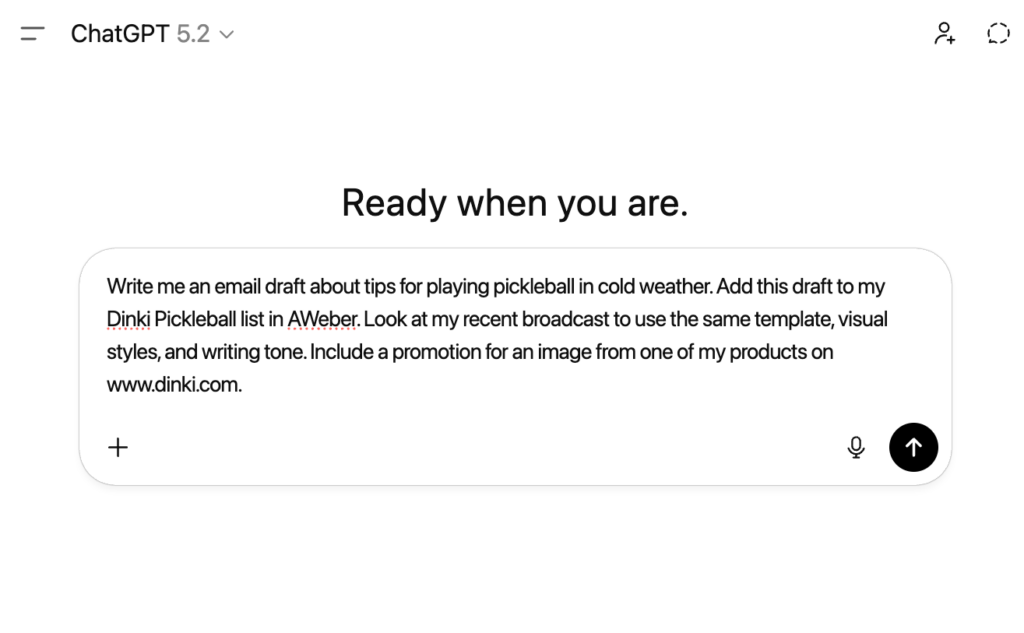
Precise Prompting: The initial step involves providing ChatGPT with clear and specific instructions. The more detailed the prompt, the more refined and relevant the draft will be. Users can instruct ChatGPT to not only write an email on a specific topic but also to leverage patterns from their best-performing emails, apply a standard template, and even embed images from a given URL at a precise location within the email. An example prompt could be: “Write an email about [topic]. Use patterns from my best emails. Add it to [list name]. Use my standard template. Add an image from [URL] below paragraph two.” Upon receiving such a prompt, ChatGPT drafts the email, applies the specified template, integrates the image, and automatically saves the draft to the user’s AWeber account. This eliminates the manual steps of copying, pasting, and formatting, significantly accelerating the initial content generation phase.
-
Strategic Review and Refinement: Once the draft is generated and saved in AWeber, it is ready for human review. The beauty of this system lies in its ability to produce drafts that already incorporate the user’s brand voice and performance insights. The subject line, copy, and overall format are designed to mirror previously successful campaigns. This means the review process often shifts from extensive rewriting to minor adjustments. Users can quickly tighten sentences, refine the call to action, or swap an image if necessary. The human element remains crucial for ensuring authenticity, tone, and final strategic alignment, but the heavy lifting of initial drafting is offloaded to the AI.
-
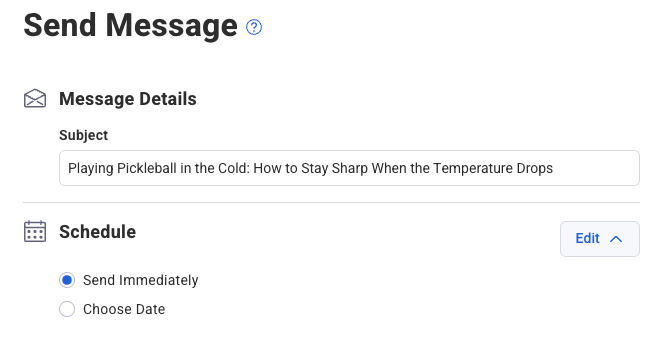
Performance-Optimized Sending: After review and any necessary adjustments, the email is ready to be scheduled or sent. The process concludes with a simple click within the AWeber interface. This entire cycle, from concept to a performance-optimized, branded email ready for deployment, can now be completed in as little as five minutes. This efficiency not only saves valuable time but also ensures that every email sent is built upon a foundation of proven success metrics, moving from speculative content creation to data-informed communication. It is important to note that while ChatGPT generates the drafts, it does not send emails directly. This crucial separation maintains user control over timing, list segmentation, and final content approval, combining AI speed with essential human oversight.
Strategic Best Practices for Maximizing AI-Driven Email Success
To fully harness the power of the AWeber-ChatGPT integration, marketers can adopt several strategic best practices:
-
Learn from Existing Performance Data: Instead of guessing what resonates with your audience, leverage your historical data. Prompt ChatGPT to analyze past campaigns for insights into successful subject line styles, optimal email lengths, and peak send times. By instructing the AI to incorporate these proven patterns into new drafts, marketers can iteratively improve campaign performance based on tangible data.
-
Show, Don’t Just Tell, Your Brand Voice: Describing a brand’s voice to an AI can be subjective and prone to misinterpretation. A more effective approach is to provide concrete examples. By asking ChatGPT to “Look at my last 10 emails and write a new one about [topic] using the same tone,” the AI can directly learn from the authentic style of previously sent communications, ensuring stylistic consistency.
-
Iterate and Refine Within the Same Chat: The conversational nature of ChatGPT is a powerful asset for refinement. If the first draft isn’t perfect, avoid starting over. Instead, provide specific feedback like “Make the intro shorter,” “Add a testimonial after paragraph two,” or “Soften the CTA.” ChatGPT can then iteratively update the draft, saving each version back to AWeber, allowing for quick and efficient content evolution.
-
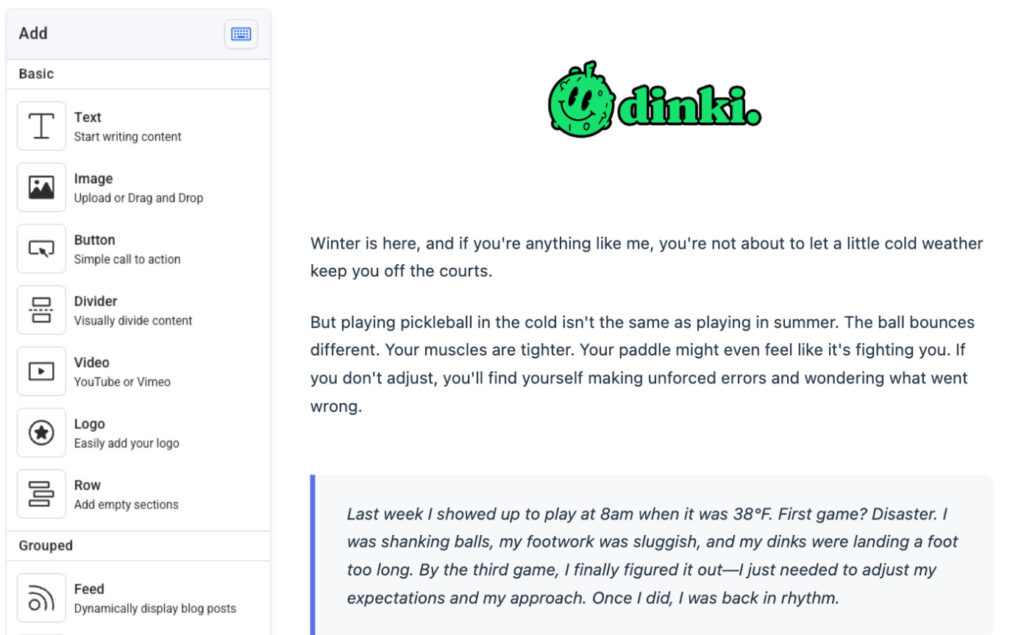
Utilize Consistent Templates: Visual consistency is vital for brand recognition and user experience. If a business employs a standard email layout, instruct ChatGPT to apply this template to all new drafts. This ensures that every email maintains a cohesive visual identity, reinforcing brand professionalism and readability.
-
Data-Driven Subject Line Generation: Subject lines are critical for open rates. Instead of brainstorming from scratch, prompt ChatGPT to generate subject line options based on the highest-performing examples from past campaigns. This data-informed approach significantly increases the likelihood of crafting subject lines that capture attention and encourage engagement.
Broader Implications and the Future of Email Marketing
The integration of AWeber and ChatGPT signifies a significant milestone in the evolution of email marketing, moving beyond basic automation to intelligent, data-driven content creation. This development has profound implications for businesses of all sizes, particularly those with limited marketing resources.
Increased Efficiency and Productivity: For many marketers, the blank screen is the biggest hurdle. AI-powered drafting, informed by historical data, drastically reduces the time spent on content creation. What once took hours of brainstorming, writing, and formatting can now be achieved in minutes, freeing up marketers to focus on higher-level strategy, audience engagement, and campaign analysis. This efficiency gain translates directly into increased productivity and the ability to execute more sophisticated campaigns with the same or fewer resources.
Enhanced Personalization and Engagement: The ability to tailor emails based on actual subscriber behavior and preferences is a holy grail for marketers. Studies consistently show that personalized emails generate significantly higher open rates, click-through rates, and conversion rates compared to generic messages. For instance, according to Statista, personalized emails can deliver six times higher transaction rates, and research by McKinsey found that personalization can reduce acquisition costs by as much as 50 percent while increasing revenues by 10-15 percent. By providing ChatGPT with the context of individual subscriber lists and past engagement, AWeber enables a level of personalization that was previously labor-intensive or required advanced analytics tools. This leads to more relevant content, stronger subscriber relationships, and ultimately, better campaign performance.
Democratization of Advanced Marketing Techniques: Historically, sophisticated data analysis and content personalization often required specialized skills or expensive enterprise software. This integration democratizes these advanced techniques, making them accessible to small businesses and individual entrepreneurs using AWeber. It levels the playing field, allowing smaller players to compete more effectively with larger organizations that have dedicated marketing teams and extensive resources.
A Shift in the Marketer’s Role: This technology doesn’t replace the marketer but rather augments their capabilities. The marketer’s role evolves from content generator to strategic editor and orchestrator. They become curators of AI output, ensuring authenticity, brand alignment, and strategic impact, while the AI handles the initial drafting. This allows marketers to focus on creativity, audience understanding, and the overarching narrative, rather than the mechanics of writing.
Timeline and Industry Context:
The release of the AWeber app in the ChatGPT marketplace on April 30, 2026, represents a culmination of trends in both AI development and email marketing. Over the past decade, email marketing has consistently delivered one of the highest returns on investment (ROI) in digital marketing. However, maintaining high engagement in increasingly crowded inboxes has become a constant challenge.
Concurrently, the rapid advancements in generative AI, particularly with the public release of models like ChatGPT in late 2022, sparked a global conversation about AI’s potential to revolutionize various tasks. Early applications in marketing demonstrated AI’s capacity for speed but highlighted its limitations in producing truly distinctive or context-aware content. The AWeber integration signifies a maturing of AI applications in marketing, moving from generalized content generation to specialized, data-informed solutions that directly address industry pain points. This is part of a broader industry trend where email service providers (ESPs) are increasingly integrating AI capabilities to offer more intelligent features, from predictive analytics for send times to automated content suggestions, further solidifying email’s role as a cornerstone of digital strategy.
Conclusion
The AWeber-ChatGPT integration offers a compelling vision for the future of email marketing. By empowering AI with the rich, specific context of a brand’s historical email performance and subscriber data, it bridges the gap between fast drafting and effective communication. Marketers can now leverage AI not as a generic ghostwriter, but as an intelligent assistant that understands their brand’s unique voice and their audience’s preferences. This synergy promises not only significant time savings but also a tangible uplift in email campaign performance, driving higher engagement and better business outcomes. As businesses continue to navigate the complexities of digital communication, tools that enable authentic, data-driven personalization will be paramount, making AWeber’s contextual AI integration a notable advancement in the marketing technology landscape.









