
 rifanmuazin
The persistent question for email marketers worldwide — “What’s the best time to send my newsletter?” — remains a critical determinant of campaign success. With digital inboxes increasingly saturated, the timing of an email dispatch can significantly influence key performance indicators such as open rates and click-through rates (CTR). Recent comprehensive research, notably from Sinch Mailgun and Mailjet’s Email Engagement Report, underscores that while general guidelines exist, a truly optimized strategy demands a data-driven, nuanced approach tailored to audience behavior, geographic location, and business model. This article explores these findings, providing marketers with actionable insights to refine their email strategies and maximize engagement in 2025 and beyond.
The Evolving Landscape of Email Marketing and Engagement Challenges
Email marketing has long been a cornerstone of digital communication, evolving from simple broadcast messages to sophisticated, personalized campaigns. However, this evolution has also brought increased competition for inbox attention. Users are bombarded with a daily deluge of promotional content, transactional notifications, and personal correspondence. In this crowded environment, merely crafting compelling content and a catchy subject line is often insufficient. The precise moment an email lands in a recipient’s inbox can dictate whether it is opened, acted upon, or dismissed.
The importance of timing stems from human psychology and daily routines. An email arriving when a recipient is busy, distracted, or simply not in a mindset to engage with marketing content is likely to be overlooked. Conversely, an email delivered during a natural pause in their day – a coffee break, lunch, or evening winding down – has a significantly higher chance of capturing attention and driving interaction. This understanding forms the bedrock of modern email timing optimization.
Global Trends in Email Checking Habits
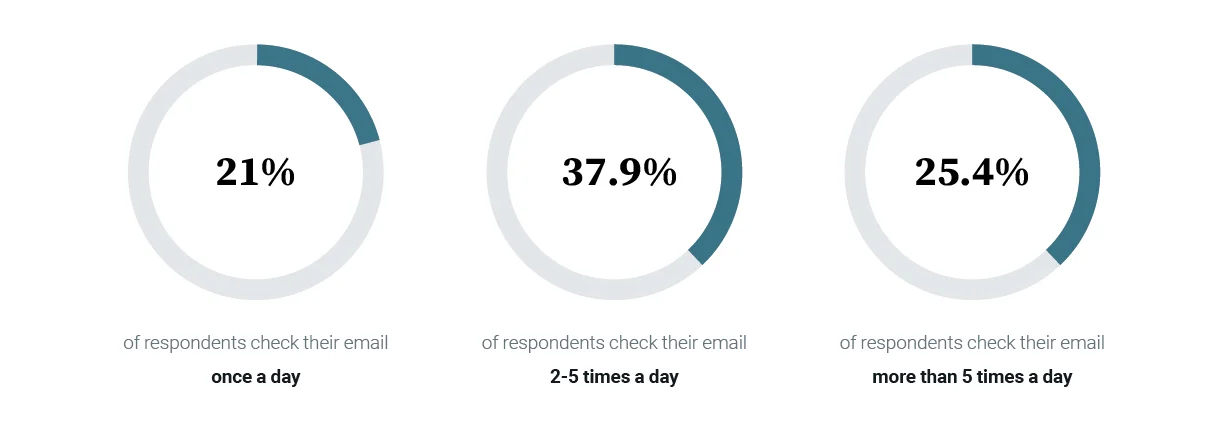
The Email Engagement Report highlights that email checking is not a singular event but a multi-point activity throughout the day for a majority of users. Specifically, 63.3% of individuals interact with their personal mailboxes at various intervals. This data challenges the simplistic notion of a single “best time” and emphasizes the dynamic nature of recipient engagement. While many sources broadly suggest a 9 AM to 12 PM window for email dispatches, this advice, while a reasonable starting point, requires further granular consideration.
It is crucial to differentiate between merely checking email and having the capacity to act on it. A user might glance at their inbox during a busy commute, but they are unlikely to click through to a product page or complete a complex form. Optimal sending times align with periods when recipients not only see the email but also have the mental bandwidth and time to process its content and respond to calls-to-action.
Unpacking Peak Hourly Engagement: The 15 UTC Benchmark
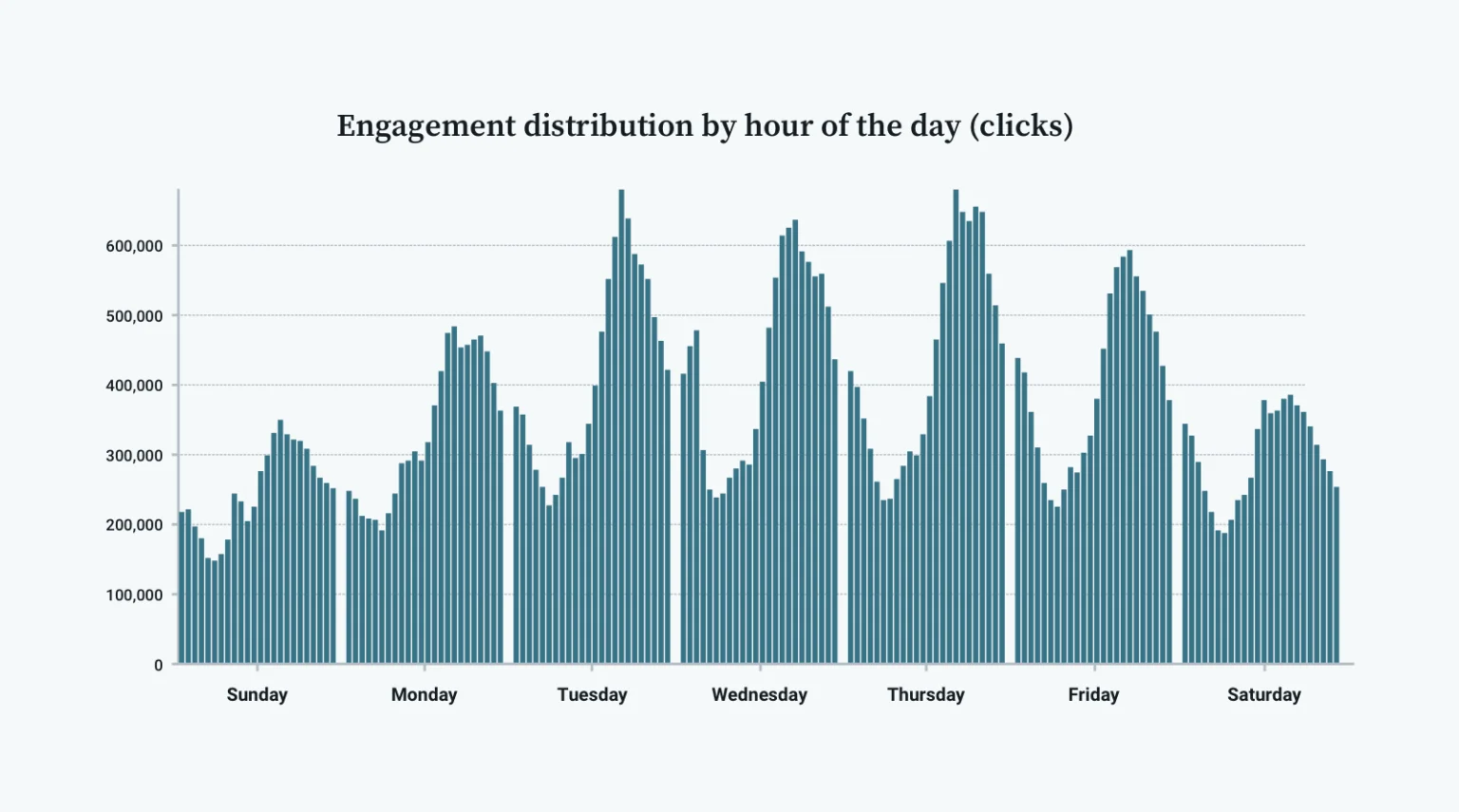
Delving deeper into engagement data, a study by Sinch Mailgun, analyzing billions of emails, revealed a consistent peak in email engagement (measured by click-to-open ratios) around 15 UTC. This time represents a global sweet spot where a significant portion of opens and clicks occur. However, marketers must remember that UTC (Coordinated Universal Time) needs to be converted to local time zones to be actionable. For instance, 15:00 UTC translates to 11 AM Eastern Standard Time during summer months, aligning with the common mid-morning recommendation.
- Open Rates by Hour: The analysis of open rates typically shows a gradual increase in engagement from early morning, peaking mid-day, and then slowly declining into the evening. The 15 UTC peak often correlates with late morning to early afternoon in major Western markets and mid-afternoon in other regions, catching users during work breaks or post-lunch lulls.
- Click Rates by Hour: Click-through rates often mirror open rates, albeit with a slight delay, as users first open and then decide to click. The sustained high CTR around the 15 UTC mark indicates that not only are emails being opened, but their content is also resonating enough to drive further interaction.
This global aggregate data provides a powerful baseline but serves as a reminder that localizing send times is paramount. A marketer in London sending an email at 15 UTC would be hitting subscribers at 3 PM local time, while a marketer targeting customers in New York would be hitting them at 11 AM. Without proper time zone segmentation, the impact of this global peak is diluted.
Geographical and Cultural Variations in Email Habits
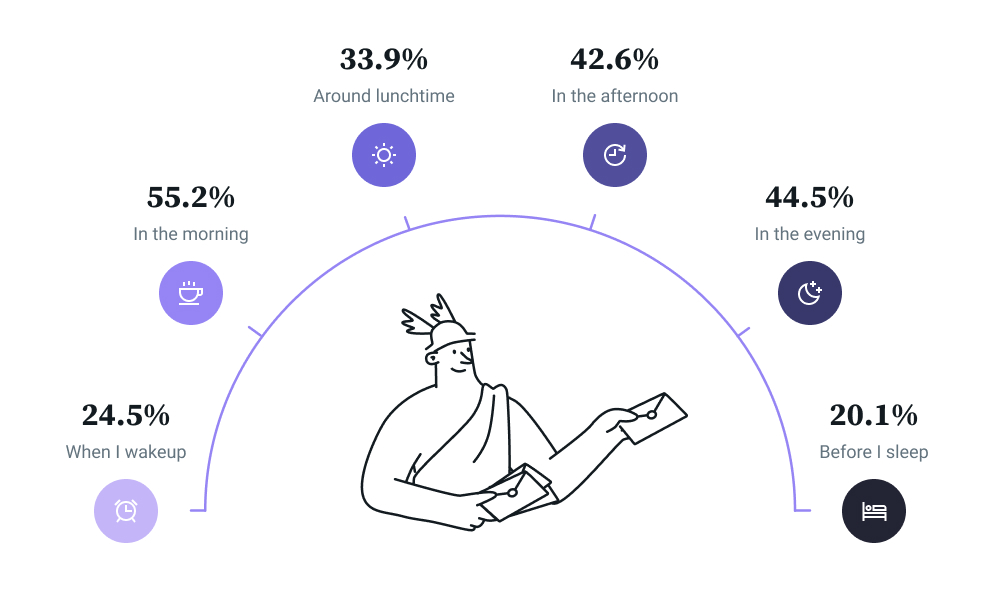
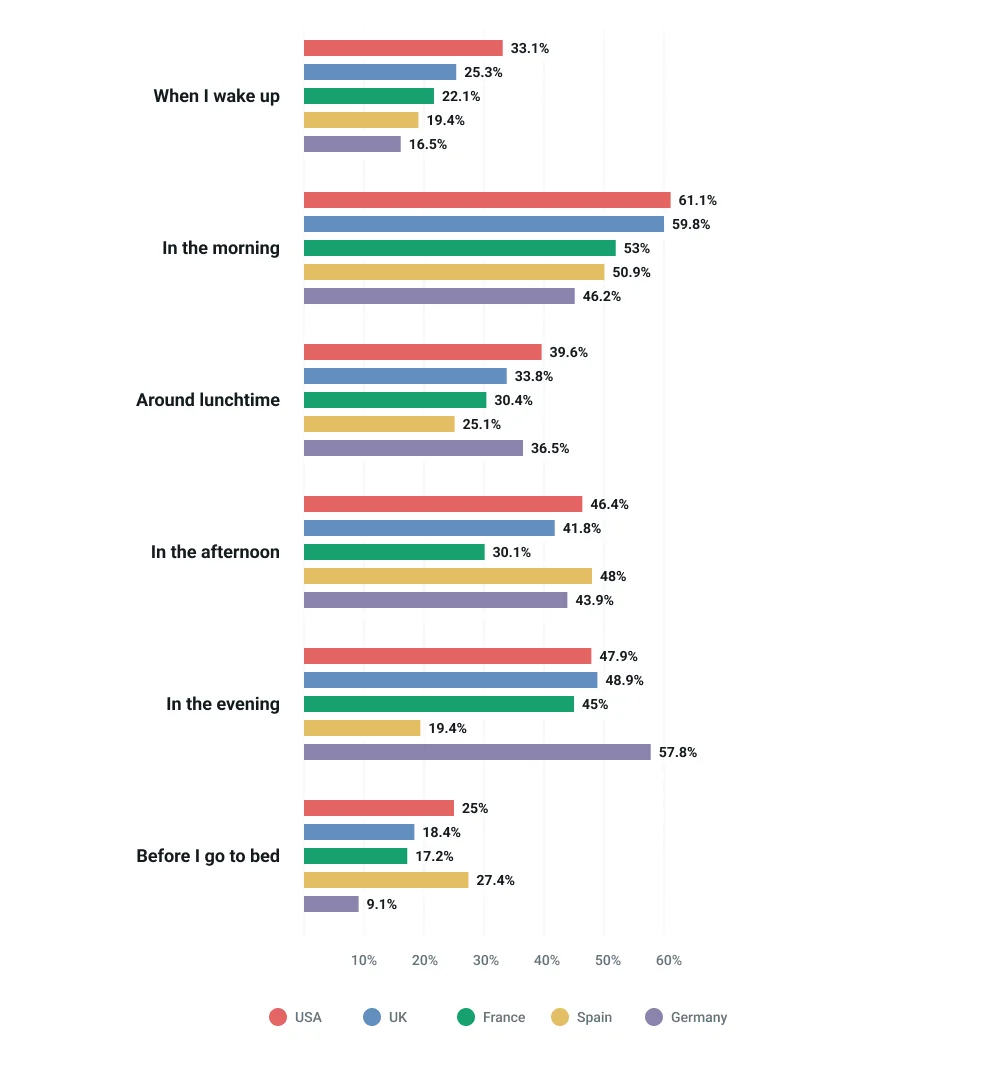
The notion of a universal “best time” further dissolves when considering international audiences. The Email Engagement Report revealed fundamental differences in email habits across various countries and cultures. For example, German customers demonstrate high email engagement in the early evening, with 57.8% opening emails at this time. In contrast, Spanish participants show a strong preference for checking emails in the late evening, with 27.4% engaging before bed, a period where only 9.1% of Germans would be attentive.
This disparity underscores the critical need for audience segmentation based on geographic location. A blanket sending strategy across multiple time zones or cultural contexts is almost guaranteed to underperform in some regions. Marketers operating globally must:
- Segment by Time Zone: Automatically adjust send times based on the recipient’s local time zone. Most advanced Email Service Providers (ESPs) offer this functionality.
- Segment by Cultural Habits: Beyond time zones, understand if a culture prioritizes work emails during business hours, personal emails during commutes, or leisure reading in the evenings. This often requires qualitative research in addition to quantitative data.
- Test and Learn: Even within a country, regional differences or specific demographic habits can influence optimal times. Continuous A/B testing within segmented groups is essential for fine-tuning.
Optimal Days of the Week: Navigating the Work-Life Balance
Beyond the hour, the day of the week plays an equally significant role in email campaign performance. The Sinch Mailgun study indicates a clear pattern for optimal engagement:
The Best Days: Tuesday, Wednesday, and Thursday
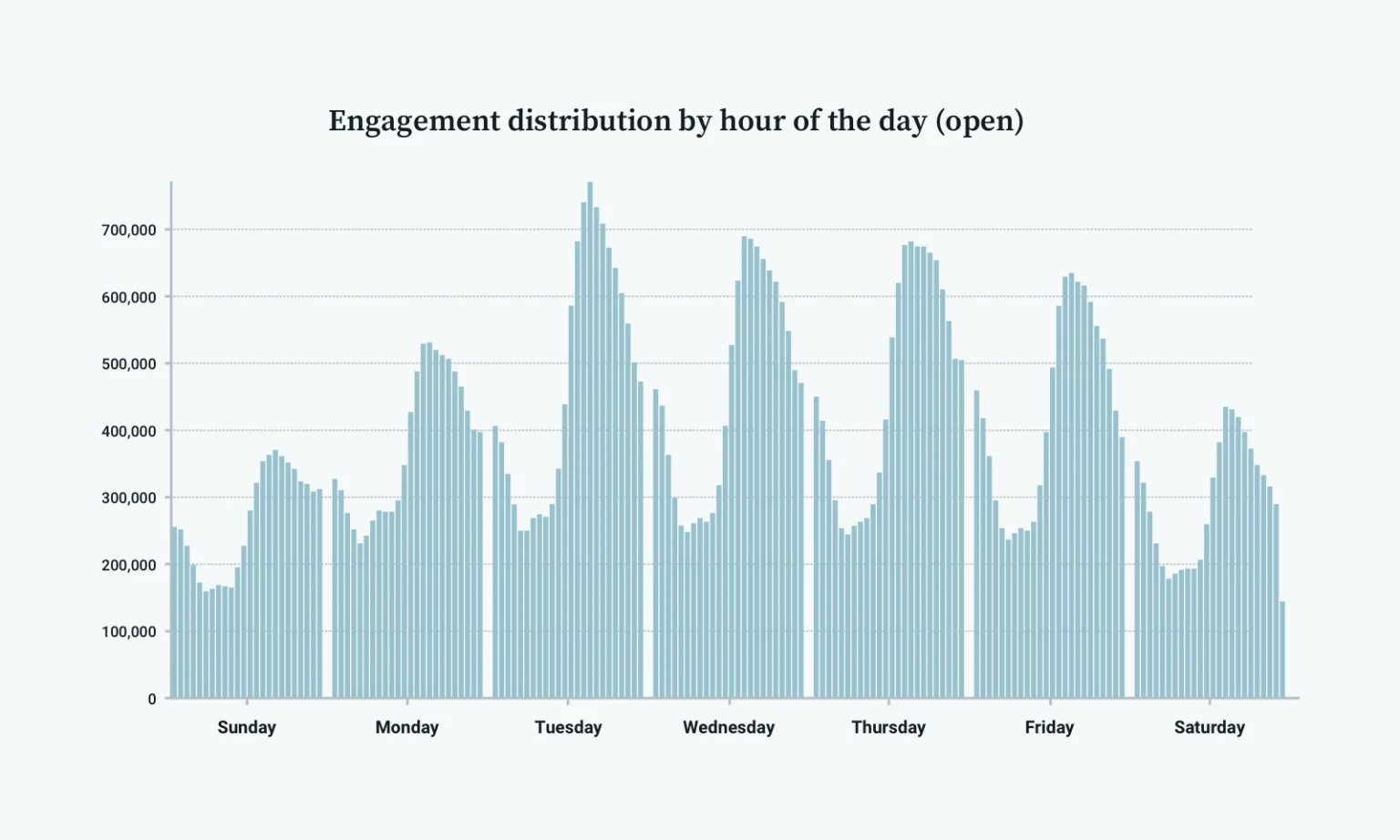
Data consistently shows that Tuesdays through Thursdays yield the highest open and click-through rates. This mid-week window generally aligns with periods when professionals are settled into their work week, past the Monday morning rush, and not yet disengaged for the weekend.
- Tuesday and Thursday: These two days often show slightly superior engagement. Marketers sending twice a week might find success by scheduling campaigns on these days, ensuring sufficient spacing to avoid overwhelming recipients.
- Wednesday: A strong second option, Wednesday benefits from being firmly in the middle of the work week, when focus is often high.
Sending emails during this midweek sweet spot leverages the typical professional and personal routines of most subscribers. People are generally more receptive to new information and calls-to-action during these days.
The Days to Approach with Caution: Weekends and Mondays
Conversely, Saturdays and Sundays are consistently identified as the worst days for email engagement. During weekends, people are typically focused on leisure, family, errands, and social activities. Marketing emails are rarely a priority, leading to significantly lower open and click rates. The exception here might be highly specialized, lighthearted content specifically designed for weekend consumption, but even then, careful testing is advised.
The traditional perception of Mondays and Fridays as suboptimal sending days also holds some truth, though the data offers a nuanced view:
- Mondays: Often characterized by a “Monday morning blues” effect, recipients are sifting through weekend emails, planning their week, and dealing with urgent work tasks. This makes them less receptive to marketing messages. As the research notes, people are “not the sharpest workers on Mondays.”
- Fridays: While not as strong as mid-week, the research surprisingly indicates that Friday often outperforms Monday in terms of open and click-through rates. This could be attributed to a winding down effect, where recipients might check emails more casually towards the end of the week, potentially having more capacity for lighter content. However, late Friday afternoon typically sees a significant drop-off as people mentally transition to the weekend.
Strategic Considerations for Day Selection:
Marketers should also consider the competitive landscape. While Tuesday, Wednesday, and Thursday are peak engagement days, they are also peak sending days for many businesses. This means a higher volume of emails competing for attention. Occasionally, sending on a slightly less popular day, like a carefully timed Friday morning, might lead to less inbox competition and potentially higher visibility for certain audiences or content types.
B2B vs. B2C: A Fundamental Divide in Email Behavior
The distinction between Business-to-Business (B2B) and Business-to-Consumer (B2C) marketing is paramount when determining optimal send times. User behavior, expectations, and the context of email interaction differ significantly between professional and personal inboxes.
B2B Email Marketing:
B2B recipients primarily engage with emails during working hours. Their professional inboxes are often meticulously managed, and content is typically expected to be relevant to their job functions, industry trends, or business needs.
- Optimal Times: Mid-morning (e.g., 9:30 AM – 11:30 AM local time) and early afternoon (e.g., 1:30 PM – 3:30 PM local time) on Tuesdays, Wednesdays, and Thursdays. These times typically avoid the initial morning rush and post-lunch slump.
- Avoid: Weekends and late evenings, as these are generally outside of professional working hours. Mondays are often too hectic, and late Fridays see diminishing returns as employees mentally check out for the weekend.
- Content Focus: B2B emails should be informative, problem-solving, and value-driven. The timing should align with when professionals are actively seeking solutions or knowledge.
B2C Email Marketing:
B2C recipients engage with emails more flexibly, often blending personal and leisure activities. Their engagement can be influenced by daily routines, commutes, and leisure time.
- Optimal Times: Can be more varied. Morning (e.g., 8 AM – 10 AM) for updates and deals before the day gets busy, lunch breaks (12 PM – 1 PM) for quick browsing, and evenings (e.g., 7 PM – 9 PM) for relaxed content consumption. Weekends might even see some engagement for specific leisure-focused content, though still generally lower than weekdays.
- Avoid: Late night (unless targeting specific night-owl demographics) and very early mornings when people are rushing.
- Content Focus: B2C emails can range from promotional offers and product updates to lifestyle content and entertainment. The timing should consider when consumers have leisure time or are in a purchasing mindset.
The Role of Customer Insights and Marketing Personas:
To effectively navigate the B2B/B2C divide, marketers must leverage defined marketing personas. Understanding the typical day-in-the-life of their target customer – their work schedule, leisure activities, and digital habits – provides invaluable context for timing decisions. For example, an e-commerce brand targeting working parents might find early morning or late evening more effective, while a gaming company targeting students might see better results in the late afternoon or evening.
Why Email Sending Time Matters: Beyond Vanity Metrics
The significance of optimal email sending times extends far beyond merely boosting open and click rates. These metrics are proxies for deeper business objectives and overall campaign effectiveness:
- Increased Visibility: In a crowded inbox, an email sent at the right time is more likely to appear at the top, immediately catching the recipient’s eye.
- Enhanced Engagement: Timely delivery means the recipient is more likely to have the capacity and inclination to read, click, and interact with the content. As the Email Engagement Report found, “86.4% of respondents say having time to read an email is an important factor in determining whether to open it.”
- Improved Conversion Rates: Higher engagement directly translates to a greater likelihood of conversion, whether that’s a purchase, a sign-up, a download, or a lead generation action.
- Better Deliverability and Sender Reputation: Consistent high engagement signals to Internet Service Providers (ISPs) that your emails are valuable, improving your sender reputation and reducing the likelihood of future emails landing in spam folders.
- Optimized Resource Allocation: By sending at peak times, marketers ensure their content creation efforts are not wasted on poorly timed dispatches, leading to a better return on investment (ROI).
- Stronger Customer Relationships: Timely and relevant communication fosters trust and anticipation, building a stronger connection between the brand and its audience.
The Scientific Approach: How to Determine Your Best Time
While global and industry benchmarks provide excellent starting points, the ultimate “best time” is unique to each brand and its specific audience. Determining this requires a systematic, data-driven approach:
- Analyze Historical Data: The first step is to dive into your own Email Service Provider’s (ESP) analytics dashboard. Most platforms, like Mailjet, provide detailed statistics on past campaigns. Look at open rates, click-through rates, and conversion rates segmented by hour of the day and day of the week. Identify patterns in your audience’s engagement. Which campaigns performed best? When were they sent?
- Segment Your Audience: As discussed, segmenting by time zone, geography, B2B/B2C, and even demographic data (if available) is crucial. A “one-size-fits-all” approach will inevitably miss opportunities.
- Formulate Hypotheses: Based on your historical data and industry benchmarks, develop specific hypotheses. For example: “Our audience in EST will engage best on Tuesdays at 10 AM,” or “Our B2C promotional emails perform better on Thursday evenings.”
- A/B Testing (Split Testing): This is the most powerful tool for optimization.
- Time-Based A/B Tests: Send identical content to different segments of your list at varying times (e.g., 10 AM vs. 1 PM vs. 9 PM over several weeks).
- Day-Based A/B Tests: Test different days of the week (e.g., Tuesday morning vs. Wednesday morning).
- Segmented A/B Tests: Apply A/B tests within specific audience segments (e.g., test evening sends only for your Spanish audience).
- Tools: Modern ESPs like Mailjet offer integrated A/B testing features, making it easy to set up, run, and analyze these experiments.
- Consistent Scheduling (with flexibility): Once optimal times and days are identified, maintain a consistent sending schedule for regular newsletters. This builds anticipation and routine for your audience. However, be prepared to deviate during special events, holidays, or urgent communications. Prioritizing engagement over rigid adherence to a schedule is often beneficial. If a major holiday falls on your usual send day, shifting it slightly might yield better results than sending to an entirely distracted audience.
- Continuous Monitoring and Adaptation: Audience habits are not static. Seasonal changes, new trends, or shifts in your target demographic can all influence optimal times. Regularly review your data and be prepared to adapt your strategy.
Leveraging Advanced Tools for Optimal Timing
The complexity of timing optimization necessitates robust email marketing platforms. Tools offered by providers like Mailjet simplify this process by offering:
- Segmentation Capabilities: To divide your audience into manageable groups based on various criteria, including geography and behavior.
- A/B Testing Features: Streamlining the process of testing different send times, subject lines, content, and calls-to-action.
- Comprehensive Analytics and Statistics: Providing detailed insights into open rates, click-through rates, conversions, and subscriber behavior, often broken down by hour and day.
- Time Zone Optimization: Automatically adjusting send times to ensure emails arrive at the optimal local time for each recipient.
- Campaign Comparison: Allowing marketers to benchmark current campaign performance against historical data and industry averages.
These features empower marketers to move beyond guesswork, transforming email timing from a challenge into a strategic advantage.
The Future of Email Timing: Hyper-Personalization and AI
As email marketing continues to evolve, the trend towards hyper-personalization will only deepen the importance of timing. Future advancements will likely involve:
- AI-Driven Optimization: Artificial intelligence and machine learning algorithms will increasingly analyze individual subscriber behavior, predicting the precise moment each recipient is most likely to engage, rather than relying on segment-wide averages.
- Behavioral Triggers: Event-triggered emails (e.g., welcome series, abandoned cart reminders, re-engagement campaigns) are inherently timely, responding directly to user actions. Integrating advanced timing optimization into these automated flows will further boost their effectiveness.
- Cross-Channel Synchronization: Aligning email send times with other marketing touchpoints (e.g., social media posts, push notifications) to create a cohesive and timely customer journey.
Conclusion
The question of the “best time to send an email newsletter” is not a simple one with a static answer. It is a dynamic challenge that requires continuous investigation, adaptation, and strategic thinking. While general benchmarks like 15 UTC and midweek sends offer valuable starting points, true optimization lies in understanding your unique audience, leveraging robust analytics, and committing to ongoing A/B testing. By embracing a data-driven approach and utilizing the powerful tools available from modern email service providers, marketers can ensure their meticulously crafted messages land at the perfect moment, cutting through the digital noise to achieve peak engagement and drive measurable business results. The era of generic send times is over; the future belongs to precise, personalized, and perpetually optimized delivery.









