rifanmuazin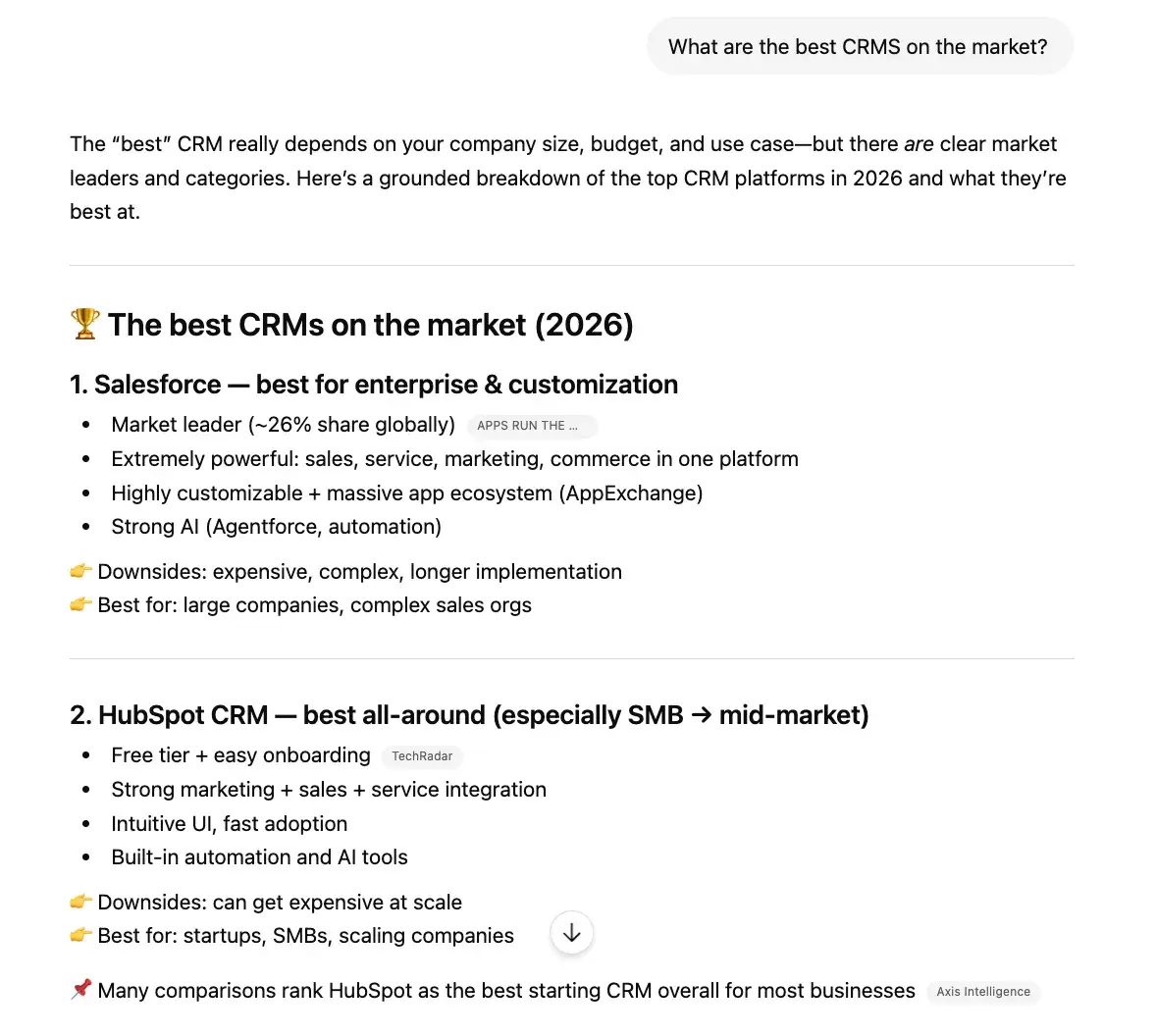
The landscape of online search has undergone a fundamental transformation, shifting from traditional keyword-based results to intelligent, conversational answers generated by artificial intelligence. In this evolving digital environment, the imperative for businesses and content creators is no longer merely to rank on the first page of Google, but to ensure their brand is accurately and prominently cited by sophisticated AI engines like ChatGPT, Perplexity, and Google Gemini. This paradigm shift has given rise to Answer Engine Optimization (AEO), a new discipline that complements traditional Search Engine Optimization (SEO) by focusing on making content discoverable, understandable, and citeable by AI. Contrary to popular belief, achieving meaningful AEO data and implementing effective strategies does not necessitate a prohibitively expensive technology stack; a curated selection of free and freemium tools, when applied strategically, can yield significant insights and competitive advantages.
The Dawn of Answer Engines: A Paradigm Shift in Search
The digital information ecosystem is rapidly being reshaped by generative AI. Recent data paints a stark picture: approximately 60% of Google searches now conclude without a click, indicating that users are increasingly finding their answers directly within search results, often through featured snippets or AI Overviews. Concurrently, large language models (LLMs) have achieved unprecedented adoption, with platforms like ChatGPT boasting over 900 million weekly active users as of early 2024. Google’s own AI Overviews, integrated directly into search results, are appearing in at least 13% of all searches, a figure expected to grow significantly. These statistics underscore a critical shift: users are interacting with information differently, expecting synthesized, direct answers rather than a list of links.

This transformation necessitates a fundamental change in how brands approach online visibility. AEO is the practice of meticulously structuring and optimizing content so that AI engines can seamlessly discover, comprehend, and confidently cite it when formulating responses for user queries. While SEO aims to elevate content within search engine results pages (SERPs), AEO targets becoming the authoritative source from which those results, particularly AI-generated summaries, draw their information. The two disciplines are inherently complementary; research by 20North Marketing indicates that an impressive 92% of AI Overview citations link back to pages that already hold a top-10 organic ranking. However, simply ranking high in traditional search does not guarantee AI citation. AEO demands a distinct set of signals: clear, concise direct answers, robust entity clarity, precise structured data, demonstrable E-E-A-T (Experience, Expertise, Authoritativeness, Trustworthiness), and content formatted for optimal extraction by language models.
Democratizing AEO: Essential Free and Freemium Tools
The good news for marketers and businesses of all sizes is that an effective AEO strategy doesn’t require a hefty budget. A robust initial audit and ongoing optimization can be achieved using readily available free and freemium tools. These tools typically fall into two categories: those that monitor how AI engines perceive and cite your brand, and those that help you optimize your content to enhance its discoverability and authority for AI.
Here’s a comprehensive look at the leading free and freemium options:

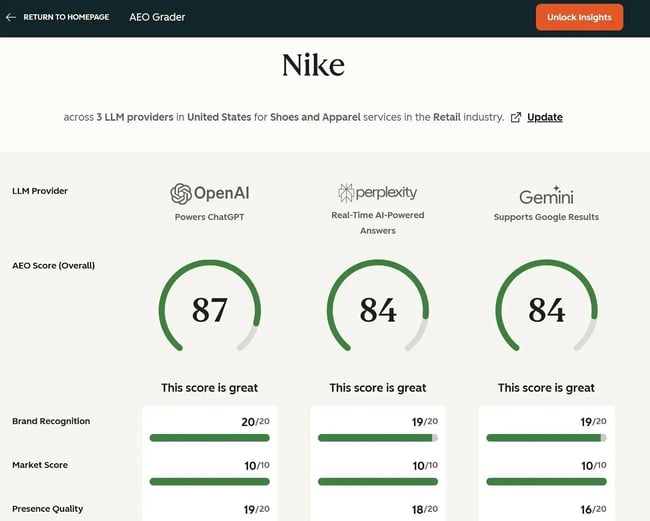
1. HubSpot AEO Grader: Your Initial AEO Benchmark
The HubSpot AEO Grader is an indispensable starting point for any team embarking on their AEO journey. This completely free tool provides an immediate, scored snapshot (out of 100) of a brand’s performance within answer engines. It evaluates visibility and sentiment (favorable or unfavorable mentions) across key dimensions. HubSpot’s internal research reveals that even established brands often reside in the "average" visibility zone, highlighting a significant competitive window for early adopters of deliberate AEO strategies. Running the grader on your brand alongside two or three key competitors offers invaluable share-of-voice and market position data.
- Key Features: Composite AEO score, visibility analysis, sentiment assessment, competitive benchmarking.
- Best For: Marketers and brand teams seeking a rapid, scored baseline of AI visibility and competitive positioning.
- Cost: Fully free, no credit card required, no usage limits.
- Pro Tip: For deeper, ongoing insights, HubSpot offers a paid AEO tool (starting at $50/month after a free trial) that tracks citation frequency for specific prompts and provides actionable recommendations.
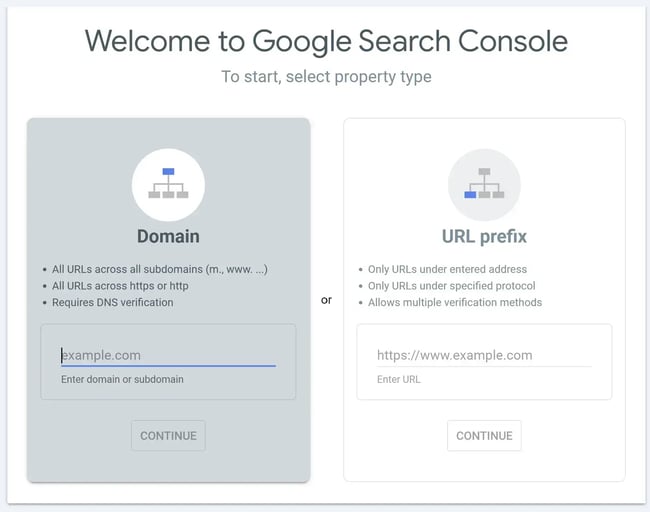
2. Google Search Console: Unearthing AI Overview Insights
Google Search Console (GSC) remains a profoundly underutilized resource for AEO. Its Performance report can be filtered by queries containing interrogative words (who, what, how, why, when, which). Pages showing high impressions but low click-through rates for such queries are often strong indicators that your content is appearing in Google’s AI Overviews or featured snippets, providing direct answers without necessitating a click.
- Key Features: Query performance analysis, impression/click-through rate data, Coverage reports (identifying indexing issues), Enhancements reports (flagging structured data errors).
- Best For: Identifying specific questions and queries driving AI visibility, diagnosing technical SEO issues that impact AI interpretation.
- Cost: Completely free for verified site owners.
- Why it Matters for AEO: GSC provides authoritative data directly from Google’s index, crucial for understanding how your content is perceived by the dominant search engine’s AI components.
3. SE Ranking AEO Tool: Advanced Citation Tracking
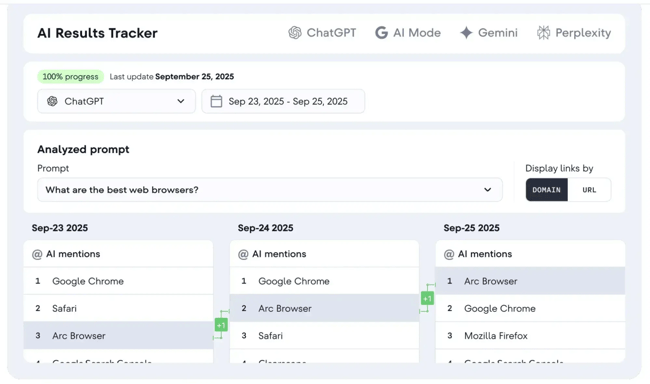
SE Ranking offers a dedicated AEO tool (accessible via a free trial) designed for monitoring brand mentions and citations with integrated competitor benchmarking. Their extensive research, spanning over 129,000 domains, has uncovered specific formatting best practices, such as pages structured into 120-180 word sections, which garner 70% more ChatGPT citations than shorter sections. This kind of data provides concrete guidance for optimization efforts.
- Key Features: Brand mention and citation monitoring across Google AI Overviews, ChatGPT, Gemini, and upcoming Perplexity support. Platform-specific metrics.
- Best For: Teams transitioning from a one-time audit to continuous citation tracking and competitive analysis.
- Cost: Free trial available. Paid plans start at $103/month, with an additional AI Search add-on ($71/month) for the full tracker suite.
- Distinguishing Factor: The product’s development is heavily informed by empirical research into AI citation patterns, offering data-driven optimization insights.
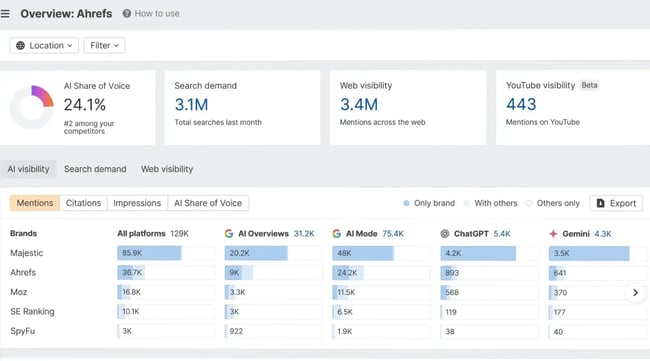
4. Ahrefs Brand Radar: Verifying AI Crawler Access
Before any answer engine can cite your content, its underlying LLM crawlers must be able to access your site. Ahrefs Brand Radar provides a free dashboard view specifically tracking AI crawler traffic, including GPTBot (OpenAI), ClaudeBot (Anthropic), and PerplexityBot. Confirming that these bots are reaching your site without being blocked or throttled is a foundational prerequisite for any AEO strategy.
- Key Features: Monitoring of specific LLM crawler traffic.
- Best For: Technical SEO teams and webmasters ensuring proper crawlability for AI engines.
- Cost: Basic AI crawler traffic monitoring available for free.
- Significance: It bridges the critical gap between technical SEO and AEO, as content optimization is futile if AI crawlers cannot access the data.
5. Google’s Rich Results Test + Schema Markup Validator: Structured Data Mastery
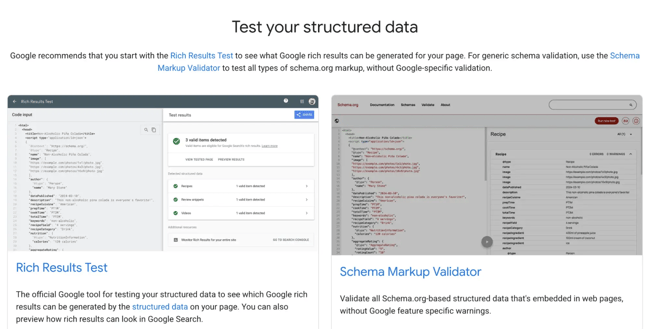
Structured data is a cornerstone of effective AEO. Schema markups like FAQPage, Article, and Product schema help answer engines interpret the semantic structure of your content, moving beyond surface text to understand context and relationships. Google’s free Rich Results Test validates your schema implementation and indicates which rich result types your page is eligible for. The Schema Markup Validator, also free, helps catch syntax errors before deployment.
- Key Features: Structured data validation, rich result eligibility check, syntax error detection.
- Best For: Diagnosing and correcting structured data implementation issues crucial for AI comprehension.
- Cost: Both tools are completely free.
- Authority: These are direct-from-source validation tools, offering definitive insights into how Google perceives your structured data.
6. ProductRank.ai: Cross-Platform Brand Visibility Checks
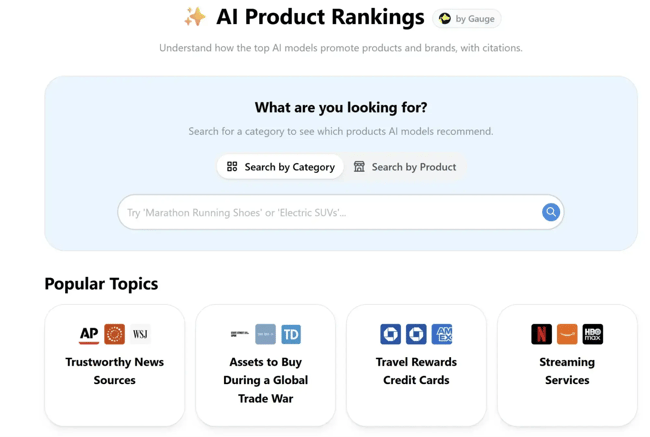
ProductRank.ai offers free, quick brand visibility checks across major LLMs, serving as an excellent second opinion to complement tools like the HubSpot AEO Grader. It provides a rapid assessment of your brand’s citation presence beyond technical readiness scores alone.
- Key Features: Fast brand visibility checks across multiple LLMs.
- Best For: Quick, independent verification of brand visibility and citation presence.
- Cost: Free for basic checks, no account required.
- Advantage: Offers a multi-engine perspective in a single, simple interface.
7. ChatGPT, Perplexity, and Gemini: Manual Prompt Testing for Intuition
Before investing in any paid tool, dedicating 30 minutes to manual prompt testing is invaluable. Directly query ChatGPT, Perplexity, and Gemini with questions such as "What is [Your Brand]?", "How does [Your Brand] compare to [Competitor]?", or "What are the best [Your Product/Service Category]?" Documenting the answers and their cited sources builds crucial intuition about how these platforms describe your brand and what information they prioritize.
- Key Features: Direct interaction with AI engines, observation of citation patterns, sentiment analysis.
- Best For: Gaining direct, real-time insights into AI perception, developing a "prompt-first" mindset.
- Cost: Free (using free tiers of ChatGPT and Perplexity, and Gemini).
- Pro Tip: Screenshot or export these results monthly, as AI models and their training data evolve, leading to potentially different answers over time. This exercise is foundational for interpreting automated tool outputs intelligently.
8. Writesonic AI Search Grader: Actionable Content Recommendations
Writesonic’s AI Search Grader stands out by not only tracking how answer engines cite your brand but also attempting to explain why citations might be missing. It surfaces underlying content gaps and provides actionable recommendations for improvement, covering ChatGPT, Gemini, Perplexity, and others.
- Key Features: Citation tracking, diagnosis of missing citations, content gap analysis, optimization recommendations.
- Best For: Content teams seeking to integrate visibility monitoring with direct content strategy recommendations.
- Cost: Free trial available; paid plans vary.
- Unique Value: Moves beyond mere reporting to provide guidance on how to improve content for AI citation.
9. Semrush AI Toolkit: Seamless Integration with Existing SEO Workflows
For teams already leveraging Semrush for traditional SEO, their integrated AI Toolkit offers answer engine visibility and AI Overviews tracking. It allows users to monitor AI Overview presence for tracked keywords and observe shifts over time within their familiar Semrush environment.
- Key Features: AI Overview tracking, integration with existing keyword and content data.
- Best For: Semrush users looking to extend their current SEO workflows into AEO without adopting new platforms.
- Cost: Freemium (limited queries on the free plan; AI features generally available on paid plans).
- Advantage: Consolidates traditional SEO and emerging AEO signals, reducing data fragmentation.
A Practical Workflow for Free AEO Implementation
The true power of these tools lies in their sequential application. Here’s a recommended workflow for teams initiating their AEO strategy:
Step 1: Audit Your Answer Engine Visibility and Crawlability
- Action: Begin by running the HubSpot AEO Grader on your brand and primary competitors to establish a baseline score and identify weak dimensions. Simultaneously, perform manual prompt tests in ChatGPT, Perplexity, and Gemini, meticulously documenting responses and cited sources. Crucially, use Ahrefs Brand Radar to verify that LLM crawlers (GPTBot, ClaudeBot, PerplexityBot) are successfully accessing your website.
- Objective: Determine if your brand is mentioned, the accuracy of its description, the sources cited, and which competitors appear when your brand is absent. Confirm technical crawlability as a foundational step.
Step 2: Structure Pages to Win Answers
- Action: Leverage Google Search Console to identify "question-based" queries with high impressions but low click-through rates, signaling potential AI Overview appearances. For these pages, and other critical content, use Google’s Rich Results Test and Schema Markup Validator to ensure accurate and error-free structured data (e.g., FAQPage, Article, Product schema). Revise content to feature clear, concise direct answers to common questions and ensure strong entity clarity.
- Objective: Optimize the technical and content structure of your pages to facilitate AI understanding and extraction of information. This includes refining internal linking, ensuring mobile-friendliness, and enhancing overall content quality and relevance.
Step 3: Competitive Analysis to Uncover Gaps and Opportunities
- Action: Revisit the HubSpot AEO Grader to re-evaluate your position relative to competitors. Use SE Ranking’s free trial to monitor competitor citations for specific queries. Analyze the content and structured data of competitor pages that consistently appear in AI answers to identify best practices and content gaps. Utilize Writesonic’s AI Search Grader for insights into why competitors might be outperforming you in certain areas.
- Objective: Identify competitor strengths and weaknesses, pinpoint opportunities for your brand to gain citations, and refine your content strategy based on proven AI citation patterns.
The Strategic Imperative: Connecting AEO to Business Outcomes
The emerging data underscores the profound business implications of AEO. Visitors arriving from answer engines often demonstrate significantly higher engagement and conversion rates compared to traditional organic search traffic. A study cited by Semrush found that LLM visitors convert at a remarkable 4.4 times higher rate than organic search visitors. To fully capitalize on this, attribution is critical: connecting AEO activity to your CRM and marketing reporting. HubSpot’s Marketing Hub Pro and Enterprise, for instance, offer integrated AEO features that link answer engine citations directly to CRM data, allowing businesses to precisely measure the impact of AI visibility on revenue.
When to Scale: Upgrading Your AEO Toolkit
While free tools provide an excellent foundation, there comes a point where their limitations can hinder growth. Signs that you might need to upgrade to paid solutions include:
- The manual effort of stitching together data from multiple free tools becomes time-consuming and inefficient.
- You require more granular, real-time tracking of AI citations across a larger content library or for a wider range of prompts.
- You need advanced competitive intelligence, including detailed analysis of competitor AI strategies.
- You seek integrated recommendations and automation to scale your AEO efforts.
- The desire for direct attribution models that link AI visibility to specific business outcomes and ROI.
For teams needing ongoing monitoring without the commitment to a full marketing platform, HubSpot AEO (a standalone paid tool) tracks visibility across ChatGPT, Perplexity, and Gemini week over week, offering prioritized, plain-language recommendations. For those already deeply integrated into the HubSpot ecosystem, AEO features within Marketing Hub Pro and Enterprise leverage existing CRM data to suggest business-relevant prompts, providing a powerful, compounding advantage.
Frequently Asked Questions About Answer Engine Optimization
How quickly can AEO show impact?
The timeline for impact varies. Brands with robust organic authority and high-quality existing content may see citation improvements within four to eight weeks following structural optimization. Brands building from scratch should anticipate three to six months of consistent optimization and content publishing before significant changes are reflected by answer engines. It’s important to note a nuance: ChatGPT often exhibits a roughly 30-day freshness bias in its citations, emphasizing the importance of regular content updates over one-off optimization pushes. AEO efforts targeting general LLMs like ChatGPT and Perplexity tend to evolve more slowly than those aimed at Google AI Overviews, which benefit from Google’s continuously refreshed index.
Do I need to fundamentally change my entire SEO strategy for AEO?
No, AEO is a complementary discipline, not a replacement for SEO. The foundational principles remain largely the same: producing high-quality, authoritative content, maintaining a strong domain authority, and ensuring a clean, technically sound website infrastructure. The primary difference lies in the measurement and targeting aspects. SEO traditionally focuses on tracking keyword rankings and organic traffic metrics. AEO expands this by tracking brand mentions, citation frequency, sentiment analysis, and share of voice specifically within answer engines. Therefore, a holistic digital strategy requires tools that provide visibility and insights across both traditional SEO and the emerging AEO channels.
The organizations poised to succeed in this new era are not necessarily those with the largest marketing budgets. Instead, success will favor those who possess a profound understanding of how answer engines make decisions, and who strategically craft and structure their content to facilitate those decisions, thereby becoming the definitive sources of truth in the age of AI.
Getting Started: Your Zero-Cost AEO Diagnostic
To initiate your AEO journey with zero upfront cost, follow this streamlined diagnostic workflow:
- Run the HubSpot AEO Grader: Get an instant benchmark of your brand’s AI visibility.
- Conduct Manual Prompt Tests: Query ChatGPT, Perplexity, and Gemini directly to understand their current perception of your brand.
- Verify AI Crawler Access: Use Ahrefs Brand Radar to confirm LLM bots can crawl your site.
- Audit Structured Data: Utilize Google’s Rich Results Test and Schema Markup Validator to ensure your content is semantically legible for AI.
- Analyze Query Performance: Dive into Google Search Console for insights into question-based queries driving impressions.
This comprehensive, zero-cost workflow provides a complete diagnostic of your current AEO standing. With these insights in hand, you can then make informed decisions about whether to invest in paid monitoring tools to scale your optimization efforts and solidify your brand’s position as an authoritative source for answer engines worldwide.