
 rifanmuazin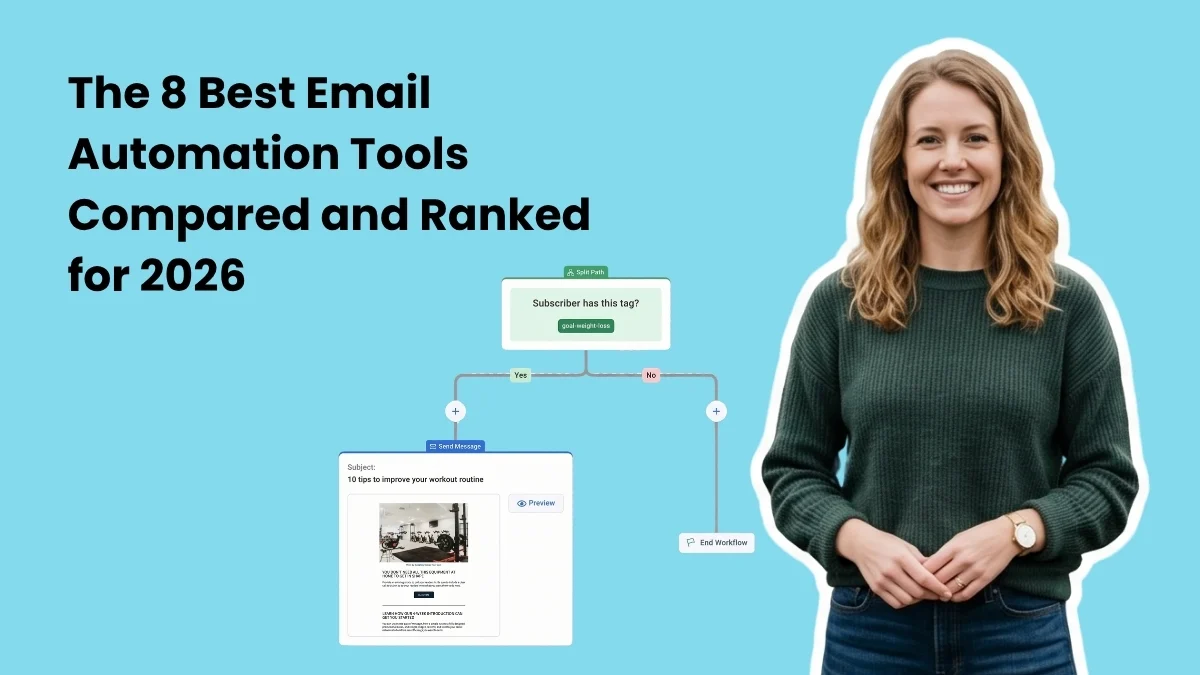
The digital marketing landscape of 2026 underscores the indispensable role of email automation, with a staggering 91% of marketers affirming its criticality to their success. In an era defined by personalized customer journeys and data-driven engagement, selecting the optimal email marketing platform is no longer a mere preference but a strategic imperative. This comprehensive analysis delves into the leading email automation tools for 2026, offering businesses a meticulously researched guide to navigate the crowded marketplace and optimize their digital communication strategies.
The Evolution and Imperative of Email Automation: A 2026 Perspective
Email marketing has transcended its origins as a simple broadcast tool, evolving into a sophisticated ecosystem powered by automation. In 2026, businesses face an unprecedented demand for hyper-personalization, efficient scaling, and integrated marketing efforts. The statistic that 91% of marketers deem automation critical highlights a fundamental shift: manual email campaigns are increasingly inefficient and ineffective in capturing and retaining audience attention. Automation platforms now empower businesses to deliver timely, relevant messages tailored to individual subscriber behavior, preferences, and lifecycle stages, driving higher engagement, conversion rates, and ultimately, stronger customer relationships.
This evolution is driven by several key factors. Firstly, consumer expectations for personalized experiences have skyrocketed. Generic communications are largely ignored, making dynamic content and behavioral triggers essential. Secondly, the sheer volume of data generated by online interactions necessitates automated processing to derive actionable insights. Thirdly, the need for efficiency in resource allocation means marketing teams must leverage technology to automate repetitive tasks, freeing up human capital for strategic planning and creative development. The competitive pressure across all industries further accelerates this adoption, as businesses without robust automation capabilities risk falling behind agile competitors.
Key Criteria for Evaluating Email Automation Platforms in 2026
Choosing the right email automation platform requires a thorough evaluation against several critical benchmarks that reflect the demands of the modern marketing environment. These criteria ensure that a chosen solution is not only powerful today but also scalable and adaptable for future needs.
-
Essential Automation Features: At its core, an effective platform must offer advanced trigger-based workflows, allowing businesses to initiate specific actions (like sending an email or updating a tag) based on predefined events (e.g., website visit, purchase, email open). Behavioral segmentation, which automatically categorizes subscribers based on their actions and interests, is crucial for delivering highly targeted content. Furthermore, an intuitive drag-and-drop builder for campaigns and workflows is non-negotiable, eliminating the need for extensive coding knowledge and democratizing access to complex automation strategies. The ability to visualize and track the performance of every step within a workflow, often directly within the builder, significantly enhances optimization capabilities.
-
AI-Powered Options: The integration of Artificial Intelligence has become a distinguishing factor for top-tier platforms in 2026. AI capabilities extend beyond basic analytics to include sophisticated features like AI-powered content generation for subject lines and email copy, significantly reducing drafting time and enhancing message effectiveness. Predictive analytics, driven by AI, can forecast subscriber behavior, enabling proactive engagement strategies. Send-time optimization, which uses AI to determine the optimal moment to send an email for each individual subscriber, maximizes open rates. Detailed, AI-enhanced analytics provide deeper insights into campaign performance, identifying patterns and suggesting improvements that might elude manual analysis.
-
Integration Capabilities: A truly effective email automation tool must function as part of a broader marketing technology stack. Seamless integration with Customer Relationship Management (CRM) systems ensures a unified view of customer data, facilitating coordinated marketing and sales efforts. E-commerce platform integrations (e.g., Shopify, WooCommerce) are vital for online retailers, enabling abandoned cart recovery, product recommendations, and post-purchase sequences. Connections with other marketing tools, such such as landing page builders, analytics platforms, and social media management systems, ensure smooth data flow and create a cohesive customer experience across all touchpoints.
-
Scalability and Pricing: The financial model of an email automation platform must align with a business’s growth trajectory. Platforms offering tiered pricing, often based on subscriber count or email volume, should avoid penalizing success with disproportionately high costs as a list expands. Understanding the nuances of these models – whether it’s a flat fee for unlimited emails up to a certain subscriber count, or a per-email charge – is crucial for effective budget planning. Flexibility to upgrade or downgrade plans without significant friction is also a key consideration for businesses experiencing fluctuating growth.
Top-Rated Email Automation Platforms for 2026: An In-Depth Analysis
Based on robust features, user feedback, and market positioning in 2026, several platforms stand out for their ability to empower businesses with advanced automation.
1. AWeber: Best Email Automation for Small Businesses
AWeber has cemented its position as the premier email automation tool for small businesses in 2026, lauded for its intuitive workflow builder and commitment to democratizing advanced marketing strategies. Its Workflow builder provides precise control over the subscriber journey, allowing businesses to automatically route subscribers down different paths based on actions such as clicks, opens, or specific tags. This level of behavioral segmentation is crucial for delivering highly personalized content without manual intervention. A standout feature is its ability to adjust wait times in automation sequences to each subscriber’s time zone, ensuring optimal delivery and engagement globally. Furthermore, AWeber accelerates setup with pre-built templates designed around common marketing goals, significantly reducing the learning curve for new users.
AWeber’s internal research underscores its efficacy, revealing that small businesses consistently implementing automation are twice as likely to report effective email strategies compared to those without. This data highlights the tangible impact of its platform on marketing outcomes. The integration of AI capabilities further enhances its value proposition, saving small businesses countless hours weekly by generating optimized subject lines and email copy. Its sophisticated subscriber tagging system automatically segments contacts into distinct email sequences based on their behavior, ensuring buyers receive post-purchase content, active clickers get promotional offers, and cold subscribers are targeted with re-engagement campaigns. This prevents message fatigue and maximizes relevance. AWeber differentiates itself by offering a professionally built email system, including ready-to-run automations delivered within seven days with minimal client input (approximately 20 minutes). This "done-for-you" service, unparalleled in the industry, offers an immediate competitive advantage to small businesses seeking to establish a powerful automation infrastructure without extensive internal resources. Pricing starts with a robust free plan for up to 500 subscribers, with paid plans commencing at $15 per month, offering unlimited automations and a compelling value proposition.
2. ActiveCampaign: Most Advanced Automation Builder
For organizations demanding enterprise-level capabilities and intricate marketing automation, ActiveCampaign remains the industry benchmark. Its platform excels at handling complex workflows and detailed customer journey mapping, making it suitable for businesses with sophisticated sales funnels and diverse customer segments. Key capabilities include advanced segmentation based on any data point, machine learning-driven predictive sending, and deep CRM integration that facilitates seamless coordination between marketing and sales teams. ActiveCampaign’s automation builder supports highly intricate decision trees, allowing for dynamic content delivery and personalized paths based on subscriber behavior, demographic data, and historical engagement. Its site tracking and event tracking features provide granular insights into customer interactions, enabling hyper-personalized follow-ups. While ActiveCampaign offers unparalleled power, its pricing model can escalate rapidly with subscriber growth and advanced feature requirements, potentially reaching $500+ monthly for larger lists, positioning it as a premium solution for mature marketing operations.
3. GetResponse: Email Automation with Integrated Webinars
GetResponse carves a niche by masterfully combining email automation with comprehensive webinar functionality, making it an ideal choice for businesses that heavily leverage educational content and live events. Its standout features include a built-in webinar platform supporting up to 1,000 attendees, automated webinar funnels for registration and follow-up, and advanced email marketing tools. GetResponse enables businesses to seamlessly integrate event promotion, registration confirmations, reminder sequences, and post-webinar follow-ups—including recordings and surveys—all within a single system. This unified approach eliminates the complexities and data silos often associated with using separate tools for email and webinars. Its pricing structure, which typically starts around $19 per month for email marketing and scales for larger lists and advanced webinar features, offers a competitive edge for content-driven businesses.
4. Kit (formerly ConvertKit): Creator-Focused Automation
Kit, previously known as ConvertKit, has solidified its reputation as the go-to platform for content creators, influencers, and online educators. Its automation is specifically designed for audience building and monetization. The platform’s strength lies in its elegant simplicity combined with powerful segmentation capabilities. Tags replace traditional lists, offering unparalleled flexibility in managing subscribers and triggering specific automations based on interests, product purchases, or engagement levels. Key features include highly customizable landing pages and forms, a robust email sequence builder, and integrations with e-commerce platforms popular among creators (e.g., Gumroad, Teachable). Kit’s automation allows creators to easily onboard new subscribers with welcome sequences, deliver digital products, and segment audiences for targeted promotions. Pricing begins with a free plan for up to 1,000 subscribers, with paid plans starting at $29 per month, making it accessible for creators at various stages of their journey.
5. MailerLite: Clean Design Meets Robust Automation
MailerLite has successfully married an emphasis on user experience and clean design with surprisingly sophisticated automation features, all offered at competitive price points. Its design-forward approach includes an intuitive drag-and-drop email editor, a rich library of templates, and custom landing page builders that prioritize aesthetics and conversion. Despite its simple appearance, MailerLite supports complex automation workflows with multiple triggers, conditions, and actions, allowing businesses to create intricate customer journeys. Its automation tools are particularly impressive for their price point, offering features like abandoned cart emails, welcome series, and re-engagement campaigns without breaking the bank. MailerLite’s free plan supports up to 1,000 subscribers with core automation features, while paid plans start from $10 per month, making it an attractive option for businesses that prioritize both design and functionality on a budget.
6. Brevo (formerly SendinBlue): Email Automation with Built-in SMS Marketing
Brevo, formerly SendinBlue, stands out for its seamless integration of email automation with built-in SMS marketing capabilities. This makes it an ideal platform for businesses seeking to communicate with customers through multiple channels from a single dashboard. Its comprehensive feature set includes a powerful email designer, advanced segmentation, CRM functionalities, and transactional email services. Brevo’s strength lies in its ability to create workflows that automatically send follow-up text messages if emails go unopened, or to deliver time-sensitive updates via SMS. This multi-channel approach ensures important messages reach the audience through their preferred communication channel, enhancing engagement and response rates. Brevo offers a generous free plan with up to 300 emails per day and basic automation, with paid plans starting at $25 per month, making it a highly versatile and cost-effective solution for integrated communications.
7. Constant Contact: Reliable Automation for Brick-and-Mortar Businesses
Constant Contact continues to be a strong contender for brick-and-mortar businesses, offering straightforward email automation combined with robust event management and local marketing tools. Its platform is particularly popular among physical retailers, restaurants, and service providers who need basic, reliable automation without excessive complexity. Features include easy-to-use email templates, list management, and fundamental automation sequences like welcome series and anniversary emails. Constant Contact excels in its event management integration, automatically handling registration confirmations, reminders, and post-event surveys, simplifying the logistics for local businesses hosting workshops, classes, or promotions. Its pricing, starting around $12 per month, is designed to be accessible, reflecting its focus on providing essential tools for businesses with a local footprint.
8. Omnisend: Omnichannel Retail Automation
Omnisend specializes in empowering retailers with integrated email, SMS, and push notification automation from a single, unified platform. Tailored specifically for e-commerce, its platform is engineered to maximize customer lifetime value and recover abandoned sales. Key multichannel capabilities include pre-built e-commerce automation workflows (e.g., abandoned cart recovery, welcome series, browse abandonment), dynamic product recommendations, and advanced segmentation based on shopping behavior. Omnisend excels at creating cohesive customer experiences across channels, ensuring consistent messaging whether customers receive emails, text messages, or browser push notifications. This integrated approach is crucial for modern e-commerce, allowing businesses to engage customers at every stage of their buying journey. Pricing starts with a free plan for up to 500 emails per month, with paid plans beginning at $16 per month, offering scalable solutions for online stores of all sizes.
Strategic Platform Selection: Matching Tools to Business Needs
The diverse landscape of email automation platforms in 2026 necessitates a strategic approach to selection, aligning a platform’s strengths with specific business requirements and objectives.
- For Small Businesses: AWeber emerges as the unparalleled choice. Its combination of an intuitive design, AI-powered tools, unlimited automations, and an expert setup service provides the perfect, low-barrier foundation for newcomers to email marketing. The "done-for-you" service significantly reduces the learning curve and time investment, allowing small business owners to quickly leverage advanced strategies.
- For Advanced Marketers: ActiveCampaign remains the gold standard. Its sophisticated automation capabilities, machine learning features, and complex workflow builder justify the premium investment for businesses with mature marketing strategies, intricate sales funnels, and a need for deep CRM integration.
- For E-commerce Businesses: Both AWeber and Omnisend offer specialized features for online retailers. AWeber’s user-friendly interface and AI tools can jumpstart e-commerce automation, while Omnisend’s deep integration of email, SMS, and push notifications is tailor-made for maximizing customer lifetime value and recovering abandoned sales across multiple channels.
- For Content Creators: Kit’s (formerly ConvertKit) tag-based system and creator-focused integrations provide the ideal ecosystem for building, segmenting, and monetizing audiences. Its emphasis on simplicity and powerful segmentation resonates deeply with the unique needs of bloggers, YouTubers, podcasters, and online course creators.
- For Coaches: AWeber’s robust Calendly integration offers a streamlined solution for coaches. It automates discovery call confirmations, session reminders, and post-session follow-up sequences, transforming manual client management into efficient, hands-off systems that nurture stronger client relationships and support business growth.
- For Businesses Needing Specialized Channels: Brevo excels at enhancing reach through integrated SMS follow-ups when emails go unopened, critical for urgent communications. GetResponse, on the other hand, is the definitive choice for businesses that run educational content or events, automating complete webinar funnels from initial registration to comprehensive post-event sequences.
Best Practices for Implementing Email Automation in 2026
Implementing email automation effectively requires more than just selecting the right platform; it demands a strategic approach to workflow design and continuous optimization.
- Prioritize Foundational Automations: Every small business, regardless of industry, should immediately establish three core automation sequences. Firstly, a welcome series, triggered the moment a new subscriber joins, is crucial for setting expectations and building initial rapport. Secondly, for businesses selling products, an abandoned cart sequence is essential for recovering potentially lost sales. AWeber’s research highlights that businesses with consistent automation are twice as likely to report effective email strategies, underscoring the immediate impact of these foundational flows. Thirdly, a re-engagement campaign for subscribers who haven’t opened an email in 60-90 days is vital for maintaining list hygiene and reactivating dormant contacts. These three automations form the backbone of any successful email strategy.
- Embrace Behavioral Segmentation: Move beyond basic demographic segmentation. Leverage the platform’s capabilities to segment subscribers based on their actual behavior: pages visited, products viewed, links clicked, purchases made, or content downloaded. This enables hyper-targeted messaging that resonates deeply with individual interests.
- A/B Test and Optimize Continuously: Automation is not a set-it-and-forget-it strategy. Regularly A/B test subject lines, email copy, calls to action, and even workflow timings to identify what performs best. Platforms with built-in analytics and AI-powered insights facilitate this ongoing optimization.
- Integrate Seamlessly: Ensure your email automation platform is fully integrated with your CRM, e-commerce platform, and other essential marketing tools. This prevents data silos, ensures a consistent customer view, and enables holistic marketing campaigns.
- Review and Refine: Periodically review your automation workflows to ensure they remain relevant to your business goals and customer journey. As products, services, or customer behaviors evolve, your automations must adapt accordingly.
The Future of Email Automation: Trends and Outlook
Looking beyond 2026, the trajectory of email automation points towards even deeper levels of personalization, predictive intelligence, and convergence with other marketing technologies. Hyper-personalization, driven by advanced AI and machine learning, will allow for truly individualized content generation, not just based on segments but on individual preferences and real-time behavior. Predictive analytics will become more sophisticated, enabling platforms to anticipate customer needs and proactively deliver relevant content even before explicit actions are taken.
The convergence of marketing automation with Customer Data Platforms (CDPs) will centralize customer data, providing a single source of truth for all interactions and enabling even more granular segmentation and activation. Furthermore, ethical considerations around data privacy (e.g., GDPR, CCPA) will continue to shape platform development, with a greater emphasis on consent management and transparent data usage within automated workflows. The integration of conversational AI and natural language processing could also lead to more interactive and dynamic email experiences, moving beyond static messages to personalized, adaptive dialogues.
Overcoming Implementation Challenges
New users often face common concerns when considering email automation. Addressing these proactively can smooth the transition and accelerate time to value.
- Cost Considerations: How much do email automation tools cost for a small business? Most small businesses find robust solutions in the $15 to $50 per month range. AWeber’s free plan, covering up to 500 subscribers with automation included, provides an excellent starting point. Paid plans commence at a competitive $15 per month. While platforms like ActiveCampaign begin at $15, costs can rise quickly with list growth and advanced feature requirements. It is essential to weigh the cost against the potential ROI in terms of efficiency, improved engagement, and increased conversions.
- Switching Platforms: Can I switch email automation platforms without losing my subscribers? Absolutely. The process typically involves exporting your subscriber list as a CSV file from your current platform before canceling. Most reputable email service providers, including AWeber, offer free migration services that assist in transferring contacts, tags, and even existing automation workflows. It is advisable to plan for one to two weeks of transition time to thoroughly rebuild and test sequences on the new platform before going live, ensuring a seamless experience for your audience.
- Technical Skills: Do I need technical skills to set up email automation? In 2026, the answer is largely no. Modern platforms, including AWeber, prioritize user-friendliness with intuitive drag-and-drop workflow builders that require no coding expertise. AWeber’s Workflow builder, for instance, allows users to visually map triggers, conditions, and actions, enabling the creation of a complete welcome series in under an hour. The primary requirement is a basic understanding of your customer journey and marketing objectives, not a developer’s skillset.
In conclusion, the strategic implementation of email automation is a non-negotiable component of successful digital marketing in 2026. By carefully evaluating platforms against essential criteria, understanding their unique strengths, and adopting best practices for workflow design, businesses of all sizes can harness the transformative power of automation. The right platform not only streamlines operations but also fosters deeper customer relationships, drives significant ROI, and positions a business for sustained growth in an increasingly competitive digital landscape.









