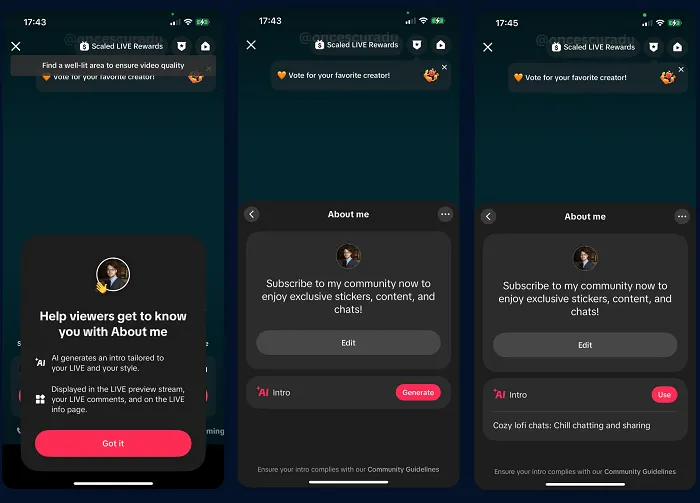
TikTok, the globally dominant short-form video platform, has officially rolled out a new artificial intelligence-powered introduction tool designed to assist live stream creators in generating concise summaries of themselves and the focus of their broadcasts. Integrated directly within the TikTok Live composer, this feature allows hosts to quickly provide viewers with additional context, aiming to enhance audience engagement and discoverability. The announcement underscores a growing trend across social media platforms to leverage AI for streamlining creator workflows and improving user experience, though its practical utility and broader implications are already sparking discussion among industry observers and creators alike.
The Genesis of TikTok’s AI Introduction Feature
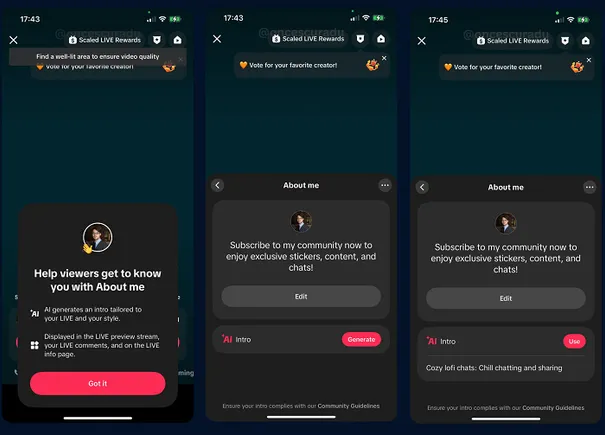
The new AI-powered introduction tool was first brought to public attention through observations shared on Threads by app researcher Radu Oncescu, showcasing its presence within the TikTok Live composer interface. Creators engaging in live broadcasts can now access a dedicated button to generate an "audience intro summary." This summary is intended to provide a snapshot of the live host’s persona and the primary subject matter of their current stream, which can then be shared with viewers, potentially offering a more structured and immediate understanding for those tuning in.
For a platform like TikTok, which thrives on dynamic content and rapid user engagement, the introduction of such a tool aligns with its ongoing efforts to empower creators and optimize the viewer experience. Live streaming has become an increasingly critical component of the platform’s ecosystem, fostering deeper connections between creators and their audiences, and serving as a significant revenue stream through virtual gifts and brand partnerships. The ability to quickly convey the essence of a live session could be particularly beneficial for creators seeking to attract and retain new viewers who might be browsing through numerous concurrent streams.
Understanding the Mechanics and Potential Benefits
While the precise algorithms underpinning TikTok’s new AI introduction tool have not been detailed by the company, it is generally understood that such systems rely on advanced natural language processing (NLP) and machine learning models. These models likely analyze various inputs, including a creator’s profile information, past live stream data, keywords used in stream titles or descriptions, and potentially even real-time audio analysis of the ongoing broadcast, to synthesize a coherent and relevant summary. The goal is to distill complex information into an easily digestible format, helping viewers decide whether to commit to watching a stream.
From a creator’s perspective, the potential benefits are multifold. Firstly, it offers a degree of convenience and time-saving. Crafting compelling and informative intros manually can be a minor but recurring task, especially for prolific live streamers. An AI-generated summary could free up mental bandwidth, allowing creators to focus more on the content itself and direct interaction with their audience. Secondly, it could aid in discoverability. A well-articulated, concise summary might increase the likelihood of a stream being recommended by TikTok’s algorithm or catching the eye of a potential viewer scrolling through the Live feed. For new creators or those experimenting with different content niches, a professionally sounding intro generated by AI could lend an air of polish and credibility.
For viewers, the tool promises a more efficient way to navigate the vast landscape of live content. With countless streams active at any given moment, a quick, accurate summary could help users filter out irrelevant content and hone in on streams that match their interests, thereby improving their overall viewing experience and reducing friction in content discovery. This aligns with TikTok’s broader strategy of optimizing its recommendation engine, which is already renowned for its ability to deliver highly personalized content feeds.
Broader Context: The AI Revolution and Social Media
TikTok’s latest feature is not an isolated development but rather a microcosm of a much larger trend sweeping across the technology sector: the aggressive integration of artificial intelligence. In recent years, AI has moved from a niche academic pursuit to a mainstream technological imperative, with companies across all sectors investing heavily in its development and deployment. For social media platforms, AI is already deeply embedded in core functionalities, from content recommendation algorithms and moderation systems to personalized advertising and sophisticated content creation tools.
The competitive landscape among social media giants has intensified, with platforms constantly vying for user attention and creator loyalty. In this environment, offering cutting-edge tools and features becomes a crucial differentiator. Meta, Google, X (formerly Twitter), and Snapchat, among others, have all unveiled or are actively developing AI-powered features aimed at enhancing user experience, streamlining content creation, and improving platform efficiency. These range from AI-driven photo editing and text generation to advanced search functionalities and virtual assistants. The push for AI integration is also fueled by the potential for increased monetization, as more sophisticated AI can lead to better targeted advertising and more engaging user interactions.
The creator economy, estimated to be worth hundreds of billions of dollars globally, is at the heart of this innovation drive. Platforms recognize that attracting and retaining top creators is paramount to their long-term success. Creators are constantly seeking tools that can help them produce higher quality content, manage their presence more efficiently, and grow their audience. AI is perceived as a powerful enabler in this regard, offering solutions for tasks that range from video editing and scriptwriting to audience analytics and content optimization.
Skepticism and Concerns: The Human Element vs. Automation
Despite the potential benefits and the industry-wide embrace of AI, the introduction of tools like TikTok’s AI-powered intro also elicits a degree of skepticism and raises important questions about the role of automation in creative endeavors. The initial reaction to TikTok’s feature, as highlighted by some commentators, points to concerns regarding the accuracy and genuine utility of such AI-generated content. The example provided in early observations suggested that the AI’s summary might not always be perfectly aligned with the nuanced reality of a live stream, nor is the underlying generation process transparent.
A significant point of contention revolves around the necessity of automating tasks that are, arguably, not overly complex for human creators and, in some cases, contribute to the "human element" of content creation. Crafting a personal introduction or a compelling bio is often seen as an act of self-expression, a chance for creators to inject their unique voice and personality into their brand. If AI takes over these tasks, there is a risk that intros could become generic, losing the authentic touch that often resonates most deeply with an audience. This raises philosophical questions about the "joy of creation" and whether automating even seemingly minor creative tasks diminishes the overall human experience of content production.

Critics argue that deploying AI for such seemingly trivial tasks, especially when considering the significant computational resources (and thus energy consumption) required to power complex AI models, represents a questionable allocation of resources. They contend that while AI holds immense potential for solving complex problems and revolutionizing industries, its application should be prioritized for areas where it offers genuinely transformative benefits, rather than merely replacing simple human actions that are neither time-consuming nor particularly challenging. The debate centers on finding the right balance between leveraging AI for efficiency and preserving the intrinsic value of human creativity and personal connection.
Technical and Ethical Considerations
The development and deployment of AI tools for content generation are not without technical and ethical challenges. On the technical front, ensuring the AI’s accuracy, contextual relevance, and ability to adapt to diverse creator styles and content niches is a continuous endeavor. AI models are trained on vast datasets, and if these datasets contain biases, the generated content can inadvertently reflect and perpetuate those biases. For instance, an AI might struggle to accurately summarize content from niche communities, or it might generate summaries that inadvertently misrepresent a creator’s intent or identity.
Ethically, the increasing prevalence of AI-generated content raises questions about authenticity, transparency, and accountability. Viewers may increasingly wonder if the content they are consuming, even seemingly minor elements like an intro, is genuinely human-created or machine-generated. While TikTok’s tool is clearly labeled, the broader trend could blur the lines between human and artificial creativity. Furthermore, concerns around data privacy and how creator data is utilized to train and improve these AI models are paramount. Platforms must ensure robust data governance and transparent policies regarding AI’s use of user-generated content.
Industry Reactions and Future Implications
Industry analysts and experts are likely to view TikTok’s AI introduction tool through a multifaceted lens. Some might see it as a strategic move by TikTok to maintain its lead in the creator economy, demonstrating its commitment to innovation and providing creators with every possible advantage. By subtly integrating AI into daily workflows, TikTok reinforces its image as a forward-thinking platform. Others might echo the skepticism, suggesting that such a feature is more about "AI-washing" – the act of promoting AI integration for novelty rather than substantial utility – than about delivering genuinely impactful value.
Looking ahead, the trajectory of AI integration in content creation is poised for further acceleration. We can anticipate more sophisticated AI tools that assist with everything from video script generation and automatic content editing to personalized engagement strategies and even AI-driven virtual co-hosts for live streams. The challenge for platforms like TikTok will be to identify truly valuable use cases for AI that genuinely empower creators and enhance user experience, without inadvertently diluting the authenticity and human connection that form the bedrock of social media.
The debate over the "unending power and utility" of AI tools will continue to evolve. While there is broad consensus on AI’s potential to revolutionize complex scientific research, medical diagnostics, and industrial automation, its application in areas that touch upon human creativity, personal expression, and interpersonal communication remains a fertile ground for discussion. TikTok’s AI-powered live stream introduction tool, while seemingly minor in isolation, serves as a significant marker in this ongoing conversation, illustrating both the relentless march of technological innovation and the persistent questions about its most beneficial and ethical applications in the digital age. The ultimate success and acceptance of such features will depend not just on their technical prowess, but also on their ability to genuinely resonate with and serve the complex needs and desires of the human creators and audiences they aim to assist.