The landscape of digital marketing is constantly evolving, yet some fundamental strategies consistently demonstrate their value, albeit often underutilized. One such strategy, the personalized birthday email, stands out as a powerful, yet frequently neglected, tool in a brand’s customer engagement arsenal. A recent informal study, mirroring the King of England’s famed dual birthday celebration, illuminated the stark disparity between the promise and performance of these highly personal communications. While one individual’s "email birthday" – a specific date provided to brands upon signup – recently triggered over fifty birthday emails, the quality and effectiveness of these messages varied wildly, presenting a compelling case study in both best practices and missed opportunities.
The Phenomenon of the "Email Birthday" and Its Insights
The concept of an "email birthday" – a consistent, non-personal date provided to various online services – offers a unique vantage point into how brands manage and leverage customer data. For one recent recipient, this simulated celebration yielded more than 50 greetings from brands worldwide. While some messages successfully fostered genuine positive sentiment, others were so perfunctory or poorly executed that they raised questions about the brands’ underlying strategy. This experience underscores a critical lesson: a birthday email is not merely a formality; it is a strategic touchpoint that, when executed thoughtfully, can significantly enhance the customer journey and build lasting brand affinity. Conversely, a poorly conceived or generic message can erode trust and signal a lack of genuine customer understanding.
The Strategic Value of Birthday Data: A Dual Benefit
The collection of a customer’s date of birth (DOB) represents a potent piece of personal data, offering substantial benefits to both brands and consumers when utilized judiciously. For businesses, this data is invaluable for refining life-stage segmentation and enabling highly personalized marketing campaigns. It empowers brands to anticipate purchasing behaviors, tailor product recommendations, and deliver messages that resonate deeply with individual customer profiles. Statistical analysis consistently demonstrates that birthday messages reliably outperform generic marketing campaigns in terms of open rates and click-through rates, signaling a higher level of engagement from recipients. This heightened interaction translates directly into improved campaign performance and a stronger return on investment.
From the consumer perspective, birthday rewards are more than just transactional incentives; they are genuinely anticipated benefits. These can range from exclusive discounts and complimentary products to bonus customer loyalty points or even privileged access to age-restricted services. Beyond the tangible benefits, there is an inherent pleasure in feeling recognized and valued by a brand. Birthday marketing, by its very nature, is deeply personal, fostering an emotional connection that transcends mere commercial exchange. It transforms a routine transaction into a moment of appreciation, deepening loyalty and strengthening the customer-brand relationship.
The Alarming Gap: Data Collection Versus Activation
Despite the clear advantages, there exists a significant disconnect between the data brands collect and their subsequent utilization. According to data from Validity, a prominent authority in email intelligence, this year alone, the aforementioned "email birthday" should have triggered 124 birthday emails based on the data provided to various brands. Shockingly, only 43 of these messages actually arrived, representing a mere 35% activation rate. This statistic highlights a pervasive issue: brands are diligently collecting valuable personal data but are failing to leverage it effectively. The implications of this underutilization are profound, signaling not only missed marketing opportunities but also a potential erosion of customer trust when personal information is gathered but not acted upon in a meaningful way. It underscores a critical principle in data management: if data is collected, it must be used responsibly and strategically to deliver value.
Anatomy of a Birthday Offer: What Works and What Doesn’t
Birthday email campaigns typically fall into several distinct categories, each with varying degrees of effectiveness:
-
Heartfelt Greetings with No Tangible Offer: More common among premium or luxury brands, this approach relies on the sentiment that "it’s the thought that counts." The assumption is that high-net-worth clientele may not be seeking freebies, valuing the gesture of recognition more. However, in some instances, these "gifts" were subtly disguised suggestions to purchase more products, which can undermine the sincerity of the message. While a simple, elegant greeting can be effective for certain brands, it risks feeling hollow if not genuinely appreciative.
-
The Ubiquitous Birthday Discount: By far the most prevalent tactic, birthday discounts are often accompanied by a minimum spend requirement but rarely an upper limit. The key to success here lies in the generosity of the offer. A token discount can feel underwhelming and cheapen the gesture, while a substantial markdown can genuinely incentivize a purchase. For example, a 10% discount on a high-value item might be appreciated, but a 5% discount on a low-cost item might be perceived as negligible. Brands must carefully calculate the discount percentage to ensure it feels like a genuine reward, not a reluctant concession.
-
Complimentary Products with Conditions: Many restaurant chains employ this strategy, offering a free birthday dessert, often contingent on the purchase of an entrée. While seemingly a generous offer, a closer look at the economics reveals the brand’s strategic intent. An analysis comparing average entrée and dessert prices at several popular restaurants illustrates the effective discount:
- Seasons 52: Avg. Entrée $28, Avg. Dessert $4-$9, Effective Discount 12-24%
- Olive Garden: Avg. Entrée $18.50, Avg. Dessert $12, Effective Discount ~39%
- Yard House: Avg. Entrée $21, Avg. Dessert $10, Effective Discount ~32%
- Cheddar’s: Avg. Entrée $18, Avg. Dessert $7.50, Effective Discount ~29%
- LongHorn Steakhouse: Avg. Entrée $26, Avg. Dessert $11, Effective Discount ~30%
- Applebee’s: Avg. Entrée $17, Avg. Dessert $6, Effective Discount ~26%
Viewed through this lens, the average discount across these establishments works out to a healthy 30%, with Olive Garden leading at approximately 39%. This demonstrates that even conditional offers can provide significant value to the consumer while strategically driving additional sales for the brand.
-
Extended Redemption Windows and Multi-Stage Campaigns: Most brands offer a grace period, typically 30 days, for customers to redeem their birthday gift. The most effective strategies, however, transform this into a multi-stage communication sequence. Brands like Calvin Klein exemplify this by sending an advance warning email, followed by an on-the-day message, and then a reminder. This systematic approach significantly increases the likelihood of the gift being redeemed, maximizing engagement and conversion. This chronological approach ensures the message isn’t lost in a crowded inbox and provides ample opportunity for the customer to act.
-
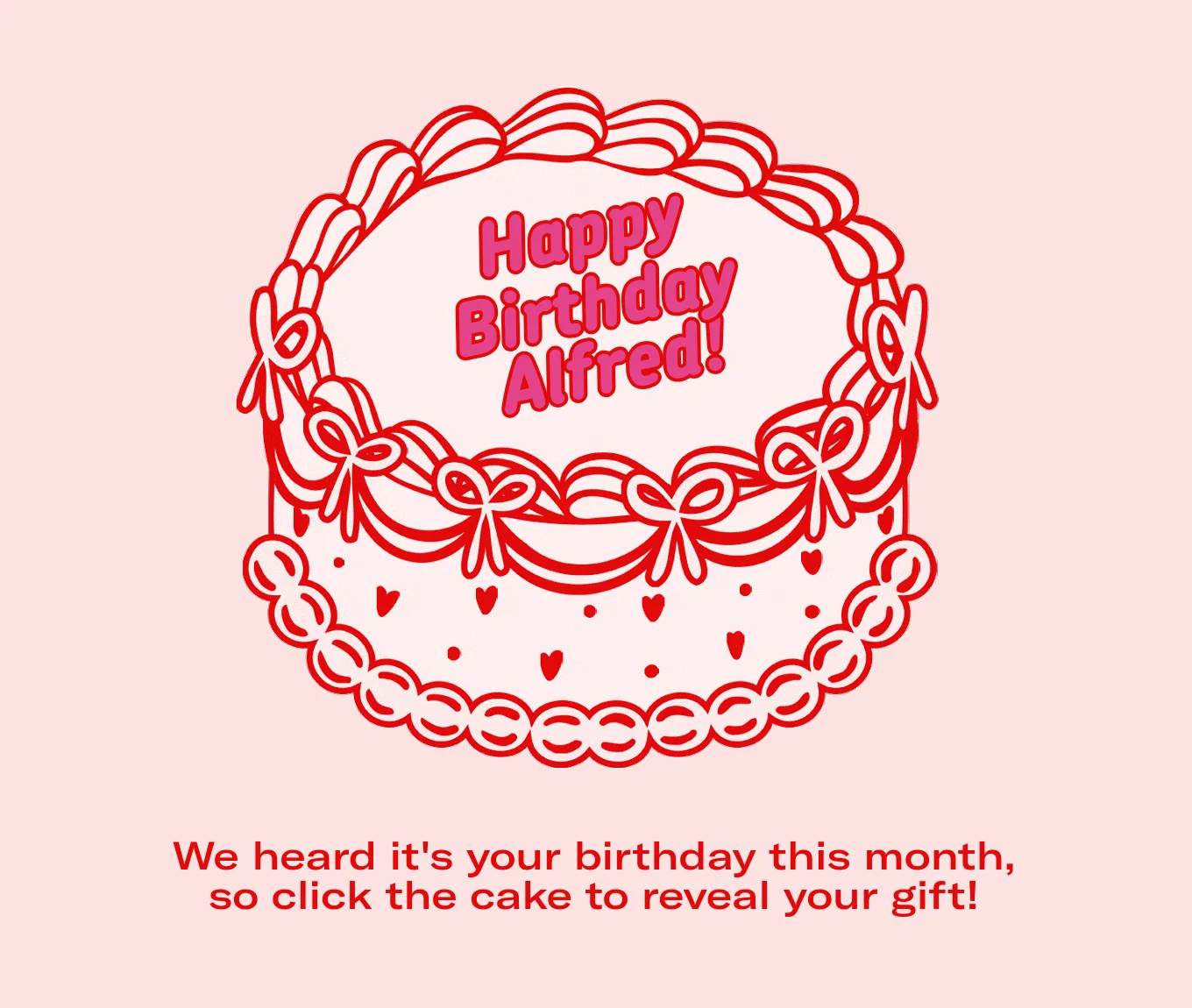
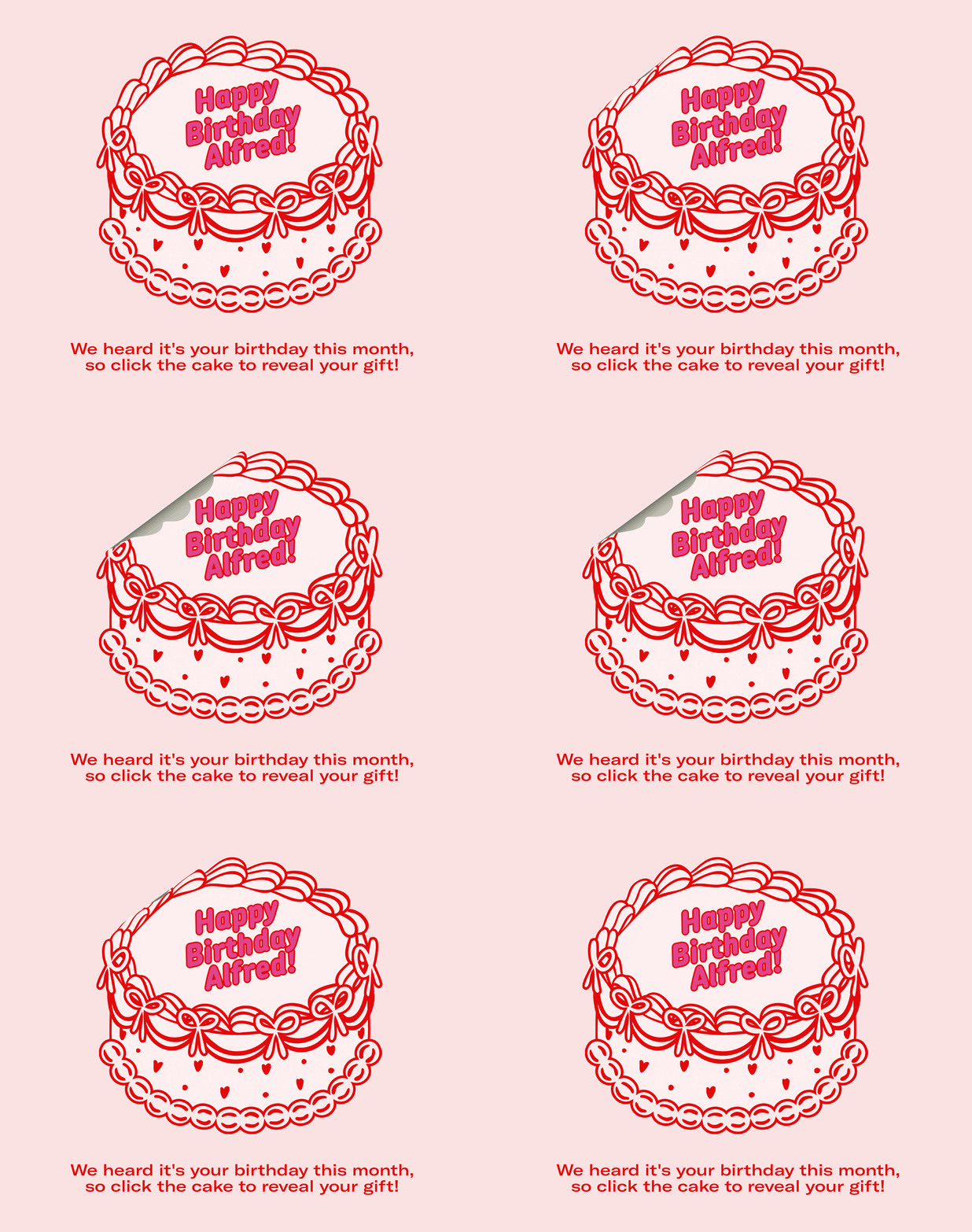
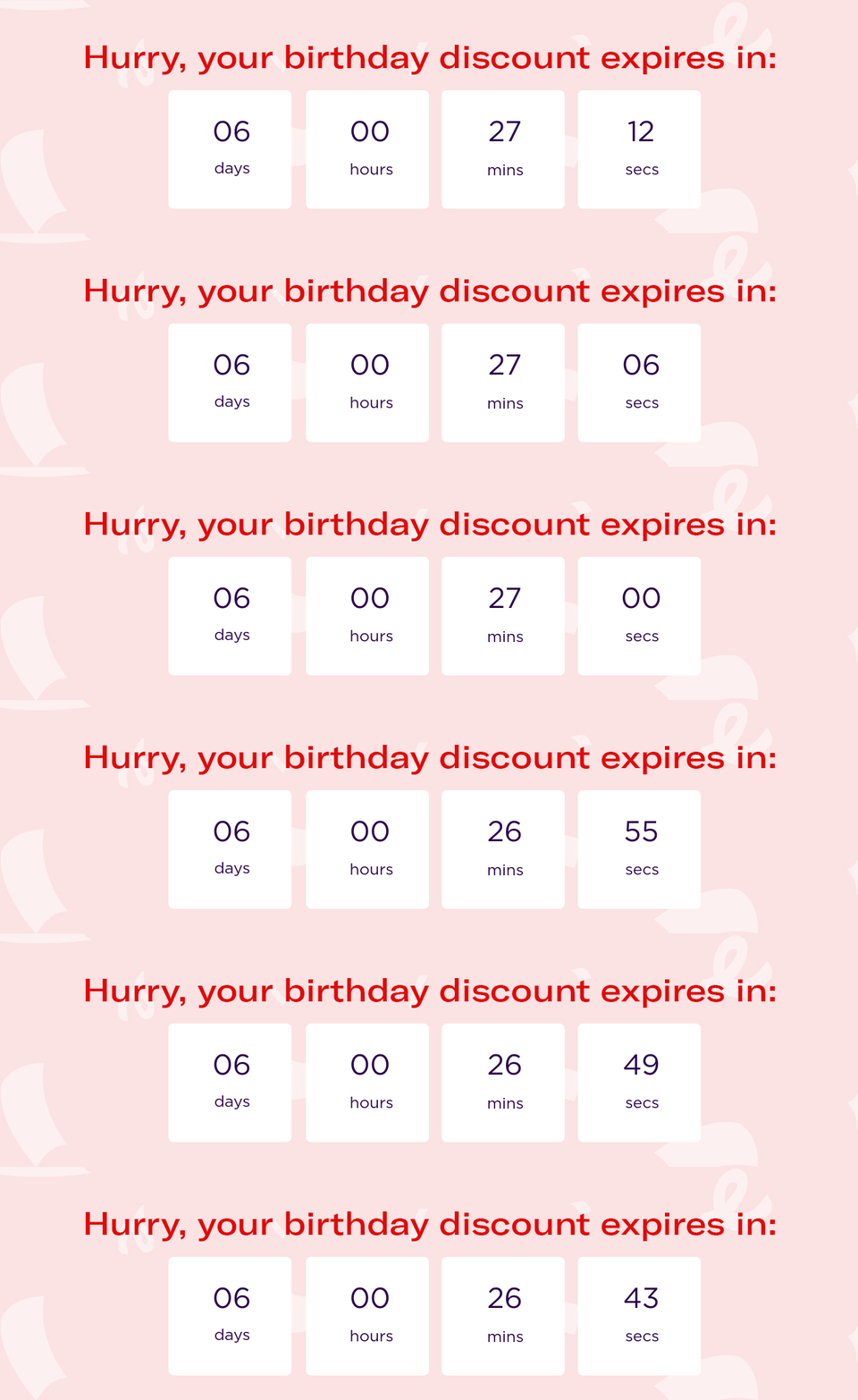
Leveraging Animation and Dynamic Content: Surprisingly, few brands fully exploit the interactive potential of birthday emails. Birthdays are inherently celebratory, making them ideal for dynamic elements like flickering candles, animated cakes, or "open your present" interactivity. Virgin Australia, for instance, excels in this area. Their on-the-day email features an animated cake that dynamically reveals the discount, while a follow-up email incorporates a countdown timer to instill a sense of urgency, further encouraging redemption. Such creative use of email technology enhances the celebratory feel and captures recipient attention more effectively.
Best-in-Class Examples and Consumer Sentiment
Amidst the deluge of "here’s your birthday discount" emails, certain brands manage to stand out by delivering genuinely valued experiences. Burger King, for instance, garnered top marks for its straightforward offer: "Enjoy a free bday Whopper." The absence of minimum spend requirements or hidden conditions made this a truly unconditional gift, fostering immense goodwill. This simple, no-strings-attached approach resonated strongly, demonstrating that sometimes, generosity and clarity trump complex offers.
Other brands also earned honorable mentions for their thoughtful approaches:
- Calvin Klein: Praised for its well-timed, multi-stage campaign that maximized the chance of gift redemption.
- Virgin Australia: Recognized for its innovative use of animated content and countdown timers, creating an engaging and urgent experience.
- Marriott Bonvoy: Appreciated for offering bonus loyalty points, a gift that directly enhances a customer’s long-term relationship with the brand and provides flexible value.
These examples highlight that the most impactful birthday emails are those that combine genuine value, clear communication, and thoughtful execution, making the customer feel truly special.
The Economic Imperative: Evaluating the ROI of Birthday Discounts
Across the 50-plus emails received in the informal study, the average discount or its equivalent hovered around 18%. While this might seem reasonable, particularly for businesses operating on thin net margins (e.g., a restaurant with a 4% net margin), the question arises: could brands achieve greater returns by increasing this investment?
The business case for nurturing active customers is robust and well-documented. Research from the Harvard Business Review indicates that acquiring a new customer can cost five times more than retaining an existing one. Further, Bain & Company’s findings suggest that a mere 5% increase in customer retention can boost profits by as much as 75%. Reactivating dormant customers falls somewhere between acquisition and retention in terms of cost-effectiveness; it’s cheaper than acquiring new clients but significantly more expensive than simply maintaining a strong, ongoing relationship.
Experian’s comprehensive Birthday Emails report provides compelling evidence of their commercial impact, revealing that birthday emails generate an astonishing 481% more transactions and 342% more revenue per email than standard promotional campaigns. This positions birthday messages as one of the highest-performing touchpoints across the entire customer lifecycle. In contrast, research by Dotdigital indicates that win-back emails, even when accompanied by an enticing offer, typically achieve a redemption rate of just over 2%.
These statistics collectively argue for a strategic upgrade to the often-token birthday gesture. Brands frequently extend substantial discounts, often ranging from 25-40%, in desperate attempts to win back disengaged customers, frequently with limited success. Given the high engagement and strong emotional connection associated with birthdays, it makes profound economic sense to invest more generously at this earlier, high-impact stage. The cost of a more substantial birthday offer is a fraction of the expense and effort required for a potentially futile win-back campaign. The argument for prevention, in this context, is overwhelmingly clear and self-evident.
Crafting an Effective Birthday Email Strategy: Best Practices
While the business case for birthday emails is compelling, their deeply personal nature necessitates flawless execution. Errors—whether in data, value proposition, or timing—can cause more harm than good. Here are ten best practices for optimizing birthday email marketing:
- Prioritize Data Accuracy and Hygiene: Ensure the collected date of birth is accurate and regularly updated. Inaccurate data leads to missed opportunities or, worse, poorly timed messages that can alienate customers. Implement data validation processes at the point of collection.
- Segment and Personalize Beyond the Name: While addressing the recipient by name is standard, true personalization involves tailoring offers based on purchase history, preferences, and engagement patterns. A coffee brand might offer a free latte to a frequent coffee buyer, but a discount on brewing equipment to someone who has only bought beans.
- Craft Compelling and Generous Offers: Move beyond token gestures. The offer should feel like a genuine reward. Whether it’s a free product, a significant discount, or bonus loyalty points, the perceived value must be high enough to incentivize action. Consider the brand’s average transaction value and profit margins to determine an impactful yet sustainable offer.
- Implement Multi-Stage Campaigns: Don’t rely on a single email. A well-orchestrated sequence—an advance notification, an on-the-day message, and a follow-up reminder with an urgency element (e.g., countdown timer)—significantly boosts redemption rates.
- Utilize Dynamic Content and Interactivity: Embrace animation, interactive elements, and personalized visuals to make the email more engaging and celebratory. A GIF of a flickering candle or an animated "gift box" revealing the offer can dramatically increase attention and delight.
- Optimize for Mobile: A vast majority of emails are opened on mobile devices. Ensure birthday emails are fully responsive, load quickly, and have clear, tap-friendly calls to action.
- Maintain Brand Consistency: While celebratory, the email should still align with the brand’s overall voice, aesthetics, and messaging. It should feel like an authentic communication from the brand, not a generic template.
- Clear Call-to-Action (CTA): Make it unequivocally clear what the customer needs to do to redeem their gift. Use prominent buttons and concise instructions.
- Test and Optimize: Continuously A/B test different elements—subject lines, offers, imagery, send times, and call-to-action phrasing—to identify what resonates most with the audience and drives the highest engagement and conversion rates.
- Integrate with Multi-Channel Strategies: Consider how the birthday email can be complemented by other channels, such as in-app notifications, SMS, or even direct mail for high-value customers, creating a cohesive and impactful birthday experience.
Beyond the Cake: Broader Implications for Customer Engagement
When executed correctly, birthday emails transcend simple promotional messages; they become meaningful, positive interactions that significantly strengthen the overall brand experience. Even if customers do not make an immediate purchase, these personalized gestures foster goodwill, enhance brand perception, and increase the likelihood of future engagement and purchases. Furthermore, satisfied customers are more likely to become vocal brand advocates, sharing their positive experiences with others.
The strategic deployment of effective birthday emails is not just about celebrating a single day; it’s about investing in the long-term health of customer relationships. It underscores a brand’s commitment to understanding and valuing its customers as individuals, laying the groundwork for increased customer lifetime value and fostering a loyal community. In an increasingly competitive digital landscape, leveraging every opportunity to forge deeper connections is paramount, and the birthday email, when handled with care and strategic intent, represents a golden opportunity for brands to shine. By embracing robust data intelligence and committing to a thoughtful, personalized approach, businesses can transform a simple date into a powerful catalyst for sustained customer loyalty and commercial success.