The landscape of digital marketing has undergone a radical transformation over the last two decades, evolving from a creative-led discipline into a data-driven science. At the heart of this evolution is A/B testing, a methodology that allows businesses to make incremental improvements to user experience and conversion rates. Despite its central role, a growing body of evidence suggests that the statistical foundations used by many practitioners are significantly outdated, often lagging behind the rigorous standards found in fields such as medicine, genetics, and physics by more than half a century.
A/B testing, or split testing, is essentially a randomized controlled trial (RCT). In a digital environment, users are randomly assigned to a control group or a variant group to establish a causal relationship between a specific change—such as a headline adjustment or a checkout flow modification—and a specific outcome, like a completed purchase. However, the reliance on classical statistical models, which were originally designed for agricultural and industrial experiments where data is collected in a single batch, has created a disconnect between theoretical accuracy and the practical realities of the modern web.
The Statistical Crisis in Conversion Rate Optimization
The primary issue facing modern A/B testing is not the lack of data, but the misuse of the statistical tools intended to interpret that data. Most practitioners rely on "statistical significance" as a binary indicator of success. Yet, the classical frameworks used to calculate significance—such as the Student’s T-test—carry a strict requirement: the sample size must be fixed in advance.
In a clinical trial for a new medication, researchers determine the exact number of participants needed to achieve a specific level of certainty before the trial begins. In digital marketing, however, data is accrued in real-time. This leads to a phenomenon known as "data peeking" or data-driven optional stopping. Stakeholders, eager for results, often monitor live dashboards daily. When they see a result that looks "significant," they stop the test early to implement the winner.
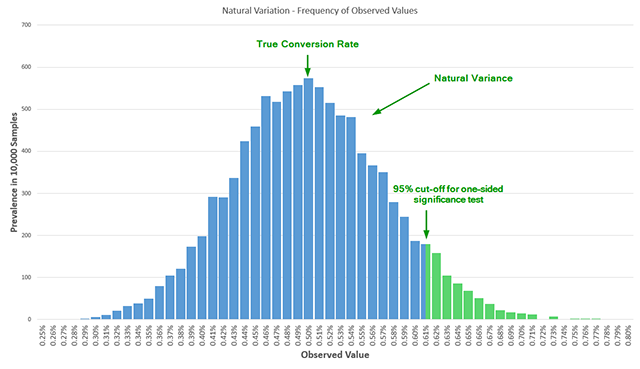
This practice, while intuitive, is statistically disastrous. Every time a practitioner "peeks" at the data and makes a decision, they increase the probability of a false positive. Statistical research dating back to 1969, most notably by Armitage et al., has demonstrated that peeking just five times during a test can more than triple the actual error rate compared to the reported nominal error rate. For instance, if a test is set at a 95% confidence level (a 5% error rate), peeking ten times can inflate the actual risk of a false positive to 25%. This "Garbage In, Garbage Out" (GIGO) cycle results in businesses implementing changes that they believe are improving revenue, when in fact they are merely observing random noise.
The Chronology of Experimental Methodology
To understand why A/B testing methodology is currently in a state of flux, it is necessary to examine the history of experimental design:
- The 1920s: The Fisherian Era. Ronald A. Fisher established the foundations of experimental design, focusing on agricultural trials where data was harvested at the end of a season. The concept of "p-values" and fixed sample sizes became the gold standard.
- The 1940s: Sequential Analysis. During World War II, Abraham Wald developed sequential analysis to allow for the continuous monitoring of quality control in manufacturing. This was a precursor to modern "early stopping" methods.
- The 1970s-1980s: Group Sequential Designs in Medicine. Medical researchers realized that stopping a clinical trial early was an ethical necessity if a drug was clearly saving lives or causing harm. This led to the development of "error-spending functions" to maintain statistical integrity during interim looks.
- The 2000s: The Rise of CRO. Companies like Google and Amazon popularized A/B testing in the digital space. Tools like Google Website Optimizer brought testing to the masses, but often simplified the statistics to make them user-friendly, inadvertently encouraging improper data peeking.
- The 2010s-Present: The Statistical Shift. Leading experimentation platforms began moving toward more robust models, such as Bayesian statistics and sequential frequentist approaches (like AGILE), to address the "peeking problem" and the need for speed.
Addressing the Power Deficit in Digital Experiments
A second major hurdle in current A/B testing practice is the neglect of statistical power, often referred to as "test sensitivity." While statistical significance guards against false positives (Type I errors), statistical power determines the probability of avoiding false negatives (Type II errors). In simpler terms, power is the ability of a test to detect a real effect if one actually exists.
Industry analysis of influential literature on A/B testing reveals a startling trend: out of seven major books published between 2008 and 2014, only one addressed statistical power with any degree of depth. Many free online calculators default to a power level of 50%, which is equivalent to a coin toss. Running an under-powered test is a waste of organizational resources; it means that even if a variant is superior, the test is unlikely to confirm it.
Furthermore, power and sample size are inextricably linked. To achieve high power (e.g., 80% or 90%), a test often requires a much larger sample size than most marketers anticipate. When faced with the realization that a test might need to run for three months to reach the required power, many practitioners choose to ignore power altogether, leading to "flat" results that discourage further innovation.
The Inefficiency of Classical Models in Fast-Paced Markets
The third issue is the inherent inefficiency of fixed-sample testing. In a classical test, if a variant is performing exceptionally well—perhaps delivering a 20% lift when only a 5% lift was expected—the practitioner is technically required to wait until the full sample size is reached before calling the winner.
This creates an opportunity cost. Every day a superior variant is held in a "test" state rather than being fully deployed is a day of lost revenue. Conversely, if a variant is performing poorly and actively hurting conversion rates, a fixed-sample test requires the practitioner to continue the experiment until the end, resulting in unnecessary financial loss.
The AGILE Solution: A New Framework for Experimentation
To bridge the gap between scientific rigor and business agility, the "AGILE" statistical approach has been proposed. Drawing inspiration from group sequential designs used in clinical trials, the AGILE method introduces a flexible framework that allows for interim data analysis without compromising the validity of the results.
The AGILE method relies on several key components:
- Error-Spending Functions: Instead of a single "budget" for error used at the end of a test, AGILE uses a function to "spend" that error across multiple interim analyses. This allows practitioners to check results at 25%, 50%, and 75% of the total sample size while keeping the overall false positive rate strictly controlled.
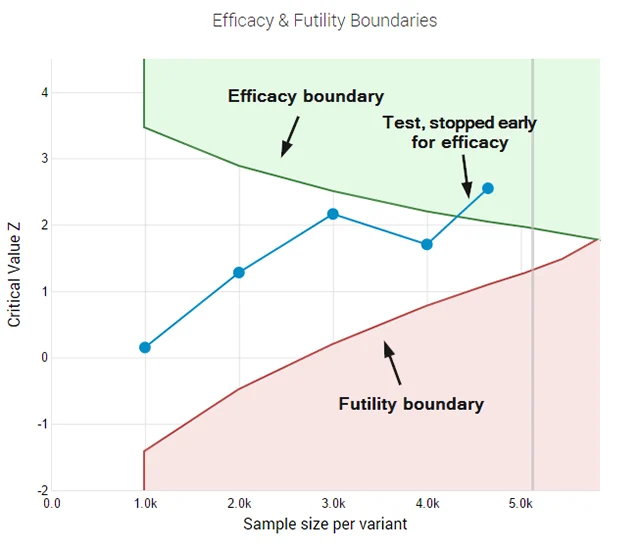
- Efficacy Stopping Rules: If a variant shows a massive, statistically validated lift early in the process, the test can be stopped for efficacy. This allows businesses to capitalize on winning ideas much faster than classical methods allow.
- Futility Stopping Rules: One of the most innovative aspects of the AGILE method is the ability to "fail fast." If a variant shows no sign of improvement or is performing significantly worse than the control, a futility boundary allows the practitioner to abandon the test early with a statistical guarantee that they aren’t missing a hidden winner.
- Sensitivity Alignment: Statistical power is baked into the design phase of an AGILE test. Practitioners must decide upfront on the minimum effect size of interest, ensuring that the test is properly equipped to detect meaningful changes.
Industry Implications and Analysis
The shift toward AGILE and sequential testing methodologies represents a professionalization of the Conversion Rate Optimization (CRO) industry. As organizations move away from "peek-and-stop" heuristics toward mathematically sound frameworks, the reliability of digital experiments will increase.
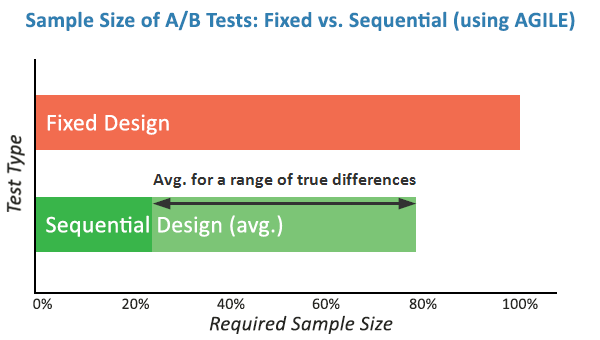
Data simulations comparing AGILE to classical fixed-sample tests show efficiency gains of 20% to 80%. In a competitive market, a company that can validate five ideas in the time its competitor validates two gains a significant strategic advantage. Moreover, the addition of futility rules reduces the "risk" of experimentation, making it easier for marketing teams to justify testing bold, high-risk, high-reward ideas.
However, the adoption of these methods requires a cultural shift. Stakeholders must move away from the obsession with a single p-value and toward a more nuanced understanding of risk management and resource allocation. It requires better tooling and a commitment to the "scientific" part of data science.
Ultimately, the AGILE statistical method aligns the math with the reality of the digital world. By acknowledging that practitioners will look at their data, the method provides a way to do so safely. This transition marks the end of the "wild west" era of A/B testing and the beginning of a more mature, rigorous, and efficient age of digital experimentation. As the digital economy continues to grow, those who master these advanced statistical principles will be the ones who drive the most sustainable growth for their organizations.