
 rifanmuazin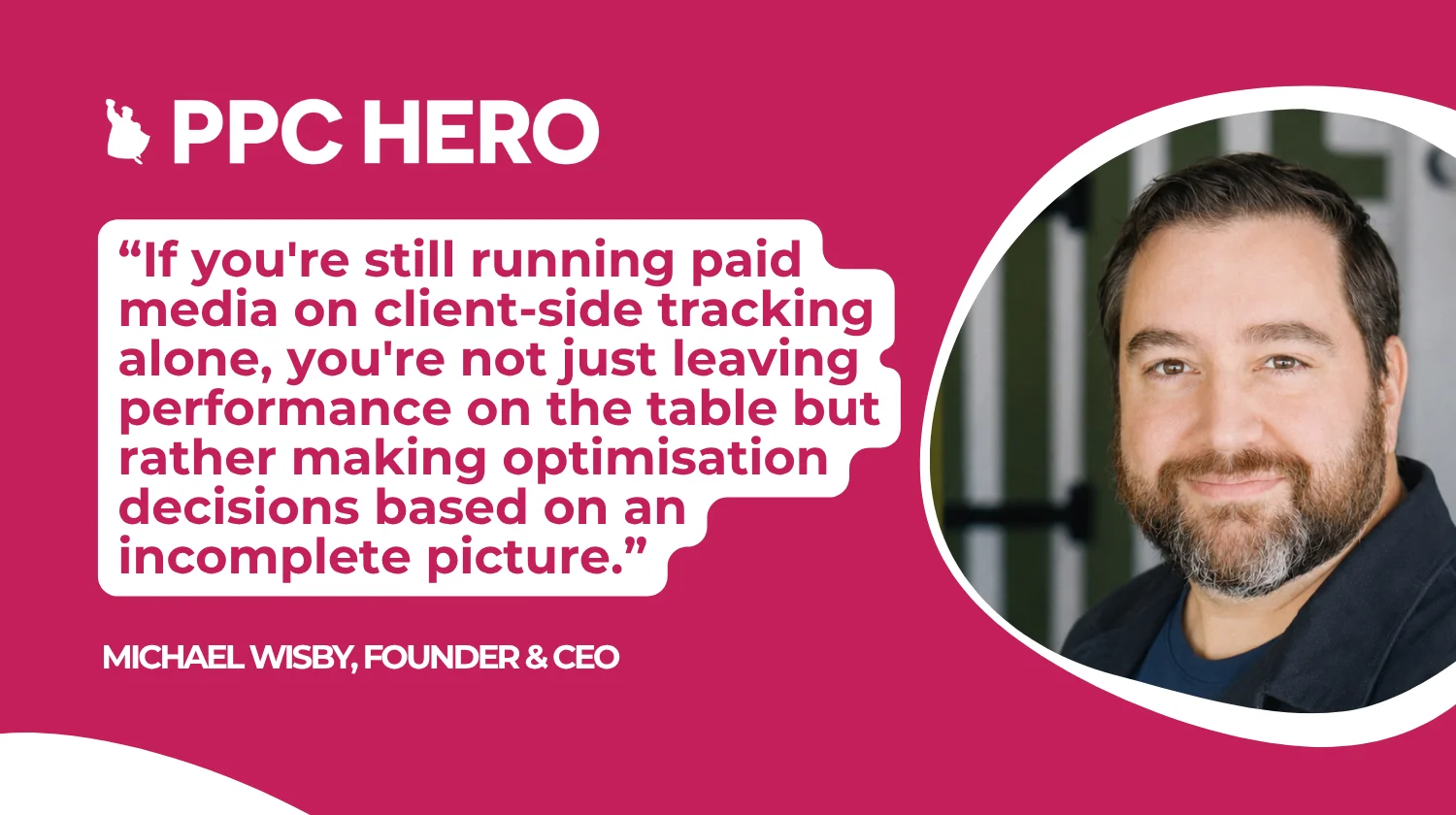
The performance marketing landscape is undergoing a seismic shift, leaving many advertisers flying blind. The fundamental measurement tools that have underpinned digital advertising for years are breaking down, creating a crisis of confidence and a significant risk to marketing effectiveness. The core issue: current campaign performance data is increasingly unreliable, making it impossible for marketers to know if their efforts are truly succeeding or failing.
This pervasive uncertainty stems from the dismantling of the traditional browser-based tracking infrastructure. For decades, the digital advertising ecosystem has relied on JavaScript pixels fired from user browsers to report conversion events back to ad platforms. However, this foundational layer is under siege from multiple fronts. Browsers are actively blocking third-party cookies, privacy regulations like GDPR and CCPA are restricting data collection, ad blockers are intercepting pixels before they can send data, and sophisticated technologies like Apple’s Intelligent Tracking Prevention (ITP) are silently eroding conversion data. As a result, performance marketers relying solely on these client-side methods are making critical optimization decisions based on incomplete and often inaccurate information, effectively “bidding on shadows.”
The solution, according to industry experts, lies in server-side tracking. This architectural shift is being hailed as the single highest-ROI infrastructure investment for businesses managing significant ad spend. By moving the tracking computation from the user’s browser to the advertiser’s server, a more robust, reliable, and privacy-compliant data pipeline can be established.
The Erosion of Client-Side Data: A Five-Front War
Understanding the necessity of server-side tracking requires a deep dive into the forces that are systematically dismantling traditional client-side measurement. This is not a singular issue but a convergence of technological, regulatory, and user-behavioral trends that are rendering browser-based pixels increasingly ineffective.
1. Browser Privacy Restrictions
The most significant challenge comes from browsers themselves, which are progressively tightening their privacy controls. Safari’s Intelligent Tracking Prevention (ITP) has been particularly aggressive, drastically shortening the lifespan of cookies. First-party cookies set via JavaScript are now often capped at 7 days, and in many cases, as little as 24 hours. Firefox’s Enhanced Tracking Protection is enabled by default, and even Google Chrome, once a holdout, is phasing out third-party cookies and introducing privacy-preserving APIs like the Topics API.
For advertisers operating in regions with high iPhone penetration, such as the UK where Safari’s market share is substantial, ITP’s impact is profound. A user clicking an ad on Monday and returning to convert on Thursday might find that the cookie linking their visit to the initial click has expired. This conversion, which represents a genuine success for the campaign, is then lost to attribution models. The campaign appears to underperform, return on ad spend (ROAS) is understated, and crucial signals for algorithmic optimization are starved.
2. Ad Blockers and Privacy Tools
The widespread adoption of ad blockers further compounds the problem. Industry estimates suggest that 30-40% of desktop users employ ad blockers, with this figure rising significantly among tech-savvy and business audiences. Modern ad blockers are not merely preventing ads from displaying; they are actively stripping tracking pixels from web pages. When essential tags like those from Google, Meta, or LinkedIn are blocked, the user’s entire interaction with the website becomes invisible to the advertising platforms. This is particularly acute for B2B advertisers targeting highly informed decision-makers, who are precisely the audience most likely to use these privacy tools.
3. iOS and App Tracking Transparency (ATT)
Apple’s App Tracking Transparency (ATT) framework, introduced with iOS 14.5, fundamentally altered the mobile advertising landscape. ATT requires users to explicitly opt in to tracking, with opt-in rates generally hovering between 25-35% across most sectors. This has led to a dramatic loss of visibility for advertisers, particularly Meta, in tracking conversion events on iOS devices. The decline in accurate signal data has degraded the effectiveness of campaign optimization on the platform. While ATT is a mobile-specific regulation, its ripple effects are felt across web campaigns by impacting Meta’s overall modeling accuracy, making its Conversions API (CAPI) an increasingly critical component for maintaining signal integrity.
4. Cross-Device and Cross-Browser Journeys
The contemporary buyer journey is rarely linear or confined to a single device. A prospect might engage with an ad on their mobile phone during a commute, conduct further research on their work laptop, and ultimately convert on their personal computer at home. Traditional client-side tracking, heavily reliant on browser cookies, often perceives these as three separate, anonymous users. Server-side tracking, when integrated with first-party data such as email addresses or user IDs, offers the capability to stitch these disparate touchpoints together, providing a unified and more accurate signal to ad platforms.
5. Page Speed and Tag Bloat
The proliferation of client-side tracking tags has also led to a significant increase in page load times. Each tag requires JavaScript to be downloaded, parsed, and executed within the user’s browser. A typical enterprise website might host between 15 and 30 marketing tags, all competing for browser resources. This can lead to slower website performance, increased bounce rates, and, critically, situations where users navigate away from a page before all tracking tags have successfully fired. Server-side tracking alleviates this burden by offloading computational tasks from the browser, leading to faster load times and more reliable conversion signal transmission.
The Transformative Power of Server-Side Tracking
Implementing server-side tracking addresses the deficiencies of client-side methods, yielding tangible improvements in campaign measurement and performance.
More Accurate Conversion Counts
The most immediate benefit of server-side tracking is a significant increase in attributed conversions. By bypassing browser restrictions, ad blockers, and cookie expirations, advertisers can recapture conversions that were previously invisible. Most advertisers report a 15-30% increase in attributed conversions post-implementation. This uplift is not due to an increase in actual conversions but rather a more accurate reflection of those already occurring. This enhanced accuracy directly impacts algorithmic optimization, as platforms like Google’s Smart Bidding rely on comprehensive conversion data to make informed bidding and budget allocation decisions.
Enhanced Signal for Algorithmic Optimization
Major advertising platforms are increasingly leaning on AI-driven optimization, evident in features like Google’s Performance Max, Meta’s Advantage+ campaigns, and LinkedIn’s predictive audiences. The effectiveness of these systems is directly proportional to the quality and quantity of the data they receive. Server-side tracking provides richer event data, including hashed Personally Identifiable Information (PII) like email addresses and phone numbers, transaction values, and custom parameters. This more robust signal allows algorithms to learn faster, bid more efficiently, and model audiences with greater precision.
Extended Attribution Windows
Server-side tracking facilitates the use of true first-party cookies with extended expiration windows, circumventing the 7-day cap imposed by ITP on JavaScript-set cookies. This is particularly crucial for B2B and high-consideration purchase scenarios where sales cycles can span weeks or even months. The ability to attribute conversions that occur days or weeks after an initial click significantly improves the perceived performance of top-of-funnel campaigns and provides a more accurate understanding of the full customer journey.
First-Party Data Activation
Server-side tracking provides a natural infrastructure for leveraging an advertiser’s first-party data. When a known user converts (e.g., logged in, filled out a form), hashed PII can be sent alongside the conversion event to ad platforms. This powers features like Google’s Enhanced Conversions and Meta’s Advanced Matching, crucial for audience targeting, lookalike modeling, and cross-device attribution in a world where third-party data is rapidly diminishing.
Improved Data Governance and Compliance
A significant advantage of server-side tracking is the enhanced control it offers over the data pipeline. Advertisers can inspect, filter, and redact data before it is sent to any ad platform, ensuring compliance with privacy regulations. This is particularly critical in the UK and EU, where the UK GDPR, PECR, and similar data protection laws mandate explicit opt-in consent for non-essential cookies. Server-side tracking provides a clean mechanism to enforce these consent decisions at the server level, mitigating the risk of substantial fines. The Information Commissioner’s Office (ICO) in the UK has been actively auditing websites for cookie compliance, with potential fines reaching up to £17.5 million or 4% of global turnover. In the US, the fragmented yet growing landscape of state privacy laws (e.g., CCPA/CPRA in California, CDPA in Virginia) further underscores the need for robust data governance. Server-side tracking offers a centralized control point to enforce consent, strip sensitive parameters, and audit data transmission, a level of control that is difficult to achieve with autonomous client-side tags.
The Implementation Landscape: Accessibility and Evolution
The technical barrier to implementing server-side tracking has significantly lowered in recent years, thanks to advancements in managed hosting platforms.

The Core Architecture: Server-Side GTM
The standard approach to server-side tracking involves deploying a server-side Google Tag Manager (sGTM) container. This is a separate GTM environment hosted on a cloud server, distinct from the browser-based client-side GTM. Historically, this required significant DevOps expertise and the provisioning of cloud infrastructure, such as Google Cloud Platform instances.
However, managed hosting platforms have revolutionized this process. Services like Stape.io, Addingwell, and TAGGRS now handle the server infrastructure, scaling, and maintenance, making server-side tracking accessible to a much wider audience. These platforms typically host the sGTM container on a first-party subdomain (e.g., data.yourdomain.com), ensuring that cookies set by the server are treated as true first-party cookies, immune to browser restrictions and ad blocker interference.
Platform-Specific Integrations
For Meta, server-side tracking primarily involves implementing the Conversions API (CAPI). CAPI enables the server to send web events directly to Meta’s servers, enriched with user parameters that aid in attribution. Meta recommends a “redundant setup,” running CAPI alongside the browser pixel to maximize signal capture, with event IDs used for deduplication.
On the Google side, server-side GTM facilitates Enhanced Conversions, where hashed first-party data is sent with conversion events to improve attribution accuracy, especially when cookies fail.
The Era of Managed Hosting
The evolution of managed hosting platforms has democratized server-side tracking. Stape.io, a leading provider, offers managed sGTM container hosting with tiered pricing starting from a free tier for testing up to business and enterprise plans catering to high-volume needs. These platforms abstract away the complexities of server provisioning, scaling, uptime monitoring, SSL certificates, and CDN distribution.
For businesses prioritizing data residency and GDPR compliance, EU-based hosting options like Addingwell and TAGGRS are available. These platforms offer a streamlined path to compliance by hosting infrastructure within the EU. Specialized solutions for e-commerce platforms like Shopify, such as Elevar and Littledata, further simplify the process with pre-configured server-side tracking tailored for e-commerce events.
While managed hosting has removed the infrastructure barrier, the strategic configuration of tracking logic remains critical. Advertisers still need to define their tracking events, map data fields, implement robust deduplication mechanisms, and integrate first-party data.
Implementation Effort and Common Pitfalls
A proper server-side tracking implementation, while made easier by managed hosting, still requires careful planning and execution. Setting up a managed sGTM container can take minutes, but configuring the tracking logic for a single platform might take 1-2 weeks for an experienced team. A comprehensive multi-platform implementation with consent integration and rigorous testing can extend to 3-6 weeks.
Several common mistakes can derail server-side tracking initiatives:
- Running Server-Side Exclusively for Meta: Meta’s recommendation for a redundant pixel and CAPI setup is crucial. Relying solely on CAPI can lead to a loss of valuable browser-side signals that Meta uses for modeling.
- Ignoring Deduplication: Inadequate event ID logic can lead to double-counting conversions, creating artificially inflated ROAS figures. Airtight deduplication is paramount.
- Failing to Set Up a First-Party Subdomain: Using a generic hosting URL instead of a subdomain of the advertiser’s domain negates the benefits of first-party cookie setting.
- Skipping Consent Mode Integration: Particularly for UK and EU advertisers, server-side tracking does not exempt them from consent requirements. Google’s Consent Mode v2 must be configured correctly to respect user consent decisions, ensuring compliance with GDPR and PECR. Failure to do so risks significant fines and erodes user trust.
- Treating it as “Set and Forget”: Server-side tracking requires ongoing monitoring. Event firing rates, deduplication effectiveness, and platform API changes necessitate continuous oversight.
The Business Case: A Strategic Imperative
For leadership teams, the adoption of server-side tracking transcends technical implementation; it represents a strategic imperative with clear financial and risk-management implications.
Maximizing Ad Spend Value
Advertisers are already investing heavily in paid media. Server-side tracking ensures that the full value of this investment is realized by capturing all attributable conversions, not just those visible through degraded client-side methods. It enhances the efficiency of existing ad spend by providing algorithms with the data they need to optimize more effectively.
A Force Multiplier for Performance
With a 20-30% increase in conversion signals, algorithmic bidding strategies can operate with greater intelligence. This translates to more conversions for the same spend or equivalent conversions at a lower cost. The relatively low cost of managed hosting platforms, often in the range of $20-$100 per month, offers a rapid ROI, typically paying for itself within the first billing cycle for accounts with significant ad spend.
Competitive Advantage and Future-Proofing
As platforms like Google and Meta increasingly tie campaign performance and auction dynamics to the quality of server-side data, advertisers who adopt these technologies will gain a competitive edge. The gap between those with robust data infrastructure and those without will widen. Investing in server-side tracking now is an investment in future campaign effectiveness and resilience.
Mitigating Regulatory Risk
For businesses operating under stringent data privacy regulations, particularly in the UK and EU, server-side tracking is becoming a critical component of compliance. It provides an auditable control point for data processing and consent enforcement, aligning with the expectations of data protection authorities. In the US, the evolving patchwork of state privacy laws further reinforces the need for proactive data governance. Implementing server-side tracking preemptively is a more cost-effective approach than retrofitting compliance measures or facing potential regulatory penalties.
The Iceberg Analogy: Beneath the Surface of Performance
The effectiveness of paid media campaigns can be likened to an iceberg. The visible portion—ad creative, targeting, bidding strategies, landing pages—is where most marketers focus their attention. This is the tangible “marketing” work. However, the submerged 80% of the iceberg—the data infrastructure, tracking implementation, conversion data pipeline, and first-party data integration—is what truly determines performance.
Without a solid data foundation, even the most brilliant creative or strategic targeting will falter. If half of all conversions are untracked, algorithms cannot accurately attribute success. If attribution windows are too short for long sales cycles, top-of-funnel campaigns will perpetually appear underperforming. If valuable audience segments are rendered invisible by ad blockers, scaling efforts will be misguided. Server-side tracking is not a mere feature; it is the unglamorous, foundational element upon which all successful performance marketing is built.
Getting Started in a Shifting Landscape
For advertisers ready to embrace server-side tracking, a structured approach is recommended:
- Audit Current Data Gaps: Compare conversion data reported by ad platforms with backend data from CRMs or e-commerce platforms. A discrepancy exceeding 20% signals a significant opportunity for server-side tracking.
- Select a Managed Hosting Platform: Leverage platforms like Stape.io, TAGGRS, or Addingwell to quickly set up a server-side GTM container. Stape’s free tier offers a low-risk entry point for testing. For UK/EU advertisers, European hosting options simplify data residency compliance.
- Prioritize Key Platforms: Begin with Google Ads and Meta, as they typically represent the largest share of ad spend. Implement GA4 and Google Ads conversion tracking via sGTM, followed by Meta CAPI.
- Establish a First-Party Subdomain: Crucially, configure the sGTM container on a subdomain of your domain (e.g., data.yourdomain.com) from the outset to ensure first-party cookie benefits.
- Rigorous Testing: Before full deployment, meticulously test event firing, deduplication, and user parameter hashing using tools like Meta’s Event Manager and Google’s Tag Assistant.
- Recognize the Limits of DIY: While managed hosting has removed infrastructure barriers, expertise in event mapping, deduplication logic, and consent mode configuration remains vital. Engaging specialists for complex implementations is often a wise investment.
- UK/EU Focus on Consent: For advertisers in the UK and EU, integrating server-side tracking with a robust consent management platform from day one is non-negotiable. Properly configured consent mode at the server level provides a more reliable and auditable compliance mechanism than client-side tag firing rules.
The tracking landscape is in permanent flux, with privacy restrictions and regulations tightening globally, particularly in the UK and EU. As client-side tracking continues to degrade, advertisers who proactively build their measurement infrastructure on a server-side foundation will be best positioned for sustained campaign success. The time to look below the surface and invest in the unseen architecture of performance marketing is now.










