

The long-standing debate concerning the strategic allocation and management of transactional versus marketing email infrastructure has intensified, playing out daily across the digital corridors and executive boardrooms of the world’s fastest-growing technology companies. For years, this operational schism has created an artificial divide, pitting the objectives of marketing teams against the foundational requirements of development teams, resulting in a landscape rife with inefficiencies, inconsistent customer experiences, and significant operational liabilities. As of January 20, 2026, a growing consensus points towards a unified email strategy as not merely an option, but a critical imperative for sustainable product-led growth (PLG).
Historically, the distinction between marketing and transactional emails was clear-cut, often managed by entirely separate systems and teams. Marketing emails, designed for campaigns, promotions, and engagement, typically resided within sophisticated marketing automation platforms. These tools empowered marketers with rich design capabilities, segmentation, and analytics to drive user acquisition and retention through beautiful newsletters and intricate automation sequences. On the other side stood transactional emails – the backbone of application functionality – handling critical notifications such as password resets, welcome messages, order confirmations, and security alerts. These were traditionally managed by development teams, often hard-coded into the application and sent via robust but often rudimentary email APIs, prioritized for reliability and speed over design flexibility. This operational separation, while seemingly logical in its nascent stages, has, over time, fostered two parallel universes within a single organization, leading to disconnected workflows, disparate data, and a fractured brand identity.

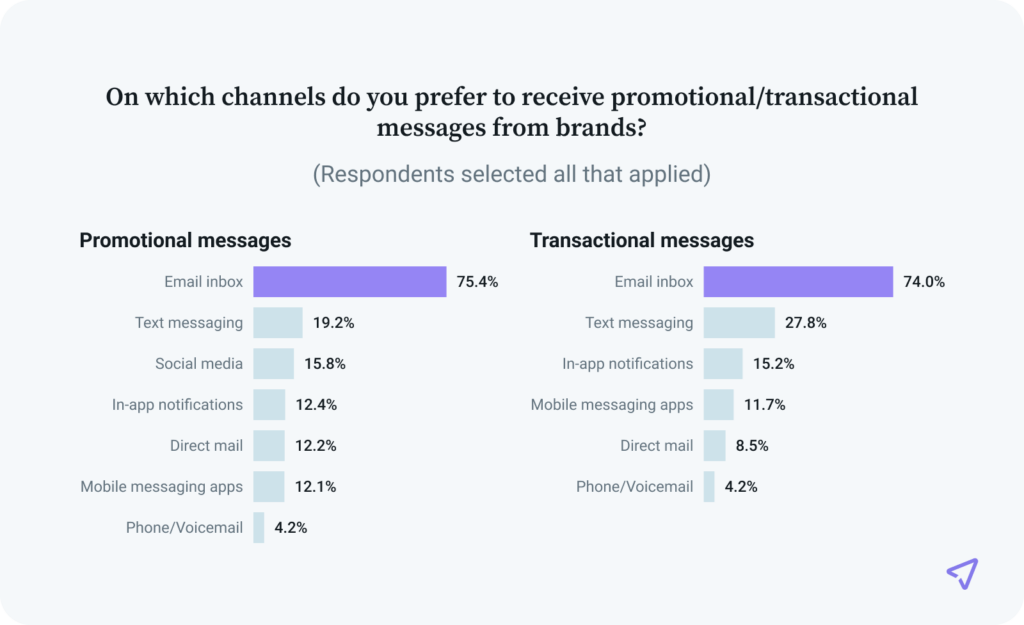
The inherent conflict arises from the customer’s perspective: they interact with one brand, not a series of departmental silos. A prospective user, captivated by a meticulously crafted marketing email showcasing a product’s sleek interface and innovative features, expects a seamless experience throughout their journey. When this user then receives a plain-text, unbranded password reset email after a minor login hiccup, the carefully cultivated sense of trust and sophistication can instantly evaporate. This jarring inconsistency, frequently observed in payment receipts, shipping notifications, and error messages, creates what industry analysts term "brand trust decay"—a death by a thousand small, inconsistent cuts. Data from Mailjet’s 2024 email engagement report highlighted this fragility, revealing that while 71% of respondents would check spam folders for a transactional email, the underlying sentiment was one of inconvenience and a diminished perception of professionalism. The report underscored that a distinct look and voice across all customer interactions significantly increases email recognition, trust, and ultimately, engagement.
Beyond the immediate impact on brand perception, the bifurcated email strategy introduces profound operational and strategic challenges. One of the most keenly felt pain points within product-led growth organizations is the "developer bottleneck." In a fast-paced, competitive environment where speed to market and iterative improvements are paramount, a divided email infrastructure becomes a significant impediment. A Growth Manager, armed with insights from user behavior analytics, might devise a highly optimized, five-part automated onboarding sequence aimed at guiding new users through critical activation steps. While the content is compelling and designs are engaging, the implementation often grinds to a halt. If crucial welcome emails or activation prompts are hard-coded into the application and tied to a basic transactional service inaccessible to the marketing team, the request enters a development backlog. This prioritization queue, often saturated with critical bug fixes and new feature builds, can delay deployment for weeks or even months. The ability to rapidly A/B test subject lines, dynamically personalize content based on user actions, or refine calls-to-action to maximize conversions is severely hampered. What should be a growth accelerator becomes a systemic brake on innovation, directly impacting key performance indicators such as user activation rates and churn reduction.
Furthermore, the operational and legal ramifications of a divided email strategy are substantial. For platform owners, operations leaders, and compliance officers, email governance and data privacy are non-negotiable priorities. The existence of duplicate data stores across separate marketing and transactional platforms creates a labyrinth of compliance risks. With stringent regulations like GDPR and CCPA imposing severe financial penalties, confidently asserting that a user’s "right to be forgotten" has been fully exercised across all systems becomes a formidable challenge. Similarly, ensuring that a customer who unsubscribes from a newsletter does not inadvertently receive promotional content triggered by a "transactional" system is a constant battle, potentially leading to compliance violations and significant damage to sender reputation. This division also directly impacts email deliverability, a cornerstone of effective communication. If a transactional system, perhaps due to less rigorous list hygiene practices, consistently sends emails to invalid addresses, it can degrade the sender’s domain reputation. Since both marketing and transactional emails often originate from the same domain, the marketing team’s meticulously crafted campaigns can find themselves rerouted to spam folders, irrespective of their individual quality or compliance. This scenario underscores a critical vulnerability: the weakest link in the email infrastructure can compromise the entire communication ecosystem.
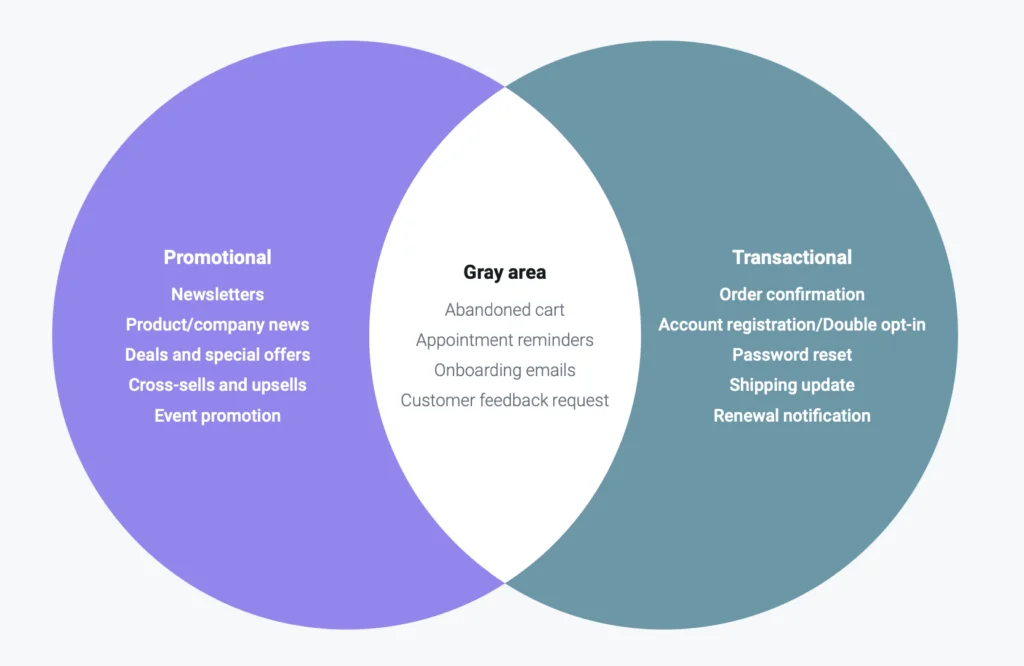
The evolution of digital marketing and product development, particularly the rise of Product-Led Growth (PLG) strategies, has amplified the urgency for a unified approach. PLG models inherently blur the lines between product, marketing, and sales, focusing on the product itself as the primary driver of customer acquisition, retention, and expansion. In such a model, every customer touchpoint, including every email, is an integral part of the product experience. The artificial separation of email types contradicts the very essence of PLG, which demands a cohesive, data-driven, and agile approach to customer engagement.
The strategic solution to this operational chaos is not a series of compromises but a fundamental shift towards a unified email platform. This model is predicated on the simple yet profound principle that all emails are part of a singular, continuous customer conversation. By consolidating these functions, organizations can unlock profound, business-altering benefits that foster both growth and robust control.
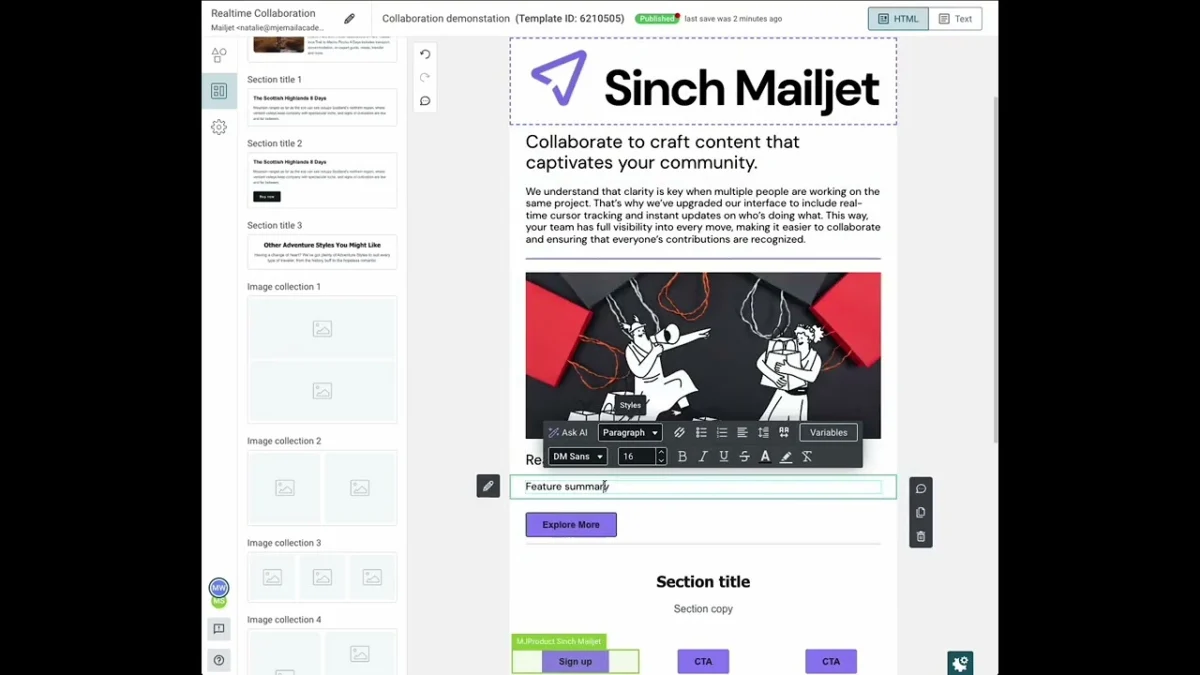
Firstly, a unified platform enables the delivery of a truly consistent customer journey. When every email, from the initial marketing outreach to the final critical notification, originates from a single, centralized platform, a cohesive and professional brand experience becomes attainable. This consistency builds trust and delight, speaking with one voice and reinforcing brand identity at every touchpoint. This is made possible through advanced email template management systems designed for modern, collaborative teams. Platforms such as Mailjet offer collaborative tools that allow marketing and design teams to build and maintain a shared gallery of beautiful, on-brand, and mobile-responsive templates for every conceivable scenario—be it a password reset, a feature announcement, a usage alert, or a payment receipt. Developers can then seamlessly integrate these pre-approved templates via a simple API call, confident that every email triggered from the application is polished and perfectly aligned with the brand’s aesthetic and voice. This integration effectively resolves the perennial debate over transactional versus marketing email branding.
Secondly, a unified platform empowers teams and dramatically accelerates product innovation by permanently dismantling the developer bottleneck. In this re-optimized workflow, Growth Managers gain unprecedented autonomy. They can independently design, iterate, and launch comprehensive email automation sequences for SaaS onboarding, nurture campaigns, or re-engagement flows using intuitive visual workflow builders. This newfound agility allows for rapid A/B testing of subject lines, calls-to-action, and content variations to optimize open rates, click-through rates, and conversion metrics in real-time. The developer’s role evolves from being a bottleneck to a strategic enabler. Instead of being mired in requests to code HTML emails or make minor content adjustments, developers can focus on their core competency: building an exceptional product. Their responsibility shifts to architecting clean API calls that trigger the appropriate, pre-designed templates at precise moments in the user journey. This API-first approach drastically shrinks innovation cycles from months and weeks to mere hours and days, fostering a culture of rapid experimentation and continuous improvement vital for PLG success.
Thirdly, for platform owners and operations leaders, a unified platform delivers the highly coveted "single pane of glass" view for the entire email infrastructure. From one central dashboard, administrators can monitor deliverability metrics across all email types, manage user permissions with granular role-based access control, and maintain a single, global suppression list that guarantees compliance with data privacy regulations. This centralized control does not, however, come at the expense of team agility. Leading platforms are engineered to provide both autonomy and oversight. Mailjet’s Sub-accounts feature, for instance, allows a central administrator to establish distinct, sandboxed accounts for different teams, brands, or environments (e.g., development, staging, production). Each team can operate independently, managing their own templates and sender lists, while the master account owner retains ultimate visibility and control over critical aspects such as billing, security policies, and global compliance rules. This model represents centralized email management without stifling the operational agility required by modern, distributed teams.
The enduring discussion around the perceived necessity of separate transactional and marketing email platforms is rapidly becoming a relic of a bygone digital era. As of early 2026, the strategic advantage offered by unified email platforms—in fostering deep customer relationships, accelerating product innovation, and providing the robust, centralized governance essential for scaling with unwavering confidence—cannot be overstated. The shift from a fragmented, siloed approach to a cohesive, all-in-one strategy is not merely a technological upgrade; it is a fundamental reorientation that aligns technology with overarching business objectives. Modern enterprises, particularly those embracing product-led growth, are recognizing that breaking down these email silos and combining transactional and marketing email effectively is no longer a luxury but a strategic imperative. The future of customer engagement and operational efficiency hinges on this unification, ensuring a seamless, trustworthy, and dynamic email experience from the first marketing touchpoint to the last critical notification.








