Dwi Wanna
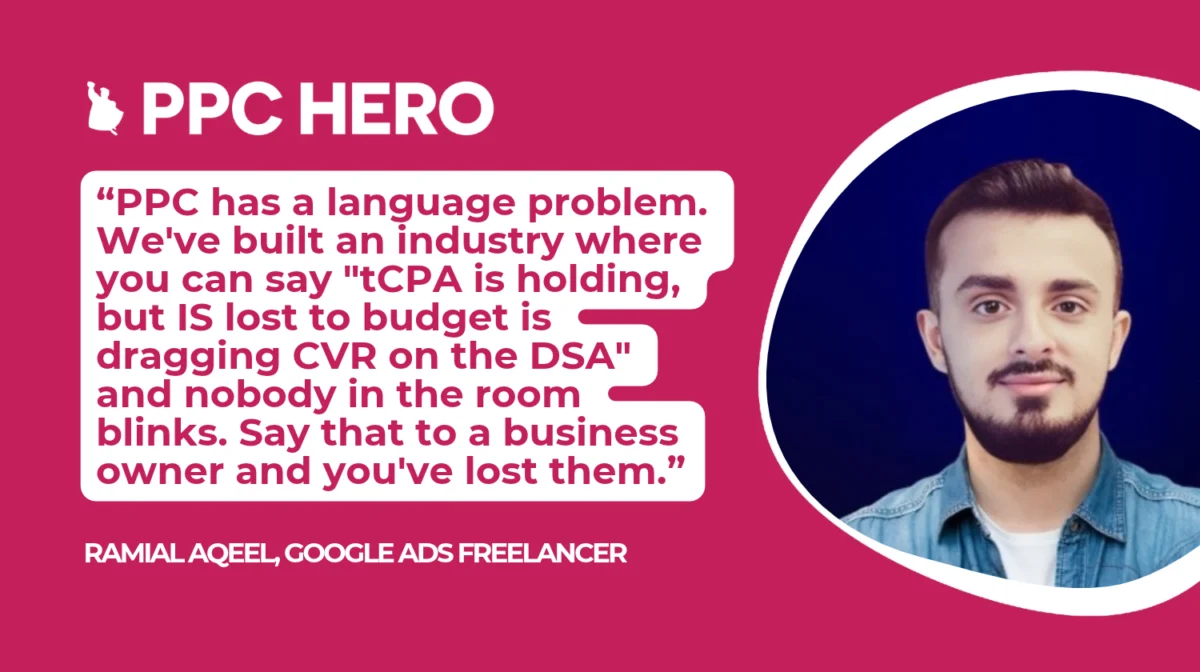
The world of Pay-Per-Click (PPC) advertising, while powerful and effective for businesses seeking to reach their target audiences online, is often characterized by a dense and sometimes impenetrable lexicon of acronyms. This specialized language, born from the need for efficiency and precision in a fast-paced digital environment, can create a significant barrier to understanding for those outside the immediate industry. The proliferation of these abbreviations, while saving time for seasoned professionals, can lead to confusion, miscommunication, and ultimately, costly strategic errors when not clearly defined and understood. This comprehensive guide aims to demystify the essential PPC acronyms, providing clarity on their meaning and significance for effective campaign management and stakeholder communication.
The Foundation: Core Concepts in PPC and Search Engine Marketing
At the heart of digital advertising lies the concept of paying for visibility and engagement. Understanding the fundamental building blocks is crucial before delving into more complex metrics and strategies.
-
PPC (Pay-Per-Click): This is the overarching model where advertisers pay a fee each time one of their ads is clicked. While historically referring to this specific payment structure, PPC is now broadly used as shorthand for all forms of paid online advertising, encompassing search, display, social media, and more. Its effectiveness lies in driving targeted traffic directly to a website or landing page, with costs directly tied to user interaction.
-
SEM (Search Engine Marketing): This term encompasses both paid search advertising (PPC) and organic search engine optimization (SEO). It’s critical to clarify whether an individual or report is referring to the combined efforts of paid and organic strategies or solely the paid components. In many contexts, SEM is used interchangeably with PPC, but a precise definition is vital for accurate performance analysis.
-
SERP (Search Engine Results Page): This is the page a user sees after performing a search query on a search engine like Google. It’s a dynamic landscape where paid advertisements, organic listings, local map packs, and increasingly, AI-generated overviews compete for user attention. Understanding the SERP’s structure and the placement of ads is fundamental to PPC strategy.
-
KPI (Key Performance Indicator): These are the critical metrics that define the success of a PPC campaign. Instead of tracking every possible data point, KPIs focus on the one or two most important numbers that directly align with business objectives. For example, a KPI could be the Cost Per Acquisition (CPA) for e-commerce sales or the number of qualified leads generated for a B2B service.
Measuring Success: Essential Performance Metrics
The true value of PPC lies in its measurability. A robust understanding of performance metrics allows advertisers to gauge efficiency, identify areas for improvement, and demonstrate ROI.
-
CPC (Cost Per Click): This is the actual amount an advertiser pays for each click on their ad. It is calculated by dividing the total cost of clicks by the total number of clicks. The "Max CPC" is the highest bid an advertiser is willing to pay for a click, acting as a ceiling for their bidding strategy.
-
CTR (Click-Through Rate): Calculated as (Clicks / Impressions) * 100, CTR is a crucial indicator of ad relevance and effectiveness. A high CTR suggests that the ad copy and targeting resonate with the searcher’s intent. It also serves as a significant signal to search engines about ad quality, potentially influencing ad rankings.
-
CVR (Conversion Rate): This metric measures the percentage of clicks that result in a desired action, known as a conversion. It’s calculated as (Conversions / Clicks) * 100. It’s important to note that platforms like Google Analytics 4 (GA4) often use "sessions" instead of "clicks" in their CVR calculations, requiring careful attention to the data source.
-
CPA (Cost Per Acquisition): This metric represents the average cost incurred to acquire a customer or achieve a specific conversion goal. It’s calculated as Total Cost / Total Conversions. The accuracy of CPA is heavily dependent on the robustness and reliability of the conversion tracking setup.
-
CPL (Cost Per Lead): A variation of CPA specifically for lead generation campaigns, CPL measures the cost of acquiring a single lead. It’s crucial to distinguish a "lead" from a "customer," as not all leads will convert into paying customers.
-
ROAS (Return On Ad Spend): This is a profitability metric calculated as (Conversion Value / Cost) * 100. It measures the revenue generated for every dollar spent on advertising. It’s important to remember that ROAS is typically based on revenue, not profit, meaning the actual profit margin needs separate consideration.
-
AOV (Average Order Value): Calculated as Total Revenue / Total Orders, AOV represents the average amount a customer spends per transaction. This metric is often overlooked but is a powerful lever for improving ROAS, as increasing AOV can significantly boost overall revenue without necessarily increasing ad spend.
-
CPM (Cost Per Mille): Mille is Latin for thousand. CPM represents the cost an advertiser pays for one thousand impressions of their ad. This metric is more common in display and programmatic advertising where brand awareness and reach are primary objectives.
Strategic Bidding: Driving Performance and Efficiency
Automated bidding strategies have become increasingly sophisticated, allowing advertisers to delegate optimization tasks to algorithms. However, understanding the underlying principles is essential for effective management.
-
MaxConvs (Maximize Conversions): This is an automated bidding strategy designed to get the most conversions possible within a given budget. It aims to spend the entire budget to achieve the highest volume of desired actions.
-
tCPA (Target Cost Per Action): This strategy builds upon "Maximize Conversions" by adding a specific target CPA. The algorithm will aim to acquire conversions at or below the set target CPA, adjusting bids accordingly.
-
MCV (Maximize Conversion Value): Similar to MaxConvs, this strategy aims to generate the highest possible conversion value for the budget. It is particularly useful for businesses with varying product prices or services, prioritizing higher-value conversions.
-
tROAS (Target Return On Ad Spend): This is the value-focused counterpart to tCPA. Advertisers set a desired ROAS percentage (e.g., 400%, meaning for every dollar spent, they want to generate four dollars in revenue), and the algorithm optimizes bids to achieve this target. It is crucial to enter the target as a percentage (e.g., 400) rather than a decimal (e.g., 4).
-
TIS (Target Impression Share): This bidding strategy focuses on achieving a specific percentage of impressions in a particular location on the SERP, such as the absolute top position or the top of the page. It is often used for brand awareness campaigns or when ensuring visibility is paramount. It is strongly recommended to cap the maximum CPC when using TIS to prevent excessive spending.
Campaign Structure and Ad Formats: Reaching the Right Audience
The evolution of advertising platforms has introduced new campaign types and ad formats, each with its unique characteristics and targeting capabilities.
-
PMax (Performance Max): This is a campaign type that leverages Google’s AI to run across all of Google’s channels, including Search, Display, YouTube, Gmail, and Discover, from a single campaign. It requires advertisers to provide assets (text, images, videos) and audience signals, allowing the AI to optimize for conversions.
-
DG (Demand Gen): This campaign type focuses on visually rich ads displayed on platforms like YouTube, Google Discover, and Gmail. It aims to engage users further down the marketing funnel who have shown interest in products or services.
-
DSA (Dynamic Search Ads): These ads automatically target relevant searches based on the content of a website. Google crawls the website and generates headlines and landing pages. Importantly, DSA campaigns are being integrated into newer AI-driven formats, with Google announcing a transition towards "AI Max" for Search in the coming years. This shift signifies a move towards more predictive and broader matching capabilities.
-
AI Max (AI Max for Search): This emerging concept represents an evolution of search advertising, promising broader keyword matching and automated ad copy generation layered onto the traditional Search campaigns, further enhancing the AI’s role in campaign management.
-
RSA (Responsive Search Ad): These ads allow advertisers to provide multiple headlines (up to 15) and descriptions (up to 4). Google’s AI then dynamically combines these assets to create the most relevant ad for each search query.
-
SQR (Search Query Report): This report reveals the actual search terms users typed into search engines that triggered an advertiser’s ad. Previously known as the Search Query Report, it is now more commonly referred to as the "search terms" report. Analyzing this data is critical for identifying new keyword opportunities and negative keywords to refine targeting.
Quality and Auction Dynamics: The Engine of Ad Placement
Search engines operate complex auction systems where ad quality plays a significant role in determining ad placement and cost.

-
QS (Quality Score): This is a diagnostic metric assigned by Google on a scale of 1 to 10, assessing the expected click-through rate, ad relevance, and landing page experience. While not a direct KPI, a low Quality Score can lead to higher costs and lower ad positions.
-
IS (Impression Share): This metric indicates the percentage of eligible impressions an ad received compared to the total number of eligible impressions. A low Impression Share might suggest missed opportunities due to budget limitations, low bids, or ad rank issues.
-
Abs. Top IS (Absolute Top Impression Share): This specifically measures the percentage of impressions where an ad appeared in the very first ad position on the SERP. Achieving a high Absolute Top Impression Share is often a goal for advertisers seeking maximum visibility.
Audience Targeting and Shopping Campaigns: Reaching Specific User Segments
Beyond broad keyword targeting, PPC offers sophisticated ways to reach specific user groups and showcase products.
-
RLSA (Remarketing Lists for Search Ads): This allows advertisers to bid differently for users who have previously visited their website when they perform new searches. It enables tailored messaging and bidding strategies for a warm audience.
-
RMKT (Remarketing): This broader term refers to showing ads to users who have previously interacted with a brand’s website or app. It’s a powerful tool for re-engaging potential customers and driving them back to complete a desired action.
-
CM (Customer Match): This feature allows advertisers to upload their own customer lists (email addresses, phone numbers) to target or exclude specific segments of their existing customer base on platforms like Google Ads.
-
GMC (Google Merchant Center): This is a platform where businesses upload their product data, creating a product feed that powers Google Shopping campaigns and other Google product-related advertising features.
-
GTIN (Global Trade Item Number): This is a unique product identifier, such as a barcode number (e.g., UPC, EAN). Missing GTINs can significantly limit the reach and visibility of products in Google Shopping campaigns.
Landing Page Optimization: The Crucial Bridge to Conversion
The effectiveness of a PPC campaign extends beyond the ad itself to the experience users have after clicking.
-
LP (Landing Page): This is the specific page on a website where a user is directed after clicking on an ad. Landing pages should be designed with the ad’s promise in mind, focusing on a single call to action and providing a seamless user experience, rather than being a generic homepage.
-
CTA (Call To Action): This is the specific instruction or prompt designed to encourage a user to take a desired action, such as "Buy Now," "Sign Up," or "Download." A clear and compelling CTA is essential for driving conversions.
-
CRO (Conversion Rate Optimisation): This is the process of systematically improving a website or landing page to increase the percentage of visitors who complete a desired action. It often involves A/B testing and data analysis.
-
A/B (A vs B Test or Experiment): This is a method of comparing two versions of a webpage, ad, or email to determine which one performs better. Traffic is split between the two versions, and the version that yields a better result (e.g., higher conversion rate) is declared the winner.
Tracking and Attribution: Understanding the Journey
Accurate tracking and attribution are fundamental to understanding what’s working in PPC and justifying marketing spend.
-
GA4 (Google Analytics 4): This is Google’s latest analytics platform, designed to provide a more comprehensive view of user behavior across different devices and platforms. It’s important to note that GA4’s "key events" are not always directly aligned with PPC conversion goals, requiring careful configuration.
-
GTM (Google Tag Manager): This is a free tool that allows users to manage and deploy marketing tags (tracking codes) on their websites without needing to modify the website’s code directly.
-
GCLID (Google Click Identifier): This is a parameter appended to URLs that helps tie an ad click to a specific conversion. It’s a crucial component of Google Ads conversion tracking.
-
UTM (Urchin Tracking Module): These are tags added to URLs that provide analytics platforms with information about the traffic source, medium, and campaign. They are essential for understanding where website traffic originates.
-
EC (Enhanced Conversions): This feature allows advertisers to send hashed customer data (e.g., email addresses) to Google Ads, which can help recover conversions that might otherwise be lost due to privacy changes or cookie limitations.
-
OCT (Offline Conversion Tracking): This enables advertisers to upload conversion data from their CRM systems (e.g., sales closures, qualified leads) back to Google Ads. This is vital for businesses with longer sales cycles.
-
DDA (Data-Driven Attribution): This is Google’s default attribution model, which uses machine learning to distribute credit for conversions across all the touchpoints in a customer’s journey, rather than solely crediting the last click.
The Business Perspective: Financial Metrics Beyond Ad Spend
While PPC metrics focus on campaign performance, understanding the broader financial impact is critical for business decision-making.
-
ROI (Return On Investment): This is a profitability metric calculated as (Net Profit / Cost of Investment) * 100. Unlike ROAS, which is revenue-based, ROI considers the actual profit generated.
-
POAS (Profit On Ad Spend): This metric calculates gross profit generated per dollar spent on advertising. It offers a more nuanced view of profitability than ROAS alone.
-
MER (Marketing Efficiency Ratio): This is a broader metric that measures total revenue generated against the total marketing spend. It provides a holistic view of marketing’s contribution to revenue.
-
CAC (Customer Acquisition Cost): This represents the total cost of sales and marketing efforts required to acquire a new customer. It is not the same as CPA, as CAC often encompasses a broader range of marketing and sales expenses.
-
LTV (Lifetime Value): This metric estimates the total revenue a business can expect to generate from a single customer over their entire relationship with the company. High LTV justifies higher CAC.
-
MQL / SQL (Marketing Qualified Lead / Sales Qualified Lead): MQL refers to a lead that has shown interest and is deemed likely to become a customer by the marketing team. SQL is a lead that has been further vetted and accepted by the sales team as a viable prospect.
The Final Word: Clarity Over Jargon
Ultimately, the most valuable skill in PPC is not the ability to rattle off acronyms, but the capacity to translate them into clear, actionable business insights. Instead of stating "IS Lost (Budget) is 40%," a more effective communication would be, "We are missing out on four out of every ten potential search queries because our campaign budget is being exhausted before the end of the period." This approach ensures that stakeholders, regardless of their technical expertise, can grasp the implications of campaign performance and make informed decisions. The consistent and accurate use of these terms, coupled with a commitment to translating them for a broader audience, is the true hallmark of a proficient PPC professional.

 Lina Irawan

 Jia Lissa