Artificial intelligence (AI) social listening is rapidly reshaping how organizations understand public sentiment and market dynamics, offering unprecedented speed and depth in discerning what individuals are not only saying but genuinely feeling about brands, products, competitors, and industries. This technological evolution moves beyond mere keyword tracking, leveraging sophisticated algorithms to interpret complex linguistic nuances, visual cues, and even auditory data across a vast digital landscape. By 2026, AI-powered social listening has become an indispensable strategic asset, automating the arduous task of sifting through immense volumes of online content to deliver actionable insights that drive proactive decision-making.

Defining the New Era of Digital Intelligence
At its core, AI social listening employs advanced artificial intelligence to continuously monitor social media channels and a broader spectrum of online platforms for mentions related to specific topics. Unlike traditional methods that rely heavily on manual review and exact phrase matching, AI tools autonomously collect, filter, and analyze massive datasets in real-time. This process involves scanning billions of posts, comments, images, videos, and audio files, detecting intricate patterns, and translating them into comprehensive, digestible insights. The shift from manual data aggregation to AI-driven analysis marks a pivotal moment, freeing up human resources to focus on strategic interpretation and response rather than tedious data collection.

The Evolution of Digital Intelligence: A Brief Chronology
The journey to AI social listening began with rudimentary media monitoring in the pre-internet era, evolving through several stages:
- Early 2000s: Keyword Tracking: Initial digital monitoring involved simple keyword searches across nascent online forums and early social platforms. This was largely reactive, focused on identifying direct mentions.
- Mid-2000s to Early 2010s: Social Monitoring: With the rise of platforms like Facebook and Twitter, tools emerged to track engagement metrics, identify influencers, and respond to customer queries. Sentiment analysis was basic, often just positive/negative categorization.
- Mid-2010s to Early 2020s: Advanced Social Listening: The explosion of user-generated content necessitated more sophisticated analytics. Natural Language Processing (NLP) began to improve sentiment accuracy, and the focus shifted from just tracking to understanding broader trends.
- Early 2020s Onwards: AI-Powered Social Listening (2026 Context): The integration of deep learning and advanced NLP has propelled social listening into its current AI-driven phase. This iteration includes context-aware sentiment analysis, visual and audio recognition, multilingual processing, and increasingly, predictive analytics. This progression underscores the growing complexity of the digital sphere and the need for intelligent systems to make sense of it.
How AI Transforms Social Data into Actionable Insights
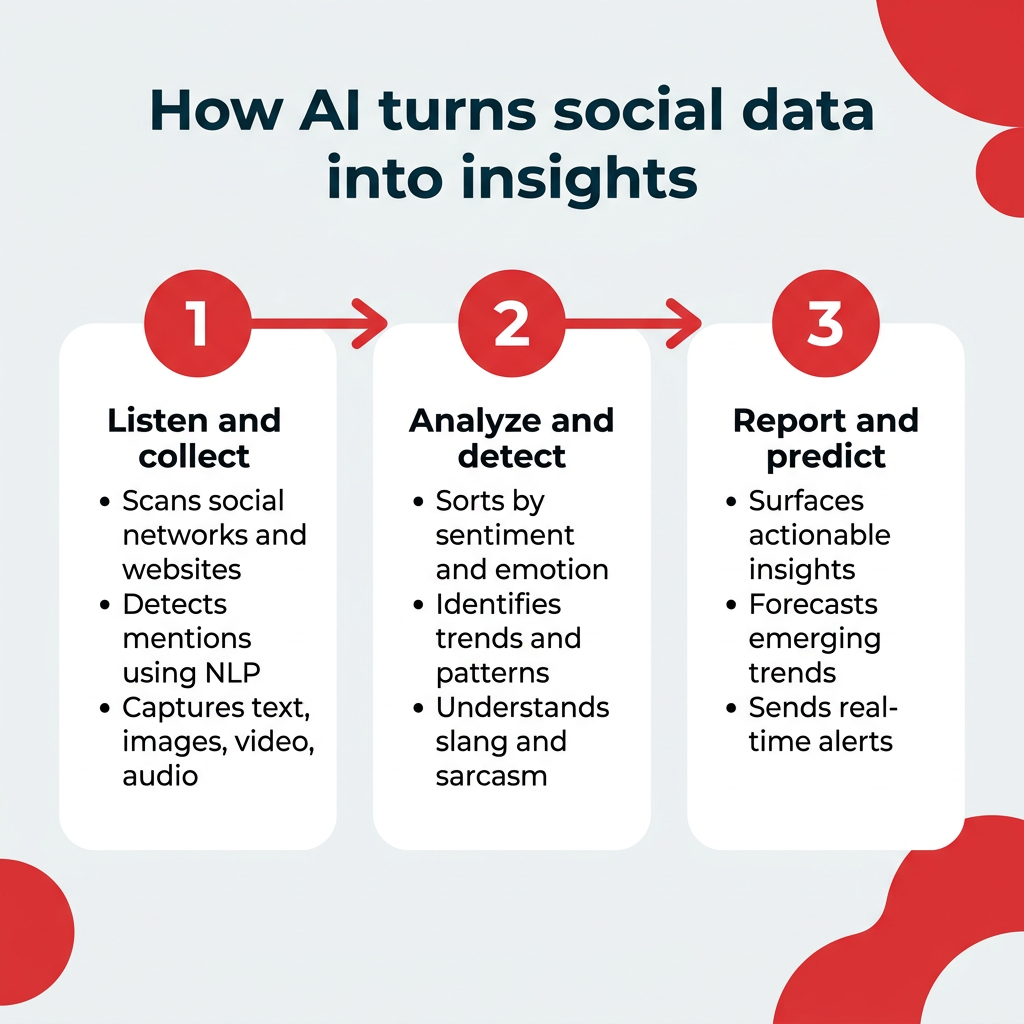
The operational framework of AI social listening can be broken down into three critical stages: listening and data collection, AI analysis and sentiment detection, and AI reporting and predictive insights. This integrated process allows organizations to move from raw data to refined, strategic intelligence.
-
AI Listening and Data Collection:
AI social listening platforms continuously scan an expansive array of online sources, including major social networks (e.g., X, Instagram, Facebook, TikTok, LinkedIn, YouTube), blogs, forums, news sites, review platforms, and even emerging networks. Crucially, these tools leverage Natural Language Processing (NLP) to go beyond exact keyword matches. NLP allows AI to interpret the nuances of human language, including context, slang, common misspellings, and even indirect brand references. This capability ensures that a mention of “that famous coffee shop with the mermaid logo” is recognized as a reference to Starbucks, for instance, even without a direct brand name. Advanced AI algorithms are also trained to recognize logos, objects, and text within images and videos, enabling a form of “visual listening” that captures conversations where brands might appear without being explicitly text-mentioned. This comprehensive data capture ensures a 360-degree view of online discourse. -
AI Analysis and Sentiment Detection:
Once data is collected, AI algorithms undertake a deep analysis of these vast datasets, identifying patterns, emerging trends, and anomalies that would be impossible for human analysts to spot at scale. A cornerstone of this stage is sentiment analysis, powered by advanced NLP. AI can accurately classify posts as positive, negative, or neutral, but its capabilities extend further to detecting specific emotions like anger, excitement, frustration, or joy. Crucially, modern AI can interpret casual language, sarcasm, and irony, understanding that a phrase like “This product is sick!” often conveys enthusiasm rather than negativity. Beyond text, visual listening analyzes images and videos for brand presence, product usage, or contextual relevance, while audio listening can detect spoken mentions in podcasts or video content. This multi-modal analysis provides a richer, more accurate picture of public perception.
-
AI Reporting and Predictive Insights:
The final stage translates complex data and analyses into clear, actionable reports. Instead of merely presenting data spikes, AI social listening tools can offer insights into the underlying causes of these spikes, helping marketers understand why a conversation intensified. A significant advancement in 2026 is the widespread integration of predictive analytics. These capabilities allow AI to forecast future changes, such as rising interest in a specific topic, the potential for a trend to go viral, or even potential reputational risks to a brand. By identifying emerging signals before they peak, teams can proactively address issues or capitalize on opportunities, shifting from reactive damage control to strategic foresight. According to a 2025 Gartner CMO Spend Survey, 49% of CMOs cite improved time efficiency as a top ROI driver for Generative AI, underscoring the value of these automated insights.
Illustrative Success: The NBA Case Study
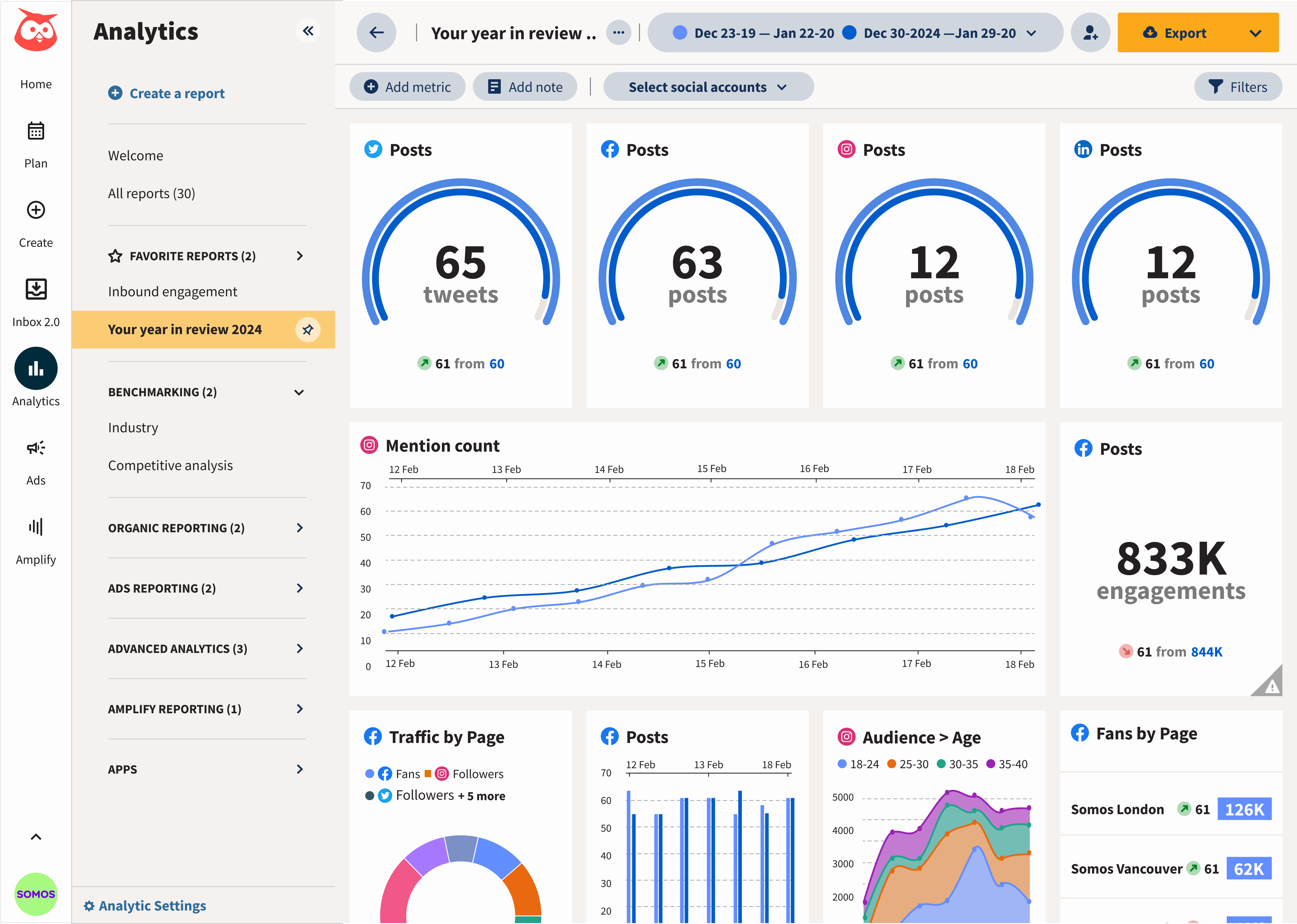
The practical impact of AI social listening is best understood through real-world applications. One notable example involves a prominent NBA team seeking to deepen fan engagement and quantify its social media efforts. By consolidating vast amounts of social data through advanced listening platforms, the team’s marketing department identified a clear fan preference for interactive content such as polls, Q&As, and authentic, behind-the-scenes footage, rather than heavily repurposed clips.
Armed with these insights, the team strategically pivoted its content strategy, increasing original posts to between 50-80% of their output. This direct response to fan feedback yielded impressive results: a 352% average increase in video views season-over-season and a 46% growth in overall impressions. Further sentiment analysis revealed nine key emotional drivers that resonated most strongly with their fanbase, allowing the team to craft a more collaborative content approach that kept audiences invested throughout the basketball season and beyond. Competitive analysis reports, also generated by AI, provided crucial benchmarking against other teams, substantiating the need for additional marketing resources and ultimately leading to a new hire. This strategic optimization resulted in a 27% rise in engagement despite a reduction in the sheer volume of posts, demonstrating the power of smarter, data-driven content.

Strategic Imperatives: The Benefits for Modern Marketers
AI social listening offers a multitude of benefits that are transforming marketing strategies in 2026, allowing marketers to track more conversations with greater clarity and efficiency.
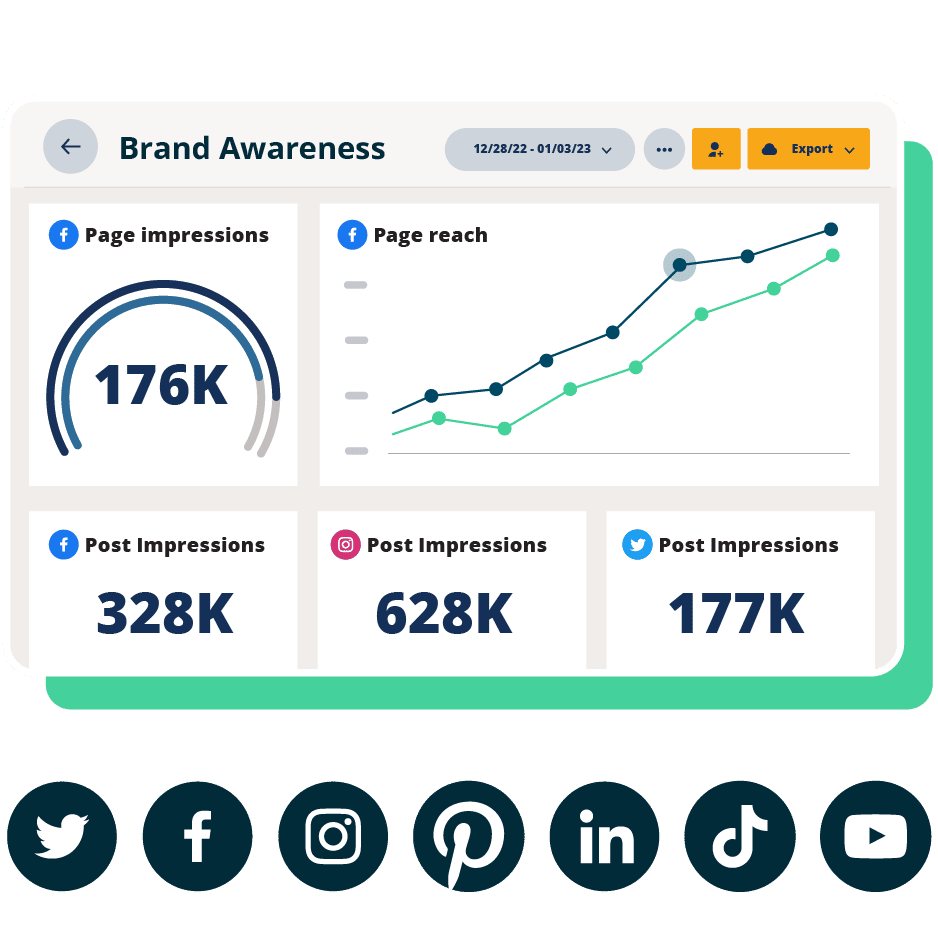
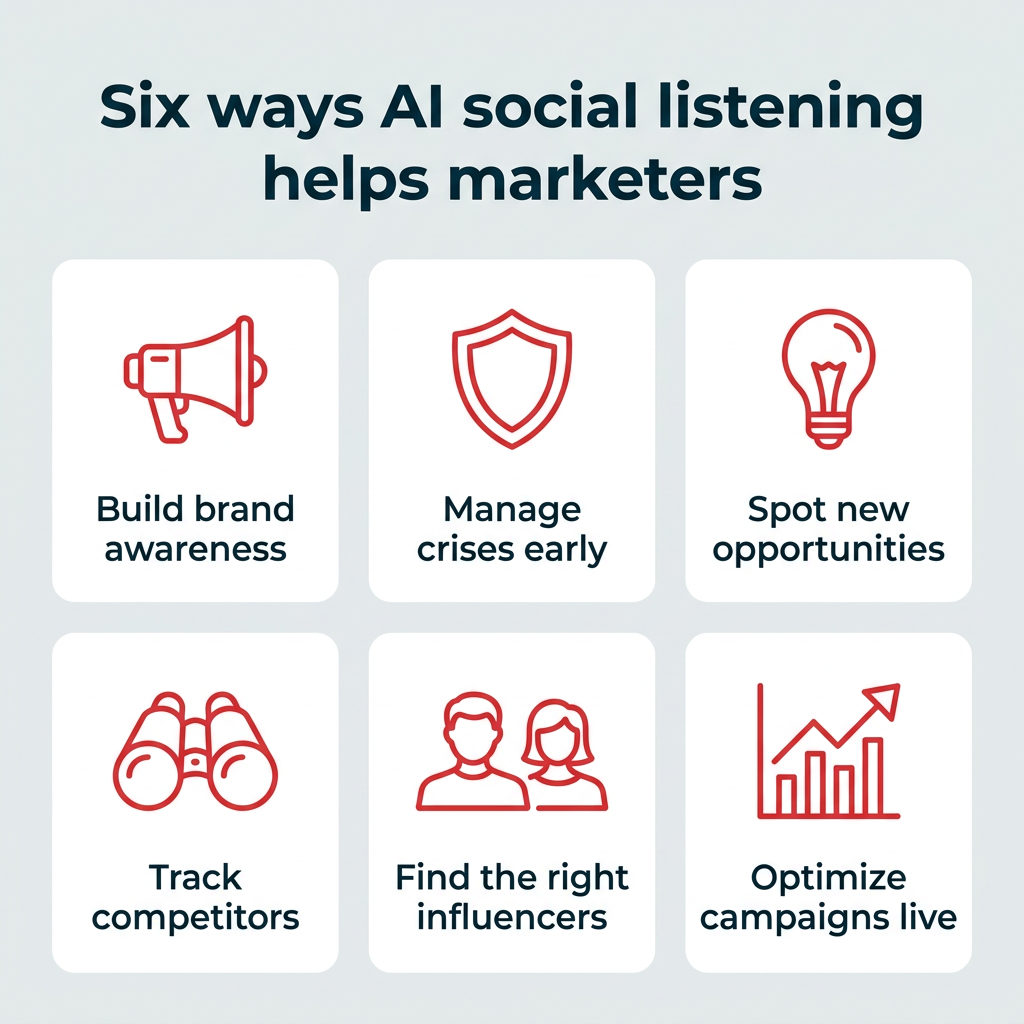
- Enhanced Brand Awareness: AI tools enable brands to discover and engage with conversations about them more efficiently. By identifying visual mentions (logos in images, products in videos, brand names in audio), marketers can uncover engagement opportunities that traditional text-only tools would miss. This broadens the scope of brand visibility and interaction.
- Proactive Crisis Management: Real-time tracking of online conversations allows marketers to monitor brand health continuously and spot potential issues before they escalate into full-blown crises. AI’s ability to learn and predict can flag unusual spikes in negative sentiment or specific keywords, providing early warning signals. This enables rapid response and mitigation, preserving brand reputation.
- Identification of New Opportunities: By listening across diverse channels, AI uncovers emerging trends, unmet customer needs, and potential collaboration opportunities. It can detect rising interest in specific product features, sustainable practices, or market gaps that might otherwise go unnoticed. This “radar” capability helps teams innovate and adapt swiftly.
- Precision Competitor Intelligence: AI social listening tools provide a comprehensive view of competitor activities, including new campaigns, product launches, and shifts in messaging. They can benchmark a brand’s share of voice against rivals, illustrating competitive standing. This intelligence allows for proactive strategic adjustments rather than reactive catch-up.
- Influencer Identification with Data-Backed Precision: Moving beyond mere mention tracking, AI identifies and ranks influencers based on their engagement, reach, and relevance to specific audiences. This ensures that influencer marketing programs are built on data-backed partnerships, maximizing impact and ROI by aligning with genuinely influential voices.
- Real-time Campaign Optimization: AI provides immediate feedback on campaign performance. If a hashtag campaign generates confusion, AI quickly detects the sentiment shift, allowing marketers to adjust messaging or tactics in real-time. This flexibility ensures campaigns remain agile, relevant, and effective, maximizing their impact throughout their lifecycle.
Navigating the Landscape: Top AI Social Listening Tools for 2026
The market for AI social listening tools is robust, with various platforms offering specialized capabilities. Organizations must evaluate these tools based on their specific needs, data coverage requirements, and integration capabilities. Here’s an overview of some leading platforms:
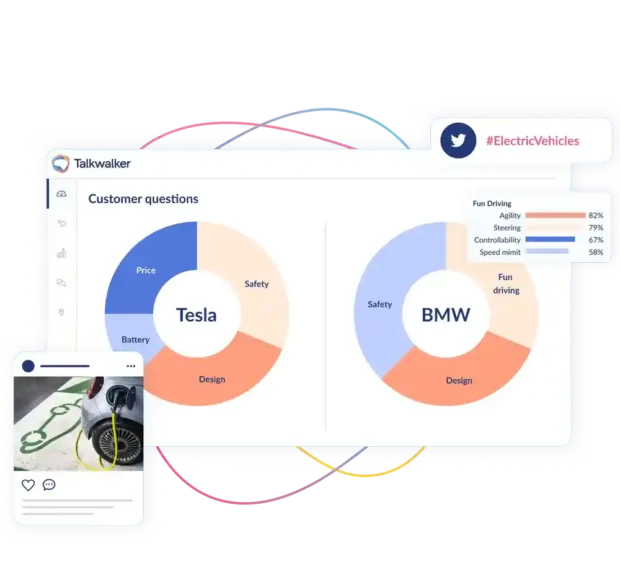
- Talkwalker (Integrated with Hootsuite): Known for its advanced BlueSilk AI engine, Talkwalker offers extensive coverage across 30+ social networks and 150M+ websites, including emerging platforms like Bluesky. Its unique strength lies in multi-modal listening, encompassing visual AI (logo, object, scene detection) and audio AI (spoken mentions in videos and podcasts). It excels in predictive crisis detection and deep sentiment analysis, interpreting irony and sarcasm. Enterprises benefit from its historical data access (up to five years) and API for custom integrations.
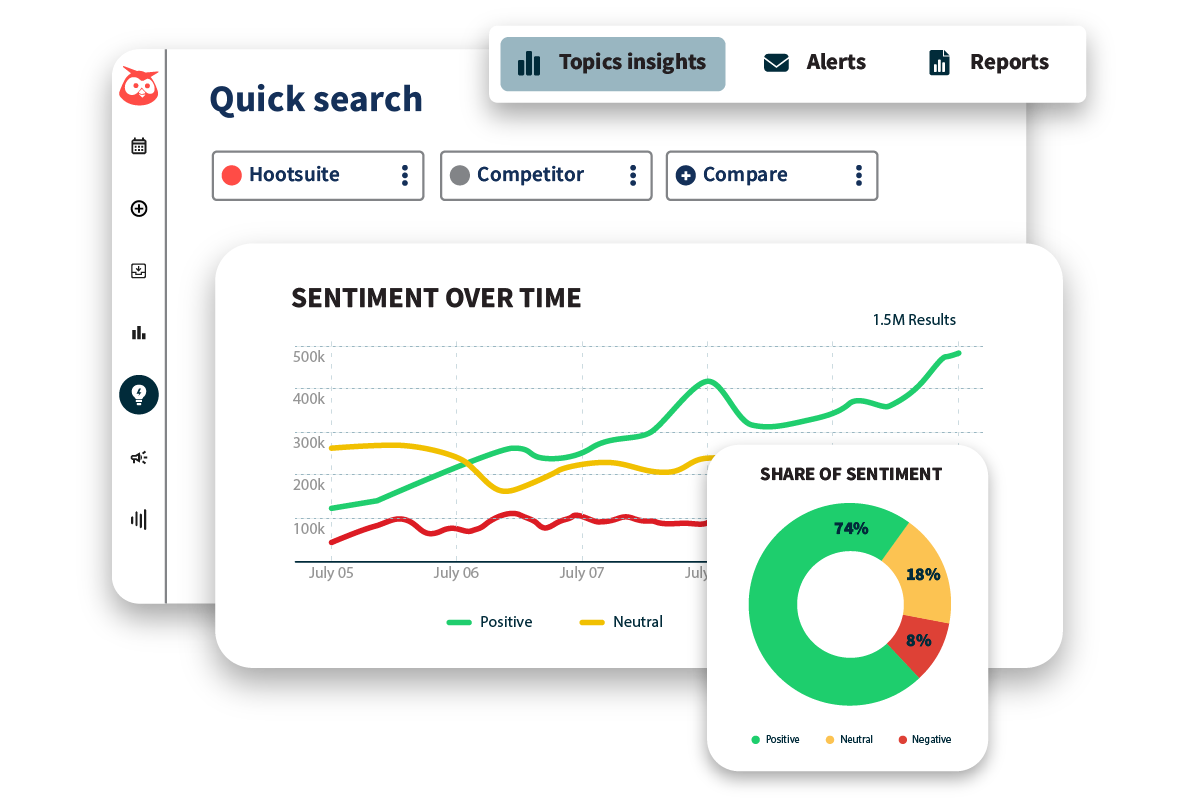
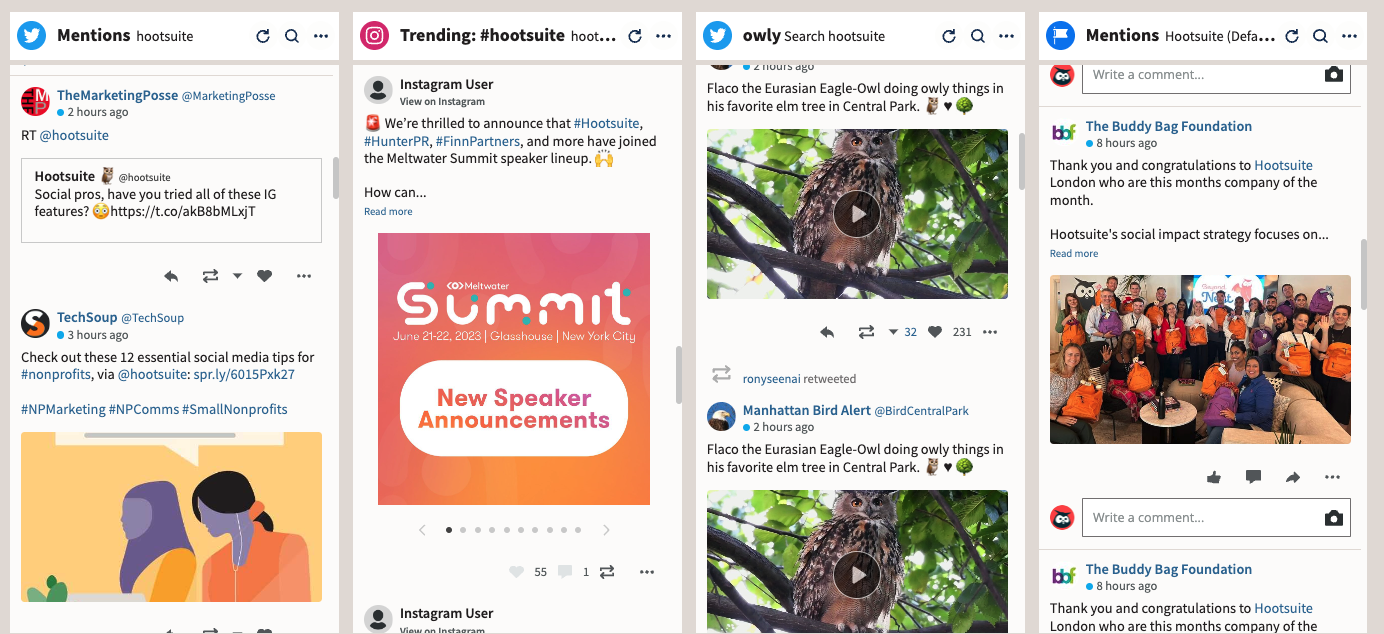
- Hootsuite Listening: Provides AI-powered social listening capabilities directly within its social media management dashboard. Features include sentiment analysis, an AI Query Builder for optimizing search queries, and trend detection across major social networks. It offers quick search functionalities for trending hashtags, brands, and events, allowing users to track brand mentions, competitors, and products.
- Brandwatch: Focuses on large-scale, in-depth consumer research, processing over 500 million new conversations daily from billions of sources. It leverages OpenAI for analysis and includes visual mention identification (objects, words, logos in images). Brandwatch is particularly suited for organizations requiring extensive consumer intelligence.
- Sprinklr: Integrates AI-powered social listening within a broader customer experience management (CXM) platform. It monitors 30+ social and digital channels, including news, Reddit, blogs, and podcasts, and offers logo and text detection in various media formats. Sprinklr is ideal for brands seeking a unified solution for CX and listening.
- Brand24: Offers broad AI-powered social media listening across major platforms and over 25 million online sources. It stands out with its ability to detect specific emotions (sadness, happiness, anger) beyond basic positive/negative sentiment. Brand24 also provides anomaly alerts for sudden spikes in mentions or sentiment shifts, offering comprehensive online conversation coverage.
- YouScan: Distinguished by its advanced visual AI capabilities, YouScan excels in detecting logos, objects, scenes, and product usage within images. Monitoring over 500,000 online sources, it applies AI to surface consumer insights and emerging trends, making it a strong choice for brands focused on visual intelligence.
- Meltwater: Combines media monitoring with AI-powered social listening, providing a unified view of brand presence across social, news, print, and broadcast media. Its AI assists in sentiment analysis, share of voice tracking, and generating enterprise-grade reports, catering to organizations needing integrated PR and social intelligence.
- Sprout Social: Offers AI-driven social listening within its social media management platform, suitable for small teams and beginners. It monitors major social networks and the web for keywords and brand mentions, including multimedia content. Sprout Social’s AI can segment audiences, benchmark performance against competitors, and provide predictive analytics for potential issues.
Overcoming the Hurdles: Challenges and Solutions
Despite its immense power, AI social listening presents inherent challenges that modern solutions are designed to address:

- Filtering Irrelevant Data: The sheer volume of online content is a “firehose” of information, much of which may be irrelevant to a brand’s specific objectives. Without intelligent filtering, marketers risk being overwhelmed by noise, obscuring valuable insights. Advanced AI tools combat this by employing machine learning algorithms to continuously refine search parameters, prioritize relevant mentions, and deliver actionable data free from clutter.
- Understanding Context and Sentiment: Human language is inherently complex, laden with sarcasm, slang, emojis, and cultural nuances that can confuse AI systems. A literal interpretation can lead to miscategorized sentiment (e.g., “This is sick!” misread as negative). Modern AI tools leverage sophisticated NLP models trained on vast and diverse linguistic datasets to better understand tone, context, and implied meaning, accurately classifying sentiment and even detecting specific emotions.
- Managing High Volumes of Unstructured Data: The diverse formats and sheer quantity of data from dozens of platforms pose a significant challenge for aggregation and analysis. Without robust integration and data normalization, insights can remain shallow or fragmented. Leading AI solutions aggregate data from various sources, clean out duplicates, and normalize results, transforming chaotic, unstructured data into clear, coherent trends.
By effectively addressing these challenges, AI social listening becomes a robust and indispensable tool for marketers, transforming raw data into strategic intelligence.
Charting the Course: Implementing AI Social Listening

For enterprise teams, implementing AI social listening effectively involves a structured, phased approach:
- Define Clear Objectives: Begin by clearly outlining what you aim to achieve. Are you tracking campaign performance, monitoring brand health, identifying product opportunities, or analyzing competitors? Specific goals will guide your tool selection and data interpretation.
- Select the Right Platform: Evaluate platforms based on data coverage (social networks, blogs, forums, news, audio, visual), AI capabilities (sentiment analysis, predictive analytics, query builder), integration options, and scalability to match your organizational needs and budget.
- Set Up Comprehensive Queries: Utilize AI query builders to create precise search parameters that capture both direct and indirect mentions. Incorporate keywords, phrases, hashtags, competitor names, industry terms, and relevant visual/audio cues.
- Monitor and Analyze Data: Regularly review dashboards for real-time insights into trends, sentiment shifts, and engagement patterns. Leverage AI’s analytical capabilities to understand the ‘why’ behind the data.
- Translate Insights into Action: Use the generated reports and predictive insights to inform marketing campaigns, product development, customer service strategies, and crisis management plans. Continuously refine your listening strategy based on observed outcomes.
Expert Perspectives and Future Outlook
Industry analysts widely agree that AI social listening is not just a trend but a fundamental shift in market intelligence. “The ability of AI to not only process but understand human language at scale is revolutionary,” states Dr. Anya Sharma, a leading AI in marketing expert. “It empowers brands to move from reactive marketing to proactive engagement, anticipating market shifts and customer needs before they fully materialize.” The broader implication extends beyond marketing departments, influencing product development by surfacing customer pain points and desired features, enhancing customer service by identifying widespread issues, and strengthening overall brand reputation management. As AI continues to evolve, incorporating more sophisticated predictive models and cross-platform correlation, its role in strategic business intelligence will only deepen, making it a cornerstone of competitive advantage in the years to come.
AI social listening, in 2026, represents a paradigm shift from simply monitoring online chatter to deeply understanding collective sentiment and anticipating future trends. It is an essential component for any organization aiming to maintain relevance, foster strong customer relationships, and drive informed strategic growth in the dynamic digital landscape.