rifanmuazin
In the increasingly complex landscape of Business-to-Business (B2B) engagement, many sales and marketing teams find themselves grappling with inconsistent pipeline generation, despite employing a wide array of digital and human-powered outreach tactics. The common diagnosis often points to a deficiency in channels or a lack of personalization. However, according to marketing consultants, the fundamental issue lies not in the channels themselves, but in the timing of their deployment. This perspective suggests a critical need for B2B organizations to move beyond a "more is better" approach to communication and instead focus on a sophisticated orchestration of touchpoints, aligning outreach with genuine buyer signals and stages.
Sarah Threet, a Marketing Consultant at Heinz Marketing, highlights this pervasive challenge. "If your team is doing ‘all the right things’ but pipeline still feels inconsistent, the issue may not be your channels—it’s your timing," she states. This sentiment is echoed across numerous B2B organizations that invest heavily in paid campaigns, email nurture sequences, Sales Development Representative (SDR) outreach, and retargeting efforts. While these individual tactics are proven to be effective, their impact is significantly diminished, and can even be detrimental, when applied at the wrong juncture in the buyer’s journey. This misalignment can lead to a fragmented and frustrating buyer experience, ultimately hindering engagement and conversion.
The Illusion of Channel Overload: The Real Problem is Orchestration
The prevailing response to flagging engagement metrics often involves a reactive strategy of simply adding more tools and more campaigns. This "more is better" philosophy stems from a misunderstanding of digital fatigue. While the sheer volume of digital communication can contribute to overload, the root cause is not a technological deficit but a lack of strategic coordination. Teams often find themselves inundating prospects with a barrage of messages without a clear understanding of the buyer’s current mindset or intent.
This leads to several detrimental practices:
- Over-reliance on Automation: Automated sequences are deployed broadly, without considering individual buyer behavior or the stage of their decision-making process. This can result in generic messages that feel impersonal, even if they contain some degree of personalization.
- Premature Human Intervention: Sales representatives may initiate direct outreach too early in the buyer’s awareness or consideration phase. This can be perceived as intrusive and may lead to a negative first impression, significantly reducing the likelihood of future engagement.
- Delayed Human Follow-up: Conversely, high-intent prospects might be left in automated nurture loops for too long, while competitors are actively engaging them through more personalized, human-led conversations.
The consequence of this disjointed approach is a suboptimal buyer experience. Prospects are bombarded with irrelevant or ill-timed messages, leading to disengagement and a missed opportunity to build meaningful relationships. The theory that digital fatigue is purely a technology problem is a misdiagnosis. It is, in fact, an orchestration problem—a failure to synchronize the right message, delivered through the right channel, at precisely the right moment.
Beyond Personalization: The Crucial Role of Context and Timing
While personalization has become a cornerstone of modern marketing, it is not a panacea for poor timing. A highly personalized message, delivered too early in the buyer’s journey, can still feel intrusive and irrelevant. Similarly, an automated follow-up that arrives too late can create a sense of disconnect and neglect. Buyers are increasingly sophisticated and value contextual relevance above all else. They respond best when communication acknowledges their current situation, their expressed needs, and their journey toward a solution.
This underscores a critical shift in B2B engagement strategy: moving from a focus on what to say to when and how to say it. The question for B2B teams should not solely be "What should we send next?" but rather, "What do we actually know about this account, and what is their current engagement level?"
A Data-Driven Approach to Timing Engagement
To effectively time outreach, B2B organizations must cultivate a deeper understanding of their target accounts. This involves gathering intelligence and analyzing data points that reveal buyer intent and behavior. At a high level, key questions to consider include:
- Awareness Stage: Has the prospect shown any indication of recognizing a problem or need? This might be through website visits, content downloads related to industry challenges, or engagement with thought leadership.
- Consideration Stage: Is the prospect actively researching solutions to their identified problems? This could manifest as visits to product pages, comparison guides, or attendance at webinars discussing solutions.
- Decision Stage: Is the prospect evaluating specific vendors or ready to make a purchase decision? Evidence might include requests for demos, pricing inquiries, or engagement with case studies and testimonials.
Consistently answering these questions provides a foundational understanding that allows teams to align their outreach efforts with actual buyer behavior, rather than relying on assumptions or generic segmentation. This data-driven approach enables a more precise and effective allocation of resources, ensuring that human touchpoints are reserved for high-potential engagements and that digital channels are used to nurture and inform at appropriate junctures.
Common Pitfalls in B2B Outreach Timing
Many B2B teams fall into predictable traps that undermine their engagement efforts:
Human Outreach Deployed Too Early
Initiating direct human contact before a prospect has demonstrated any awareness of a problem or a need is a common and costly mistake. This premature outreach often results in:
- Low Response Rates: Prospects are not yet receptive to sales conversations, leading to unanswered calls and emails.
- Negative First Impressions: Being contacted by sales before being ready can create an adversarial relationship and damage the brand’s perception.
- Wasted Resources: The significant effort required for direct human outreach is expended with little to no return, impacting sales team productivity and morale.
Automation Deployed Too Late
Conversely, allowing high-intent accounts to remain in automated nurture sequences for extended periods can be equally detrimental. This can lead to:
- Lost Opportunities: Prospects actively seeking solutions may move on to competitors who offer more immediate and personalized engagement.
- Missed Engagement Thresholds: Automation is best utilized to qualify and nurture leads, transitioning to human touch once a certain level of engagement or intent is demonstrated. Leaving them in automation too long means missing the optimal window for human intervention.
Lack of Prioritization of Effort
A significant oversight for many organizations is the failure to differentiate their engagement strategies based on account value or engagement level. When all engaged accounts are treated identically, regardless of their potential impact on revenue, valuable resources are spread too thin. This leads to:
- Generic Treatment of High-Value Accounts: Top-tier prospects may receive the same level of attention as smaller, less impactful accounts, diminishing the potential for significant growth.
- Inefficient Resource Allocation: Sales and marketing efforts are not focused on where they can yield the greatest return, leading to overall suboptimal performance.
This lack of prioritization can be particularly problematic in the context of Account-Based Marketing (ABM), where the goal is to tailor efforts to specific, high-value target accounts. Without a clear strategy for prioritizing engagement, ABM initiatives can become diluted and ineffective.
The Evolution of B2B Engagement: Aligning Effort with Signals
High-performing B2B teams are increasingly adopting a model where their outreach efforts are meticulously aligned with observable buyer signals. This strategic approach involves:
- Leveraging Digital Channels for Early-Stage Engagement: Utilizing content marketing, targeted advertising, and automated email sequences to build awareness and educate prospects about their challenges and potential solutions. This is done without demanding immediate action or commitment.
- Deploying Human Outreach for High-Intent Signals: Once a prospect demonstrates clear interest—such as requesting a demo, downloading product-specific collateral, or engaging with sales-related content—human intervention becomes crucial. This is the point where personalized conversations, tailored demonstrations, and direct relationship building can have the most significant impact.
- Prioritizing Engagement Based on Account Value and Intent: Implementing a tiered approach where high-value accounts and those exhibiting strong buying signals receive more personalized and frequent human attention. Lower-intent or lower-value accounts may continue to be nurtured through digital channels until they reach a predefined engagement threshold.
- Strategic Use of Human Touchpoints: Human outreach is reserved for moments where it can add the most value, such as addressing complex questions, building rapport, understanding nuanced needs, and guiding prospects through the final stages of the decision-making process.
Crucially, these high-performing teams avoid initiating high-touch human engagement too early in the buyer’s journey. They understand that building trust and demonstrating value through appropriate channels at the right time is paramount. This approach is becoming even more critical as artificial intelligence (AI) continues to scale execution capabilities, allowing for more sophisticated personalization and automation, but also emphasizing the need for human insight and strategic timing.
A Practical Framework for Orchestrating Engagement
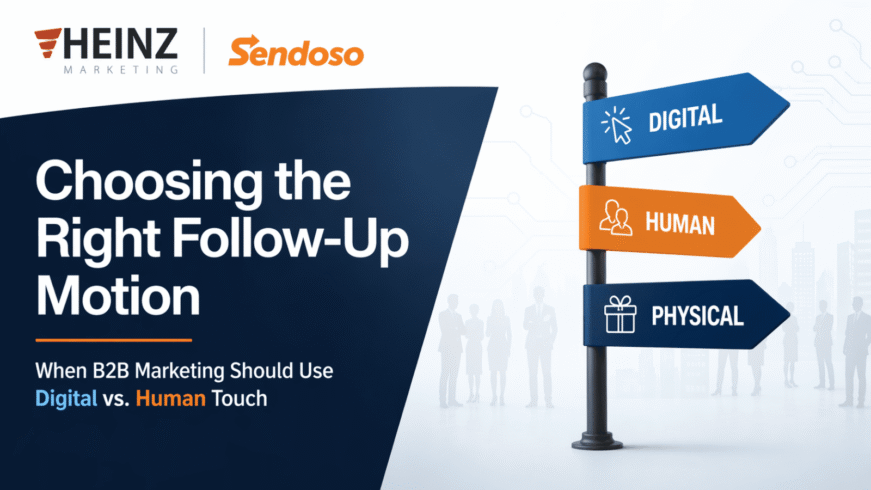
To translate these principles into actionable strategies, organizations need a clear framework for deciding when to utilize digital versus human outreach. Heinz Marketing, in partnership with Sendoso, has developed such a framework to guide B2B teams in optimizing their engagement strategies. This framework helps answer the fundamental question: "When should we stay digital, and when should we go human?"
The guide typically helps teams to:
- Identify Key Buyer Signals: Define the specific actions and behaviors that indicate a prospect’s readiness for different types of engagement.
- Map Touchpoints to Buyer Stages: Create a clear roadmap of which channels and tactics are most effective at each stage of the buyer’s journey.
- Determine the Optimal Cadence and Mix: Establish a balanced approach that leverages both digital and human touchpoints without overwhelming or neglecting prospects.
- Prioritize Efforts for Maximum Impact: Focus resources on the accounts and opportunities that have the highest potential for conversion and revenue generation.
Conclusion: The Future of B2B Engagement is Timely and Orchestrated
In conclusion, for B2B teams experiencing inconsistent pipeline generation, the solution is rarely found in simply adding more marketing tactics. Instead, the focus must shift towards achieving better timing and more intelligent orchestration of existing resources. The strategy is not about doing more, but about making more informed decisions about what to do next. By understanding buyer signals, aligning outreach with their journey, and strategically deploying both digital and human touchpoints, organizations can significantly improve engagement, build stronger relationships, and ultimately drive more predictable and robust pipeline growth.
The path forward for effective B2B engagement lies in a refined understanding of timing and a commitment to orchestrated precision, ensuring that every interaction is relevant, valuable, and delivered at the opportune moment.
For those seeking to deepen their understanding and implement these strategies, resources like the guide "Choosing the Right Follow-Up Motion: When B2B Marketing Should Use Digital vs. Human Touch" offer practical frameworks and actionable insights. By mastering the art of timely engagement, B2B organizations can navigate the complexities of modern buyer journeys and achieve sustainable success. For further inquiries or assistance in implementing these strategies, reaching out to [email protected] provides direct access to expert guidance.