In the fast-paced world of digital marketing, where attention-grabbing subject lines, compelling calls-to-action (CTAs), and rigorous A/B testing dominate strategic discussions, a critical component often languishes in neglect: the email footer. Frequently treated as a mere appendage, a space for leftover legal text, the footer is routinely populated with inherited content from previous campaigns, a practice that not only represents a significant missed opportunity for brand reinforcement and subscriber engagement but also poses substantial compliance risks. This seemingly minor section of an email, often overlooked in the meticulous crafting of marketing messages, holds immense power as the most consistent piece of real estate in every communication, serving as a cornerstone for legal adherence, trust-building, and brand identity.
The Underestimated Power of the Email Footer
Far from being an inconsequential addendum, the email footer is a fundamental element of any professional digital communication. It is one of the few parts of an email message that is legally regulated across various jurisdictions, making its accurate and thoughtful construction paramount. A well-executed footer acts as a vital safeguard for businesses, shielding them from potential legal penalties while simultaneously fostering a robust sense of trust with subscribers. Moreover, it consistently reinforces brand identity, ensuring that every sent email, regardless of its primary content, subtly yet effectively communicates professionalism and reliability. Ignoring this segment is akin to neglecting the foundational elements of a well-built structure; while the facade may be impressive, the underlying integrity is compromised.

Navigating the Regulatory Landscape: Why Footers Matter Legally
The legal mandate for comprehensive email footers stems from a global effort to combat unsolicited commercial email (spam) and protect consumer privacy. Key legislation worldwide dictates specific requirements for commercial electronic messages, making the footer a critical compliance checkpoint. These regulations emerged in response to the exponential growth of commercial email and the subsequent deluge of spam, which not only annoyed users but also posed security risks and eroded trust in digital communication.
- CAN-SPAM Act (Controlling the Assault of Non-Solicited Pornography and Marketing Act) in the United States: Enacted in 2003, CAN-SPAM established federal standards for commercial emails. It explicitly requires messages to include a clear and conspicuous unsubscribe mechanism, a valid physical postal address of the sender, and clear identification that the message is an advertisement. Non-compliance can lead to severe penalties, including fines of up to $50,120 per individual email violation, a figure periodically adjusted for inflation, in addition to potential criminal charges.
- CASL (Canada’s Anti-Spam Legislation): Introduced in 2014, CASL is recognized as one of the strictest anti-spam laws globally. It mandates explicit or implied consent for sending commercial electronic messages, along with clear sender identification (name, mailing address, and other contact information) and an easy-to-use unsubscribe mechanism valid for at least 60 days. Penalties for violating CASL can reach up to CAD $1 million for individuals and CAD $10 million for organizations.
- GDPR (General Data Protection Regulation) in the European Union: Effective since May 2018, GDPR sets a high bar for data privacy and consent across the EU. While not solely focused on email, its principles apply directly to email marketing, requiring clear, unambiguous consent for data processing (including email addresses), transparency about how data is used, and the absolute right for individuals to easily withdraw consent (i.e., unsubscribe). Fines for GDPR non-compliance can be astronomical, up to €20 million or 4% of annual global turnover, whichever is higher.
- CCPA/CPRA (California Consumer Privacy Act/California Privacy Rights Act): These influential U.S. state-level regulations, particularly impactful for businesses operating in or with data from California residents, also emphasize consumer rights regarding personal information, including the right to opt-out of the sale or sharing of personal data. This extends to email marketing preferences, requiring businesses to provide clear mechanisms for consumers to exercise these rights, often facilitated through footer links to privacy policies and data request forms.
These regulations collectively underscore that a thoughtful footer isn’t merely good practice; it’s a legal necessity. Industry analysts consistently highlight that beyond avoiding fines, adherence to these laws builds a foundation of trust. When a recipient sees a legitimate physical address, a clear company name, and an easily accessible unsubscribe link, it signals that the sender is a responsible entity, not a spammer. Conversely, a footer lacking these details, or one that attempts to obscure them, can instantly undermine an otherwise meticulously crafted marketing campaign, leading to increased spam complaints, reduced deliverability, and severe damage to sender reputation. Studies by email deliverability platforms frequently show that emails with complete and clear footer information experience significantly higher inbox placement rates compared to those that fall short.
The Evolution of Email Footer Best Practices: A Chronological Overview
The concept of the email footer has evolved significantly alongside the broader development of email marketing and internet regulations, reflecting a growing emphasis on user rights and data privacy.
- Early Days (Pre-2000s): In the nascent stages of email, footers were often minimal, if present at all. The internet was a less regulated space, and the volume of commercial email was lower. "Netiquette" guided some practices, but legal requirements were largely absent, leading to an increasing problem of unsolicited commercial messages.
- The Rise of Spam and Early Regulatory Attempts (Early 2000s): As unsolicited commercial email became a pervasive problem, overwhelming inboxes and frustrating users, governments began to take action. The CAN-SPAM Act of 2003 marked a pivotal moment, establishing federal standards for commercial email in the U.S. This legislation concretized the need for specific footer elements like unsubscribe links and physical addresses, shifting the paradigm from optional courtesy to legal obligation.
- Global Harmonization and Increased Scrutiny (Mid-2010s): The mid-2010s saw a greater emphasis on consumer protection globally. Canada’s CASL in 2014 set a high bar for consent, influencing practices worldwide and demonstrating a proactive regulatory stance. The growing awareness of data privacy, driven by high-profile data breaches and public demand for control over personal information, set the stage for more comprehensive regulations that would impact how personal data, including email addresses, was handled.
- The GDPR Era and Beyond (2018-Present): The implementation of GDPR in 2018 revolutionized data privacy, placing user consent and transparency at the forefront. This regulation, with its extraterritorial reach, compelled businesses globally to re-evaluate their data handling practices, including how they manage email subscriptions and opt-outs. Subsequent laws like CCPA and CPRA continue this trend, emphasizing consumer rights and requiring clearer communication, often facilitated through robust footer elements like privacy policy links and preference centers. This era has shifted the footer from a mere compliance checklist item to a strategic tool for demonstrating respect for user privacy and building long-term relationships, with a focus on accessibility and user-friendliness for critical links.
This chronological progression highlights a clear trend: the email footer’s role has expanded from a basic legal disclaimer to a dynamic component essential for maintaining sender reputation, ensuring deliverability, and cultivating brand trust in an increasingly regulated and privacy-conscious digital environment. The evolution reflects a broader societal shift towards greater digital accountability and user empowerment.
Beyond Compliance: Strategic Enhancements for Brand and Subscriber Engagement
Once the non-negotiable legal requirements are met, the footer transforms into a valuable piece of marketing real estate that can significantly enhance brand experience and subscriber engagement. Thoughtful additions can turn a standard disclaimer into a powerful touchpoint, driving measurable improvements in customer loyalty and brand perception.
- Preference Center Links: Instead of a simple "unsubscribe" link, offering a "manage preferences" link empowers subscribers to tailor the content and frequency of emails they receive. This granular control dramatically reduces full unsubscribes, as users can opt for less frequent communication or specific content topics rather than severing ties entirely. Data from email service providers frequently indicates that companies offering preference centers see significantly lower unsubscribe rates (up to 20-30% reduction) and higher long-term engagement compared to those that only offer a blanket unsubscribe.
- Social Media Links: Integrating clear, visually appealing links to a brand’s active social media profiles (e.g., Facebook, X/Twitter, Instagram, LinkedIn, YouTube) provides an avenue for subscribers to connect on other platforms. This expands brand reach, fosters community engagement, and allows for multi-channel communication, thereby diversifying touchpoints beyond email. It also allows subscribers to choose their preferred channel for interaction.
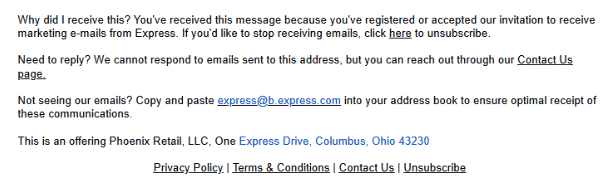
- Privacy Policy and Terms of Service: While sometimes legally required, a clearly linked privacy policy reinforces transparency about how subscriber data is collected, used, and protected. This is particularly crucial in the post-GDPR landscape, reassuring users and demonstrating a commitment to ethical data practices. Similarly, linking to terms of service establishes clear expectations between the brand and its customers.
- Copyright Information and Trademarks: Standard copyright notices and trademark symbols reinforce brand ownership and professionalism, deterring unauthorized use of content and intellectual property. This seemingly minor detail contributes to a perception of legitimacy and authority.
- "Why You’re Receiving This Email" Statement: A concise statement explaining the basis for receiving the email (e.g., "You’re receiving this email because you subscribed to our newsletter on [website name] on [date]") serves as a powerful reminder to subscribers, significantly reducing the likelihood of them marking the email as spam out of forgetfulness. This transparency is a key factor in maintaining a healthy sender reputation and reducing costly spam complaints.
- Referral Programs or Share Options: Encouraging subscribers to share content or refer friends can turn engaged readers into brand advocates, driving organic growth and expanding reach through trusted networks. A simple "Share this email" or "Refer a friend" link can leverage existing relationships for new customer acquisition.
- Customer Service and Support Links: Direct links to FAQs, support portals, or a customer service contact page can streamline problem-solving for subscribers, enhancing user experience and demonstrating responsiveness. This prevents frustration and improves overall customer satisfaction.
- Brand Logo and Consistent Branding: Including the brand logo and maintaining consistent font styles, colors, and overall design in the footer reinforces brand identity and recognition. This visual consistency builds familiarity and trust over time, contributing to a cohesive brand experience.
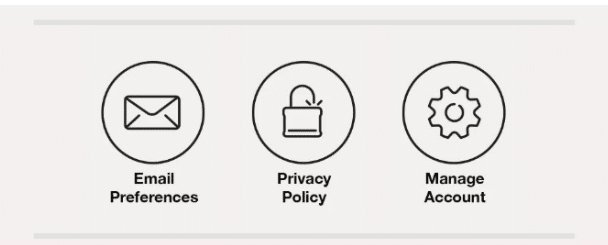
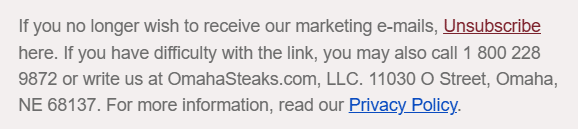
Companies like Omaha Steaks exemplify best practices by utilizing large, accessible call-to-action buttons for preferences or contact, making it easy for users, including those with accessibility needs, to navigate these crucial links. This proactive approach to user experience in the footer is a testament to its strategic value. Another effective example includes explicit statements reminding subscribers of their opt-in reason, directly addressing a common cause for spam complaints: users forgetting they subscribed. These strategic additions transform the footer from a mere legal requirement into an active contributor to the brand’s digital ecosystem.
Best Practices for an Optimized and Compliant Email Footer
Crafting an effective email footer requires intentionality and adherence to established best practices, balancing legal requirements with user experience considerations.
- Keep it Clean and Concise: A cluttered footer overwhelms recipients and is difficult to parse, especially on mobile devices. Prioritize essential legal elements, then strategically add only a few high-value extras. The goal is clarity and easy navigation, not an exhaustive list of links. Industry experts advise a minimalist approach, focusing on utility over volume.
- Don’t Bury the Unsubscribe Link: This cannot be overstated. Hiding or obscuring the unsubscribe link is a detrimental practice that backfires spectacularly. It frustrates subscribers, leading them to report the email as spam, which severely damages sender reputation, impacts deliverability across all future campaigns, and can even lead to IP blacklisting. A prominent, easily clickable unsubscribe link is not just legally required but also a sign of respect for the subscriber’s choices. Data consistently shows that a clear unsubscribe process reduces spam complaints, which are far more damaging to sender reputation and long-term deliverability than a clean opt-out. Email security providers often flag emails with obscure unsubscribe links, impacting their inbox placement.
- Design for Mobile-First: With a significant majority of email opens occurring on mobile devices (often exceeding 60-70% depending on the industry), the footer must be mobile-responsive. Text should remain legible without zooming, and links should have sufficient tap target areas (e.g., 44×44 pixels as a standard recommendation) to prevent accidental clicks, improving overall accessibility and user experience. Overlooking mobile optimization alienates a large segment of the audience.
- Maintain Brand Consistency: The footer is an extension of the brand. Use consistent fonts, colors, and formatting across all email campaigns. This visual uniformity reinforces brand recognition and builds a sense of reliability and professionalism, making the sender instantly recognizable and trustworthy. Consistency builds subconscious familiarity and strengthens brand recall.
- Rigorously Test All Links: Broken links are a common and entirely avoidable mistake. Every link within the footer—unsubscribe, preference center, social media, privacy policy, contact—must be thoroughly tested before each send. Automated testing tools can be invaluable here, especially after template updates or platform migrations. A dead unsubscribe link is a critical compliance failure and a major source of user frustration, potentially leading to immediate spam complaints.
- Revisit and Update Periodically: The digital landscape is dynamic. Regulations evolve, business information changes (e.g., physical addresses, branding guidelines), and social media platforms gain or lose relevance. A footer that was perfectly compliant and effective two years ago might now be outdated, non-compliant, or contain dead ends. Schedule a comprehensive review of the email footer at least annually, or whenever significant business or regulatory changes occur, to ensure its continued accuracy and effectiveness. This proactive approach safeguards against unforeseen liabilities and ensures the footer remains a relevant and functional component of the email strategy.
The Broader Implications: Trust, Deliverability, and Business Success
The meticulous design and maintenance of an email footer extend far beyond mere regulatory checkbox ticking. Its broader implications directly influence email deliverability, sender reputation, and ultimately, business success. Email service providers (ESPs) and internet service providers (ISPs) actively monitor sender behavior, including the presence and functionality of critical footer elements. A history of non-compliance, high spam complaint rates (often triggered by hidden unsubscribe links), or outdated information can lead to emails being filtered into spam folders, blocked entirely, or result in sender IP blacklisting. This directly impacts the effectiveness of marketing efforts, wasting resources and severely hindering communication with legitimate subscribers. A poor sender reputation can take months, if not years, to repair.
Moreover, a well-crafted footer contributes significantly to building and maintaining subscriber trust. In an era of heightened privacy concerns and skepticism towards unsolicited digital communication, transparency and clear options for control are paramount. A footer that respects user rights, provides easy exits, and offers control over preferences fosters a positive relationship, encouraging long-term engagement and loyalty. Conversely, a poor footer erodes trust, leading to churn and a negative brand perception that can spill over into other areas of customer interaction. Data privacy advocates consistently emphasize that clear, accessible information in the footer is a fundamental aspect of ethical data stewardship and consumer respect.
Conclusion: An Essential Investment in Email Marketing Excellence
The email footer, though often the smallest section of an email, bears an outsized responsibility. It is not merely a legal requirement but a multifaceted tool that underpins compliance, cultivates subscriber trust, and serves as a consistent extension of the brand’s professional identity. Treating it with the same strategic intentionality and attention to detail as the subject line or primary CTA is not just a best practice; it is an essential investment in the overall health and effectiveness of any email marketing program. Neglecting this crucial element risks not only regulatory penalties but also significant damage to sender reputation, deliverability, and the invaluable relationship with subscribers. In an increasingly complex digital ecosystem, smart marketers understand that a robust, compliant, and strategically designed footer is indispensable for achieving sustained email marketing excellence. Solutions that automatically ensure compliance and optimize deliverability, like Validity Engage mentioned in the original context, represent a growing trend in how businesses are managing these critical