

The digital marketing landscape is currently undergoing a significant correction regarding how user engagement and lead generation are measured, particularly concerning the efficacy of online forms. For over a decade, a specific set of "zombie statistics" has dominated the industry, appearing in countless white papers and marketing roundups. These figures—such as the claim that 81% of users abandon forms or that multi-step forms inherently convert 86% better—often trace back to the early 2010s, an era when mobile browsing was in its infancy and user experience (UX) design was significantly less sophisticated. As of 2024, data transparency and primary-source verification have become the new gold standards for organizations seeking to optimize their digital funnels.
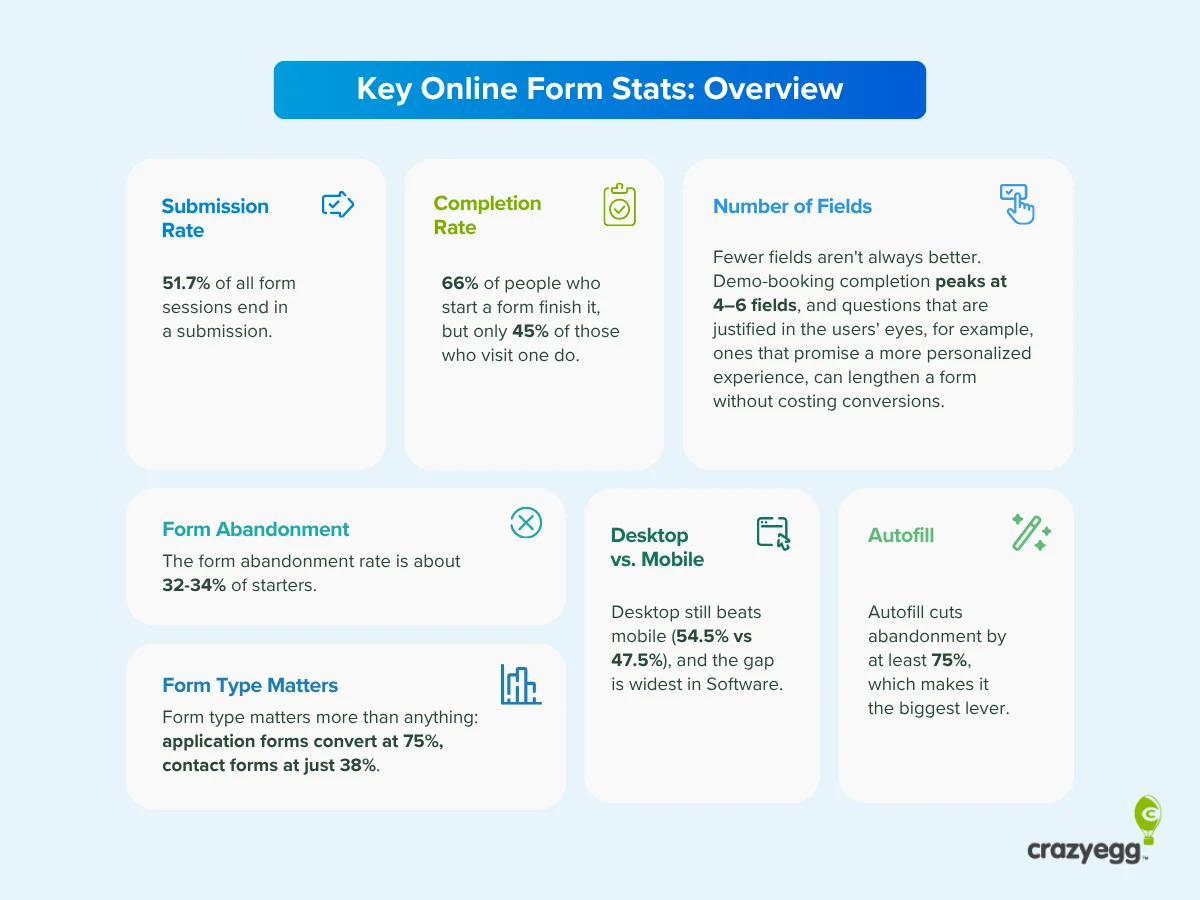
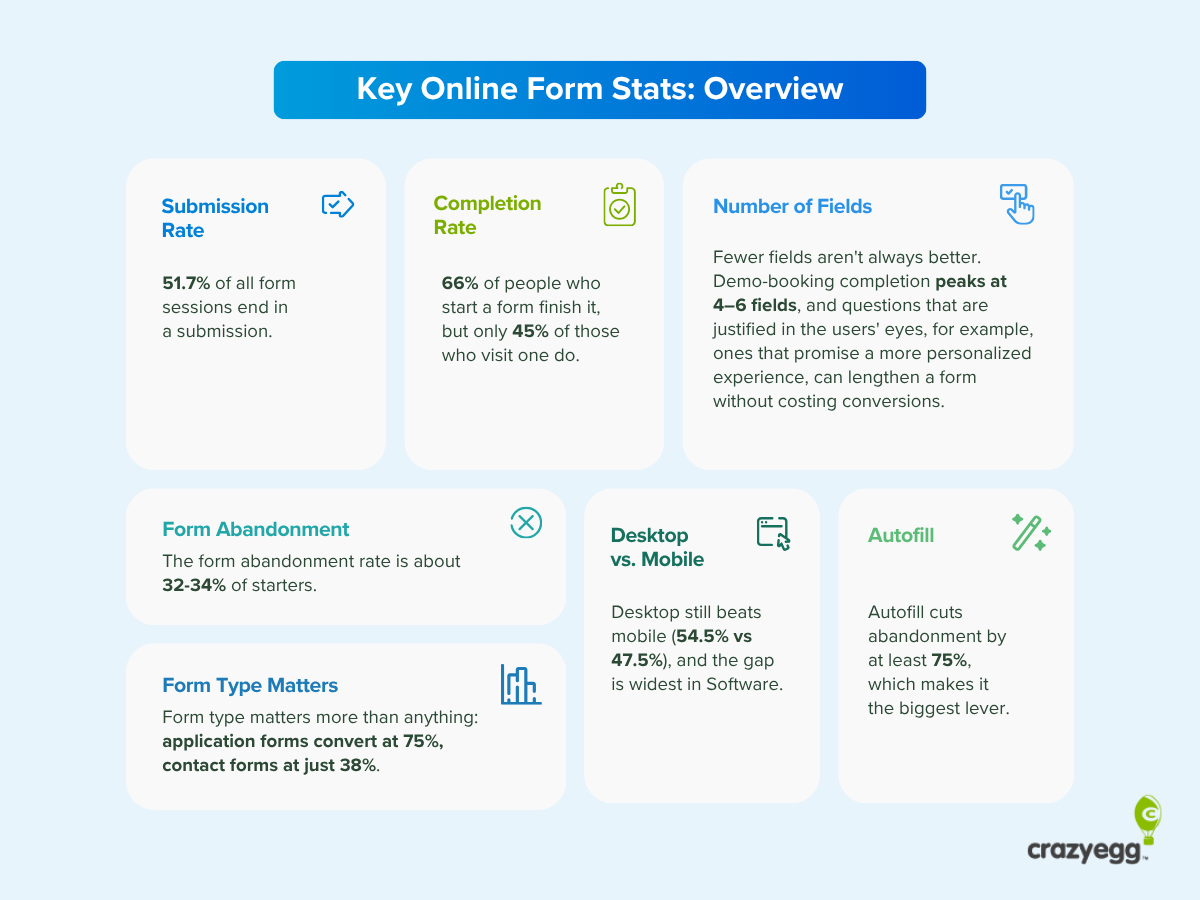
The reality of modern form performance is far more nuanced than these recycled figures suggest. Recent industry analysis indicates that completion rates are highly dependent on the "denominator" used in the calculation. When measuring the percentage of users who finish a form after having started it, the completion rate typically hovers around 66%. However, when the metric is shifted to include every visitor to a page, that figure drops to approximately 45% to 50%. This distinction is critical for data scientists and marketing managers who must differentiate between "form friction" (problems with the form itself) and "page friction" (problems with the value proposition or traffic quality).
A Chronology of Data Decay: Why Old Stats Persist
To understand why the industry relies on outdated information, one must look at the evolution of digital marketing reporting. Between 2015 and 2019, several major form-building platforms released internal data reports that were subsequently picked up by major SEO-driven blogs. Because these numbers were startling—showing massive leaps in conversion for simple changes—they became "link bait," cited by thousands of other articles until the original context was lost.
For instance, the frequently cited "86% higher conversion" for multi-step forms originated from a 2015 FormStack report and was reinforced by a 2019 HubSpot survey. However, modern audits of this data reveal a significant selection bias. Multi-step forms are predominantly used for high-intent activities, such as university applications or insurance quotes, where the user is already committed to the process. Conversely, single-page forms are often used for low-intent newsletters or quick contact requests. Comparing the two without accounting for user intent creates a statistical mirage that does not necessarily reflect the inherent superiority of one layout over another.
Similarly, the 2018 survey by The Manifest, which claimed 81% of people abandon forms, was a "lifetime recall" study. It asked participants if they had ever abandoned a form, rather than tracking actual abandonment rates per session. In the context of 2024, this statistic is functionally useless for a business trying to benchmark its monthly performance.
Benchmarking the 2024 Conversion Landscape
Current data suggests that form performance is now heavily stratified by industry and device. According to recent cross-industry benchmarks, the following conversion rates (defined as the percentage of form starters who complete the process) are considered standard:
- SaaS and Technology: 55% – 60%. These forms often require higher cognitive load, asking for company size and job titles.
- E-commerce and Retail: 65% – 75%. Checkout forms benefit from high user intent, though they are highly sensitive to shipping cost disclosures.
- Non-Profit and Education: 40% – 50%. These often suffer from "donation fatigue" or overly complex information requirements.
- Professional Services: 35% – 45%. These forms are often the most complex, requiring detailed project descriptions or legal information.
Device-specific behavior has also shifted. In 2018, it was widely reported that only 3% of users preferred mobile forms. Today, mobile form sessions account for nearly half of all global form interactions. While desktop still leads in completion rates by roughly seven percentage points, the "mobile gap" is closing rapidly due to the integration of biometric autofill (FaceID/TouchID) and more responsive design frameworks.
The Impact of Design Choices on User Friction
Modern UX research has moved beyond the "shorter is always better" mantra. While reducing the number of fields can decrease friction, the relevance of those fields is a more significant predictor of success. Users are generally willing to complete longer forms if they perceive a direct correlation between the information requested and the value provided.
The Autofill Revolution
Autofill remains the most potent lever for increasing conversion rates. Statistics from 2023 and early 2024 show that forms correctly labeled for browser autofill (using standard HTML attributes) see a completion boost of up to 20%. Despite this "free win," audits of the top 1,000 e-commerce sites reveal that nearly 30% of forms still lack proper labeling, forcing users to manually input data—a primary driver of mobile abandonment.
Single-Column vs. Multi-Column Layouts
A landmark 2016 study by Speero indicated that single-column forms were completed 15.4 seconds faster than multi-column versions. While the study is aging, the psychological principle behind it—the "vertical path of least resistance"—remains a cornerstone of modern design. Multi-column forms often confuse the user’s eye-tracking pattern, leading to "omission errors" where fields are accidentally skipped, triggering frustrating validation errors.
Inline Validation and Error Handling
The method by which a form handles errors can make or break the user experience. Real-time inline validation—where a green checkmark or red warning appears as the user types—is now an industry standard. Waiting until the "Submit" button is clicked to reveal a list of errors at the top of the page is a major contributor to "form fatigue," a psychological state where the user feels the effort to correct the form exceeds the potential reward.
Expert Analysis: The Shift Toward Privacy and Data Quality
Industry analysts are noting a shift in how companies approach form strategy. Rather than maximizing the quantity of leads through hyper-shortened forms, many B2B organizations are intentionally adding "friction" to improve lead quality.
"The goal is no longer just a high conversion rate," says one senior digital strategist at a leading analytics firm. "A 50% conversion rate on a form that yields 100 qualified leads is infinitely more valuable than a 90% conversion rate that yields 1,000 junk leads that waste the sales team’s time."
This "intentional friction" often takes the form of conditional logic—where additional questions appear based on previous answers—or CAPTCHA-free bot protection. Furthermore, with the rise of privacy regulations like GDPR and CCPA, forms must now include transparent data-usage disclosures. While these disclosures can technically be seen as "extra fields," they have been shown to increase trust and, in some cases, actually improve conversion among privacy-conscious demographics.
Diagnosing and Fixing "Leaky" Forms
For businesses looking to move beyond general statistics and address their specific performance issues, a four-tier diagnostic approach is recommended:
- Heatmapping: Visualizing where users click and how far they scroll can reveal if crucial fields are being ignored or if the "Submit" button is placed in a "dead zone" on mobile screens.
- Session Recordings: Observing actual user behavior can pinpoint the exact moment of frustration—such as a user repeatedly trying to enter a phone number in a format the form doesn’t accept.
- Field Analytics: Measuring the "time-to-complete" for individual fields allows developers to identify which specific questions are causing users to hesitate or drop off.
- A/B Testing: Rather than relying on industry-wide stats, companies should test changes—such as button color, copy ("Sign Up" vs. "Get Started"), and layout—within their own unique traffic ecosystem.
Future Implications: AI and the End of the Manual Form
Looking toward 2025 and beyond, the traditional online form may undergo its most radical transformation yet. Artificial Intelligence is beginning to enable "conversational forms" and "zero-input" interfaces. In these models, AI agents can pull verified data from a user’s digital identity (with permission) to populate complex applications instantly, or use natural language processing to turn a chat conversation into a structured database entry.
As these technologies mature, the "average conversion rate" will likely cease to be a useful metric. Instead, the focus will shift toward "identity resolution" and "seamless authentication." For the time being, however, the most successful organizations will be those that discard outdated myths, embrace clean single-column designs, prioritize autofill compatibility, and rely on their own first-party data to drive optimization. The era of the "1.7% average" is over; the era of data-driven, user-centric precision has arrived.







