The digital marketing landscape is experiencing a profound transformation, moving beyond the familiar metrics of traditional Search Engine Optimization (SEO) into the burgeoning domain of Answer Engine Optimization (AEO). What was once a predictable game of keywords, backlinks, and domain authority has evolved into a new, more nuanced challenge where visibility hinges on trust and extractability rather than merely rank. This paradigm shift, driven by the rapid advancement of generative AI and large language models (LLMs), compels brands to rethink their content strategies to ensure prominence in AI-generated answers.
The New Frontier of Search: From Findability to Quotability
For decades, SEO strategies centered on making content "findable" by search engine crawlers, aiming for the coveted top positions on Search Engine Results Pages (SERPs). However, the advent of sophisticated AI answer engines like Google AI Overviews, Gemini, ChatGPT, and Perplexity has introduced a new imperative: "quotability." These engines don’t just point users to a page; they synthesize information to directly answer queries, often citing sources within their generated responses. This means brands are no longer solely competing for clicks but for direct inclusion as a trusted informational authority within the AI’s output.
As AJ Ghergich, VP of AI & Consulting Services at Botify, aptly notes, "You don’t rank in AI. It’s stochastic." The unpredictable nature of AI-generated answers means marketers cannot simply "claw their way" to a fixed position one. Instead, the goal is to become the authoritative source that an AI engine instinctively turns to when formulating an answer. This shift from findability to quotability demands content that is not only accurate but also impeccably structured, demonstrably trustworthy, and easily digestible by AI models.
Recent comprehensive analyses, including a study drawing on thousands of citation data points from over six major answer engines and a survey of more than 4,000 global marketers, underscore this critical evolution. The findings reveal that brands successfully earning citations at scale exhibit remarkably consistent behaviors, diverging significantly from purely traditional SEO tactics.
Pillars of AEO Success: Five Core Behaviors
High-citation brands are not relying on secret algorithms but on fundamental principles of clear communication and demonstrated authority. Five key behaviors consistently emerge:
-
Consistent Content Structure: AI models process content differently from humans. They parse, chunk, and extract specific pieces of information to construct answers. Messy, unstructured content presents a significant hurdle. Data indicates a strong correlation between content with more headings and greater heading depth (H3s and H4s, not just H2s) and higher citation rates. Pages featuring between 7 to 15 H2 headings appear to hit a "sweet spot" for citation. This meticulous organization allows AI engines to effortlessly identify and lift precise, self-contained answers. High-citation brands prioritize writing in scannable formats, with clear headings, concise paragraphs, bulleted lists, and upfront definitions, making content inherently extractable.
-What-We-Learned-from-Analyzing-10+-Brands-With-High-AI-Search-Citations-1-20260826-304258.webp)
-
Strong E-E-A-T Signals (Experience, Expertise, Authoritativeness, Trustworthiness): Google’s long-standing E-E-A-T framework has gained renewed importance in the AI era. Answer engines, staking their own credibility on the information they provide, rigorously assess the trustworthiness of their sources. Cited pages often feature visible trust markers: credible author bios with genuine credentials, outbound links to original sources and data, proprietary research, and consistent brand signals across the digital ecosystem. The underlying question AI engines ask is, "Can I vouch for this information and its source?" Brands excelling in AEO actively integrate E-E-A-T signals across their websites, blogs, and social platforms, building a robust entity authority that AI recognizes and respects.
-
Multi-Format, Multi-Channel Presence: AI answer engines do not limit their information gathering to a brand’s official website. They scour the broader web, including social media platforms and community forums, for corroborating evidence and diverse perspectives. The aforementioned AEO data highlights LinkedIn and YouTube as leading social channels for earning citations, primarily due to their text-heavy formats and support for long-form video, respectively. Krista Doyle, Founder at Fan Out, emphasizes that "LinkedIn signals practitioner authority, and YouTube signals demonstrated expertise," providing critical proof of a brand’s knowledge beyond its own domain. Furthermore, mentions within niche, industry-specific communities (e.g., Slack community recaps published as blog posts, or indexed Substack newsletters) can carry significant retrieval weight, especially in B2B contexts, often surpassing the impact of generic high-authority backlinks. High-citation brands strategically disseminate their expertise across multiple channels, ensuring their message is consistent and reinforced wherever AI engines look.
-
A Regular Publish and Refresh Cadence: Freshness is a powerful trust signal for AI engines, indicating active maintenance and relevance. While it doesn’t necessitate daily posting, a consistent cadence of content updates is crucial. The HubSpot "State of AEO" report found that including the current year in H1s and meta titles correlates with higher citations, particularly for Google AI Overviews and Copilot. Visible "last updated" dates also contribute positively. Brands that consistently win citations treat their high-performing pages as living assets, regularly reviewing, updating with new data, and re-stamping with the current year. Even minor updates, such as a "what’s next" or "as of [year]" note, signal to the engine that the content is being actively managed and remains current.
-
Schema Markup and Technical Hygiene: Structured data acts as a labeled map for AI engines, guiding them through a page’s content rather than forcing them to infer meaning. Implementing schema markup, particularly FAQ schema, demonstrates a strong relationship with increased citations. Descriptive FAQ headings, when paired with FAQ schema, provide AI engines with pre-packaged question-and-answer pairs that are ideally suited for direct inclusion in generative responses. Beyond FAQs, basic article and author schema reinforce content context and authorship. High-citation brands prioritize technical hygiene, ensuring their digital infrastructure is clean, well-organized, and utilizes schema effectively to remove guesswork for AI crawlers.
Strategic Content Formats for Citation Magnets
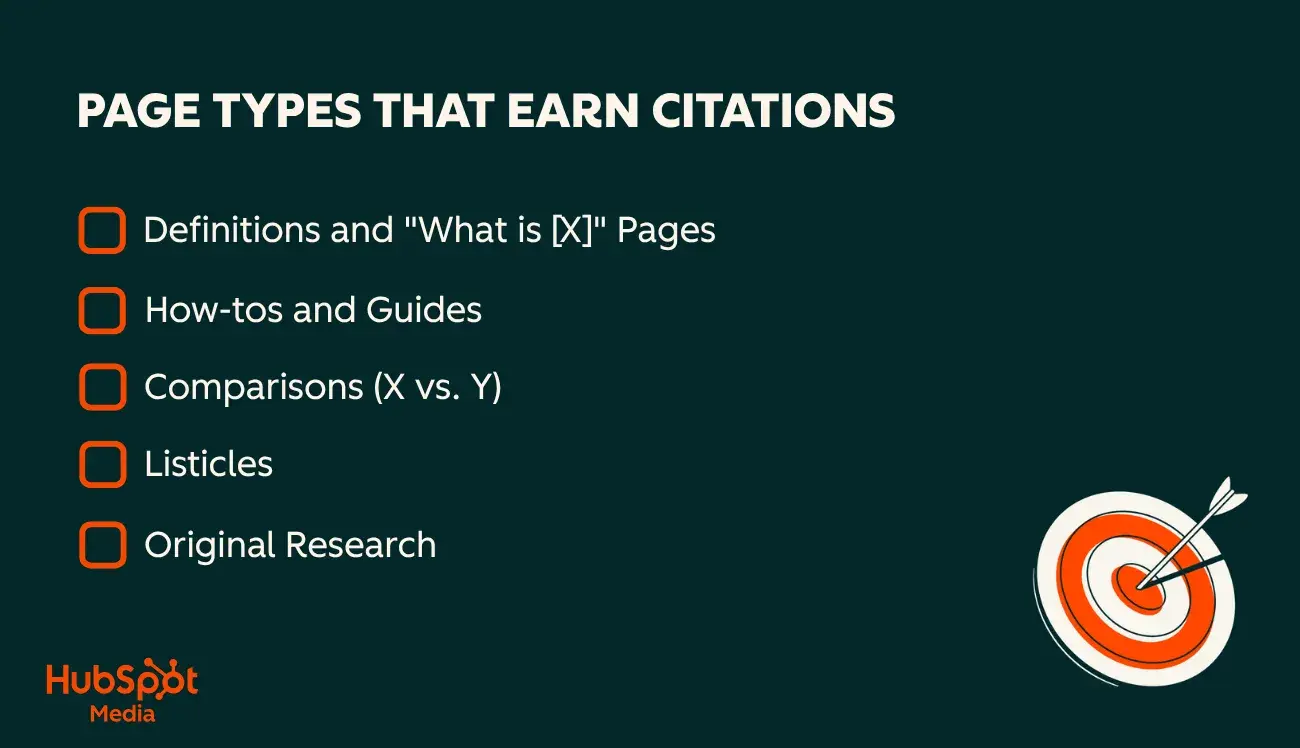
Not all content types are equally effective in attracting citations. Based on extensive analysis, certain formats consistently prove to be citation magnets:
- Definitions and "What is [X]" Pages: Concise, unambiguous definitions are precisely what AI engines seek for direct answers. Leading with a clear definition before expanding on the topic is a highly effective strategy.
- How-tos and Guides: Step-by-step instructional content aligns perfectly with how AI engines structure procedural answers. Clearly numbered and labeled steps simplify the engine’s task of formatting and extracting relevant instructions.
- Comparisons (X vs. Y): Comparison content is a particularly potent citation format, especially within platforms like ChatGPT, where comparison pages showed exceptionally high citation rates. As users frequently ask AI engines to compare options, well-organized comparison tables are invaluable.
- Listicles: "Best [X]" lists and numbered listicles perform strongly across multiple engines. Their inherent structure, scannability, and ease of item-by-item extraction make them ideal for AI-generated answers.
- Original Research: Unique data, not available elsewhere, serves as the ultimate trust signal. Publishing original research establishes a brand as the primary source, making it a definitive point of reference for other content and AI engines alike.
Tailoring Strategies for Diverse AI Platforms
AEO does not replace SEO but rather builds upon it. Existing SEO investments, particularly strong Google rankings and authority, often translate into higher visibility within AI Overviews. However, "optimizing for AI search" generically is a misstep. Each answer engine possesses distinct citation appetites, necessitating a segmented approach.
- Google AI Overviews: This platform strongly favors structured, authoritative content and exhibits the clearest correlation with existing Google organic rankings. Informative blog posts and articles are frequently cited, implying that robust traditional SEO efforts directly contribute to AEO success here.
- Gemini: Leaning on Google’s inherent trust signals, Gemini adopts a more conversational and multi-step approach. It cites a wide array of content types—blog posts, product pages, listicles—and rewards content designed to support iterative interactions and follow-up questions, rather than just single-shot answers.
- ChatGPT: This engine demonstrates a pronounced preference for comparison content, user reviews, public relations materials, and content with explicit sourcing. It often cites well-known brands and original research. Brands with strong comparison pages and clearly sourced authority content will find particular success here.
- Perplexity: Perplexity stands out for its propensity to surface recent, specific, and niche content. Its aggressive linking out makes citations from Perplexity especially valuable for driving referral traffic. Product pages and blog content are cited effectively, with freshness and specificity being key levers for visibility.
The practical takeaway is clear: marketers must map their priority content formats to the specific engines that reward them. A generic "AI optimization" approach risks spreading resources too thinly, achieving minimal impact across all platforms.

Query Intent: Shaping Citation Battles
The brands cited by AI engines are heavily influenced by the user’s query intent. Different intents trigger different citation patterns, making it imperative for AEO strategies to be dynamically aligned. For instance, informational queries seeking definitions or "how-to" guides will pull from authoritative, structured content, while commercial queries comparing products will favor comparison pages and user reviews. This dynamic plays out differently across various audiences. For B2B audiences, queries often revolve around complex solutions, industry trends, and technical specifications, leading AI to cite whitepapers, detailed guides, and expert analyses. B2C audiences, on the other hand, frequently ask for product comparisons, reviews, and "best of" lists, directing AI to consumer-focused content and user-generated reviews. Understanding these nuanced shifts allows for more precise content targeting.
A 90-Day Action Plan for Enhanced Citations
Transforming AI visibility and becoming a high-citation brand requires a structured, actionable plan.
- Weeks 1: Audit & Setup: Establish a baseline of current AI visibility. Tools like HubSpot’s AI Search Grader can provide an immediate snapshot of how answer engines currently represent a brand. This initial audit involves identifying existing AI citations, analyzing competitor performance, and defining key target queries.
- Weeks 2-6: Build & Refresh Priority Pages: With a clear baseline, focus on creating or updating content directly addressing target queries. This involves restructuring existing pages with clear H2s/H3s, integrating E-E-A-T signals, implementing relevant schema markup (especially FAQ schema), and updating content for freshness. Prioritizing the refresh of existing pages with some authority often yields faster citation gains than launching entirely new URLs.
- Weeks 7-12: Distribute & Reinforce: A proactive multi-channel distribution strategy is crucial. Actively engaging on platforms like LinkedIn, YouTube, and relevant niche communities helps influence AI search visibility by reinforcing brand authority and expertise beyond the owned website. This includes repurposing content for different platforms, participating in industry discussions, and monitoring mentions to ensure consistent brand representation.
By the end of 90 days, a brand should have a clear understanding of its AI visibility, a set of optimized priority pages, and an active distribution strategy feeding the signals that AI engines reward.
Measuring Success in the AI Era: Beyond Clicks
Historically, measuring digital marketing success revolved around clicks, impressions, and conversion rates from direct website visits. However, this "click-era" mentality is often misleading in the context of AEO. As AJ Ghergich explains, AI crawlers visit sites at vastly different rates than they send human users, leading to inflated impressions without corresponding clicks. This disconnect renders traditional dashboards inadequate for AEO.
Answer engines deliver a crucial outcome – informing a qualified buyer – often without a click ever occurring. Therefore, AEO demands a new set of metrics:
- Brand Visibility Score and Share of Voice: Tracking how often a brand is cited across various answer engines relative to competitors provides a clear indicator of market presence.
- Sentiment: Analyzing the tone and context of AI-generated answers that cite a brand is crucial for reputation management.
- Prompt Tracking: Understanding the specific user prompts that lead to a brand’s citation offers invaluable insights into audience needs and effective content optimization.
- Citation Analysis: Detailed reporting on which pages are cited, by which engines, and for what queries allows for continuous refinement of content strategy.
- Pipeline and Assisted Conversions: Ultimately, AEO impact must be tied to business outcomes. AI-sourced visitors often exhibit higher buying intent and conversion rates. Tracking assisted conversions and revenue-qualified pipeline provides tangible proof of AEO’s value.
HubSpot’s AEO tools, for instance, aim to provide marketers with a "one-view" dashboard that translates visibility gaps into prioritized actions, from content creation to technical fixes and external outreach. HubSpot’s own experience, demonstrating a staggering 1,850% growth in AI-sourced leads by implementing these strategies, underscores the profound impact of effective AEO measurement and execution.
-What-We-Learned-from-Analyzing-10+-Brands-With-High-AI-Search-Citations-2-20260826-1137108.webp?width=700&height=403&name=(non-organic)-What-We-Learned-from-Analyzing-10+-Brands-With-High-AI-Search-Citations-2-20260826-1137108.webp)
Governance and Quality Over Time: Sustaining AEO Success
Earning a citation is just the beginning; maintaining it requires ongoing vigilance. AI engines continuously re-crawl and re-evaluate content, meaning a cited page can quickly lose its prominence if it becomes stale or if a competitor offers a more structured or trustworthy alternative. Sustaining AI search visibility necessitates treating citations as a dynamic portfolio.
The "Loop Marketing" framework—Express, Tailor, Amplify, Evolve—provides an effective operational model:
- Express: Clearly articulate brand expertise and unique value.
- Tailor: Adapt content to specific AI platform requirements and user intents.
- Amplify: Distribute and reinforce content across diverse channels.
- Evolve: Continuously monitor performance, update content, and refine strategies based on new data and AI advancements.
Beyond continuous content management, a critical, often overlooked aspect is governance. Who within an organization decides how AI engines are allowed to access and represent brand information? This is no longer solely an IT concern of "block or allow" server toggles. When product data, brand positioning, or factual information appears inaccurately in an AI answer, it immediately becomes a brand crisis. Effective governance requires marketing, IT, and legal teams to collaborate, establishing clear policies on what brand data is accessible, ensuring its accuracy, and defining a proactive plan for managing AI’s representation of the brand.
The Urgent Opportunity: Win the Answer
The era of Answer Engine Optimization is here, and it is reshaping the competitive landscape. While 58% of marketers are reportedly experimenting with AEO, many are still in the early stages. The brands that are moving deliberately, establishing baselines, implementing strategic plans, and leveraging robust measurement systems, are already capturing high-intent traffic and securing valuable citations. Success in AEO does not require an enterprise-level budget but rather a commitment to foundational principles: clear structure, verifiable trust, consistent presence, and continuous adaptation. The brands that embrace this evolution now are poised to win the answer and define their visibility in the generative AI future.