
 rifanmuazin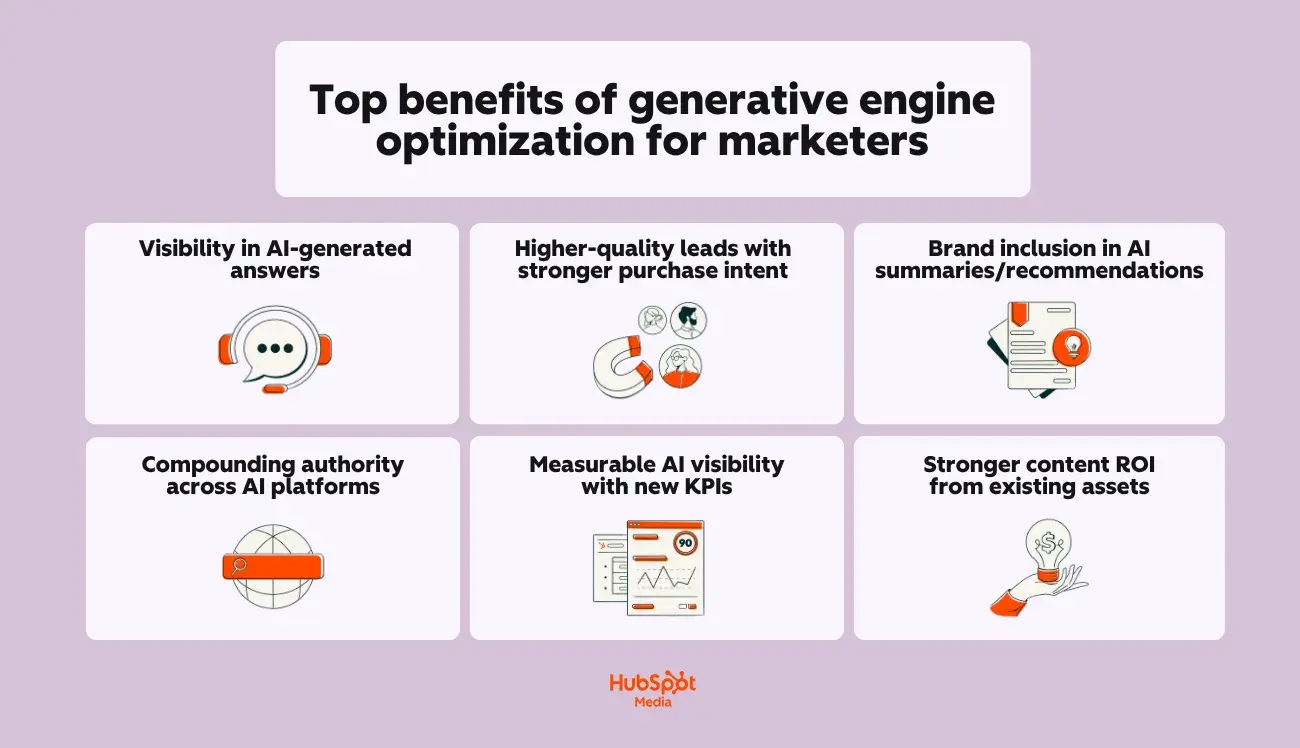
The landscape of brand discovery is undergoing a seismic shift, fundamentally altering how consumers find information and interact with digital content. This transformation, driven by the rapid evolution of artificial intelligence, has ushered in a new era where traditional search engine optimization (SEO) must be complemented, and indeed amplified, by Generative Engine Optimization (GEO). Marketers are witnessing a paradigm shift where audiences are moving from traditional "ten blue links" search results to synthesized, AI-generated answers, demanding a re-evaluation of digital visibility strategies.
The Evolving Digital Landscape: From SEO to GEO
For years, SEO has been the bedrock of digital marketing, focusing on ranking high in search engine results pages (SERPs) through keywords, backlinks, and technical optimization. However, the advent of sophisticated large language models (LLMs) and generative AI platforms like ChatGPT, Google AI Overviews, Perplexity, and Gemini has introduced a new layer of content consumption. Users are increasingly turning to these "answer engines" for direct, summarized responses, often bypassing traditional search listings entirely. This fundamental change means a brand’s presence is no longer solely defined by its ranking on a SERP, but by its accurate and authoritative inclusion within these AI-generated summaries.
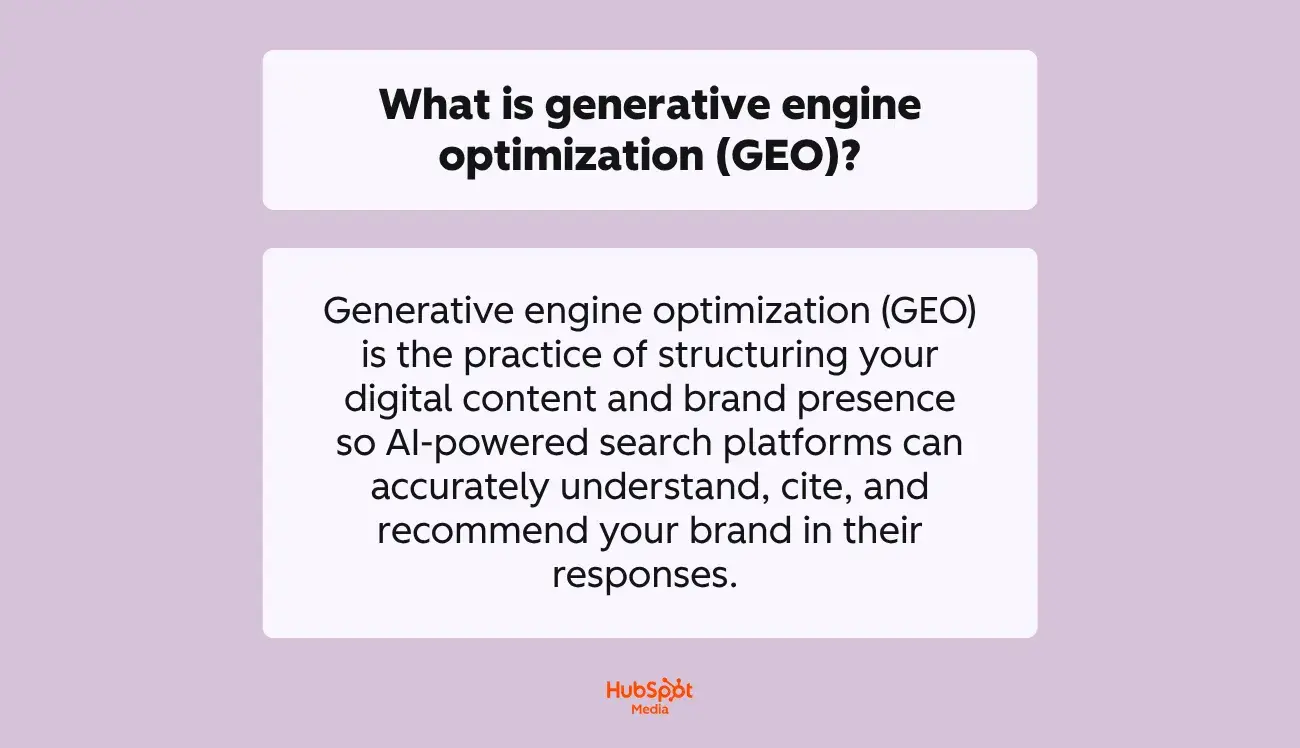
Generative Engine Optimization (GEO) is the strategic practice of structuring digital content and brand presence to ensure AI platforms can accurately understand, cite, and recommend a brand in their responses. Unlike traditional SEO, which prioritizes factors like keyword density and domain authority for link-based rankings, GEO emphasizes structured data, semantic clarity, and machine-friendly content. It’s not a replacement for existing SEO investments but rather a crucial amplification, enabling brands to maintain and grow organic visibility in an AI-first world.
The urgency for marketers to adopt GEO is underscored by recent data. HubSpot’s 2026 State of Marketing Report indicates that nearly half of marketers (49%) have observed a decrease in web traffic from traditional search due to the prevalence of AI answers. Yet, a significant 58% also report that AI referral traffic boasts much higher intent than conventional search. This dichotomy highlights a critical juncture: while traditional visibility may be challenged, the quality of traffic from AI sources presents an unparalleled opportunity for high-conversion engagement.
The Compelling Return on Investment for GEO
The shift to generative AI is not merely a technological curiosity; it represents a measurable revenue advantage for proactive brands. The return on investment (ROI) for generative engine optimization is increasingly evident through several key metrics:
-
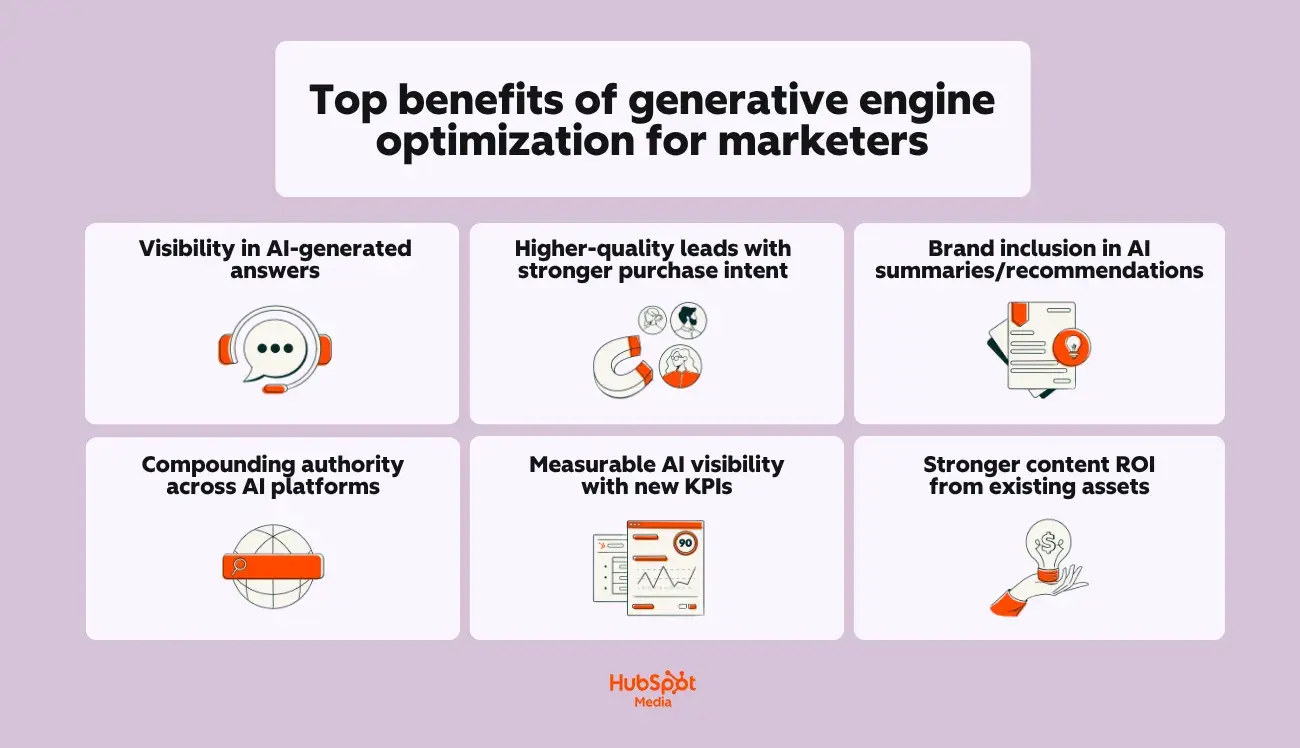
Direct Visibility in AI-Generated Answers: The most immediate and impactful benefit of GEO is securing a brand’s presence within the AI-generated response itself. When a user queries an AI platform for recommendations (e.g., "What’s the best CRM for remote teams?"), a brand’s inclusion in that direct answer places it at the apex of buyer intent. This bypasses the competitive click-through environment of traditional search, delivering a direct pathway to highly engaged prospects. Semrush data reinforces this, showing that marketers investing in GEO are capturing higher-intent traffic that converts at 4.4 times the rate of traditional organic search. This is a stark indicator that GEO is not a future bet but a current, measurable driver of business outcomes.
-
Higher-Quality Leads with Stronger Purchase Intent: AI-referred traffic isn’t just about volume; it’s about unparalleled quality. Visitors arriving from answer engines have often already consumed synthesized information, compared alternatives, and formed an initial opinion based on the AI’s curated response. This pre-qualification means these leads are further down the purchase funnel, resulting in shorter sales cycles and higher conversion rates. For marketing strategists focused on pipeline targets, GEO effectively compresses the journey from initial discovery to final decision, optimizing resource allocation and improving sales efficiency.
-
Enhanced Brand Inclusion in AI Summaries and Recommendations: Generative engines don’t merely present a list of websites; they synthesize information from diverse sources to construct a curated, authoritative answer. When a brand is cited within this synthesis, especially alongside or ahead of competitors, it acts as a powerful signal of authority and trustworthiness. This inclusion is not automatic; it requires brands to proactively supply robust, fact-checked, and structured data, including official company information, product specifications, and validated customer testimonials. Such strategic input ensures accurate and favorable brand representation, fostering a stronger perception of credibility among potential customers.
-
Compounding Authority Across AI Platforms: A crucial, often underestimated, benefit of GEO is the compounding effect of citation authority. Similar to how domain authority builds in traditional SEO, a brand’s consistent citation in one AI platform (e.g., ChatGPT) strengthens its entity authority across others (e.g., Perplexity, Gemini, Google AI Overviews). This occurs because AI models draw from overlapping training data and real-time retrieval sources. By systematically building entity authority through consistent branding, clear content, and robust schema markup, brands can create a self-reinifying "citation flywheel" that amplifies their presence across the entire generative AI ecosystem.
-
Measurable AI Visibility with New Key Performance Indicators (KPIs): While traditional SEO metrics like rankings and click-through rates (CTR) fall short in measuring AI visibility, dedicated measurement frameworks for GEO are emerging. New KPIs include citation volume (how often a brand is cited), sentiment analysis (the tone and context of citations), entity confidence (how reliably AI platforms recognize and characterize a brand), and share of voice within AI-generated responses. Tools like HubSpot’s AEO Grader provide a baseline by evaluating brand presence across sentiment, presence quality, brand recognition, share of voice, and market position, allowing marketers to benchmark and track improvements over time.
-
Stronger Content ROI from Existing Assets: GEO does not necessitate a complete overhaul of content strategy. In fact, some of the highest-ROI GEO moves involve optimizing existing, high-performing content. Content that already ranks well in traditional search is often a strong candidate for AI citation. By restructuring existing blog posts, guides, and product pages with clear, direct answers, structured data, and machine-friendly formatting, brands can unlock new layers of AI visibility from assets they have already invested in. This approach maximizes the return on existing content investments, making the transition to GEO more efficient and cost-effective.
Navigating the Challenges of Generative Engine Optimization
Despite its clear benefits, GEO presents a distinct set of challenges that differ fundamentally from traditional SEO. Marketers must proactively address these obstacles to successfully implement and scale their GEO strategies.

-
Data Fragmentation Across Platforms and Tools: A primary challenge lies in ensuring consistent and machine-readable brand information across every digital surface AI models access. This includes websites, social media profiles, business listings, review sites, and third-party directories. Most marketing teams manage these disparate surfaces using separate tools, leading to fragmented entity signals that can confuse AI engines. Inconsistent information (e.g., varying company descriptions on LinkedIn, Google Business Profile, and website schema) reduces "entity confidence," diminishing the likelihood of accurate citation or, worse, leading to misrepresentation. The fix involves establishing a "single source of truth" for core brand information, implementing robust data governance policies, and leveraging centralized tools for content and data management.
-
Entity Clarity and Disambiguation: AI engines don’t just match keywords; they resolve entities – identifying and understanding specific people, organizations, products, or concepts. If a brand name is generic (e.g., "Summit," "Atlas"), shares a name with another company, or lacks distinct entity signals, generative models may struggle to differentiate it. This ambiguity can lead to a brand being confused with competitors, omitted from relevant responses, or even misattributed. Unlike traditional SEO, where domain authority clarifies identity, GEO relies on strong entity resolution. Solutions include creating a unique brand entity, consistent naming conventions across all digital assets, and linking to official identifiers (e.g., D-U-N-S numbers, Wikipedia pages) through structured data.
-
AI Hallucination and Brand Misrepresentation: Large language models predict statistically likely word sequences rather than retrieving facts. When faced with gaps in training data or ambiguous signals, they can confidently generate entirely fabricated information – known as "hallucinations." For brands, this poses a significant risk: AI could misstate product features, attribute false claims, generate incorrect pricing, or even create fictional reviews. Mitigating this requires proactively supplying AI models with authoritative, fact-checked content via structured data, implementing strong brand guidelines for all public-facing information, and establishing robust monitoring systems to detect and correct misrepresentations swiftly.
-
Schema Markup Complexity and Implementation Barriers: Structured data, particularly schema markup, serves as the critical translation layer between human-readable content and AI systems. However, many marketing teams find schema implementation technically daunting. Incorrectly implemented schema (e.g., mismatched types, stale data, missing entity connections) can render content invisible to AI or lead to misinterpretation. Overcoming this requires dedicated resources, training for content and technical teams, or leveraging platforms that simplify schema generation and validation (e.g., JSON-LD in the document head, validated with Google’s Rich Results Test).
-
Measurement Gaps and KPI Uncertainty: The lack of established metrics for AI visibility is a frequently cited challenge. Traditional SEO metrics fail to capture how AI engines represent a brand in generated responses. A brand could rank #1 for a keyword but be entirely absent from the AI-generated answer above the listing. The solution lies in adopting new GEO-specific KPIs (citation volume, share of voice, sentiment, lead quality from AI referrals) and utilizing specialized tools that can track these dimensions. Setting up custom channel groups in Google Analytics 4 (GA4) for AI referral traffic is also crucial for isolating and analyzing performance.
-
Privacy, Compliance, and Data Governance: GEO introduces new privacy and compliance considerations. AI models train on vast amounts of publicly available data, meaning brand information, employee details, product specifications, and customer testimonials may be ingested, recombined, and surfaced in AI responses in unforeseen ways. For businesses in regulated industries (e.g., healthcare, finance), this raises concerns about data accuracy obligations, liability for AI-generated claims, and compliance with evolving AI transparency regulations. Proactive measures include auditing publicly available data, ensuring robust data governance policies, clearly defining AI usage terms, and seeking legal counsel on emerging AI regulations.
A Practical Framework for Immediate GEO Implementation
Getting started with GEO doesn’t require a complete overhaul or a new tech stack. The most effective implementations build upon existing SEO foundations. Here’s a practical, quick-start framework:
Step 1: Establish Your AI Visibility Baseline
Before optimizing, brands must understand their current AI presence. Utilizing tools like HubSpot’s AEO Grader provides a scored baseline across sentiment, presence quality, brand recognition, share of voice, and market position in platforms like ChatGPT, Perplexity, and Gemini. Supplement this with manual testing: query these AI platforms with 10-15 high-intent prompts relevant to your ideal buyers (e.g., "What’s the best [your category] for [use case]?"). Document brand appearance, characterization, and competitor citations to identify urgent content gaps.
Step 2: Restructure High-Value Content for AI Extraction
AI engines process content differently from humans, scanning for direct, extractable answers, often within the first 40-60 words of a section. They prioritize content structured with question-based headings, factual claims, and cited statistics. Identify your five highest-traffic blog posts or landing pages and apply these changes:
- Start sections with a direct answer to the heading’s implied question.
- Use bullet points, numbered lists, and bold text for key takeaways.
- Incorporate clear, factual claims with supporting data and temporal markers.
- Add a dedicated FAQ section with schema markup.
This optimizes existing assets for AI visibility quickly.
Step 3: Implement Core Schema Markup on Priority Pages
Structured data is paramount for AI understanding. Focus on three high-impact schema types:
- Organization Schema: For company details (name, logo, contact, social profiles).
- Product Schema: For product-specific information (name, description, pricing, reviews).
- FAQPage Schema: For question-and-answer pairs within content.
Implement using JSON-LD in the document head, Google’s recommended format, and validate every page with Google’s Rich Results Test before publishing.
Step 4: Set Up AI Referral Traffic Tracking in Google Analytics 4 (GA4)
Measurement is crucial for justifying GEO investment. Create custom channel groups in GA4 to segment traffic from AI referral sources (e.g., "AI Search" for Perplexity, "Generative AI" for ChatGPT/Gemini). This allows for isolating AI-referred sessions, measuring conversion rates separately from traditional organic traffic, and building a robust reporting infrastructure that connects GEO efforts to pipeline outcomes. Track both direct AI citation metrics (visibility, share of voice) and downstream website performance (traffic, conversions from AI sources).
Step 5: Build Entity Authority Beyond Your Own Domain
AI platforms often trust third-party sources more than brand-owned content. Therefore, a brand’s website alone, however optimized, won’t earn citations if AI engines lack independent validation. Prioritize external authority signals by ensuring consistent, accurate brand information across:
- Wikipedia and Wikidata entries.
- Industry directories and authoritative review sites.
- Press releases and reputable news mentions.
- Google Business Profile and other local listings.
This consistent external presence helps AI agents discover and process brand information, reinforcing its authority.
Step 6: Integrate GEO into Existing Content Workflows
The perception that GEO requires a parallel workstream is a common barrier. Instead, integrate GEO directly into existing content production processes:
- Content Briefs: Include sections for desired AI citations and required structured data.
- Content Creation: Train writers to produce AI-friendly content (direct answers, clear structure).
- Editorial Review: Add a GEO checklist (schema validation, entity consistency).
- Content Updates: Incorporate GEO optimization during regular content audits.
HubSpot’s Marketing Hub and Content Hub, with their AEO Product, offer unified data and content automation, allowing teams to manage GEO from a single, CRM-connected system.
Step 7: Monitor, Iterate, and Scale
GEO is not a one-time project. AI models continuously update, competitors optimize, and answer engine optimization trends evolve rapidly. Establish a monthly review cadence:
- Review AEO Grader Scores: Track changes in AI visibility.
- Analyze GA4 Data: Monitor AI referral traffic and conversion rates.
- Manual Prompt Testing: Re-evaluate brand citations for key queries.
- Competitive Analysis: Identify new citation opportunities or threats.
Consistent effort builds compounding citation authority, creating structural advantages for early movers.
Choosing the Right Tools for Your GEO Stack
Operationalizing GEO doesn’t necessarily demand an enterprise budget. Many foundational actions (content restructuring, schema implementation, FAQ creation, manual prompt testing) primarily require time. However, budget can significantly enhance monitoring and automation. Dedicated generative engine optimization tools can automate citation tracking, competitive benchmarking, and content audit recommendations at scale. Evaluate tools based on the specific challenges your team faces, whether it’s identifying content gaps, implementing schema, tracking performance, or monitoring for hallucinations.
The Future is Now: GEO as a Strategic Imperative
Generative Engine Optimization is no longer a future concept; it is the present reality of content marketing. It enables brands to appear in both traditional search results and, critically, in the conversational answers shaping buyer decisions. The benefits are tangible and measurable: higher-intent leads, stronger brand inclusion, and a compounding visibility advantage that rewards proactive teams.
While challenges such as measurement uncertainty, schema complexity, and the risk of AI hallucination are real, they are solvable with the right frameworks, tooling, and a systematic approach. The brands that are pulling ahead are not necessarily those with the largest budgets, but rather those that:
- Adopt new measurement frameworks for AI visibility.
- Proactively structure their content for AI understanding.
- Build entity authority across the digital ecosystem.
- Treat GEO as an integrated extension of their SEO strategy.
The shift in consumer behavior toward AI-powered answers is irreversible. Brands that embrace Generative Engine Optimization today will build a durable competitive advantage, ensuring their relevance and visibility in the evolving digital landscape. The time to act is now.









