
 rifanmuazin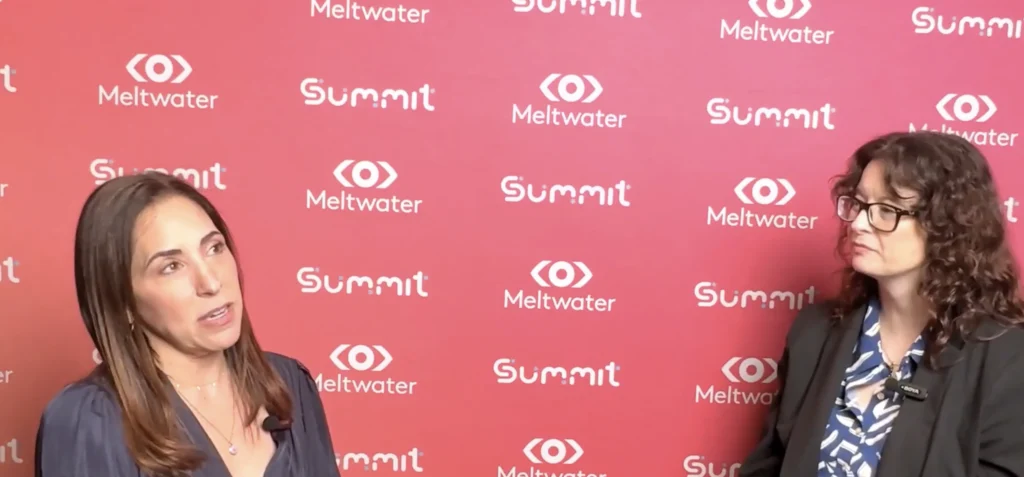
The landscape of public relations is undergoing a profound transformation, moving away from its traditional roots as a siloed discipline toward a sophisticated, data-driven, and multi-channel ecosystem. This evolution was the central theme of a high-level discussion at the 2026 Meltwater Summit, where Dara Busch, CEO of Havas PR North America, sat down with Nicole Schuman, Managing Editor at PRNEWS, to dissect the current state and future trajectory of the industry. As brands navigate an increasingly complex media environment, the integration of earned media, social strategy, and influencer programming has become the new standard for driving growth and maintaining brand relevance in an era defined by artificial intelligence and hyper-targeted analytics.
The 2026 Meltwater Summit served as a critical backdrop for these insights, bringing together thousands of communications professionals to discuss the intersection of technology and storytelling. Against this backdrop, Busch detailed how Havas PR has restructured its approach to meet the demands of a “moving target” industry. The conversation highlighted a shift in client expectations, where the focus has moved from mere media placements to the strategic use of PR as a primary engine for business revenue and audience engagement.
The Architecture of a Modern PR Agency: The Havas Model
To understand the current shifts in the industry, Busch provided a comprehensive overview of the Havas PR structure, which illustrates the specialized yet integrated nature of modern communications. Havas PR North America operates through distinct but collaborative agencies, each tailored to specific market needs while feeding into a broader strategic network.
One of the cornerstones of this structure is Havas Formula, an agency acquired approximately 15 years ago. Formula has evolved into a versatile powerhouse, managing a diverse portfolio that includes corporate technology, consumer brands, and social media strategy. Born out of Formula’s success is “Street,” an experiential agency designed to bridge the gap between digital storytelling and physical brand interactions. Busch noted that experiential marketing is no longer an outlier but a core component of brand building, providing the tangible touchpoints that consumers crave in an increasingly digital world.
Complementing these is Havas Red, a global network that champions the “merged media” system. This model is built on a multi-channel ecosystem that treats earned, social, and influencer media as a singular, cohesive unit. According to Busch, this integration is essential for creating multifaceted programs that “move the needle” for clients. By breaking down the walls between these disciplines, agencies can ensure that a brand’s narrative remains consistent across every touchpoint, from a high-tier news feature to a viral TikTok campaign or a targeted influencer partnership.
The Glow Up of Earned Media in the Age of AI
Perhaps the most surprising trend discussed was the resurgence of earned media, which Busch described as having a “glow up.” While some predicted that traditional PR might fade in the face of paid digital advertising, the opposite has occurred. The rise of Artificial Intelligence (AI) has actually revitalized the value of earned media. As AI-powered search engines and large language models (LLMs) become the primary way consumers find information, the credibility of earned media serves as the authoritative data source that powers these algorithms.
Busch explained that earned media provides the “fuel” for AI search. When a brand is featured in a reputable publication, that content is indexed and prioritized by AI tools, lending a level of third-party validation that paid ads cannot replicate. This has led to a fascinating dichotomy in the market: some clients are returning to “old-fashioned” earned media programs specifically because they understand how these placements influence the modern AI-driven discovery process.
However, the “new” earned media is inseparable from data. Busch revealed that approximately 90% of PR practitioners now utilize data and analytics to craft their campaigns. What were once considered aspirational goals—such as deep audience insights and predictive modeling—are now baseline expectations. The industry has moved beyond the “spray and pray” method of media relations, moving toward a surgical approach where every pitch and every campaign is backed by empirical evidence.
From Impressions to Impact: The Death of Volume-Based Metrics
For decades, the PR industry was obsessed with “vanity metrics,” such as total impressions or the sheer volume of clippings. Busch signaled that this era is officially over. In 2026, client sophistication has reached a point where “gazillion billion trillion views” are no longer the primary measure of success. Instead, the focus has shifted to the quality of the audience and the resonance of the message.
“It’s not about how many eyeballs; it’s about how good those eyeballs are,” Busch remarked. This shift has placed “Share of Voice” (SOV) and engagement at the forefront of PR measurement. By focusing on SOV, brands can see how they stack up against competitors within specific, high-value conversations. More importantly, modern analytics allow agencies to track how PR efforts directly affect growth and revenue. This transition from a “communications cost” to a “growth mechanism” has fundamentally changed the power dynamic between agencies and the C-suite.
Busch emphasized that data allows PR professionals to identify and tap into real audiences in real time, transforming casual observers into brand loyalists and fans. This level of precision ensures that marketing budgets are spent efficiently, targeting those most likely to convert rather than casting an unnecessarily wide and expensive net.
The Spectrum of Client Sophistication and the Multi-Agency Brief
A significant challenge for modern agencies is the wide disparity in client knowledge regarding new technologies. Busch noted that the current market exists on a spectrum. On one end are highly sophisticated brands that are well-versed in AI search optimization, data-driven insights, and the nuances of the digital ecosystem. These clients often use tools like Meltwater to dive deep into consumer behavior and demand high-level strategic integration.
On the other end are “mom-and-pop” businesses or smaller enterprises that have achieved success through traditional means and still view a segment on “The Today Show” as the ultimate achievement. Busch stressed that both types of clients are valid, and the key to agency success lies in building flexible teams that can scale up or down to meet these varying needs.
Furthermore, the industry is seeing an increase in “multi-agency briefs.” At Havas, this involves PR teams working in tandem with advertising agencies and branding firms from the very beginning of a project. This collaborative approach allows PR to act as a lever, generating buzz and third-party credibility around advertisements as they are being created. Busch described this as seeing “how the sausage is made,” allowing communicators to weave PR-able moments into the fabric of broader marketing campaigns.
Challenges and the “Moving Target” of 2026
Despite the advancements in the field, Busch warned that the industry remains a “moving target.” The rapid pace of technological change means that as soon as a strategy is mastered, the landscape shifts again. She issued a call to action for all communicators to become “sponges” for new information, emphasizing that those who fail to educate themselves will be left behind.
One of the practical steps Busch suggested was the creation of a centralized “glossary of terms” within agencies. As the vocabulary of PR expands to include technical terms related to AI, data science, and platform-specific metrics, ensuring that every team member—from junior associates to senior executives—speaks the same language is vital.
The integration of tools like Meltwater is no longer optional. These platforms are evolving as quickly as the media they track, and staying on the “front lines” of these updates is a full-time requirement for the modern practitioner. The summit concluded with the understanding that the future of PR lies in the balance between human storytelling and machine intelligence.
Implications for the Future of Communications
The insights shared by Dara Busch at the 2026 Meltwater Summit suggest a permanent shift in the role of the PR professional. The industry is no longer just about managing reputations; it is about managing data and ecosystems. The “glow up” of earned media, the integration of social and influencer channels, and the reliance on sophisticated analytics have elevated PR to a strategic business function.
As AI continues to reshape how information is consumed, the ability of PR to provide credible, high-quality content will only become more valuable. However, this value is contingent on the industry’s ability to prove its impact through rigorous measurement. For agencies like Havas, the path forward involves a commitment to integration, a relentless focus on audience quality over quantity, and a culture of continuous learning. In the “moving target” of 2026, the only constant for PR professionals is the need to evolve as fast as the stories they tell.










