Commerce, a dynamic and ever-evolving sector, is on the cusp of its most significant transformation in decades, moving beyond the internet-driven e-commerce experiences of today towards an autonomous future powered by artificial intelligence. This profound shift, termed "agentic commerce," envisions a world where AI agents act as intelligent digital proxies for consumers, autonomously discovering products, comparing options, negotiating prices, and even completing purchases on their behalf. While the concept may sound futuristic, technological advancements and shifting consumer behaviors suggest that this next evolution of retail is rapidly taking shape, promising unprecedented levels of convenience but also raising critical questions about trust, control, and the very nature of brand engagement.
The Dawn of Autonomous Shopping
At its core, agentic commerce defines a model where AI agents assume the role of decision-makers and executors in the shopping journey, operating under predefined rules, preferences, and goals set by the user. Unlike traditional AI assistants, which primarily offer information or recommendations, agentic AI possesses the capacity to independently execute complex tasks across the entire purchasing lifecycle. Imagine instructing an AI agent, "Find me a pair of running shoes that match my current fitness tracker, are suitable for marathon training, cost under $150, and can be delivered by Friday." The agent would then spring into action, navigating various online retailers, analyzing product specifications, reading reviews, comparing prices, and ultimately presenting a curated selection or even completing the purchase directly, with user approval.

This shift represents a departure from the manual, often laborious process of browsing countless tabs and comparing dozens of products across different websites. Instead, the user defines the intent, and the AI agent performs the heavy lifting, acting as a sophisticated digital shopping proxy. The human element, however, remains crucial, as users retain ultimate control over final decisions, spending limits, and privacy settings. This collaborative model aims to blend AI’s efficiency with human oversight, ensuring that convenience doesn’t come at the cost of control.
Driving Forces: Why Agentic Commerce is Inevitable
The emergence of agentic commerce is not merely a technological whim but a response to converging trends in consumer behavior, AI adoption, and market dynamics. Several key indicators highlight its growing prominence:
- Consumers Already Embrace AI in Their Buying Journey: The groundwork for agentic commerce has already been laid by widespread consumer interaction with AI-powered tools. A comprehensive 2023 report by McKinsey & Company revealed that over 70% of AI-powered search users engage with these tools for top-of-the-funnel inquiries about categories, brands, products, or services. Furthermore, nearly 50% of consumers actively use AI-powered search experiences today. This pervasive adoption indicates a growing comfort and reliance on AI for product discovery and decision-making. The study also projected a significant disruption to traditional search, estimating that 20-50% of web traffic could shift away from conventional search experiences over time, underscoring the imperative for businesses to adapt to AI-driven discovery channels.
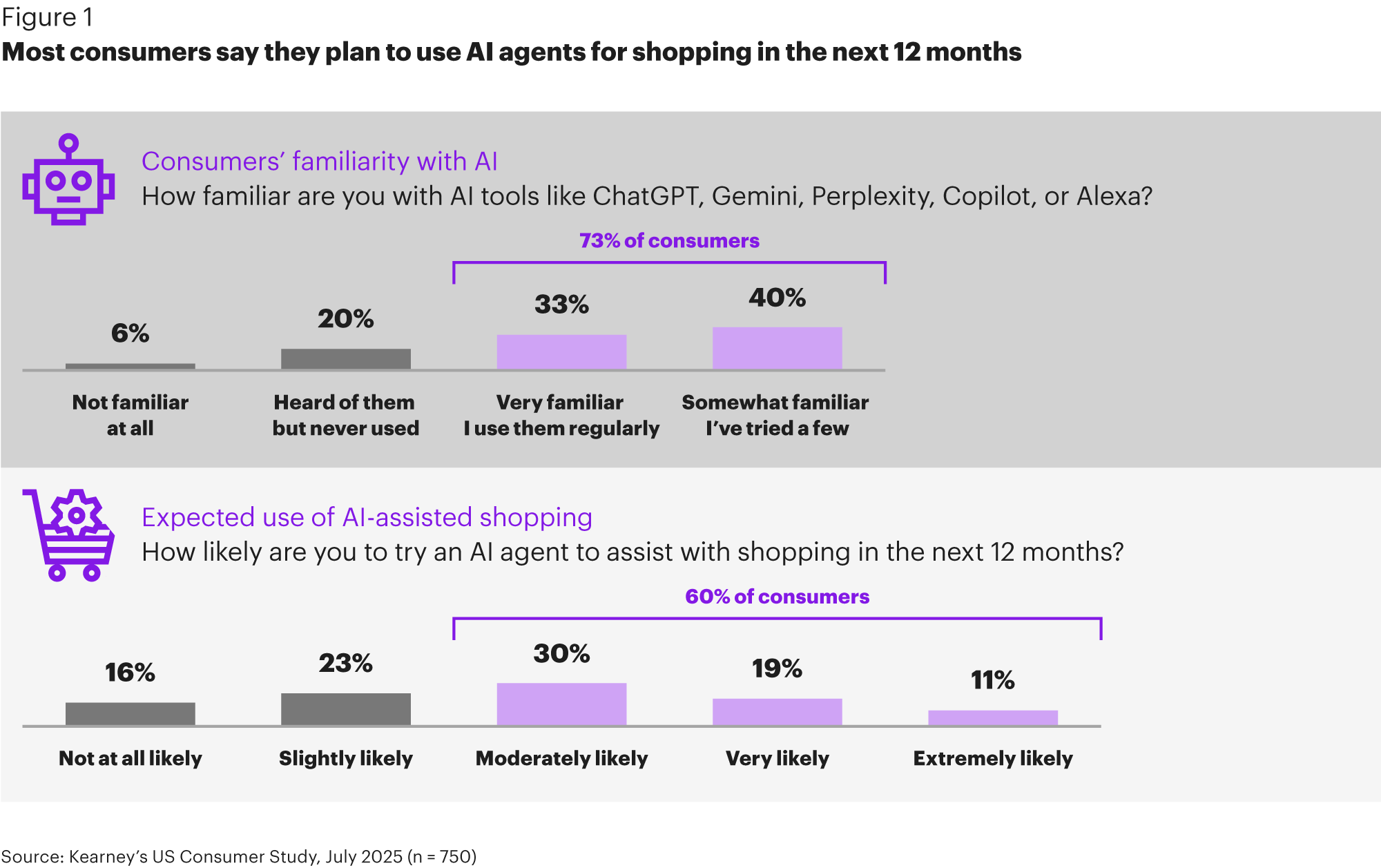
- Rising Consumer Expectations for AI Assistance: Beyond current usage, consumer interest in more autonomous shopping experiences is rapidly expanding. A 2025 report by Kearney, titled "Agentic Commerce: From Brand Loyalty to Bot Logic," indicated that over 60% of shoppers anticipate using agentic AI for their retail needs by 2026. This research points to a major behavioral shift, where shoppers increasingly prioritize convenience, speed, competitive pricing, and trust over traditional platform or brand loyalty. Instead of navigating individual retailer apps, consumers expect AI agents to compare options across multiple platforms, evaluate reviews, identify optimal deals, and complete purchases with greater efficiency, fundamentally altering the competitive landscape from direct retailer-to-retailer battles to AI-driven discovery ecosystems.
- Explosive Market Growth Projections: Industry analysts forecast agentic commerce to unlock a substantial economic opportunity. Another McKinsey report projected that by 2030, the US B2C retail market alone could see an "orchestrated revenue opportunity" ranging from $900 billion to $1 trillion. Globally, this opportunity could expand to an astounding $3 trillion to $5 trillion. These figures underscore the potential for agentic commerce to fundamentally reshape the shopping experience and drive significant economic growth, positioning it as a pivotal force in the future of retail.
The Mechanics of Agentic Commerce: A Step-by-Step Breakdown

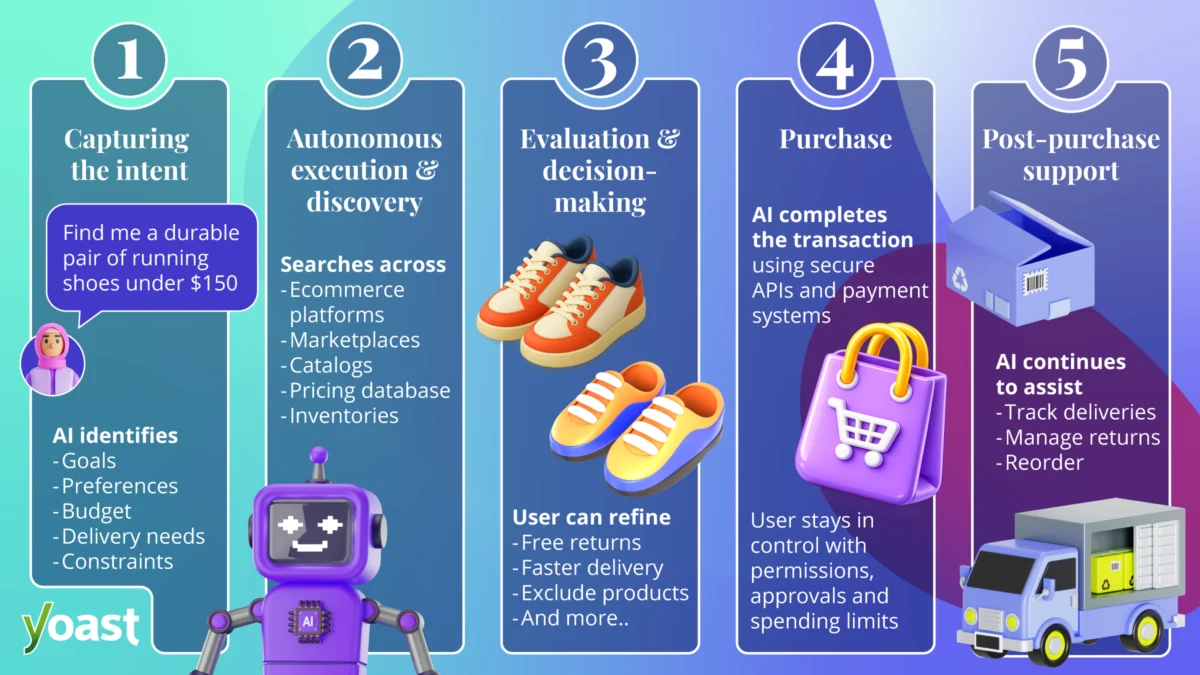
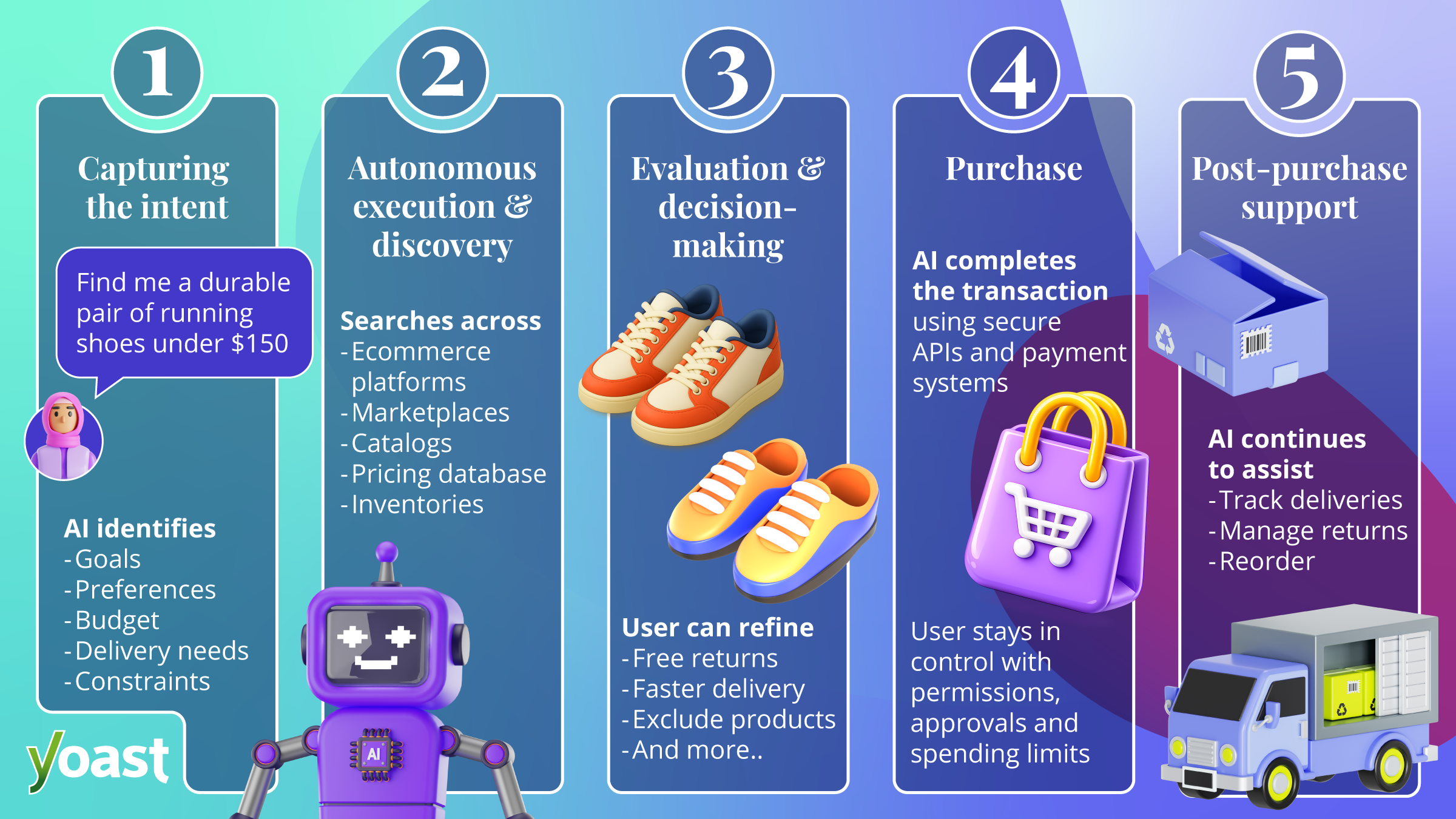
The practical application of agentic commerce involves a sophisticated interplay between human instruction and AI execution, extending far beyond simple product recommendations. Here’s a detailed look at its operational flow:
-
Capturing the Intent: The journey commences with the user articulating their needs. This isn’t limited to short keywords but involves conversational interactions with the AI agent. For instance, a shopper might express, "I need a new laptop for graphic design, under $2,000, with a high-resolution screen and excellent battery life, preferably from a brand known for durability." The AI agent’s initial task is to parse this natural language, understanding the user’s specific goals, budget constraints, preferred attributes, and any implicit requirements. If the request is ambiguous, the agent will engage in clarifying dialogue, asking follow-up questions to refine the intent before proceeding.
-
Autonomous Instruction Execution and Brand Discovery: Once the intent is clear, the AI agent autonomously executes the task. This involves scanning a vast digital landscape, including multiple e-commerce platforms, online marketplaces, product catalogs, review aggregators, pricing databases, and inventory systems. This stage is transformative for product discovery, as the agent filters and prioritizes options based on the shopper’s nuanced needs, moving beyond a simple list of products. Crucially, brands with well-structured product data, accurate and real-time inventory information, transparent pricing, and machine-readable content will gain a significant advantage in being discovered and considered by these AI agents. This necessitates a new focus on "AI-ready" content strategies for businesses.
-
Evaluation and Decision-Making: After compiling relevant options, the AI agent rigorously evaluates products and compares trade-offs. This involves analyzing a multitude of factors such as product specifications, user reviews and ratings, pricing dynamics (including discounts and promotions), availability and delivery times, warranty and return policies, and brand reputation. The agent doesn’t just present data; it reasons through the options, explaining why certain products align better with the user’s requirements. Users can further refine this process by adding conditions like, "Prioritize products with a 4.5-star rating or higher" or "Exclude any brands that had a major recall last year." This iterative feedback loop allows the AI agent to continuously learn and improve its recommendations, ensuring alignment with evolving user preferences.
-
Purchase: With user approval or predefined authorization, the AI agent proceeds to execute the transaction. Leveraging APIs, secure commerce protocols, and integrated payment systems, the agent can add items to carts, apply relevant discounts, authenticate payments, and complete purchases seamlessly. The purchase might occur instantly or be contingent on specific conditions, such as a targeted price drop, restock availability, or a faster delivery option becoming available. Despite the AI’s autonomous execution, users maintain control through granular permissions, approval settings, and spending limits, ensuring security and preventing unauthorized transactions.
-
Post-Purchase Support: The AI agent’s utility extends beyond the point of sale. In the post-purchase phase, agents can continue to assist users by tracking order status, managing returns or exchanges, providing proactive customer support (e.g., reminding users about warranty registrations), and even anticipating future needs based on past purchases and usage patterns (e.g., suggesting compatible accessories or reordering consumables). This transforms shopping from a discrete transaction into an ongoing, intelligent, and supportive experience.
Building the Foundation: Key Technological Protocols and Partnerships
The realization of agentic commerce is underpinned by a burgeoning ecosystem of protocols, frameworks, and secure payment systems that enable AI agents to interact efficiently and securely with the digital commerce landscape. The foundational concept of the Model Context Protocol (MCP), which allows AI models to connect with external systems and applications via a standardized communication layer, is now being specialized for commerce.
-
Agentic Commerce Protocol (ACP): Introduced by Stripe in collaboration with OpenAI, the Agentic Commerce Protocol (ACP) is a pioneering open standard specifically designed to facilitate natural interactions between AI agents and e-commerce systems. ACP provides the essential infrastructure for AI agents to move beyond mere recommendations and execute actual purchases securely. Early implementations are already visible, with ChatGPT users in the United States now able to purchase products from Etsy merchants directly within the chat interface, leveraging Stripe’s checkout capabilities. Shopify integrations are anticipated to follow, marking a significant step towards AI-enabled transactions occurring directly within conversational interfaces. ACP’s open-standard approach is critical, positioning it as a foundational framework for broader adoption across the evolving agentic commerce landscape.
-
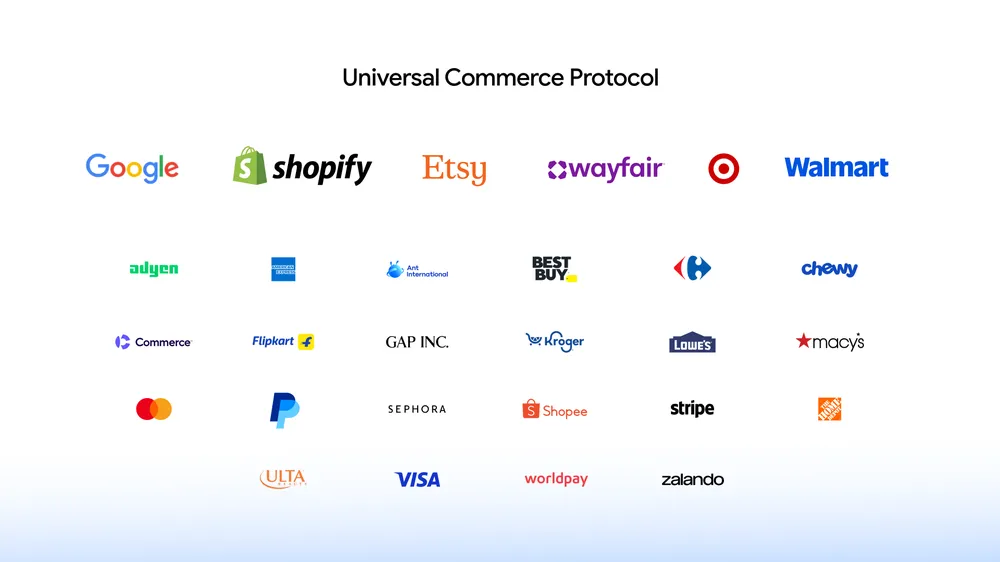
Universal Commerce Protocol (UCP): Addressing the challenge of interoperability across a fragmented retail ecosystem, Google introduced the Universal Commerce Protocol (UCP). UCP aims to create a common language for agentic commerce, allowing AI agents to communicate with thousands of retailers, marketplaces, and payment providers without requiring bespoke integrations for each. Its broad scope covers the entire commerce lifecycle, from product discovery and inventory checks to order placement, payment, and post-purchase management. Google co-developed UCP with major industry players including Shopify, Etsy, Wayfair, Target, and Walmart, and has garnered support from financial giants like Mastercard, Visa, Stripe, and American Express. UCP is designed to complement other emerging AI standards, such as Agent2Agent (A2A) and Agent Payments Protocol (AP2), providing the scalable infrastructure needed for agentic commerce to flourish across the broader digital economy.
-
Mastercard Agent Pay: While protocols like ACP and UCP focus on communication and interoperability, Mastercard Agent Pay addresses the critical need for trust and secure payment execution in agentic commerce. This platform provides the infrastructure for AI agents to execute payments within strict user-defined permissions, authentication requirements, and spending controls. Instead of granting AI systems unrestricted access to payment credentials, Agent Pay focuses on creating verified, traceable, and authorized payment flows. A significant collaboration with PayPal is integrating Mastercard Agent Pay into PayPal’s wallet infrastructure, enabling AI agents to securely complete transactions on behalf of PayPal users, leveraging existing security and trust mechanisms. This partnership is crucial for moving agent-driven payments from experimental environments to real-world adoption across a vast ecosystem of merchants and consumers.
Implications Across the Ecosystem

The advent of agentic commerce carries profound implications for all stakeholders in the digital economy:
- For Consumers: The primary benefit is unparalleled convenience and personalization. Consumers can offload the tedious aspects of shopping, saving time and effort. AI agents can act as highly informed personal shoppers, ensuring users get the best deals and products tailored to their precise needs. However, this convenience comes with challenges, including potential concerns over privacy, data security, and the risk of overspending if not properly controlled. Trust in AI agents to make financial decisions on one’s behalf will be a critical factor in widespread adoption.
- For Retailers and Brands: Agentic commerce necessitates a fundamental rethinking of marketing, discoverability, and customer engagement strategies. Brands must ensure their product data is meticulously structured, accurate, and machine-readable to be effectively discovered by AI agents. The traditional focus on direct brand loyalty may shift towards optimizing for AI agent discoverability, potentially leading to a more commoditized market where price and availability, rather than brand affinity, become paramount. This also presents an opportunity for increased sales through automated purchasing and access to a wider pool of potential customers.
- For the Broader Economy: The projected multi-trillion-dollar opportunity signifies a massive restructuring of the e-commerce landscape. New businesses will emerge to build and manage AI agents, protocols, and specialized services. Traditional retailers that fail to adapt risk being marginalized as consumers increasingly bypass direct engagement. The competitive dynamics will shift, favoring those who can seamlessly integrate with agentic ecosystems and provide transparent, AI-optimized product information.
Navigating the Challenges: The Path Ahead
Despite the rapid technological advancements and enthusiastic projections, agentic commerce faces significant hurdles before achieving widespread adoption. Foremost among these is the question of consumer trust. Many individuals may be hesitant to grant AI agents the authority to make purchasing decisions or access payment methods, fearing fraud, errors, or a loss of control. Addressing these concerns will require robust security measures, transparent operational models, and clear user controls.
Return on investment (ROI) for businesses remains another critical unknown. Supporting agentic commerce requires substantial investments in new protocols, structured data management, API integrations, and AI-ready commerce experiences. Whether these investments will yield measurable returns, particularly given the nascent stage of consumer adoption, is a key consideration for merchants.
Broader societal and ethical challenges also loom large. Security and fraud prevention become even more complex when autonomous agents handle transactions. AI bias, if embedded in agent algorithms, could lead to discriminatory purchasing outcomes. The potential for platform dependency and the loss of direct relationships between brands and customers could fundamentally alter market dynamics and consumer engagement models.
Agentic commerce represents an exciting and potentially transformative direction for digital shopping. Its long-term success, however, will hinge on its ability to create undeniable value for consumers and merchants alike, fostering trust, ensuring security, and ultimately enhancing the overall shopping experience without adding undue complexity or ethical compromise. As the ecosystem of protocols, payment systems, and AI agents continues to mature, the commerce world watches closely to see if this futuristic vision can indeed become the next defining chapter in retail history.