

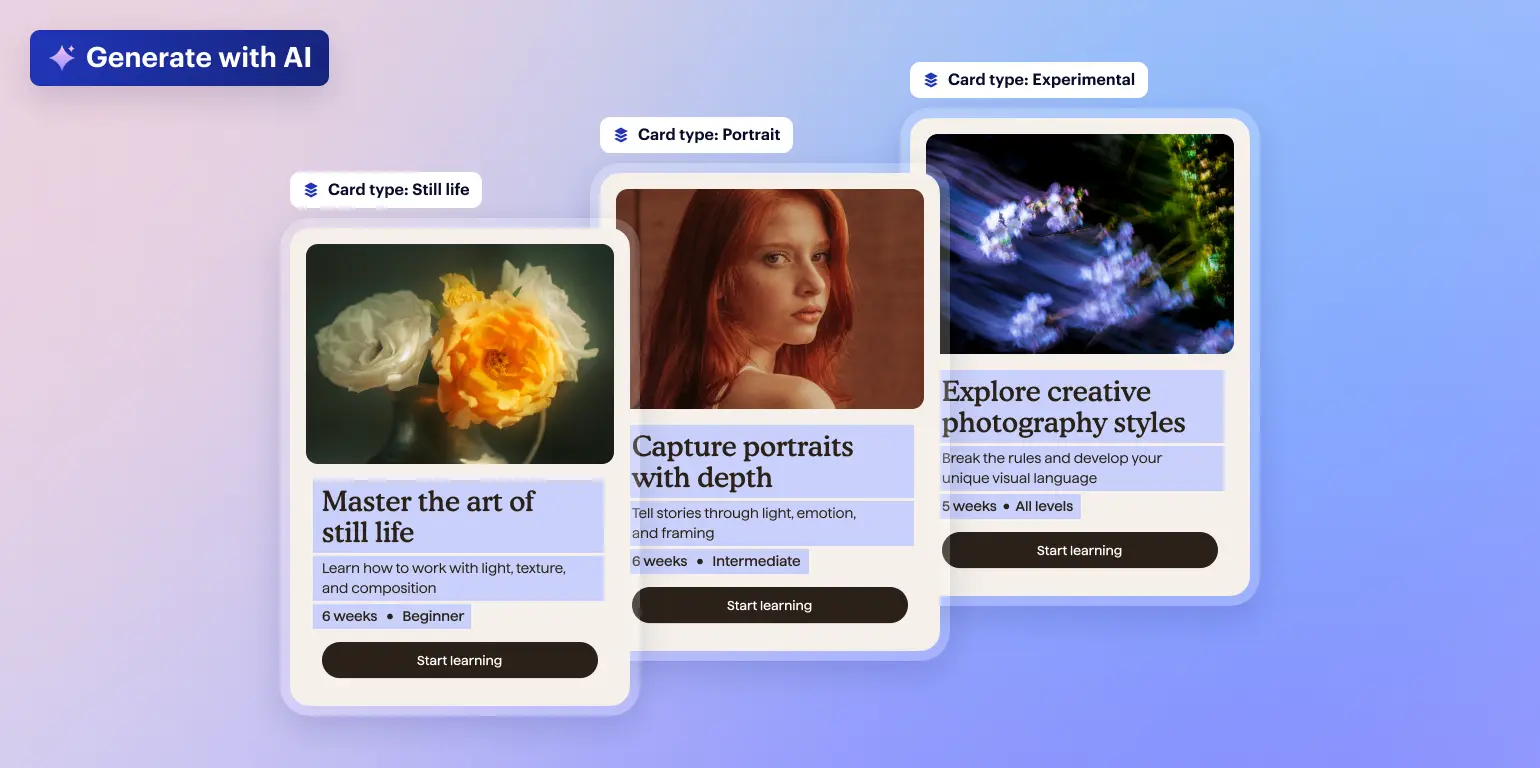
Instapage, a pioneer in the post-click automation industry, has officially announced the release of AI Collections, a sophisticated suite of tools designed to address one of the most persistent challenges in digital marketing: the scalability of personalized content. While the marketing industry has long recognized that personalization is a primary driver of conversion rates and return on ad spend (ROAS), the technical and manual hurdles required to implement it at scale have often rendered high-level personalization initiatives unfeasible for many organizations. AI Collections aims to bridge this gap by utilizing generative artificial intelligence to automate the creation, population, and management of hundreds of unique landing pages from a single centralized interface.
The introduction of this feature marks a significant shift in how marketing teams approach campaign architecture. Traditionally, creating personalized experiences for different audience segments, keywords, or geographic locations required manual duplication of pages, tedious editing of copy, and the management of complex spreadsheets to track versioning. This process was not only prone to human error but also created a significant "time-to-market" lag. According to internal data provided by Instapage, AI Collections allows teams to deploy personalized pages up to three times faster than traditional manual methods, effectively removing the "execution tax" that has historically hampered high-performance marketing departments.
The Evolution of the Personalization Paradox
To understand the impact of AI Collections, it is necessary to examine the current state of the digital advertising landscape. Modern consumers increasingly expect experiences that are tailored to their specific needs, intent, and stage in the buyer’s journey. Industry research from firms such as McKinsey & Company indicates that companies that excel at personalization generate 40% more revenue from those activities than average players. Furthermore, nearly 80% of consumers are more likely to make a purchase from a brand that provides personalized experiences.
Despite these clear incentives, the "Personalization Paradox" remains: as the demand for relevance increases, the complexity of delivering that relevance grows exponentially. A campaign targeting ten different keywords across five geographic regions and three distinct buyer personas would theoretically require 150 unique landing pages to be perfectly optimized. For most marketing teams, managing 150 separate assets is a logistical nightmare that leads to "generic page fatigue," where campaigns are eventually funneled toward a single, one-size-fits-all landing page, significantly depressing potential conversion rates.
Technical Architecture of AI Collections
AI Collections reimagines the landing page workflow by treating page elements as dynamic data points rather than static design blocks. The system operates on a "Template-to-Table" logic, which centralizes the creative and administrative tasks into a streamlined process.
The workflow begins with the creation of a master template. Marketers design a single high-converting page that serves as the blueprint for the entire collection. Within this template, the user activates the AI Collections feature, which integrates a built-in content table directly into the Instapage editor. Each row within this table represents an individual page in the collection, while each column represents a dynamic content variable—such as headlines, body copy, images, or calls to action (CTAs).
The core innovation lies in the "AI Placeholder" system. Rather than requiring a developer or a designer to manually code dynamic fields, the AI analyzes the design and layout of the master page to identify optimal locations for dynamic content. It automatically generates placeholders that act as hooks for the data stored in the content table. This automation ensures that the visual integrity of the page remains intact regardless of how many variations are produced.
Generative Content and Fluid Grid Integration
Once the structural framework is established, the generative AI component of the tool takes over the content creation process. Marketers are no longer required to write unique copy for every single iteration. By providing a "prompt" or a set of contextual guidelines—such as target audience demographics, specific value propositions, or campaign goals—the AI generates publish-ready content for every entry in the table.
This generative capability is further enhanced by Instapage’s proprietary "Fluid Grid" technology. One of the primary risks of automated content generation is "layout breakage," where a longer headline or a larger image in one variant displaces other elements on the page, leading to a poor user experience. The Fluid Grid blocks automatically adjust the layout and spacing around the AI-generated content in real-time. This ensures that whether a page has a three-word headline or a ten-word headline, the visual hierarchy and mobile responsiveness remain perfect without manual intervention.
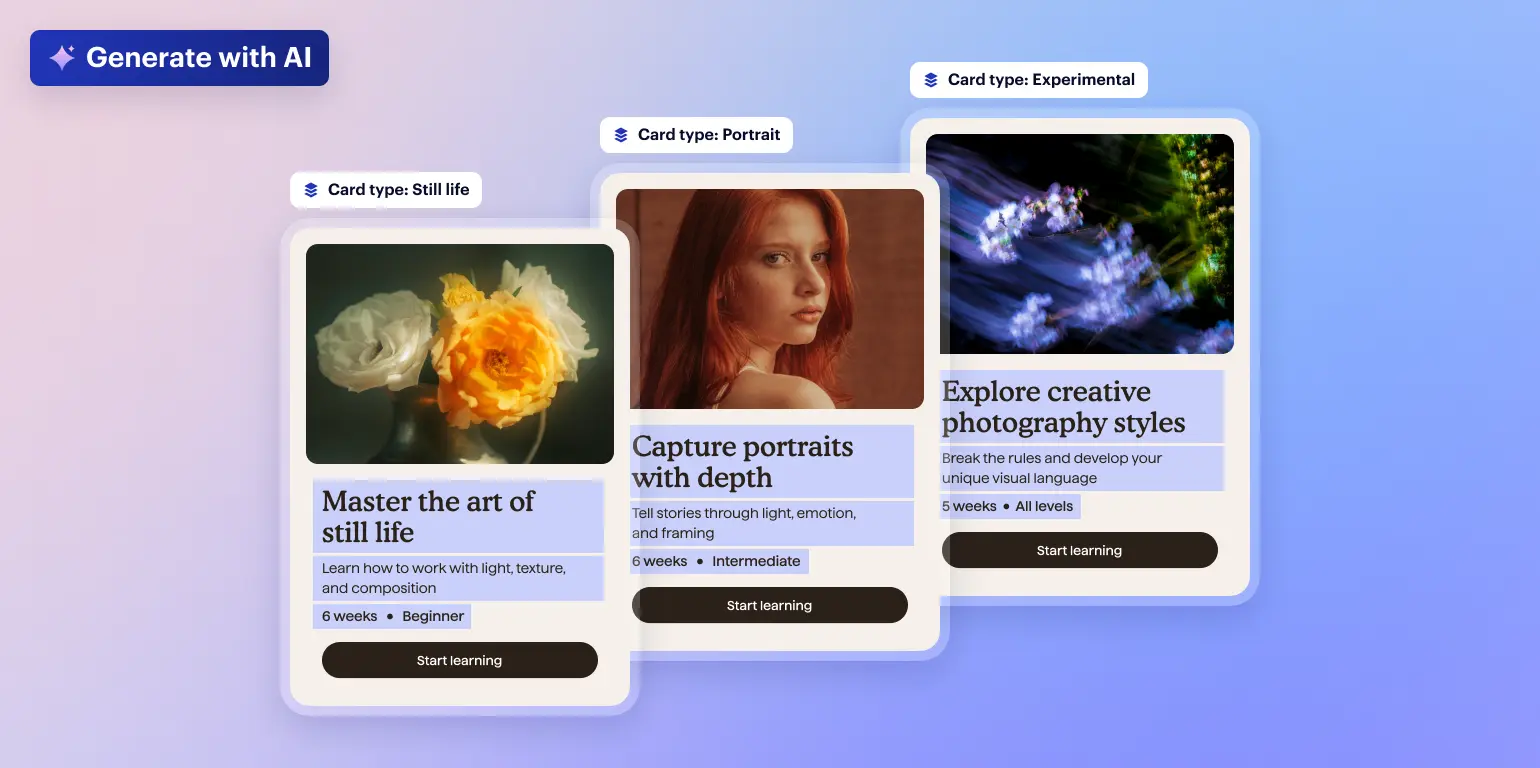
Chronology of Innovation in Post-Click Automation
The launch of AI Collections is the latest milestone in a decade-long trend toward the automation of the "post-click" experience. The timeline of this evolution highlights the transition from static web design to intelligent, data-driven environments:
- 2012–2016: The Era of the Builder. The focus was on "What You See Is What You Get" (WYSIWYG) editors that allowed marketers to build pages without developers.
- 2017–2020: The Rise of Optimization. Platforms introduced A/B testing, heatmaps, and basic dynamic text replacement (DTR) to improve performance.
- 2021–2023: Integration of AI Assistance. AI began to appear in the form of "AI Content Generators" that helped write headlines or meta descriptions within the editor.
- 2024–Present: The Era of Programmatic Personalization. With the release of AI Collections, the focus has shifted from helping humans build one page to allowing humans to oversee the AI-driven creation of entire ecosystems of pages.
Market Implications and Professional Analysis
The deployment of AI Collections is expected to have broad implications for various sectors of the digital economy, particularly for performance marketing agencies and enterprise-level internal teams.
From a cost-analysis perspective, the "3x faster" efficiency gain cited by Instapage translates into a significant reduction in labor costs. For an agency managing large-scale Google Ads or Meta Ads accounts, the ability to align every ad group with a dedicated, hyper-relevant landing page has been the "holy grail" of Quality Score optimization. By reducing the cost of production for these pages, AI Collections makes it economically viable to pursue "Long-Tail" keyword strategies that were previously ignored due to the high cost of creative overhead.
Furthermore, industry analysts suggest that this move places Instapage in direct competition with "Programmatic SEO" tools. While programmatic SEO focuses on generating thousands of pages for search engine indexing, AI Collections focuses on the conversion side of the equation. By ensuring that the "landing" is as tailored as the "search," brands can expect to see a decrease in bounce rates and an increase in the efficiency of their media spend.
Stakeholder Reactions and Industry Sentiment
While formal statements from all major partners are pending, the sentiment among early adopters and MarTech experts suggests a "cautious optimism" regarding the role of AI in creative workflows.
Marketing executives have noted that the primary value of AI Collections is not just the speed, but the democratization of sophisticated marketing tactics. "For a long time, hyper-personalization was a luxury reserved for companies with massive engineering teams and custom-built CMS solutions," noted one digital strategy consultant. "Tools like AI Collections bring that capability to the standard marketing manager, allowing for a level of agility that was previously impossible."
However, experts also emphasize that the "human-in-the-loop" remains critical. While the AI can generate the content and placeholders, the strategic direction—the prompts, the audience definitions, and the final review of the AI’s output—remains the responsibility of the marketer. Instapage has addressed this by ensuring that all AI-generated content can be reviewed and edited within the centralized content table before any pages are pushed live.
Looking Ahead: The Future of Dynamic Experiences
As Instapage rolls out AI Collections to its global user base, the focus will likely shift toward further integrations with CRM data and real-time audience signals. The ultimate goal of the industry is a "Living Landing Page" that doesn’t just change based on a static table, but evolves in real-time based on a user’s past behavior and current intent.
For now, AI Collections represents a major step toward the industrialization of personalization. By solving the execution problem, Instapage is enabling a future where "generic" is no longer the default setting for digital marketing. Organizations interested in exploring these capabilities are currently being offered a 14-day trial period to test the impact of AI-driven personalization on their own conversion metrics.
In conclusion, the launch of AI Collections is more than a feature update; it is a response to the growing demand for efficiency in an increasingly crowded and expensive digital advertising market. By leveraging AI to handle the "heavy lifting" of page duplication and content population, Instapage is allowing marketers to return to what they do best: strategy, storytelling, and high-level campaign optimization.







