The Bill and Melinda Gates Foundation has inaugurated its comprehensive Goalkeepers report, an annual assessment designed to track, document, and accelerate progress toward the United Nations Sustainable Development Goals (SDGs). The 2017 edition, titled Goalkeepers: The Stories Behind the Data, represents a pivotal shift in how global health data is communicated to the public and policymakers. By synthesizing complex datasets from the United Nations, the Institute for Health Metrics and Evaluation (IHME), and various non-governmental organizations, the report aims to diagnose urgent global problems, identify scalable solutions, and interpret key results to spread best practices in the fight against extreme poverty and disease.
Central to the 2017 report is a focused examination of maternal mortality, a metric that serves as a critical indicator of the overall health and stability of a nation’s healthcare infrastructure. The foundation emphasizes that maternal mortality is not merely a medical failure but a systemic one that devastates families and communities. According to the report, the loss of a mother often precipitates a cascade of negative outcomes for surviving children, including increased risks of malnutrition, reduced educational attainment, and higher infant mortality rates.
A Chronological Overview of Global Maternal Health Targets
The efforts to reduce maternal mortality have evolved through several international frameworks over the last three decades. In 1990, the global community established a baseline for maternal health, recognizing that hundreds of thousands of women were dying annually from preventable causes related to pregnancy and childbirth. This led to the inclusion of maternal health as a primary focus in the Millennium Development Goals (MDGs), specifically MDG 5, which aimed to reduce the maternal mortality ratio (MMR) by three-quarters between 1990 and 2015.
While the MDG era saw significant improvements, the targets were not uniformly met across all regions. In 2015, the United Nations transitioned from the MDGs to the Sustainable Development Goals (SDGs). Goal 3, Target 3.1 of the SDGs, sets an ambitious global objective: to reduce the global maternal mortality ratio to less than 70 per 100,000 live births by the year 2030. The Goalkeepers 2017 report serves as one of the first major status updates since the adoption of these new targets, providing a data-driven look at whether the world is on track to meet the 2030 deadline.
Statistical Analysis of Maternal Mortality Trends
Data provided by UNICEF and analyzed within the Goalkeepers framework reveals the staggering scale of the challenge. In 2015, UNICEF registered approximately 302,530 maternal deaths globally. This equates to a global average of 168.7 deaths per 100,000 live births. While these figures represent a substantial decline from 1990 levels, the distribution of mortality remains highly unequal.
The majority of these deaths—roughly 66%—occur in Sub-Saharan Africa, followed by Southern Asia. In high-income countries, the MMR is often in the single digits, highlighting a profound disparity in access to emergency obstetric care, skilled birth attendants, and prenatal nutrition. The Goalkeepers report utilizes these figures to argue that maternal mortality is a "solvable" problem, as the discrepancy between wealthy and developing nations proves that medical interventions already exist to prevent the vast majority of these fatalities.
The data further indicates that the most common causes of maternal death include severe bleeding (mostly postpartum hemorrhage), infections (usually after childbirth), high blood pressure during pregnancy (pre-eclampsia and eclampsia), and complications from delivery. The Goalkeepers initiative posits that by tracking these specific causes through rigorous data collection, governments can better allocate resources toward the most effective interventions, such as oxytocin to prevent hemorrhage or antibiotics for sepsis.
Case Study: Ethiopia’s Strategic Healthcare Transformation
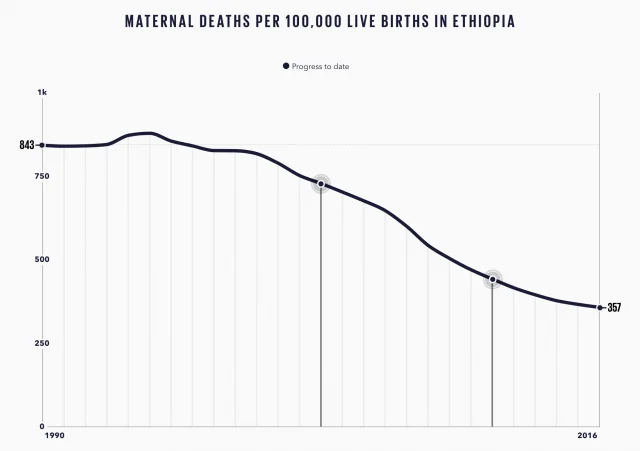
One of the most significant success stories highlighted in the 2017 report is the progress made by Ethiopia. In 1990, Ethiopia had one of the highest maternal mortality rates in the world, with 843 deaths per 100,000 live births. By 2015, this number had plummeted to 357 per 100,000 live births. While still above the global average, the rate of decline in Ethiopia has been hailed as a model for other developing nations.
Ethiopia’s success is attributed to a deliberate, state-led overhaul of its primary healthcare system. In 2003, the Ethiopian government launched the Health Extension Program (HEP). This initiative involved training and deploying over 38,000 female health extension workers to rural villages across the country. These workers provide a package of basic health services, including prenatal care, immunizations, and family planning, directly to women who previously had no access to medical facilities.
Furthermore, Ethiopia invested heavily in "Maternity Waiting Homes"—facilities located near hospitals where expectant mothers from remote areas can stay during the final weeks of pregnancy. This ensures that if complications arise during labor, the mother is already in close proximity to a surgical team. The Goalkeepers report emphasizes that Ethiopia’s progress was not the result of a single "silver bullet" but rather a combination of political will, sustained funding, and the innovative use of community-based healthcare workers.
The Role of Information Design and Data Transparency
The Goalkeepers 2017 report has been noted by analysts for its sophisticated use of information design. Unlike traditional bureaucratic reports, Goalkeepers employs a multi-medium approach, utilizing interactive charts, video testimonials, and data visualizations to make the findings accessible to a broader audience. This transparency is intended to foster a sense of accountability among global leaders.
Independent analysis of the UNICEF maternal mortality dataset, often used in conjunction with the Goalkeepers report, underscores the importance of data quality. Accurate reporting in rural areas remains a challenge, as many maternal deaths occur outside of formal hospital settings and may go unrecorded. The Gates Foundation and UNICEF have advocated for improved civil registration and vital statistics (CRVS) systems to ensure that every death is counted, thereby allowing for more precise interventions.
The use of digital tools, such as Google Data Studio and other visualization platforms, has allowed researchers to map mortality trends with higher granularity. For instance, while a country’s national average might look promising, sub-national data often reveals "pockets of neglect" where mortality rates remain high due to ethnic marginalization or geographic isolation.
Official Responses and Global Implications
The release of the Goalkeepers report prompted responses from various international stakeholders. Bill and Melinda Gates stated that "if you were trying to invent the most efficient way to devastate communities and put children in danger, you would invent maternal mortality." This sentiment has been echoed by World Health Organization (WHO) officials, who maintain that maternal health is a human rights issue as much as a medical one.
The implications of the report extend beyond healthcare. Economists argue that reducing maternal mortality is a prerequisite for economic development. When mothers survive and thrive, they contribute to the workforce and invest in the human capital of their children, creating a "demographic dividend" that can lift entire nations out of poverty. Conversely, high maternal mortality rates trap communities in a cycle of poverty and high fertility, as families often have more children to compensate for high mortality risks.
Future Outlook and Challenges for 2030
As the world looks toward the 2030 Sustainable Development Goal targets, the Goalkeepers report serves as both a celebration of progress and a warning of the work remaining. To reach the target of 70 deaths per 100,000 live births, the pace of progress must accelerate, particularly in conflict-affected regions where healthcare systems have collapsed.
Challenges such as climate change, which threatens food security and increases the spread of infectious diseases, and political instability pose significant risks to the gains made in maternal health. Moreover, the report suggests that future progress will depend on addressing the "social determinants of health," including female literacy, age of marriage, and access to reproductive health services.
In conclusion, the Goalkeepers 2017 report highlights that while the fight against maternal mortality is far from over, the trajectory is positive. Through the strategic use of data, the scaling of proven interventions like those seen in Ethiopia, and continued international investment, the goal of ending preventable maternal deaths remains within reach. The report stands as a testament to the power of combining rigorous science with compelling storytelling to drive global social change.