Dwi Wanna
The modern marketing and sales funnel, a meticulously designed engine meant to convert interest into revenue, is experiencing critical failures at multiple key transition points. A recent comprehensive study, "The MQL Trust Gap: Why Inbound Is Breaking at Every Handoff," conducted by Heinz Marketing in collaboration with Docket, reveals a systemic erosion of trust and efficiency across the entire inbound demand generation process. The research, which surveyed 192 marketing, demand generation, and RevOps practitioners, paints a stark picture of a system where the foundational metric, the Marketing Qualified Lead (MQL), is increasingly viewed with skepticism, leading to wasted resources and missed opportunities.
The study highlights that the journey of an inbound lead is fundamentally broken down into three crucial handoffs: from the buyer to marketing, from marketing to sales, and finally, from sales back to the buyer. Each of these stages is reportedly experiencing significant leaks, with the MQL metric, intended to bridge these gaps, failing to inspire confidence among those who rely on it.
Handoff 1: Buyers Opting Out at the Form – The First Choke Point
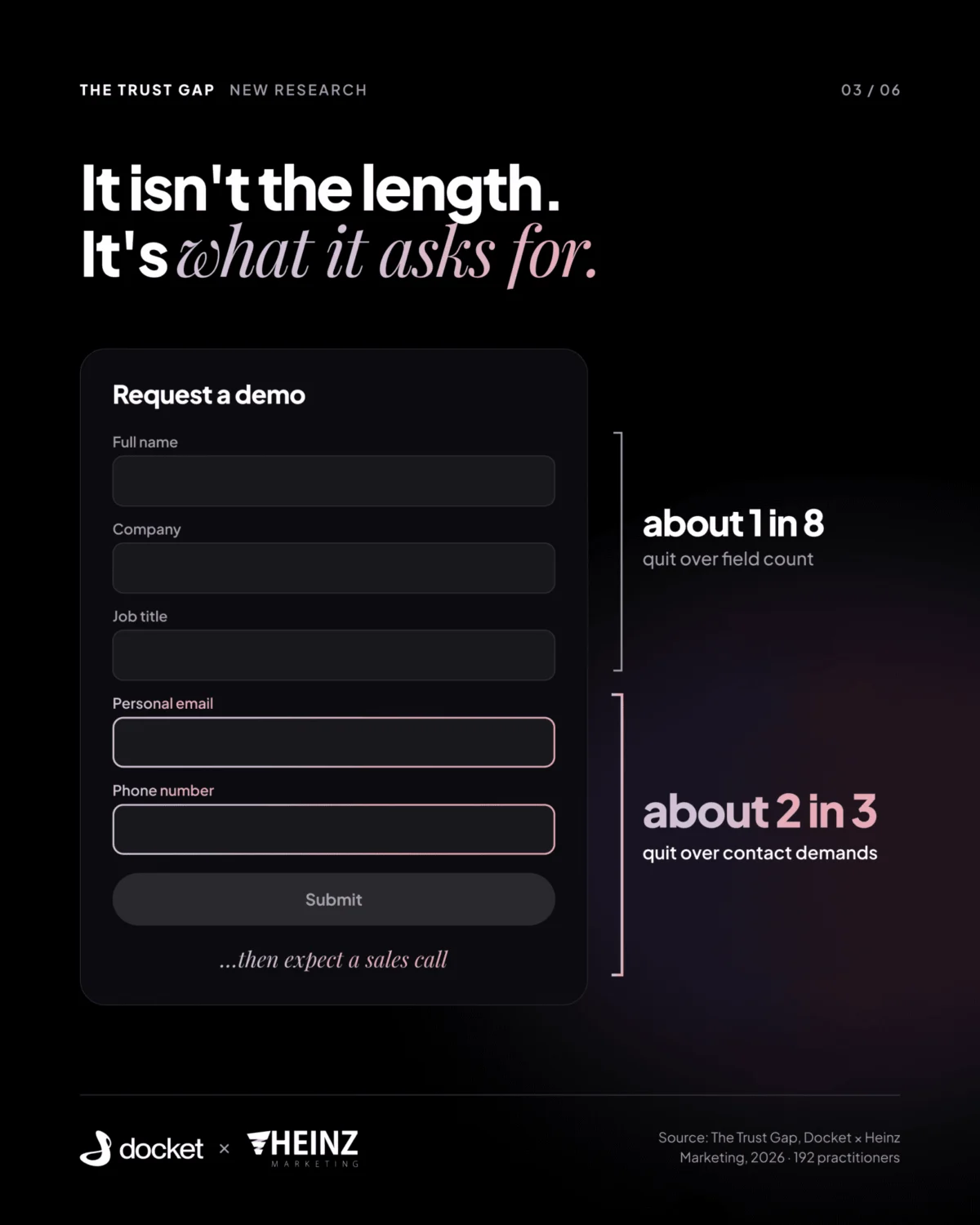
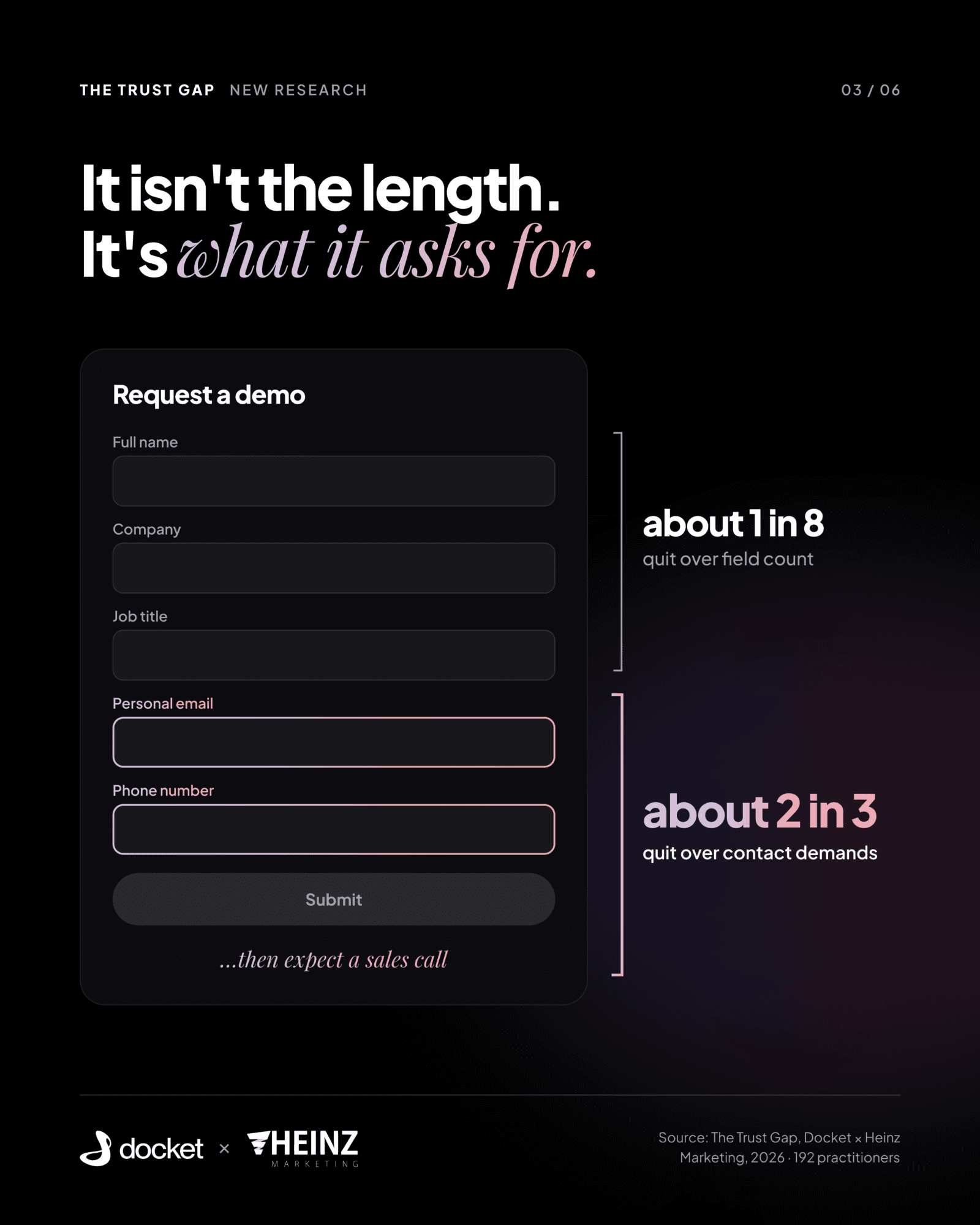
The initial point of friction for inbound leads often occurs at the digital form, a gatekeeper designed to capture essential prospect information. The findings are alarming: over 80% of surveyed respondents admitted to abandoning a vendor form within the last 90 days, with a significant portion doing so multiple times. The primary culprit for these abandonments, accounting for roughly two-thirds, is the demand for contact information, specifically phone numbers and personal email addresses, coupled with the anticipated subsequent sales outreach. Even reducing the number of form fields from nine to five often fails to address the core issue if the intrusive requests remain.
This widespread form abandonment results in a complete loss of data for the vendor, leaving no trace in any tracking system. For those prospects who do complete forms, the quality is often questionable. Nearly a third of respondents reported that a quarter or more of their form submissions in the previous quarter were deemed "junk" – inaccurate or unqualified data. This phenomenon is so prevalent that industry figures, like Matt Heinz himself, have admitted to providing intentionally inaccurate information, such as deliberately misspelling their first name, as a form of protest against overly demanding data capture practices.

While chatbots were introduced to streamline buyer interactions, they have also fallen short of expectations. The study indicates that two-thirds of buyers who engaged with a chatbot in the past 90 days did so without achieving their objectives, leading to further disengagement. Despite these shortcomings, the underlying desire for genuine interaction remains strong, with only 2% of buyers expressing a preference for browsing vendor sites without any conversational support. This suggests a clear unmet need for more effective and less intrusive engagement strategies early in the buyer journey.
Handoff 2: The MQL – A Metric Lacking Universal Trust
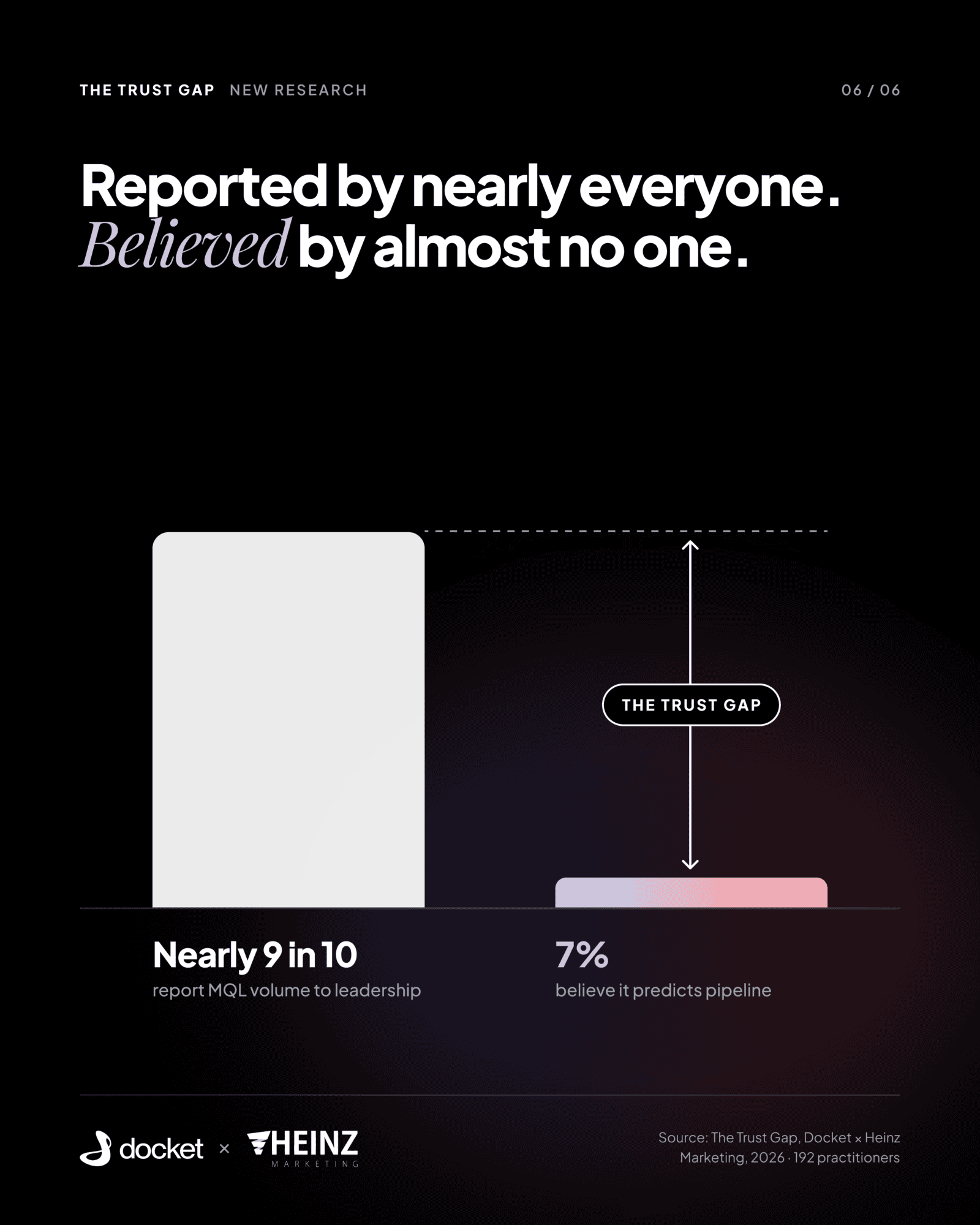
The second critical handoff occurs when marketing passes leads to sales, typically under the banner of a Marketing Qualified Lead (MQL). The research reveals a profound lack of confidence in this metric. Nearly nine out of ten respondents report MQL volume to their leadership. However, among this group, a mere 7% express genuine confidence that the reported MQL number accurately predicts future pipeline. The vast majority fall into the category of "slightly confident," underscoring a widespread unease with the metric’s predictive power.
This distrust is further evidenced by the stark reality of sales acceptance rates. At a significant 78% of organizations, sales teams reject more than half of the MQLs that marketing passes their way. This rejection rate points to a fundamental misalignment in lead qualification criteria or a deficiency in the quality of leads being generated and qualified by marketing. The desire for change is palpable, with roughly two-thirds of respondents indicating they would redefine or entirely discard the MQL metric if they were to rebuild their reporting infrastructure from scratch.
Lauren McHugh, Head of Marketing at Docket, offered a candid insight into the persistence of the MQL despite its flaws: "It’s easier to keep producing a number you don’t fully trust than to be the person who replaces it." She elaborated that implementing such a change often requires significant cross-departmental alignment and can take more than a quarter to fully integrate, making the status quo, however flawed, the path of least resistance for many. This inertia perpetuates a system where valuable marketing efforts might be generating leads that are not effectively utilized by sales, creating a significant operational and financial drain.
Handoff 3: The Faltering Follow-Up – Relevance Over Speed
The third and final handoff in the inbound process involves sales following up with the buyer. The study’s findings here are equally discouraging, indicating that the buyer’s experience post-submission is often subpar. When asked about their most recent form fill experiences, fewer than 20% of respondents received follow-up that was both prompt and relevant. The majority encountered generic sequences, experienced significant delays, or received no follow-up at all. This is particularly striking, as these are marketing and RevOps professionals, individuals who are deeply familiar with the very systems they are critiquing from a buyer’s perspective.
While speed has been a focus for many sales organizations, with roughly three in ten achieving first human contact within an hour, this has not universally translated into a positive buyer experience. Buyers still frequently describe these interactions as generic. McHugh points to a critical gap in context as the more significant issue. Sales representatives often lack crucial information about what a buyer has viewed or shown interest in on a vendor’s website. This information deficit forces follow-up into a template-driven, generic approach, failing to resonate with the buyer’s specific needs and interests.
The timing of follow-up also plays a subtler role. Over half of organizations utilizing sales agents report that a quarter or more of agent-booked meetings occur outside of standard business hours. This suggests either a misalignment in scheduling capabilities or a buyer preference for engagement outside the traditional 9-to-5, highlighting the need for more flexible and buyer-centric follow-up strategies.
The AI Ascent: Outpacing Measurement Capabilities
In parallel to these systemic challenges, Artificial Intelligence (AI) is rapidly being integrated into sales and marketing workflows. The study found that a substantial 70% of respondents are actively piloting, deploying, or scaling AI agents, primarily for lead qualification and running discovery calls. Interestingly, leadership skepticism is not a significant barrier; fewer than 4% cited it as the primary challenge. Instead, the complexity of integrating AI into existing technology stacks, known as stack connectivity, emerges as the most prominent hurdle, particularly for teams that have already deployed AI solutions (47% of deployed teams versus 13% of those still researching).
However, the ability to accurately measure the impact of these AI deployments lags significantly behind their adoption. Approximately only 10% of organizations using AI agents rely on dashboards or CRM reports for results. A staggering 50% resort to manual calculations, a labor-intensive and error-prone process. When comparing sales acceptance of AI-booked meetings against the acceptance rate of traditional MQLs, a concerning 40% of AI-generated leads fell below the MQL baseline. While this comparison requires caution due to differing measurement denominators, it strongly suggests that the newest elements of the inbound system are being evaluated against its least trusted metric.
Redefining Lead Qualification: Beyond the Form Fill
The research strongly implies that the MQL, as currently defined and utilized, is an insufficient benchmark for evaluating new lead sources, including AI. The study proposes a new set of criteria that respondents believe would make a conversation-qualified lead more actionable than a simple form submission. These include:
- Timeline: Understanding the prospect’s engagement timeline.
- Explicit Next Step: Identifying a clear intended action from the buyer.
- Buying Role: Clarifying the prospect’s position and influence in the purchasing decision.
- Current Stack: Assessing the technologies the prospect is currently using.
Interestingly, the full transcript of a buyer interaction was ranked last in terms of actionable insight, with only about 20% of respondents finding it most valuable. This aligns with anecdotal evidence from a webinar attendee who noted that a concise summary of key topics is far more effective for Business Development Representatives (BDRs) than sifting through lengthy transcripts.
Leadership, on the other hand, prioritizes downstream indicators of success such as pipeline conversion rates, win rates, and speed to meeting. Rep testimony, while valuable, persuades fewer than 1 in 5 leaders. Docket utilizes the term "Agent Qualified Lead" (AQL) to denote leads that meet these higher standards, and the report outlines four core requirements that are applicable not only to AI-generated leads but to any lead source entering the funnel.
Four Steps to Rebuild Trust and Efficiency This Quarter
The study concludes by offering actionable recommendations that do not necessarily require investment in new technologies but focus on process improvement and a shift in perspective. These four starting points can be implemented independently and concurrently:
- Refine Form Fields: Prioritize essential data capture and remove non-critical fields, particularly phone numbers, to reduce abandonment rates.
- Enhance Lead Scoring: Develop more sophisticated lead scoring models that incorporate behavioral data and explicit buyer intent signals beyond simple form submission.
- Improve Sales Enablement: Equip sales teams with enriched context about buyer interactions and browsing history to enable more personalized and relevant follow-up.
- Establish Clear Qualification Criteria: Collaborate between marketing and sales to define mutually agreed-upon, measurable criteria for lead qualification that go beyond the MQL.
Furthermore, the report includes an "Inbound Trust Assessment," an eight-question tool designed for teams to complete in a single meeting. Matt Heinz suggests that having multiple team members complete the assessment and then discussing discrepancies in their answers can illuminate areas of misalignment and foster collective understanding. The research indicates that a significant portion of the market resides in the "lower half" of this assessment, suggesting that many organizations are grappling with similar trust and efficiency issues.
Revisiting the Tuesday Night Scenario
The initial anecdote of a VP of demand generation meticulously evaluating software anonymously underscores the modern buyer’s desire for frictionless, low-commitment engagement. She sought information without immediate obligation, a behavior that is increasingly common. The teams that succeed in closing the "trust gap" will be those that can demonstrate tangible value at each stage of the buyer’s journey, providing clear evidence of what each handoff has produced for the prospect.
The full report offers an in-depth exploration of each handoff and includes the complete Inbound Trust Assessment. For organizations seeking to proactively address their own operational breakdowns, Heinz Marketing offers a free "Marketing Orchestration Self-Audit." Engaging with these resources can provide a clearer path toward rebuilding a more trusted, efficient, and ultimately, more productive inbound demand generation engine. The current system is demonstrably broken; the opportunity lies in understanding the fractures and systematically repairing them.


 Nana Muazin

 Lina Irawan