Evan Lee Salim
The digital communication landscape is undergoing a significant transformation, placing unprecedented emphasis on subscriber control and content relevance. As brands grapple with escalating unsubscribe rates and the increasing scrutiny of mailbox providers, the strategic promotion and utilization of email preference centers have emerged as a critical imperative for maintaining healthy subscriber relationships and optimizing marketing performance. Once relegated to the obscure corners of email footers, these preference centers are now recognized as powerful personalization engines, crucial for gathering zero-party data and fostering meaningful engagement in an increasingly personalized online world.
The shift towards greater subscriber autonomy is not a sudden phenomenon but the culmination of several years of evolving privacy regulations, technological advancements, and changing consumer expectations. Key milestones in this trajectory include the implementation of the General Data Protection Regulation (GDPR) in Europe in 2018 and the California Consumer Privacy Act (CCPA) in 2020, which significantly empowered individuals with greater control over their personal data. These regulations set a precedent for transparency and consent, fundamentally altering how brands collect, process, and utilize customer information.
Further accelerating this trend was Apple’s introduction of Mail Privacy Protection (MPP) in 2021, which masked IP addresses and prevented senders from knowing if or when an email had been opened. This development had profound implications for email marketers, who had traditionally relied heavily on open rates as a primary metric for engagement and segmentation. MPP forced a re-evaluation of engagement signals, pushing marketers to focus on more explicit forms of interaction, such as clicks and direct preference indications.
The most recent and perhaps most impactful development comes from major mailbox providers (MBPs) like Google. In late 2023 and early 2024, Google announced new sender requirements for Gmail, mandating that bulk senders implement one-click unsubscribe options and maintain spam complaint rates below a strict threshold. These changes, rolling out through 2024 and beyond, explicitly prioritize user experience, making it easier for subscribers to opt out of unwanted communications and holding senders accountable for the relevance and quality of their emails. Industry analysts widely interpret these mandates as a clear signal: brands that fail to provide relevant content and easy preference management will face deliverability challenges, including increased likelihood of emails landing in spam folders.
This chronology of regulatory and platform-driven changes underscores a singular message for email marketers: subscriber consent and satisfaction are paramount. The days of mass-mailing generic content are rapidly drawing to a close, replaced by an urgent need for hyper-personalization and transparent communication practices.
The Unsubscribe Epidemic: Data Demands Action
The consequences of neglecting subscriber preferences are starkly reflected in recent industry data. Research published by Mailerlite reveals a concerning trend: year-on-year unsubscribe rates more than doubled from 2024 to 2025. This dramatic increase is largely attributed to the aforementioned changes by mailbox providers, particularly Gmail, which have made the act of unsubscribing significantly easier for users. While seemingly counterintuitive for brands, this ease of opt-out serves a crucial purpose: it prevents subscriber frustration from escalating into spam complaints, which are far more detrimental to sender reputation and deliverability.
The primary drivers behind these opt-outs are consistent: "too many emails" and "messages not relevant." These complaints highlight a fundamental disconnect between what brands are sending and what subscribers actually want to receive. However, a significant portion of these departing subscribers would prefer to adjust their email frequency or content categories rather than severing ties with a brand entirely. The challenge, therefore, lies not necessarily in a lack of subscriber interest in a brand, but in the brand’s failure to provide an accessible and intuitive mechanism for managing communication preferences.
Beyond the Footer: Why Preference Centers are Underutilized
A major contributing factor to the underutilization of email preference centers is their often-hidden placement. Many brands still bury the link to their preference center in tiny, inconspicuous text within the email footer. This design choice, perhaps an attempt to minimize perceived friction or avoid drawing attention to opt-out options, inadvertently limits organic discovery and adoption. When speaking with email marketing practitioners, a consensus emerges: low usage of preference centers is rarely due to a lack of subscriber interest in customization; it is almost always a result of a lack of awareness regarding the preference center’s existence and functionality.
This oversight represents a missed opportunity. In an era where third-party data is becoming increasingly scarce and privacy-centric marketing is gaining traction, zero-party data—information willingly and proactively shared by customers with a brand—is invaluable. Preference centers are prime vehicles for collecting this data, allowing subscribers to explicitly state their interests, desired communication frequency, and preferred content types. By making these centers more prominent and user-friendly, brands can transform a potential churn point into a rich source of actionable insights, directly informing personalization strategies and building stronger, more relevant customer relationships.
The Proven Payoff: Boosting Engagement and Retention
The strategic promotion and effective use of preference centers yield tangible benefits for brands. Enhanced engagement, reduced churn, and improved sender reputation are among the most significant advantages. The business case for investing in these tools is robust, supported by compelling research and real-world results.
Single Grain, a leading digital marketing agency, published research on an e-commerce client that implemented a tiered preference center. The results were remarkable: the client saw a 189% increase in email engagement and a 76% decrease in unsubscribes. This dramatic improvement underscores the power of giving subscribers control over their experience, leading directly to more active and loyal customers. When messages are tailored to individual preferences, recipients are naturally more inclined to open, click, and interact with the content, driving higher conversion rates and customer lifetime value.
Similarly, Oracle’s research highlighted the effectiveness of incorporating a "snooze" option into email preference centers. Senders who offered subscribers the ability to temporarily pause communications, for example, during peak sales periods or busy times, observed an average 82% drop in unsubscribes. This feature is particularly valuable as it addresses the common "too many emails" complaint without forcing a permanent departure. It transforms a potential opt-out into a temporary break, preserving the subscriber relationship for future engagement. These findings unequivocally demonstrate that proactive preference management is not merely a defensive measure against churn but a potent strategy for fostering deeper, more sustainable customer connections.
Strategic Promotion: Ten Tactics for Maximizing Preference Center Adoption
To capitalize on these benefits, email senders must adopt a far more intentional and proactive approach to promoting their preference centers. The goal is to encourage subscribers not just to be aware of the option, but to actively use it. Here are ten strategic tactics for achieving this:
-
General Promotion: Dedicated Campaigns and Messaging
Starting small but consistently is key. Even a simple, dedicated email message that explains the existence and benefits of your preference center, along with a clear call to action (CTA) and link, can make a significant difference. Brands like Chanel have successfully employed this by sending concise messages that highlight how subscribers can use the tool to tailor marketing communications to their specific interests, thereby ensuring greater relevance. This approach elevates the preference center from a mere utility to a valuable service offered to the subscriber. -
Welcome Email and Onboarding Series: Seizing Peak Engagement
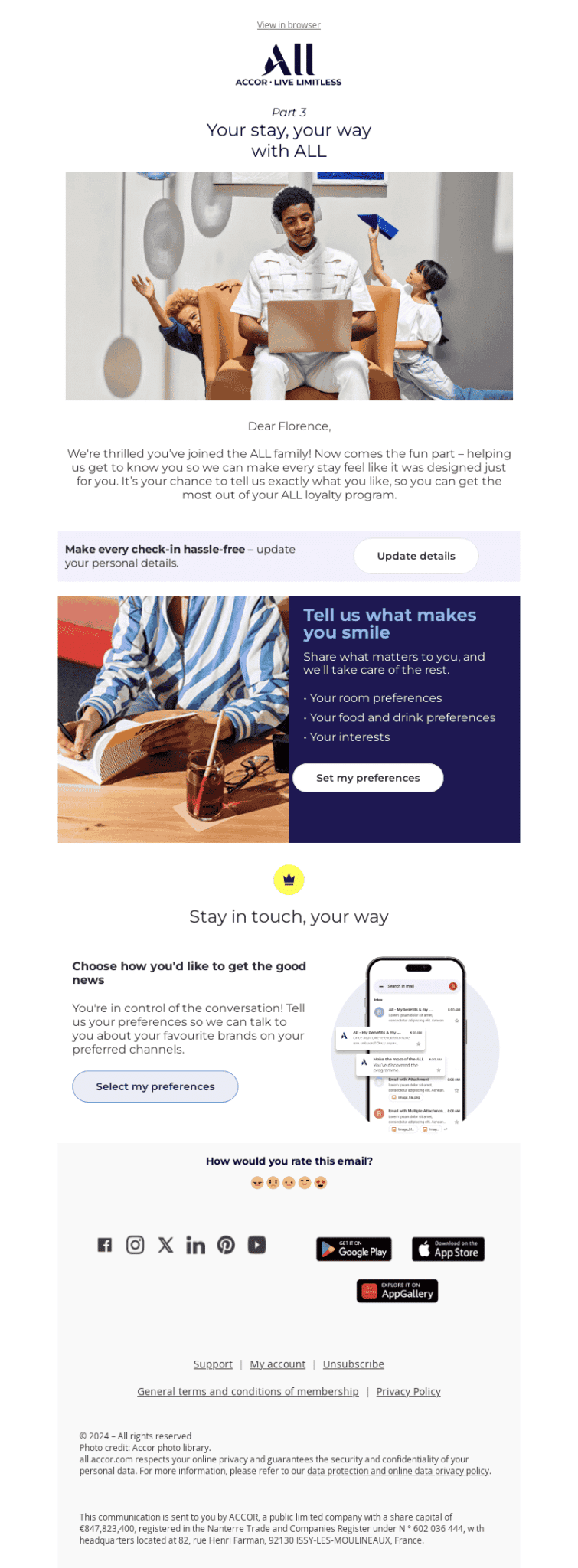
The welcome email and subsequent onboarding series represent prime real estate for preference center promotion. New subscribers are typically at their highest point of engagement and most receptive to shaping their relationship with the brand. Mizuno, for instance, uses a clever subject line that resonates with its athletic customer base, encouraging new subscribers to "be part of the first team, not the reserves" by setting their preferences. For brands running a more extensive onboarding series, like Accor Hotels, there’s ample opportunity to dedicate an entire message to the benefits of customizing communication, tying it to a superior customer experience (e.g., "better check-ins, perfect rooms, and preferred communication channels"). -
Progressive Profiling: Building Richer Data Over Time
Instead of overwhelming subscribers with a lengthy form upfront, progressive profiling involves gradually building customer profiles over time. This reduces friction and improves completion rates. Begin by capturing essential data points, then periodically send check-ins to gather richer, more nuanced information. Brands should prioritize data that directly impacts relevance. Skyscanner, for example, wisely prioritizes a customer’s preferred airport as it immediately unlocks personalized travel deals and notifications. Similarly, collecting date of birth not only allows for personalized birthday greetings (a strong relationship-builder) but also provides valuable demographic signals about age, life stage, and potential buying power. -
Interactive Elements: Gamification and Engagement
Gamification can significantly boost engagement in preference capture. By making the process fun and interactive, brands can encourage more subscribers to provide valuable data. Oceania Cruises, for example, engages subscribers with a poll-like question: "Choose which destination interests you most," displaying a running counter of which option is "winning." This not only captures immediate interest data but, over time, builds a comprehensive body of customer insights from cumulative poll responses, making data collection an enjoyable and dynamic experience. -
Articulating the Benefits: What’s in it for the Subscriber?
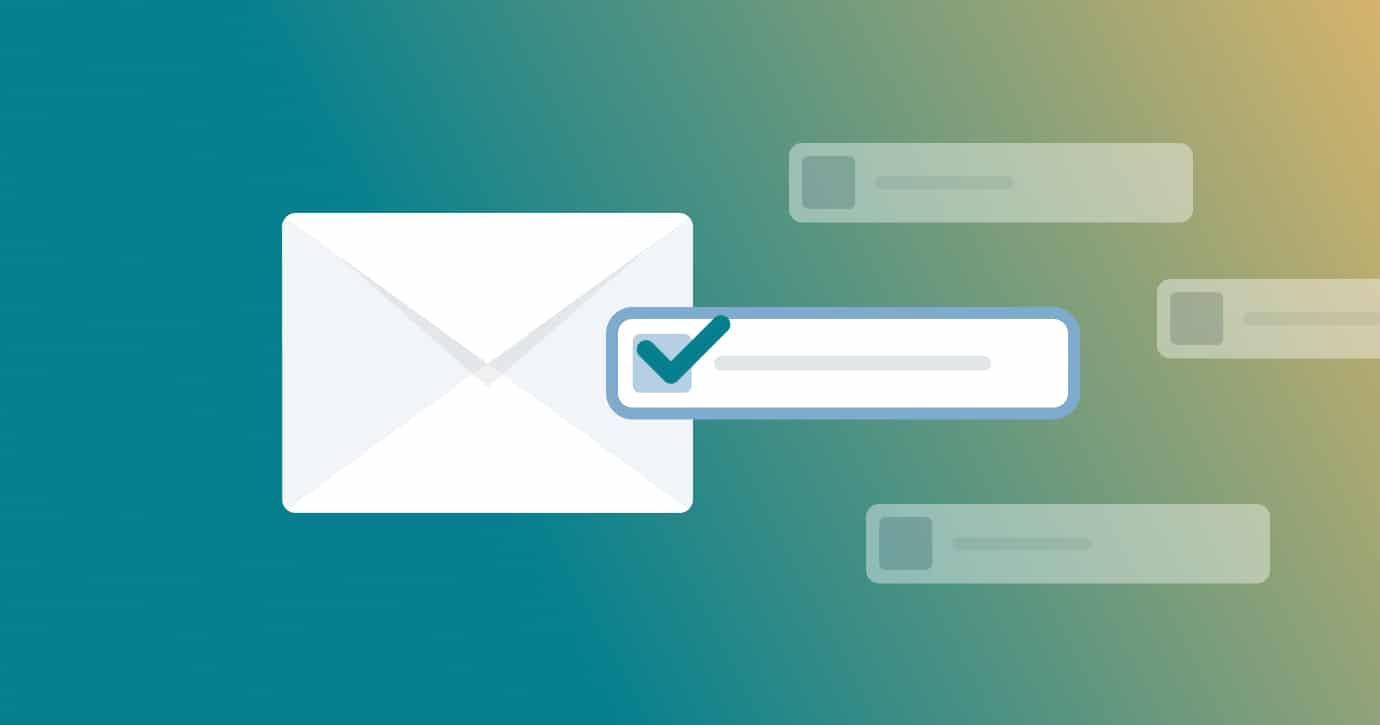
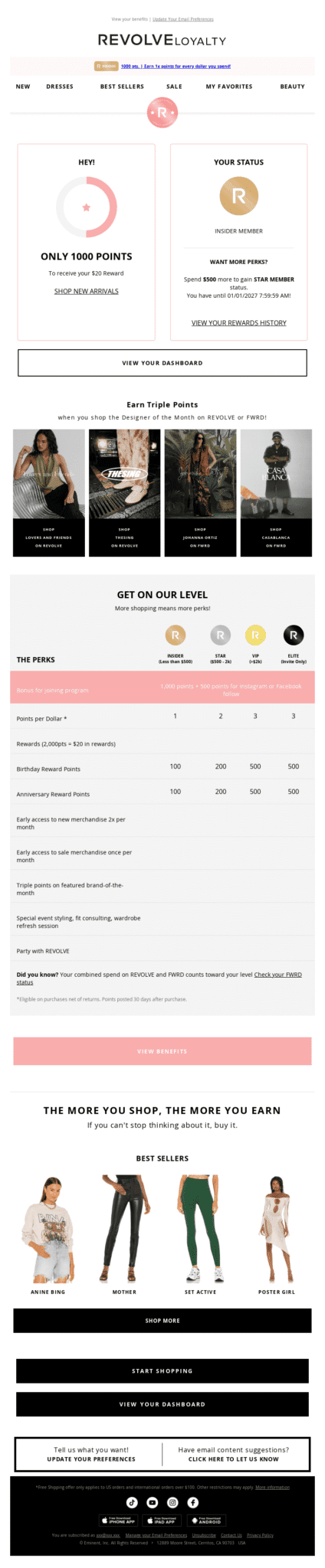
Subscribers are more likely to act when they understand the personal benefits. Brands must clearly articulate "what’s in it for them." L’Occitane excels at this by explicitly spelling out the advantages of updating preferences: early access to exclusive offers and a special birthday gift. Their preference center offers granular control over content types (new products, personalized offers, special events) and even communication channels beyond email, such as text, post, or WhatsApp, demonstrating a holistic approach to customer communication. -
Incentivizing Action: Tangible Rewards for Engagement
While "soft" benefits like early access are valuable, some subscribers require a more tangible incentive to share their data. They recognize the value of their information and expect something in return. Offering a discount, such as "10% off your next purchase" for updating preferences, is a highly effective strategy. This type of incentive not only encourages preference center usage but also drives immediate sales, creating a win-win scenario for both the subscriber and the brand.
-
Sensitive Opt-Outs: Empathy in Email Marketing
The rise of "opt-out of sensitive dates" emails (e.g., Valentine’s Day, Mother’s Day) reflects a growing awareness of emotional sensitivities. However, sending numerous such emails can inadvertently amplify the very sensitivity they aim to avoid. A more elegant and proactive solution is to integrate these as permanent, one-time options within the preference center. Brands are becoming more sophisticated in this regard: Interflora offers an "anniversaries" opt-out, Bloom & Wild allows muting "Grandparent’s Day," and Hotel Chocolat enables customers to suppress alcohol-related promotions, demonstrating a commitment to empathetic and personalized communication. -
Navigating Peak Seasons: Temporary Pauses for Subscriber Control
High-volume periods like Black Friday and Cyber Monday are revenue-critical but can overwhelm subscribers. Offering a temporary "snooze" option for holiday promotions, as highlighted by Oracle’s research, is far more effective than risking a permanent unsubscribe. Bvlgari effectively implements this, allowing subscribers to temporarily opt out of intense sales communications without leaving the list entirely. Alternatively, using the run-up to sales as a "relevance check" can be powerful. Spoonflower, for example, leverages the sentiment of "no one likes a cluttered inbox!" with a smart CTA: "Curate My Content," empowering subscribers to tailor their holiday season experience. -
Ubiquitous Visibility: Pre-Headers and Content Blocks
Beyond dedicated campaigns, every email should work harder to promote the preference center. Two tactical placements stand out for increasing visibility. Firstly, the email pre-header, traditionally used for unsubscribe links, is an ideal spot for a preference center link. This transparent approach builds trust and proactively addresses potential frustration. Secondly, incorporating a dedicated content block within regular newsletters ensures the message is consistently reinforced. Bloom & Wild successfully uses such blocks to allow responders to opt out of multiple sensitive events at once, making preference management a seamless part of the regular email experience. -
Re-engagement: A Last Chance for Connection
For subscribers who have become disengaged, promoting the preference center can be a crucial last resort in win-back campaigns. Instead of simply asking them to stay, present the preference center as an alternative to unsubscribing outright. CVS Pharmacy executes this well by restating the benefits of continued subscription, asking for direct feedback on preferences, and concluding with a powerful, commitment-oriented CTA: "Yes, I still want emails." This approach empowers the subscriber to redefine the relationship rather than merely ending it.
Implications for Brands and the Future of Email
The proactive adoption and promotion of email preference centers carry significant implications for brands navigating the contemporary digital marketing landscape. Firstly, it directly impacts email deliverability and sender reputation. Mailbox providers are increasingly using engagement signals (opens, clicks, unsubscribes, spam complaints) to determine inbox placement. By reducing unsubscribes and spam complaints through relevant content, brands improve their standing with MBPs, ensuring their emails reach the primary inbox rather than promotional tabs or spam folders.

Secondly, preference centers are pivotal in the strategic shift towards zero-party data. As third-party cookies fade and privacy concerns escalate, brands must find ethical and effective ways to gather customer insights. Preference centers provide a direct conduit for subscribers to explicitly share their interests, intentions, and communication desires. This data is inherently more valuable because it is voluntarily provided and highly accurate, forming the bedrock for hyper-personalized marketing at scale.
Thirdly, the emphasis on subscriber control fosters deeper brand loyalty and trust. Brands that demonstrate respect for individual preferences and provide tools for customization are perceived as customer-centric. This leads to a more positive brand perception, increased customer satisfaction, and ultimately, higher customer lifetime value.
Finally, in an AI-driven future, the data gathered through preference centers becomes even more critical. AI algorithms thrive on rich, accurate data to generate personalized content, optimize send times, and predict subscriber behavior. Zero-party data from preference centers provides the cleanest and most reliable input for these AI systems, enabling truly intelligent and impactful email marketing campaigns. Email marketing strategists emphasize that the future of email lies not just in automation, but in intelligent automation fueled by explicit customer preferences.
The real test of any preference center strategy lies in its measurable impact. Brands must actively monitor the link between preference center usage and key email marketing engagement metrics. If subscribers who utilize the preference center exhibit higher click-through rates, lower unsubscribe rates, and ultimately, higher spend, it unequivocally demonstrates the value of this investment. This tangible proof of return on investment strengthens the case for further dedication to enhancing the email program and solidifying the brand-subscriber relationship.
In conclusion, the era of treating email as a broadcast channel is over. The confluence of regulatory changes, evolving subscriber expectations, and technological advancements (including AI) has elevated the email preference center from a mere compliance requirement to a strategic cornerstone of effective digital communication. Brands that embrace this shift, proactively promote their preference center, and leverage the insights it provides will not only mitigate the risks of churn but will unlock unprecedented opportunities for personalization, engagement, and sustainable growth in the ever-evolving digital landscape. The time for brands to get intentional about their preference centers is now.


 Muslim