Nila Kartika Wati
The landscape of email marketing is undergoing a profound transformation, driven by evolving privacy regulations, sophisticated mailbox provider (MBP) technologies, and a heightened demand from subscribers for greater control over their digital interactions. A key prediction for email marketing in 2026, as highlighted by industry analysts, posits a significant increase in brands utilizing dedicated email campaigns to promote their preference centers. This shift is not merely a tactical adjustment but a strategic imperative, acknowledging that subscribers prioritize relevance and frequency in their communications. When messages resonate with individual interests and are delivered at an appropriate cadence, engagement metrics—such as open rates and click-through rates—experience a demonstrable uplift. Conversely, a lack of control leads directly to disengagement.
The Shifting Sands of Email Marketing: Regulatory and Technological Drivers
Recent years have brought forth a confluence of changes that underscore the critical need for robust preference center strategies. Research from Mailerlite reveals a concerning trend: year-on-year unsubscribe rates more than doubled from 2024 to 2025. This dramatic increase is largely attributable to significant modifications implemented by major MBPs, notably Gmail, which have made the unsubscribe process considerably more accessible for users. The primary culprits cited for these opt-outs and spam complaints remain consistent: "too many emails" and "messages not relevant." This indicates a systemic failure by many brands to align their communication strategies with subscriber expectations, even though a substantial portion of these opting-out subscribers would prefer to adjust their email frequency or content rather than sever ties entirely.
Apple’s Mail Privacy Protection and the Rise of Zero-Party Data
A foundational shift occurred in September 2021 with the introduction of Apple’s Mail Privacy Protection (MPP). This feature, implemented across Apple Mail, effectively masks IP addresses and pre-loads email content, making it significantly harder for marketers to accurately track traditional open rates and user locations. The immediate implication for email marketers was a challenge to the long-standing reliance on third-party data and inferred engagement metrics. MPP served as a stark wake-up call, accelerating the industry’s pivot towards zero-party data—information that customers proactively and intentionally share with a brand. Preference centers emerged as the most direct and transparent conduit for collecting this invaluable first-hand data, empowering brands to build more resilient, privacy-compliant, and genuinely personalized communication strategies.
Gmail’s User-Centric Enhancements and the Impact of AI
Following Apple’s lead, Gmail implemented its own set of user-centric changes, particularly impacting bulk senders from early 2024. These enhancements, including a more prominent and easier-to-use unsubscribe button, were designed to reduce inbox clutter and improve user experience by giving subscribers immediate control. While beneficial for users, these changes directly contributed to the observed surge in unsubscribe rates, placing increased pressure on brands to deliver hyper-relevant content.
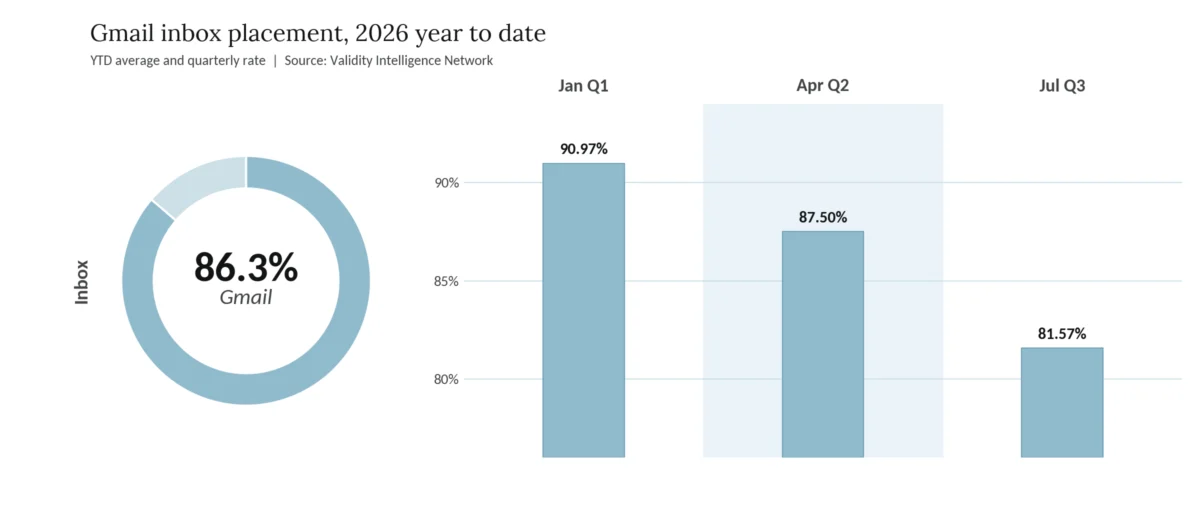
Furthermore, the integration of Artificial Intelligence (AI) into the algorithms of major MBPs is making inbox engagement more critical than ever. AI models continuously analyze user interactions—opens, clicks, replies, and even deletions or moves to spam—to determine inbox placement. Emails that consistently fail to engage subscribers are increasingly likely to be filtered into spam folders or promotional tabs, irrespective of traditional sender reputation metrics. This reinforces the idea that relevance, driven by subscriber preferences, is now paramount for deliverability and visibility.
The Untapped Potential: Why Preference Centers Matter More Than Ever
Despite the clear indicators of changing subscriber expectations and the evolving technological landscape, a significant hurdle persists: many brands continue to bury their preference center links in tiny, often obscure, email footer text. This practice severely limits organic discovery and usage. Industry practitioners widely agree that low usage isn’t a reflection of a lack of subscriber interest but rather a direct consequence of a lack of awareness regarding the preference center’s existence and functionality. This needs to change fundamentally.
The payoff for strategic preference center utilization is not merely theoretical; it is demonstrably proven. Single Grain published compelling research on an e-commerce client whose implementation of a tiered preference center yielded a remarkable 189% increase in email engagement and a significant 76% decrease in unsubscribes. Similarly, Oracle’s findings illustrate the power of granular control: senders who introduced a "snooze" option to their email preference centers witnessed an average drop of 82% in unsubscribes. These statistics are not outliers; they represent the tangible benefits of empowering subscribers and leveraging their explicit preferences to foster stronger, more enduring brand relationships. In an era where customer acquisition costs are steadily rising, investing in tools that enhance customer retention and lifetime value, such as robust preference centers, becomes an undeniable business imperative.
Email senders must adopt a far more intentional and proactive approach to promoting their preference centers and actively encouraging subscribers to engage with them. This necessitates a multi-faceted strategy that moves beyond passive link placement to integrated, engaging communication designed to highlight the value proposition of preference management.
Strategic Approaches to Elevating Preference Center Engagement
To effectively combat rising unsubscribe rates, enhance personalization, and cultivate stronger subscriber relationships, brands must strategically promote and optimize their email preference centers. Here are ten actionable strategies:
1. Dedicated Promotional Campaigns
The simplest yet often overlooked strategy is to send a dedicated email solely focused on promoting the preference center. This goes beyond a mere announcement; it should clearly articulate the benefits of managing preferences and provide an unambiguous call-to-action. Brands like Chanel have successfully employed this by keeping the message straightforward, explaining how subscribers can tailor their marketing communications to align with their specific interests, thereby transforming a potential unsubscribe into a personalized engagement opportunity.
2. Seamless Integration into Onboarding Journeys
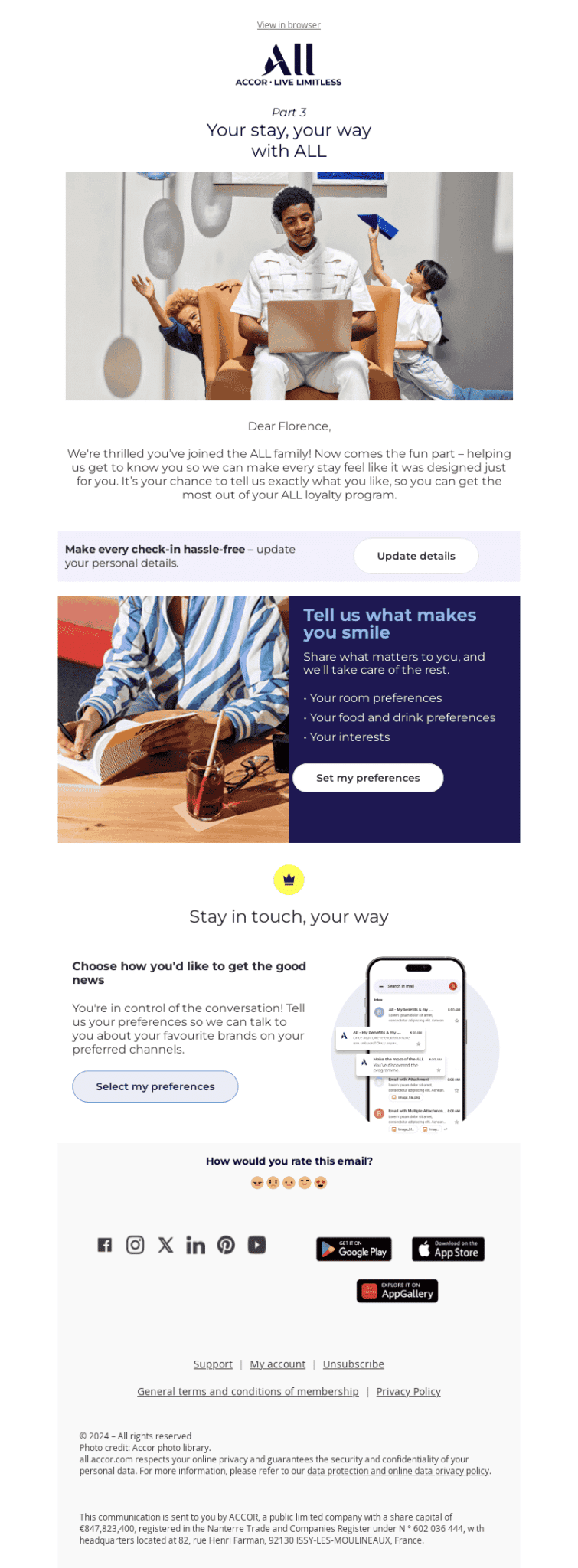
Welcome emails and subsequent onboarding series represent prime real estate for preference center promotion. New subscribers are at the zenith of their engagement and most receptive to shaping the nature of their relationship with a brand. Integrating a preference center link here leverages this peak engagement. Mizuno, for instance, uses a clever, sports-themed subject line to encourage new subscribers to "be part of the first team," inviting them to customize their experience from the outset. Accor Hotels extends this effectively across its loyalty onboarding series, sending messages that connect preference setting with benefits like "better check-ins, perfect rooms, and preferred communication channels," thereby weaving personalization into the core value proposition.
3. Progressive Profiling for Gradual Data Enrichment
Instead of overwhelming subscribers with an extensive questionnaire upfront, progressive profiling builds customer profiles gradually. This approach minimizes friction by starting with essential data points and then enriching the profile over time through periodic, targeted check-ins. Brands should prioritize data points most critical for their business. Skyscanner, understanding that a customer’s preferred airport is a gateway to highly relevant travel deals, specifically requests this information. Another effective progressive profiling target is the date of birth, which not only facilitates personalized birthday surprises but also yields valuable demographic insights into age, life stage, and purchasing power, strengthening the customer relationship.
4. Leveraging Interactivity and Gamification
Gamification is a powerful driver of engagement, and it can be effectively applied to preference capture. Oceania Cruises exemplifies this by asking subscribers to "Choose which destination interests you most," complete with a running counter showing the popularity of each option. This interactive approach not only makes the process enjoyable but also systematically builds a rich body of zero-party data based on collective poll responses, offering deep insights into subscriber interests without feeling like a chore.
5. Clearly Articulating Subscriber Benefits
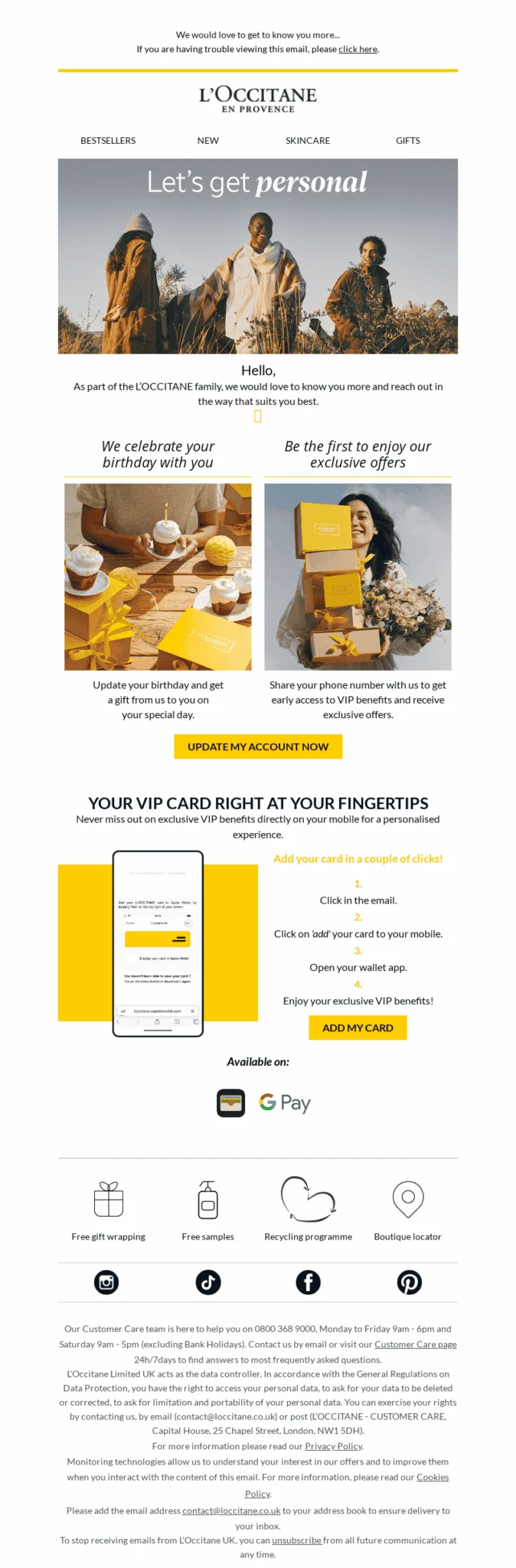
Subscribers are more likely to engage with preference centers when they understand the tangible benefits. Brands must move beyond generic statements and clearly spell out "what’s in it for them." L’Occitane excels at this by highlighting perks such as early access to exclusive offers and a special birthday gift for those who update their preferences. They further offer granular options to customize communications across new products, personalized offers, and special events, with additional choices for switching to text, postal mail, or WhatsApp, providing comprehensive control.
6. Strategic Incentivization
While "soft" benefits like early access are valuable, some subscribers require more immediate, "harder" proof of value for sharing their data. Offering a direct incentive, such as a discount, can be highly effective. This strategy creates a win-win scenario: the subscriber receives an immediate reward, and the brand benefits from collecting valuable data that can lead to future, more relevant purchases. The discount itself often pays off only with a subsequent purchase, ensuring a positive return on investment for the sender.
7. Offering Granular Opt-Outs for Sensitive Content
The increasing trend of brands sending separate emails inviting subscribers to opt out of emotionally sensitive dates (e.g., Valentine’s Day, Mother’s Day, Father’s Day) has become counterproductive, potentially amplifying the very sensitivity they aim to avoid. A more elegant and centralized solution is to integrate these as one-time, permanent options within the preference center. Brands are evolving this approach by offering even more specific controls: Interflora provides an option for anniversaries, Bloom & Wild allows subscribers to mute Grandparent’s Day promotions, and Hotel Chocolat enables customers to suppress alcohol-related marketing, demonstrating a deep understanding of diverse customer needs and sensitivities.
8. Seasonal and Event-Specific Preference Management
Peak retail periods like Black Friday and Cyber Monday are crucial for revenue, but many subscribers prefer a temporary respite from the increased email volume. As Oracle’s research on the "snooze" option clearly indicates, enabling subscribers to temporarily opt out for a defined period is vastly superior to a permanent "unsubscribe from all." Bvlgari effectively implements this strategy during seasonal campaigns. Similarly, Spoonflower uses the run-up to sales as an opportunity for a "relevance check," with a compelling call-to-action: "Curate My Content," acknowledging that "no one likes a cluttered inbox."
9. Maximizing Visibility Across All Communications
Beyond dedicated campaigns, every email should work harder to promote the preference center. Two tactical enhancements stand out:
- Pre-headers: Integrating a preference center link into the email pre-header is a highly effective strategy. Just as marketers have been advised to place unsubscribe links here for transparency and trust-building, doing the same for preference centers reinforces user control and proactively reduces spam complaints by offering an alternative to full opt-out.
- Dedicated Content Blocks: Incorporating a small, dedicated content block within the body of regular emails ensures the message about preference management is constantly reinforced, rather than relying solely on standalone campaigns. Bloom & Wild skillfully uses this tactic, allowing responders to opt out of multiple events at once directly from within the email.
10. Integrating Preference Centers into Re-engagement Strategies
For subscribers who have become disengaged, promoting the preference center can serve as a last-ditch effort in win-back campaigns. This strategy provides a viable alternative to an outright unsubscribe, offering a path for subscribers to redefine their relationship with the brand rather than ending it. CVS Pharmacy employs this effectively by restating the benefits of continued subscription, soliciting feedback, and concluding with a strong, commitment-oriented call-to-action: "Yes, I still want emails." This approach shifts the onus to the subscriber, empowering them to re-engage on their own terms.

Measuring Success and Future Outlook
The ultimate test of a preference center’s effectiveness lies in its ability to demonstrate a tangible link between its usage and stronger email marketing engagement. Brands should rigorously track metrics such as preference center link clicks, the volume and type of data collected, and the subsequent engagement rates (opens, clicks, conversions) of subscribers who have updated their preferences. If the cohort of subscribers actively utilizing the preference center consistently exhibits higher engagement and, crucially, higher spend, it presents an irrefutable business case for further investment in the email program and personalization initiatives.
In essence, the most effective preference centers function as sophisticated personalization engines and vital conversation starters for unlocking zero-party data. As the digital marketing landscape continues its rapid evolution, marked by increasing privacy consciousness, sophisticated AI-driven inbox management, and an unwavering demand for personalized experiences, the strategic deployment and promotion of email preference centers will cease to be a mere best practice. They will become a fundamental pillar of sustainable, high-performing email marketing programs, enabling brands to build trusted, relevant, and ultimately more profitable relationships with their subscribers. The future of email success hinges on empowering subscribers, and the preference center is the key to unlocking that power.

 Nana Muazin