Iffa Jayyana
In an increasingly interconnected digital landscape, content moderation has evolved from a peripheral task into a cornerstone of brand protection and community management. It encompasses the systematic review, filtering, and strategic response to user-generated content across all online channels, from social media comments to direct messages and customer reviews. The fundamental objective remains to ensure authentic engagement with legitimate users while effectively eradicating spam, abusive language, misinformation, and other harmful content that could compromise a brand’s reputation or audience experience. This critical function, once primarily manual, now leverages a sophisticated blend of artificial intelligence (AI) and human oversight, adapting to the dynamic challenges of digital communication.
The Genesis and Evolution of Content Moderation
The concept of content moderation is as old as online communication itself, tracing its roots back to early internet forums, bulletin board systems, and chat rooms where community administrators manually oversaw discussions. With the advent of Web 2.0 and the explosion of social media platforms in the mid-2000s, user-generated content scaled exponentially, rendering purely manual moderation impractical. This surge necessitated the development of more robust systems, initially relying on keyword blacklists and simple filters. Today, content moderation extends far beyond a brand’s owned channels, encompassing mentions, reviews, and broader conversations occurring across the vast expanse of the internet. The shift reflects a growing understanding that a brand’s digital footprint is shaped not just by its own output but by the collective voice of its audience and detractors. This evolution has made content moderation an indispensable component of any comprehensive digital strategy, critical for maintaining brand integrity and fostering healthy online environments.

The Indispensable Role of Content Moderation for Brands
Effective content moderation is paramount for a brand’s sustained success and resilience in the digital sphere. Its importance is multifaceted, primarily supporting robust customer service, safeguarding brand image, and enabling proactive crisis management.
1. Bolstering Customer Service Excellence:
Social media platforms have increasingly become primary channels for customer service inquiries, complaints, and feedback. A well-executed moderation strategy ensures that these messages receive timely and appropriate responses, whether handled directly by moderators or efficiently routed to specialized customer support teams. For smaller organizations, moderators might be the first line of response, while larger enterprises rely on them to triage high volumes of incoming communications, preventing critical messages from being overlooked. It is crucial to distinguish between harmful content and constructive criticism; moderation aims to remove the former, not to silence genuine customer feedback, which can be invaluable for product or service improvement. Ignoring customer outreach, even private messages, often leads to public expressions of frustration, eroding trust.
2. Preserving and Enhancing Brand Image:
Content moderation plays a dual role in reputation management: validating customer voices and cleansing channels of offensive material. Brands that actively engage with their audience and address concerns cultivate social trust and demonstrate attentiveness. Conversely, unchecked negative comments or the proliferation of offensive content can gradually tarnish a brand’s image. Studies by organizations like the World Federation of Advertisers (WFA) have consistently shown that brand safety concerns significantly impact advertising spend and brand perception. For instance, a 2023 WFA report highlighted that 80% of global brands are concerned about their ads appearing alongside inappropriate content. This concern extends to user-generated content, where an influencer or user contributing content might be deterred from future collaborations if their contributions are met with toxicity.

3. Proactive Crisis Management and Mitigation:
Moderators often serve as the first alert system for impending public relations crises. A sudden spike in negative sentiment, the emergence of coordinated trolling campaigns, or the spread of misinformation about a brand can escalate rapidly. Early detection allows teams to formulate and implement timely responses before a situation spirals out of control. Experienced moderators are adept at identifying patterns—recurring complaints, misinterpretations of recent posts, or nascent disinformation campaigns. This early intelligence enables the swift engagement of PR, legal, or leadership teams, allowing for strategic intervention. In essence, moderation extends beyond mere comment cleanup; it acts as a real-time pulse check on brand perception, enabling agile responses to potential threats.
The Diverse Spectrum of Content Requiring Moderation
The scope of content necessitating moderation is broad, encompassing virtually any digital touchpoint where users can interact with or discuss a brand. This includes:
- Public Comments: On social media posts, blogs, and news articles.
- Direct Messages (DMs): Private communications across platforms.
- Mentions: Any instance where a brand is tagged or referenced.
- Reviews: On product pages, review sites, and e-commerce platforms.
- User-Generated Content (UGC): Photos, videos, or text created by users and shared on brand channels or campaigns.
- Forum Discussions: In dedicated brand communities or relevant online forums.
- Live Chat Interactions: Real-time customer support dialogues.
- Gaming Chats: For brands operating within the gaming industry, in-game communications.
Typologies of Content Moderation: A Strategic Overview
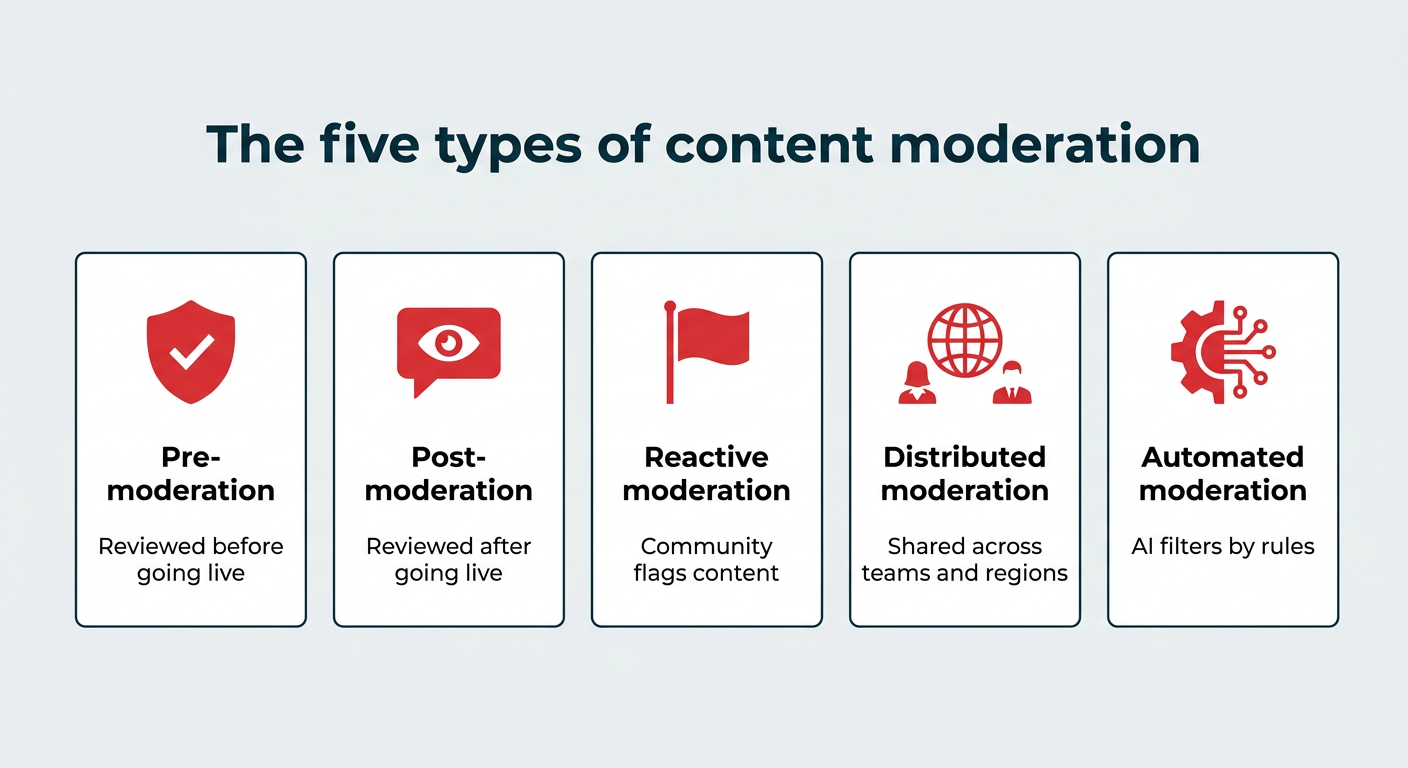
There are five principal types of content moderation, each offering a distinct balance of speed, scalability, and human involvement. Most organizations employ a hybrid approach tailored to their specific needs and risk profiles.
1. Pre-Moderation: Content is reviewed and approved before it is published or goes live. This is the most secure method, guaranteeing that no harmful content reaches the audience, but it significantly slows down real-time engagement. It is ideal for high-risk sectors such as healthcare or financial services, where regulatory compliance and legal implications outweigh the need for instant publishing.
2. Post-Moderation: Content is published first and reviewed afterward. This approach facilitates real-time interaction and fosters dynamic communities but carries the risk that inappropriate content may be visible, even if briefly, before a moderator can intervene. It is commonly used for general comments and DMs where the speed of interaction is prioritized and the immediate risk is relatively low.
3. Reactive Moderation: This method relies heavily on the community to flag content that violates established guidelines. Once reported, human moderators evaluate the content against community standards and take appropriate action. It is particularly effective for large, active online communities where constant real-time moderation of every single post is impractical or impossible.
4. Distributed Moderation: Responsibility for moderation is shared across a team, often segmented by geographical region, time zone, or specific platform. This ensures consistent moderation globally, accommodates diverse cultural nuances, and prevents moderator burnout. It is the preferred model for multinational enterprise brands.
5. Automated Moderation: Utilizing AI and machine learning algorithms, this method automatically flags, filters, or removes content based on predefined rules. Modern automated systems go beyond simple keyword matching, employing Natural Language Processing (NLP) to interpret sentiment and intent, and image/video recognition to detect visual violations like nudity or violence. TikTok’s H2 2025 DSA transparency report, for instance, noted that automated systems managed 93.8% of all enforcement actions in the EU without human review, demonstrating its significant scalability. While incredibly fast and efficient for high volumes, AI often struggles with context, nuance, and emerging forms of harmful content.
Content Moderation Actions: A Graduated Response
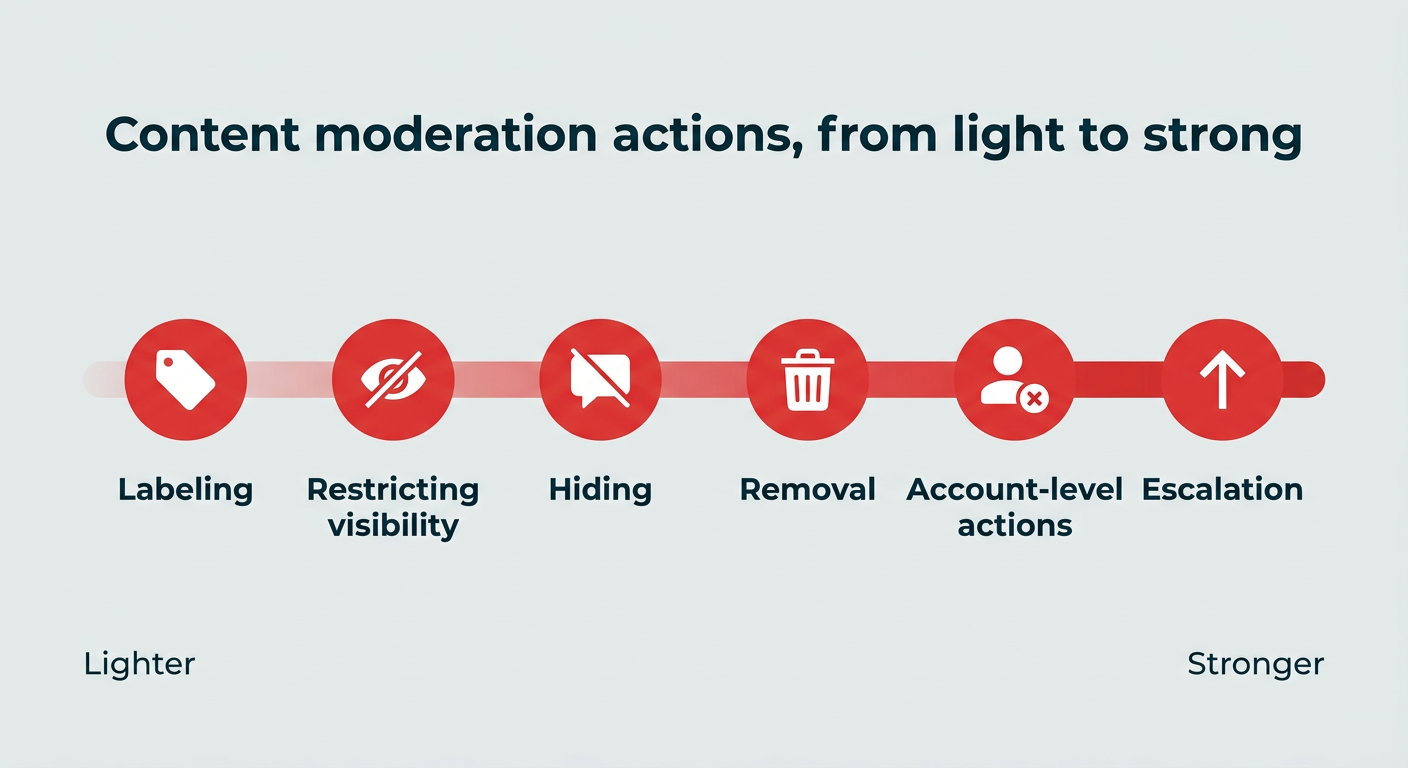
When content is flagged, moderators have a spectrum of actions available, ranging from light touch interventions to severe penalties, reflecting the severity of the violation. These actions include:
- Labeling: Adding a warning or context label to content, especially for misinformation.
- Hiding: Making content invisible to the public, often as a temporary measure.
- Editing: Modifying content to remove offensive elements while preserving the original message’s intent (rarely used due to ethical concerns).
- Removing: Deleting the content entirely.
- Warning the User: Notifying the user of a violation and the potential consequences of future infractions.
- Temporary Ban: Suspending a user’s privileges for a defined period.
- Permanent Ban: Revoking a user’s access indefinitely.
- Escalation: Forwarding severe cases (e.g., threats, illegal activities) to legal authorities or internal security teams.
Documenting the rationale for each action ensures consistency across the moderation team and provides a transparent audit trail.
The AI-Human Synergy: A Modern Imperative
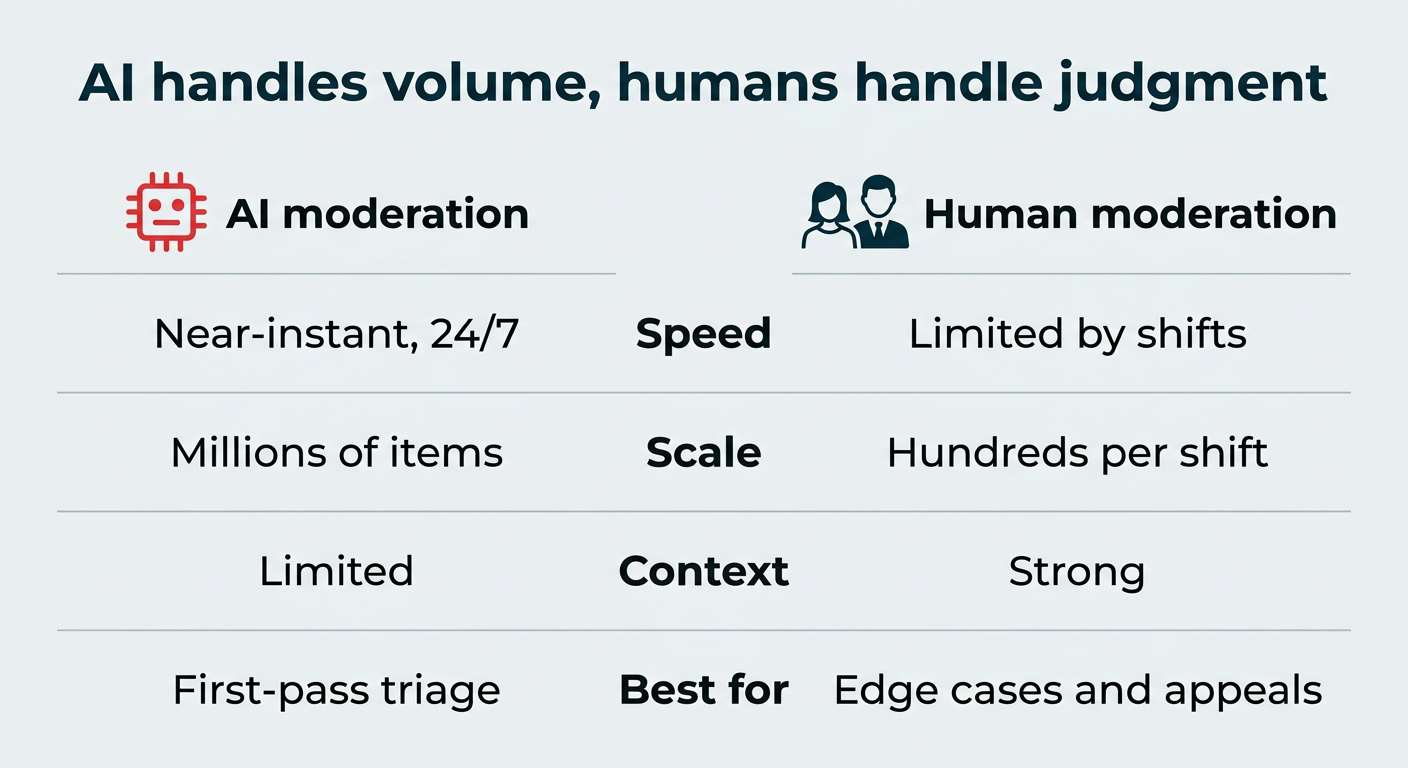
The debate between AI and human content moderation is increasingly moot; the consensus across the industry is that a synergistic approach yields the best results. AI excels at speed, scale, and consistency for obvious violations, while humans provide the indispensable judgment, contextual understanding, and empathy required for nuanced cases.
AI moderation operates by scanning incoming content against trained models and rule sets. Techniques include:

- Keyword Filtering: Blocking specific words or phrases.
- Sentiment Analysis: Detecting emotional tone (positive, negative, neutral).
- Image and Video Recognition: Identifying explicit or violent imagery.
- Pattern Detection: Spotting coordinated bot activity or spam networks.
- Natural Language Processing (NLP): Understanding the meaning and intent behind text.
However, AI frequently falters with sarcasm, irony, cultural slang, coded language, and evolving community norms, leading to both false positives (removing harmless content) and false negatives (missing actual harm). New forms of harmful content often emerge faster than AI models can be retrained. This is where human moderators become critical, handling edge cases, appeals, and sensitive interactions that demand a level of understanding currently beyond AI’s grasp. The optimal strategy, therefore, is to leverage AI for initial high-volume filtering and triage, protecting human moderators from the most egregious content, and then routing ambiguous or complex cases to trained individuals.
Operational Excellence: Best Practices for Effective Social Media Moderation
Implementing an effective content moderation program requires strategic planning and ongoing support for the moderation team.
1. Establish Clear Guidelines: A comprehensive content moderation policy is essential. It should outline acceptable and unacceptable content, define violation categories, specify corresponding actions, and detail escalation procedures. This policy should align with the brand’s social media style guide, employee social media policy, and crisis management plan. It must also address regional regulations, platform-specific rules, and the legal implications of various content types.

2. Respond Authentically to Legitimate Interactions: While filtering is crucial, engaging with genuine comments and messages is equally important. Content moderation tools help minimize noise, allowing moderators to focus on meaningful interactions. Even negative but constructive feedback warrants a professional, measured response, as these interactions are often observed by a wider audience. The adage "don’t feed the trolls" applies to purely provocative or abusive comments, where a brief acknowledgment, if any, followed by disengagement, is often the best approach.
3. Implement Robust Filters and Alerts: Leveraging platform-native and third-party tools to create comprehensive blocklists for profanity, spam phrases, and other undesirable content is a fundamental step. The specificity of these filters should align with the brand’s industry and audience; a gaming brand might have different tolerance levels than a pharmaceutical company. Automated alerts can notify moderators of spikes in negative sentiment or specific flagged keywords, enabling rapid response.
4. Automate Repetitive Tasks: Freeing human moderators from routine tasks allows them to concentrate on complex issues. Automated responses for frequently asked questions, message routing based on sentiment or keywords, and AI-powered chatbots for simple inquiries can significantly enhance efficiency. Advanced platforms, such as Hootsuite Social OS with its Nest (customer care) and Wisdom (AI-powered workflows) apps, offer capabilities like suggested replies and context-based routing, streamlining workflows.
5. Prioritize Moderator Well-being: The emotional toll of consistently engaging with abusive or graphic content is profound. Brands must prioritize the mental health and well-being of their moderation teams. Regular check-ins, access to mental health support, opportunities for debriefing, and creating a supportive work environment are critical. Treating moderators as highly valued professionals, rather than expendable resources, is paramount for retention and effectiveness.
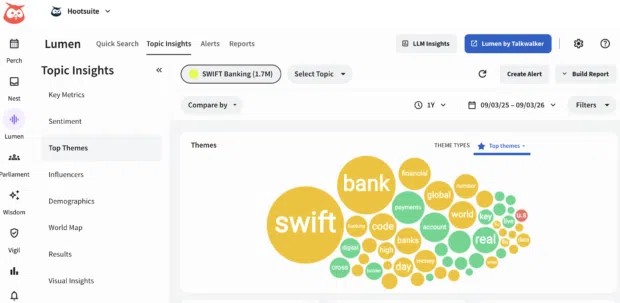
6. Establish Governance and Compliance Frameworks: For regulated industries and large enterprises, moderation decisions must withstand scrutiny. This necessitates a robust governance framework that ensures alignment with internal policies, industry regulations (e.g., HIPAA, GDPR), platform terms of service, and recognized standards like the NIST AI Risk Management Framework. Key elements include documented workflows, clear ownership of decisions, and comprehensive audit trails. Tools like Hootsuite’s Vigil layer centralize permissions, approvals, and traceability, which is vital for demonstrating compliance and mitigating legal risks associated with sharing protected information or unapproved claims.
Navigating the Minefield: Key Challenges in Content Moderation
Despite advancements, content moderation remains fraught with significant challenges that are often more organizational and ethical than purely technical. These include:
- Volume and Velocity: The sheer quantity of user-generated content and its real-time nature make comprehensive moderation difficult.
- Subjectivity and Nuance: What constitutes "harmful" can be subjective, context-dependent, and vary culturally, making consistent application of rules challenging.
- Evolving Harmful Content: Trolls and malicious actors constantly devise new ways to circumvent moderation systems (e.g., coded language, new slurs).
- Scalability Across Languages and Regions: Ensuring consistent and culturally appropriate moderation across diverse global audiences is complex.
- Moderator Burnout and Mental Health: The psychological impact of exposure to toxic content is a persistent concern.
- Balancing Free Speech vs. Safety: Striking the right balance between allowing open discourse and protecting users from harm is an ongoing ethical dilemma.
- False Positives/Negatives: Both AI and human moderation are susceptible to errors, leading to legitimate content being removed or harmful content slipping through.
- Resource Constraints: Adequate staffing and technological investment for effective moderation can be substantial.
These challenges underscore that content moderation is an ongoing management process, not a one-time fix, requiring continuous adaptation and review.

The Regulatory Imperative: Laws Shaping Digital Discourse
The regulatory landscape for content moderation is rapidly evolving, with significant implications for brands and platforms. The European Union’s Digital Services Act (DSA), effective from early 2024 for very large online platforms, sets stringent obligations concerning illegal content, notice-and-action mechanisms, and transparency regarding moderation decisions. While the primary burden falls on platforms, brands operating within the EU are indirectly affected by the tools, reporting, and appeals processes available to them. Furthermore, the EU’s AI Act, slated for full implementation in 2025-2026, introduces risk-based requirements for AI systems, directly impacting the development and deployment of automated moderation tools.
In practice, these regulations mandate that moderation workflows be meticulously documented and auditable. Brands must maintain records of moderation decisions, understand which regional rules apply to specific accounts, and utilize tools capable of demonstrating their compliance efforts. For regulated industries, the legal and financial penalties for non-compliance are substantial, making robust governance an absolute necessity.
Empowering Moderation Teams: Essential Tools for Brands

To navigate the complexities of content moderation, brands increasingly rely on specialized tools that integrate AI with streamlined human workflows.
1. Hootsuite Social OS: This comprehensive social operating system offers a suite of connected applications—Lumen for listening and insights, Nest for customer care, Wisdom for AI workflows, and Vigil for governance. This ecosystem allows brands to monitor brand conversations, manage incoming messages from diverse sources (DMs, comments, mentions), and apply AI-powered insights for suggested replies and context-based routing, all from a unified platform. Vigil ensures compliance through centralized permissions and audit trails.
2. Respondology: An AI platform specifically designed for social comments, Respondology provides discreet, automated protection against spam, scams, bots, and abuse. It’s a strong choice for brands and creators prioritizing trust and safety features over general social media management.
3. BrandFort: Integrating with Hootsuite, BrandFort is an AI-powered moderation tool for Meta platforms (Facebook, Instagram). Its AI is trained to understand the nuanced meaning behind messages, rather than just keywords, to flag and hide hate speech, spam, profanity, and negative sentiment. Its multi-language support makes it suitable for global brands.

4. Smart Moderation: This AI-powered tool automatically filters inappropriate content across Facebook, Instagram, and YouTube, targeting abusive language, hate speech, spam, and trolling. Its machine learning capabilities adapt over time to a brand’s specific guidelines, becoming more accurate with continued use. It also integrates seamlessly with Hootsuite.
These tools collectively enhance the efficiency and effectiveness of moderation efforts, allowing brands to manage high volumes of content while upholding their brand values and community standards.
Conclusion
Content moderation is no longer a mere administrative chore but a strategic imperative for any brand operating in the digital realm. The synergistic combination of advanced AI capabilities for high-volume, real-time filtering and human judgment for complex, nuanced, and sensitive interactions represents the most effective modern approach. By adopting clear policies, leveraging appropriate technologies, and prioritizing the well-being of moderation teams, brands can protect their reputation, foster engaged and healthy online communities, and navigate the ever-evolving challenges of digital discourse, ensuring long-term brand safety and success.

 Ammar Sabilarrohman

 Dwi Wanna