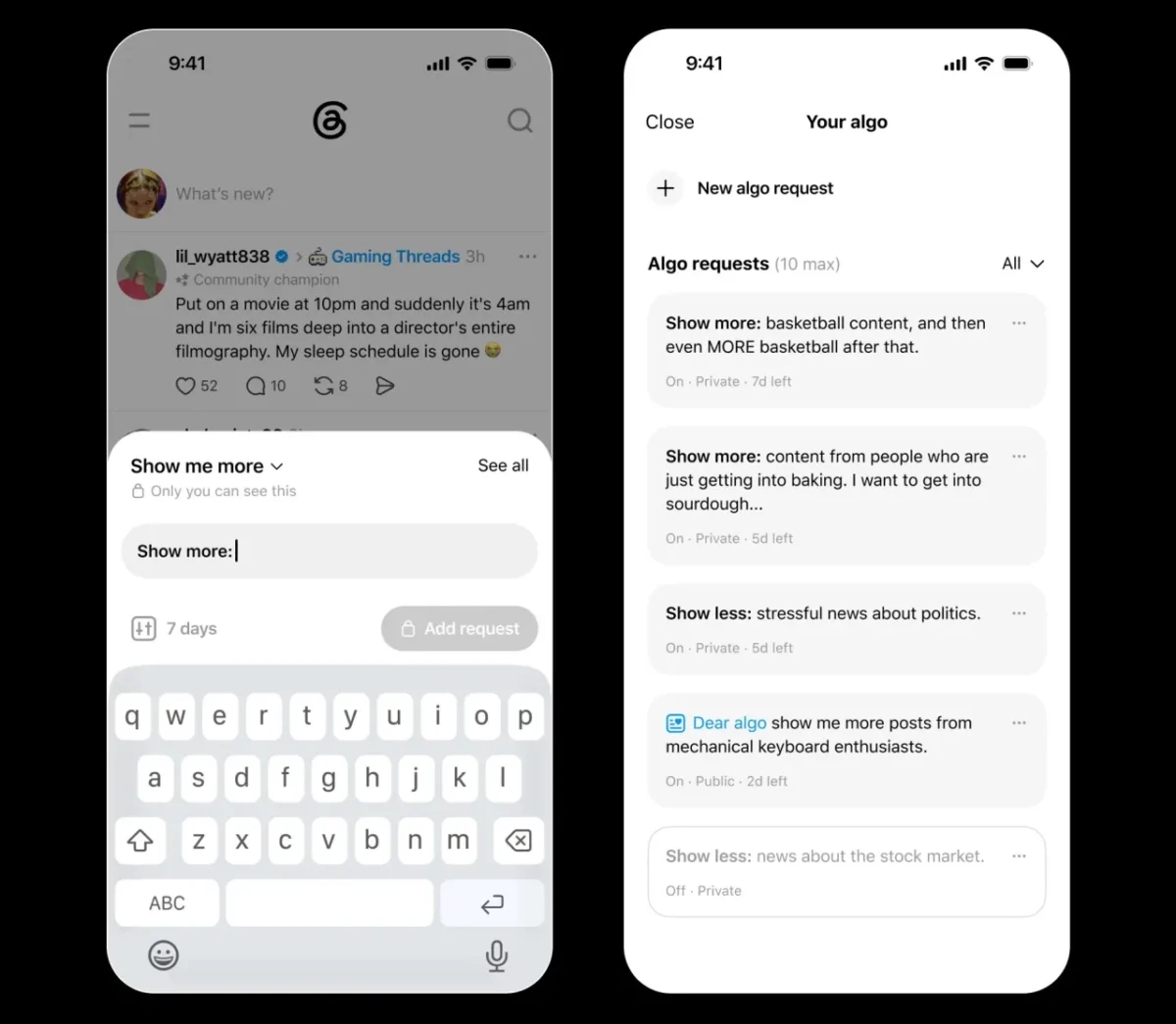
In a significant shift that has captured the attention of digital consumers and marketers alike, social media behemoths such as Threads, Instagram, and TikTok are increasingly rolling out features designed to give users explicit control over the content they encounter. These tools, often presented as "topic sliders," "interest toggles," and "content preference menus," are being marketed under the compelling narrative that users are finally taking the reins of their digital experiences. However, a closer examination reveals a more nuanced reality, suggesting that this perceived newfound control might be more about political optics and strategic communication than a fundamental alteration of how algorithms truly operate. The underlying mechanisms of user engagement and algorithmic learning have long been in place, driven by far more granular signals than these newly introduced preference settings can capture.
The core of the debate lies in the distinction between explicit declarations of interest and implicit behavioural signals. While a user might consciously select "animation" as a topic of interest, their actual viewing habits – such as watching a fan edit of "Avatar: The Last Airbender" to completion at 1 AM on a Tuesday – provide a much richer, more specific, and arguably more honest dataset for the algorithm. This granular understanding of user behaviour, built over years of interaction, forms the bedrock of personalized content delivery. The platforms’ latest features, while appearing to offer enhanced control, operate on a coarser level of data compared to the detailed behavioural tapestry already woven by user actions.
The Evolving Algorithmic Landscape: A Chronology of Control
The push for user-controlled algorithms isn’t a sudden development but rather an evolution driven by both technological advancements and societal pressures. For years, the prevailing model of social media content curation relied heavily on a "black box" approach, where algorithms operated with limited transparency. Users were largely passive recipients of content, with their feeds shaped by engagement metrics like likes, shares, and view duration, interpreted by proprietary algorithms.
Around the mid-2010s, discussions about the impact of social media on mental health and societal discourse began to gain significant traction. Concerns about filter bubbles, echo chambers, and the spread of misinformation intensified, leading to increased scrutiny from regulators, academics, and the public. This period saw a growing demand for greater transparency and user agency in how platforms curate information.
By the late 2010s and early 2020s, platforms began to respond, albeit incrementally. Features like "See Less of This" or "Mute" options emerged, offering limited ways for users to influence their feeds. However, these were often reactive rather than proactive tools. The current wave of explicit preference settings represents a more deliberate and visible attempt to address these long-standing concerns.
- 2020-2021: Early iterations of more granular interest controls began appearing on platforms like TikTok, allowing users to select categories they were interested in or wished to avoid.
- 2022-2023: Instagram and Facebook experimented with chronological feed options and more refined content control settings, responding to user calls for less algorithmic manipulation.
- 2023-2024: Threads, launched by Meta as a competitor to X (formerly Twitter), immediately incorporated robust preference settings. TikTok and Instagram have continued to refine and expand their offerings, introducing more sophisticated toggles and menus that allow users to fine-tune their content consumption. This period marks a significant acceleration in the deployment of these explicit control mechanisms across major platforms.
The Underlying Mechanics: Behavioural Signals vs. Explicit Preferences
The effectiveness of algorithmic personalization hinges on the depth and accuracy of the data it utilizes. When a user interacts with content, they generate a multitude of signals:
- View Duration: How long a video is watched.
- Completion Rate: Whether a video is watched to the end.
- Rewatch Frequency: How often a piece of content is replayed.
- Engagement: Likes, comments, shares, and saves.
- Scroll Speed: How quickly a user moves past content.
- Ad Interaction: Clicking on or ignoring advertisements.
- Profile Exploration: Visiting other users’ profiles or linked content.
These behavioural signals are inherently more dynamic and reflective of a user’s immediate and evolving interests than a static selection made from a menu. For instance, a user who has consistently engaged with content related to a specific historical period – watching documentaries, reading articles, and liking related posts – provides the algorithm with a robust understanding of their passion. This understanding is far more profound than if they had simply checked a box labeled "History."
The new preference menus, while offering a starting point, are akin to broad strokes on a canvas where the algorithm has already meticulously painted a detailed portrait. A user who explicitly states an interest in "musicals" might receive a feed populated with popular Broadway productions. However, the algorithm, informed by their viewing behaviour, might already know that this specific user is particularly captivated by mashups of "Avatar: The Last Airbender" characters singing songs from "Hamilton." This level of specificity is precisely what the behavioural signals provide, and what explicit preferences, by their very nature, cannot.
Why Now? The Strategic Rationale Behind Enhanced User Controls
The introduction of these user-controlled algorithmic features, while presented as a boon for users, serves several strategic purposes for the platforms:
- Navigating Regulatory Scrutiny and Public Pressure: In an era of heightened concern over data privacy, algorithmic bias, and content moderation, platforms are under immense pressure from governments and the public to demonstrate accountability. Offering visible "dials" for users to turn provides a tangible representation of control, serving as a political response to these demands. It allows platforms to point to these features as evidence of their commitment to user empowerment and transparency, potentially preempting more stringent regulatory interventions. For example, the European Union’s Digital Services Act (DSA) and Digital Markets Act (DMA) have pushed for greater transparency and user choice in algorithmic curation.
- Addressing the "Cold Start" Problem for New Users: For individuals joining a platform for the first time, with no established interaction history, these explicit preference settings offer a valuable solution to the "cold start" problem. Without any behavioural data to draw upon, algorithms struggle to personalize content effectively. Allowing new users to declare their interests ("I’m interested in cooking and I don’t want football") provides an immediate dataset, enabling a faster and more relevant initial content experience. This is a genuine product benefit that helps onboard new users more smoothly.
- Managing Brand Perception and Corporate Social Responsibility: By framing these features as user-centric, platforms can cultivate a more positive public image. This narrative of empowering users can help to mitigate negative perceptions associated with algorithmic manipulation and data harvesting. It aligns with broader corporate social responsibility initiatives, showcasing a commitment to user well-being and digital literacy.
Implications for Advertisers: The Enduring Power of Behavioral Engagement
The strategic implications of this shift in algorithmic control are particularly significant for advertisers. If the primary driver of content delivery remains behavioural engagement rather than declared interests, then the strategies that prove most effective will continue to be those that elicit genuine user interaction.
"The fundamental task for social advertisers has not changed with these announcements," states a senior digital strategist from a prominent marketing agency. "Our objective remains to create compelling creative assets across a diverse range of formats and messages. We need to generate enough variation so that user behaviour itself reveals which creative resonates with which audience segments. A user who watches your product video twice provides a far more valuable signal than someone who simply indicated ‘interest in fashion’."
This means that the emphasis for advertisers should remain on producing creative content that is inherently engaging and worthy of user attention. This involves:
- Diversifying Creative Strategy: Moving beyond generic messaging to develop content tailored to different audience segments and platforms. This includes experimenting with various video lengths, storytelling techniques, and calls to action.
- A/B Testing and Iterative Improvement: Continuously testing different creative approaches and formats to identify what drives the desired behavioural responses – whether it’s view duration, click-through rates, or conversion.
- Leveraging Platform Data: Relying on the actual delivery and performance data provided by the platforms to understand what is working. The most effective version of an ad is not necessarily the one chosen by the advertiser upfront, but rather the one that user behaviour organically selects and amplifies over time.
Supporting Data and Industry Trends
Industry reports consistently highlight the continued dominance of engagement metrics in algorithmic content distribution. For example, studies by Nielsen and Comscore regularly show that video completion rates and time spent on platform are critical indicators of content performance across social media. Data from eMarketer indicates that social media ad spending continues to rise, with a significant portion allocated to video and interactive formats, underscoring the advertiser’s focus on capturing user attention through engaging content.
Furthermore, the increasing sophistication of AI and machine learning allows platforms to analyze behavioural signals with unprecedented granularity. Algorithms can now detect subtle shifts in user interest based on the sequence of content consumed, the time of day, and even the emotional tone of content engagement. This deep understanding of user behaviour is a powerful tool for personalization, and the new preference menus do little to fundamentally alter this underlying capability.
Broader Impact and Future Outlook
While the explicit preference tools offer a valuable "cold start" solution for new users and serve a crucial political function for platforms, their impact on the daily experience of long-term users is likely to be marginal. The algorithms have already built a highly personalized profile based on years of granular behavioural data.
For advertisers, the core playbook remains consistent: prioritize creating content that genuinely captures and holds user attention. The illusion of explicit control offered by new menus should not distract from the enduring reality that user behaviour is the ultimate arbiter of algorithmic success. The platforms are responding to public and regulatory pressure, and while this may lead to more transparency in theory, the fundamental mechanisms of engagement-driven personalization are likely to persist.
The bottom line is that user-controlled algorithms are a meaningful feature for onboarding and a sensible political maneuver in the current landscape. For seasoned users and advertisers, however, the game remains largely the same. The ability of creative content to earn genuine behavioural engagement is still the most potent driver of performance on social media. The challenge for advertisers, therefore, is to continue building content that users not only see but actively choose to engage with, linger on, and interact with – the true signals that algorithms have always valued and will continue to prioritize. The playbook of earning attention through compelling content, supported by robust creative variation and data-driven optimization, remains the most reliable path to success.