

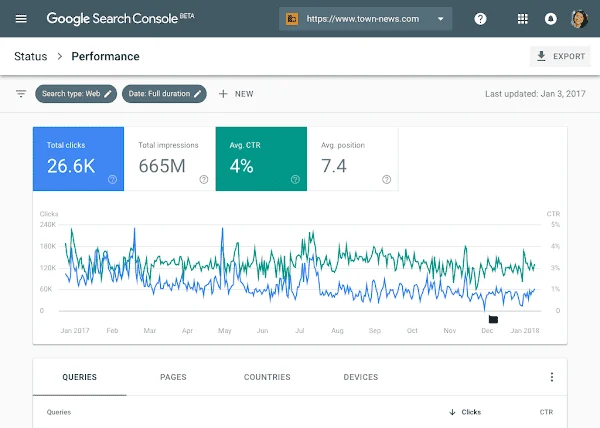
Website analysis, once a straightforward exercise in monitoring traffic volumes and keyword rankings, is undergoing a fundamental transformation as the digital landscape moves toward a more complex, AI-driven ecosystem. In the projected environment of 2026, traditional metrics such as page speed and conversion rates, while still foundational, no longer provide a complete picture of a brand’s digital health. Modern buyers now navigate a fragmented discovery path, encountering brands through Large Language Models (LLMs) like ChatGPT, conversational search engines like Perplexity, and Google’s AI Overviews before ever setting foot on a corporate homepage. Consequently, website analysis must evolve into a multi-dimensional discipline that evaluates discoverability, machine readability, credibility, and the removal of conversion friction across both human and algorithmic interfaces.
The Evolution of Search and Discovery: A Historical Context
To understand the current state of website analysis, one must look at the trajectory of search technology. In the early 2000s, analysis focused almost exclusively on "hits" and "meta tags." By the 2010s, the focus shifted toward user experience (UX) and mobile responsiveness as Google’s algorithms began prioritizing page load times and mobile-first indexing.
As of 2024, the industry has entered the era of Generative AI. This shift represents the most significant disruption to web traffic patterns in two decades. The emergence of "Zero-Click" searches—where users find their answers directly on the search results page—has necessitated a change in how performance is measured. According to data from the Pew Research Center, user behavior is already showing a marked shift: when an AI summary appears in Google results, the likelihood of a user clicking a traditional link drops from 15% to 8%. This 47% decrease in click-through potential forces analysts to look beyond simple traffic numbers and instead focus on "brand presence" within AI-generated summaries.
The Five Pillars of Modern Website Analysis
A comprehensive audit in today’s market must address five critical areas to ensure a website remains a viable business asset.
1. Search and AI Visibility (The New Frontier)
Before analyzing internal behavior, a site must be findable. However, "findability" now includes visibility in AI training sets and real-time LLM retrieval. Gartner recently predicted that traditional search engine volume could drop by as much as 25% by 2026 as users migrate toward AI chatbots and virtual agents.
Analysts must now perform "Answer Engine Optimization" (AEO) audits. This involves checking how tools like ChatGPT, Perplexity, Gemini, and Copilot summarize a brand’s value proposition. For instance, a company selling Conversion Rate Optimization (CRO) software must not only rank for "best CRO tools" on Google but must also ensure that when a user asks Perplexity, "Which CRO tool is best for enterprise e-commerce?", their brand is cited as a primary recommendation with accurate feature sets.
2. Technical Health and Core Web Vitals
While AI is changing discovery, the technical foundation of a website remains the "entry fee" for visibility. Google’s Core Web Vitals—specifically Largest Contentful Paint (LCP), Interaction to Next Paint (INP), and Cumulative Layout Shift (CLS)—remain the gold standard for technical health.
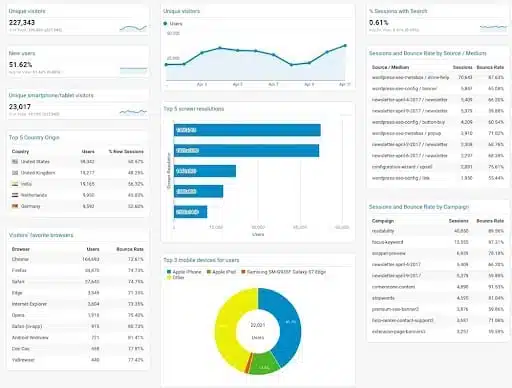
Technical analysis in 2026 also requires a focus on machine readability. This involves structured data (Schema markup) that allows AI crawlers to parse information accurately. If a website’s technical architecture is opaque, AI models may hallucinate facts about the business or omit it entirely from recommendations.
3. User Behavior and Qualitative Insights
Quantitative data (numbers) tells you what is happening, but qualitative data tells you why. A modern analysis must integrate both.
- Quantitative Data: Using tools like Google Analytics 4 (GA4) to track session duration, bounce rates, and path exploration.
- Qualitative Data: Utilizing session recordings and heatmaps (via tools like FigPii or Hotjar) to identify where users experience "rage clicks" or where they lose interest on a long-form page.
A crucial part of this pillar is messaging resonance. Analysts must determine if the copy on the landing page aligns with the intent of the traffic coming from various sources, whether that be a social media ad or a specific AI-generated query.
4. Usability and Heuristic Evaluation
Usability analysis focuses on the interface’s efficiency. This is often conducted through a "Heuristic Evaluation," a method popularized by Jakob Nielsen. This expert review identifies violations of usability "rules of thumb," such as:
- Visibility of system status: Does the user know what is happening (e.g., a loading bar or success message)?
- User control and freedom: Can users easily undo a mistake or exit a funnel?
- Consistency and standards: Does the site follow established web conventions that users already understand?
- Error prevention: Is the design robust enough to prevent slips before they happen?
5. Content Quality and Trust Signals (E-E-A-T)
In an era where AI can generate infinite amounts of content, human-centric trust signals have become more valuable. Google’s E-E-A-T framework (Experience, Expertise, Authoritativeness, and Trustworthiness) serves as the benchmark. Content analysis now involves auditing for "information gain"—providing unique insights that cannot be easily replicated by an AI model. Trust signals, including verified reviews, case studies, and clear authorship, are essential to converting a visitor who may be skeptical of AI-generated misinformation.
Strategic Methodology: How to Conduct a Comprehensive Audit
A professional website analysis follows a structured roadmap to ensure actionable outcomes rather than just a collection of data points.
Step 1: Objective Definition
Analysis without a goal is merely observation. Stakeholders must define whether the goal is to recover lost organic traffic, reduce cart abandonment, or improve the quality of leads coming through a B2B contact form.
Step 2: Tool Integration
A modern "tech stack" for website analysis typically includes:

- Search/SEO: Google Search Console, Ahrefs, or Semrush.
- AI Monitoring: Manual testing across LLMs and specialized AEO tracking tools.
- Behavioral: FigPii for heatmaps, session replays, and on-site surveys.
- Performance: PageSpeed Insights and GTmetrix.
Step 3: Data Collection and Gap Analysis
By mapping the ideal customer journey against actual user behavior, analysts can identify "leaks" in the funnel. For example, if a high volume of users lands on a blog post but none click through to a product page, there is a clear disconnect in the internal linking or call-to-action (CTA) strategy.
Step 4: Heuristic and Functionality Testing
This involves rigorous testing of every button, form, and link. Analysts ask: Is this function discoverable? Is it easy to use? Does it work across all browser types and devices?
The Role of Competitive Intelligence
A debate persists in the digital marketing community regarding the necessity of competitive analysis. However, in a crowded marketplace, understanding a competitor’s strategy is often the key to differentiation.
- Organic Traffic Gaps: Identifying keywords for which competitors rank but you do not.
- Demographic Insights: Using tools like Similarweb to see if competitors are reaching an underserved segment of the market.
- PPC Strategy: Analyzing competitor ad creatives and landing pages via tools like iSpionage to understand their value propositions and bidding strategies.
Industry Implications and Broader Impact
The shift toward more holistic website analysis has significant implications for the global digital economy. As AI agents become the primary "users" of the web, businesses that fail to optimize for machine readability risk becoming invisible. Furthermore, the rising cost of customer acquisition (CAC) means that maximizing the value of existing traffic through CRO is no longer optional; it is a requirement for profitability.
Industry experts suggest that we are moving toward a "frictionless" web where the distance between a user’s question and a business’s solution is shrinking. Websites that are difficult to navigate or slow to load will be bypassed by AI agents in favor of more efficient alternatives.
Conclusion: Making Analysis a Continuous Cycle
The most successful digital enterprises do not treat website analysis as a one-time project but as a continuous cycle of improvement. As algorithms evolve and consumer habits shift—particularly with the integration of AI into daily life—the parameters of "good performance" will continue to change.
By prioritizing a 360-degree view that encompasses technical health, AI visibility, and deep human psychology, businesses can ensure their digital presence remains robust. The power of comprehensive website analysis lies in its ability to turn raw data into a strategic roadmap, ensuring that a website serves not just as a digital brochure, but as a high-performing engine for growth and customer satisfaction. Leveraging advanced behavior analysis tools and staying ahead of search trends will be the defining factors for digital leadership in 2026 and beyond.







