In an increasingly digitized world where a robust online presence is paramount for businesses of all scales, social media scheduling tools have transitioned from mere conveniences to indispensable strategic assets. These sophisticated software platforms empower organizations to meticulously plan, automate, and optimize their social media content distribution, ensuring consistent engagement and adherence to overarching marketing objectives. Unlike the rudimentary real-time posting of yesteryear, modern scheduling tools facilitate the creation and pre-arrangement of content for automatic publication at strategically identified optimal times, thereby significantly enhancing efficiency and maintaining brand consistency across diverse digital ecosystems.

The Strategic Imperative of Automated Social Media Management
While many native social media platforms offer rudimentary scheduling and auto-publishing functionalities, the limitations of these built-in options often fall short of the demands placed upon contemporary marketing teams. Third-party social media scheduling software distinguishes itself by providing superior flexibility, expanded functionality, and the crucial ability to manage content across multiple social media channels from a single, centralized dashboard. Many of these advanced platforms transcend simple scheduling, evolving into comprehensive social media management suites that integrate analytics, unified inboxes for community engagement, and collaborative features essential for multi-person teams. This integrated approach is vital in an era where the average consumer interacts with brands across several platforms, each demanding tailored content and timely responses.

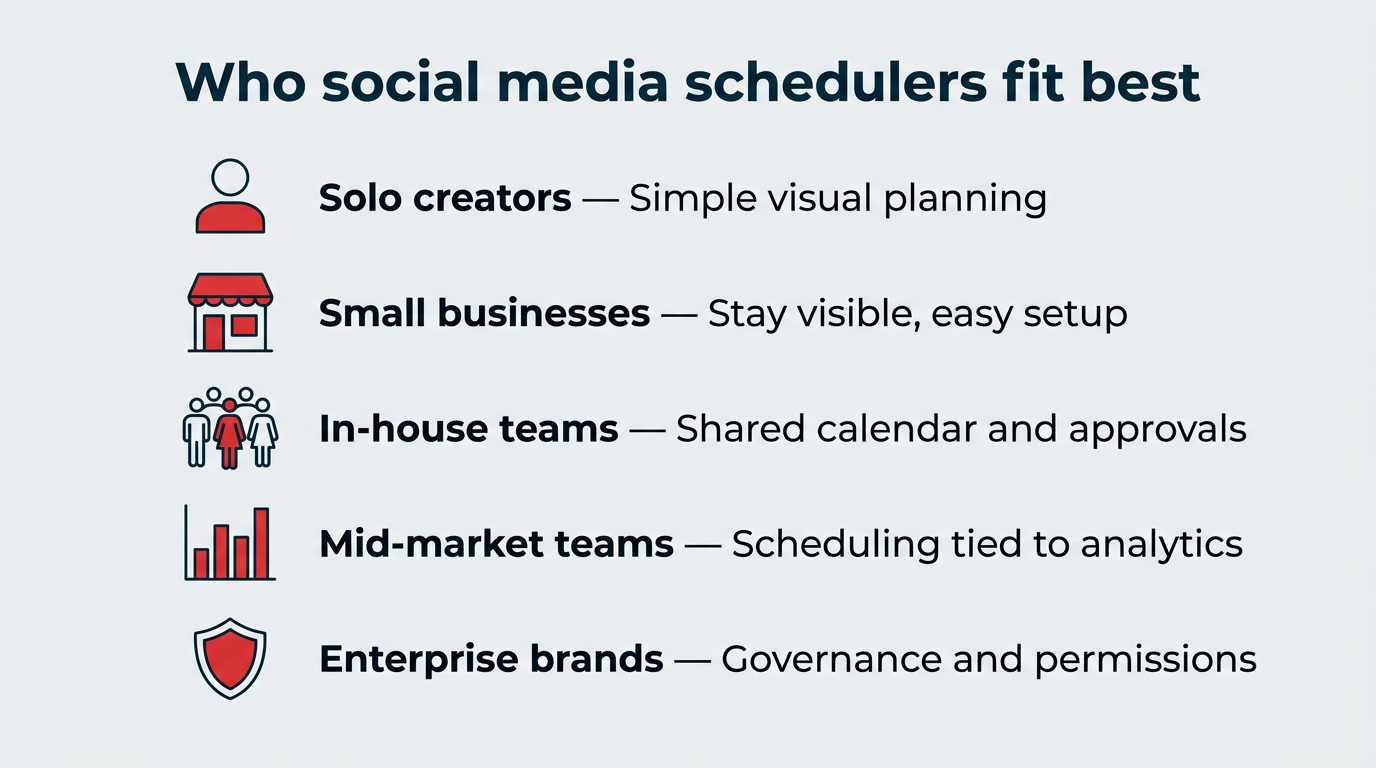
The utility of a social media scheduler extends to virtually anyone regularly posting to more than one social account. However, the specific requirements of such a tool vary significantly depending on the user’s operational scope. For solo creators or very small businesses, a straightforward, single-purpose scheduler might suffice initially. Yet, as operations scale to encompass mid-market teams, large enterprises, or agencies managing numerous clients, the need for more robust, multi-functional solutions becomes critical. A single-purpose scheduler quickly becomes inadequate for organizations requiring intricate content review processes, advanced analytics, or comprehensive governance.
Key Features Defining Best-in-Class Scheduling Tools
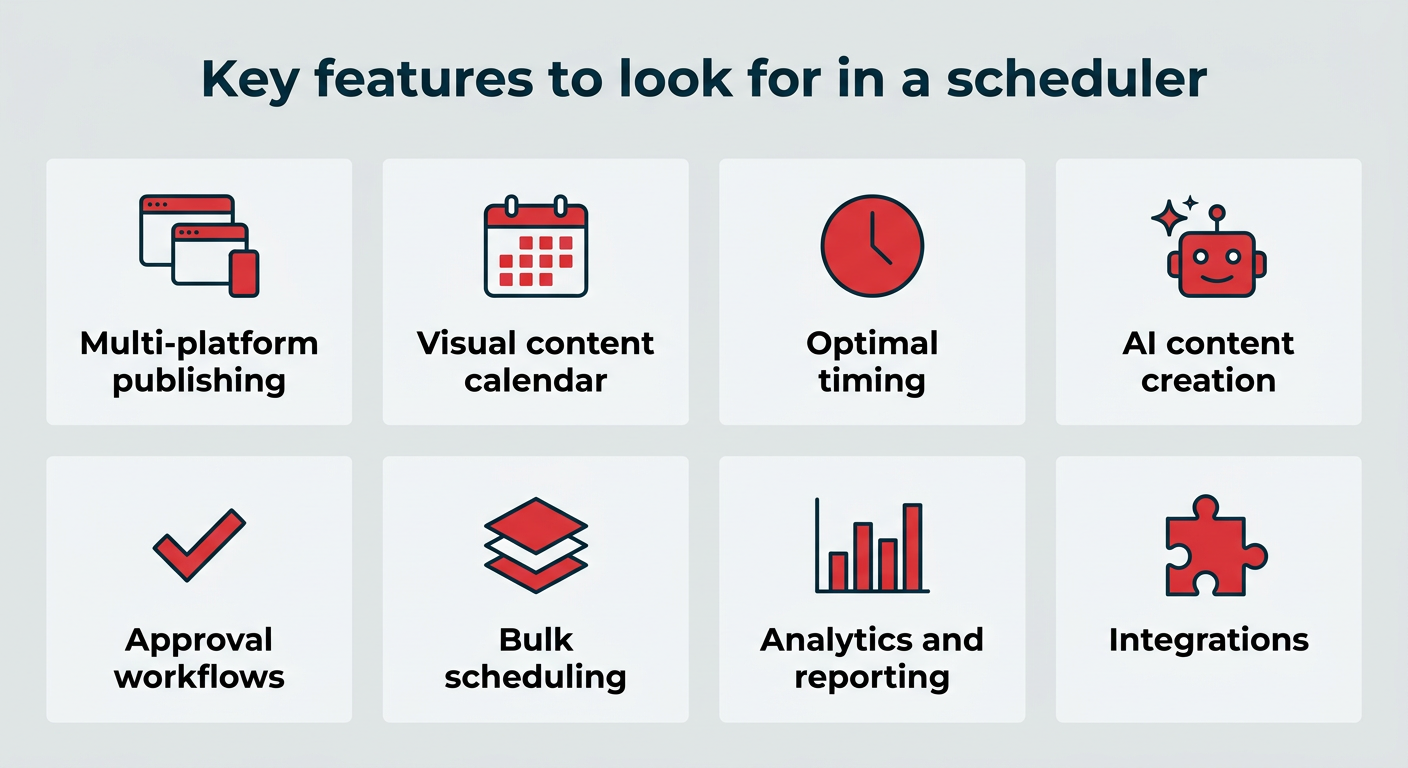
Beyond merely automating post publication, the most effective social media scheduling tools offer a suite of advanced features designed to streamline workflows and maximize impact. An evaluation checklist for prospective users should include:
- Multi-Platform Publishing: The ability to schedule and customize content for all relevant social networks (Facebook, Instagram, X, TikTok, YouTube, LinkedIn, Pinterest, Threads, Google Business Profile, Mastodon, Bluesky, WeChat, Weibo, Kuaishou, Douyin) from one interface.
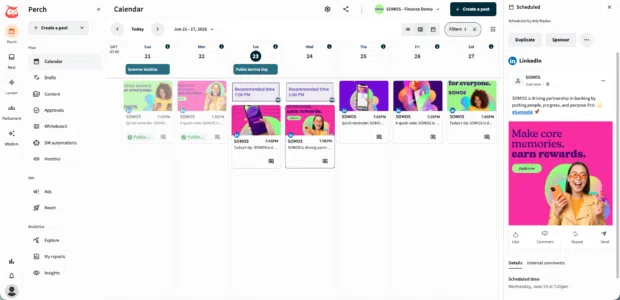
- Content Calendar: A visual, drag-and-drop calendar for intuitive content planning and overview.
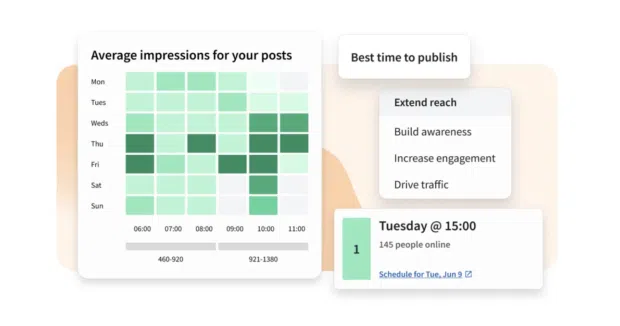
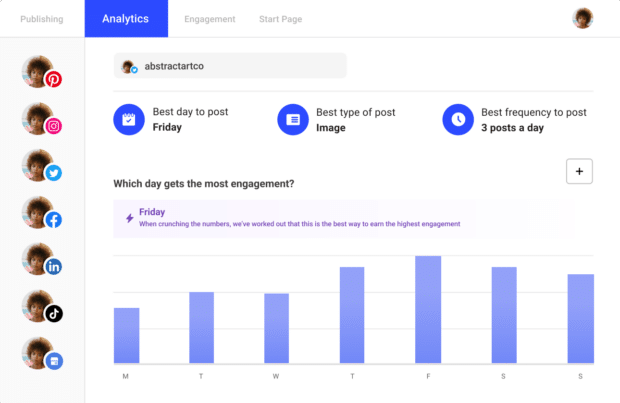
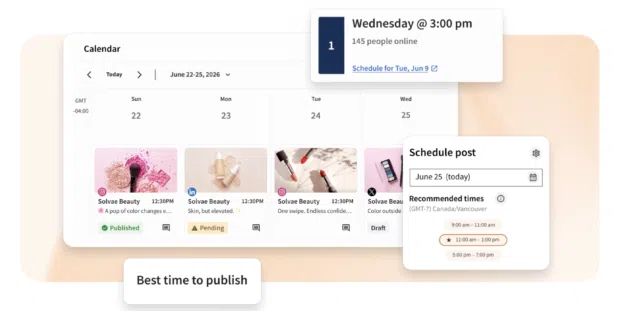
- Optimal Time Recommendations: AI-driven suggestions for the best times to post based on audience activity and historical performance.
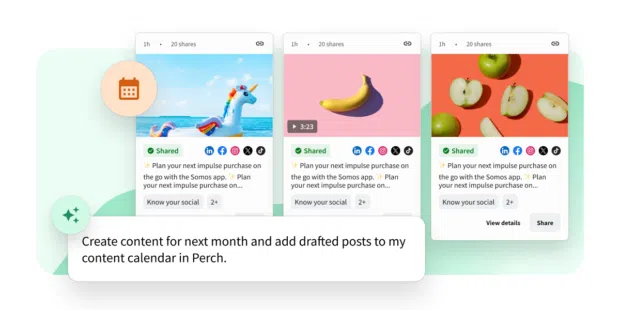
- AI-Assisted Content Creation: Tools that generate draft posts, captions, or hashtags from prompts, accelerating content production.
- Approval Workflows & Permissions: Essential for teams, allowing content to pass through multiple review stages with role-based access controls.
- Asset Management: A centralized library for storing and organizing media files, ensuring brand consistency.
- Bulk Scheduling: The capacity to upload and schedule numerous posts simultaneously, saving significant time.
- Evergreen Content Recycling: Automation for reposting high-performing or timeless content to maintain a consistent presence.
- Unified Inbox/Engagement: Integration with community management to respond to comments and messages directly from the scheduling dashboard.
- Performance Analytics & Reporting: Tools to track post-performance, audience engagement, and campaign ROI, often with customizable reports.
- Brand Safety & Governance: Features like Hootsuite’s Vigil, which provide compliance and brand safety checks for content before publication, particularly crucial for large enterprises.
- Integrations: Compatibility with other marketing tools, CRM systems, or e-commerce platforms (e.g., Shopify, WooCommerce).
The importance of these features must be weighed against team size and operational complexity. While a solo creator might forgo elaborate approval workflows, an enterprise team managing sensitive brand communications cannot.
The Market Landscape: A Comparative Overview of Leading Tools (2026)
The market for social media scheduling tools is diverse, offering solutions tailored to various organizational needs and budgets. Here’s a breakdown of prominent platforms across different categories:
All-in-One Social Media Scheduling Tools: These platforms integrate scheduling with comprehensive analytics, engagement, collaboration, and reporting, making publishing an integral part of a broader social media strategy.
-
Perch by Hootsuite:
- Best For: Large teams and enterprises managing multiple, complex social media accounts.
- Standout: A planning, publishing, and analytics powerhouse designed for extensive social teams. It encompasses content planning, cross-channel publishing, multi-stage approvals, robust asset management, detailed reporting, and AI-powered content creation (via Hootsuite Wisdom). Perch’s integration within Hootsuite Social OS also connects it to Vigil for advanced brand safety and governance, ensuring approvals and permissions are intrinsically linked to content.
- Platforms: Facebook, Instagram (Posts, Stories, Reels), X, TikTok, YouTube, Pinterest, LinkedIn, Threads.
- Pricing (2026): Standard plan at $99/user/month; Advanced at $249/user/month; Enterprise custom-priced. Free trial available.
-
Agorapulse:
- Best For: Mid-market teams requiring integrated scheduling and community management.
- Standout: Combines a shared publishing calendar with a unified inbox, allowing teams to schedule posts and manage subsequent replies seamlessly. Features internal approval workflows and client-ready reports.
- Platforms: Facebook, Instagram, X, TikTok, YouTube, LinkedIn, Google Business Profile.
- Pricing (2026): Starts at $79/user/month (billed annually). Limited free plan available.
-
Planable:
- Best For: Teams with rigorous content review and approval processes.
- Standout: Built around feedback, displaying posts exactly as they will appear on each network. Stakeholders can comment, suggest edits, and approve directly. Offers multi-step approval flows (e.g., copy editor, client, legal review).
- Platforms: Facebook, Instagram, X, TikTok, YouTube, LinkedIn, Google Business Profile.
- Pricing (2026): Starts at $33/workspace/month. Limited free plan (50 posts total) available.
Social Media Scheduling Tools for Small Teams: These solutions prioritize speed, simplicity, and affordability over extensive governance and reporting.
-
Buffer:
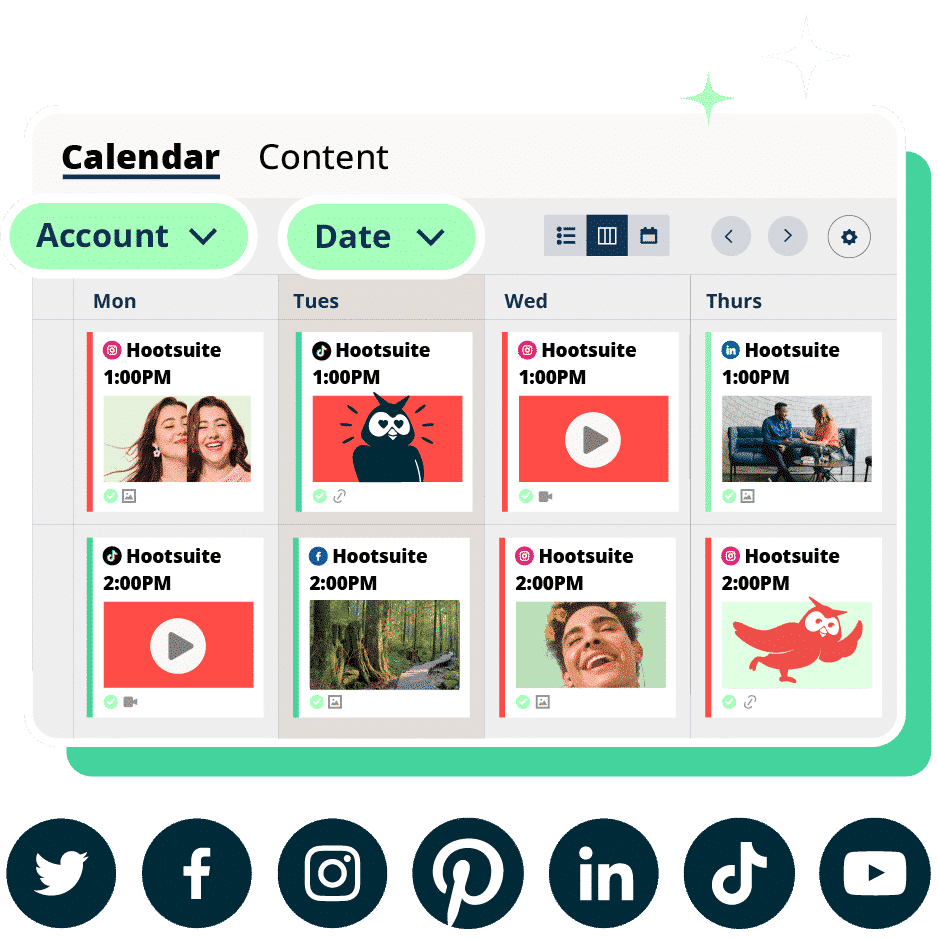
- Best For: Straightforward, no-frills social media scheduling.
- Standout: Known for its user-friendly and intuitive dashboard, allowing small teams to schedule and publish quickly. Supports a wide array of platforms and includes basic comment reply functionality for Facebook Pages and Instagram business accounts.
- Platforms: Facebook, Instagram, X, TikTok, YouTube, LinkedIn, Mastodon, Bluesky, Pinterest, Threads, Google Business Profile.
- Pricing (2026): Starts at $5/channel/month. Limited free plan available.
-
Later:
- Best For: Smaller creators and brands with a strong focus on visual content planning.
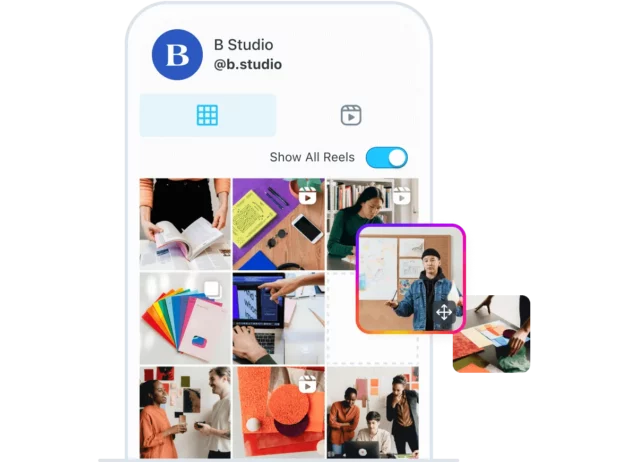
- Standout: Emphasizes visual content, particularly for Instagram, with a dedicated feed planner to preview grid aesthetics. Offers features like link-in-bio landing pages, reusable caption/hashtag sets, and a shared media library.
- Platforms: Facebook, Instagram, X, TikTok, YouTube, Pinterest, LinkedIn.
- Pricing (2026): Starts at $25/month. No free plan.
-
MeetEdgar:
- Best For: Freelancers, entrepreneurs, and small businesses seeking automated evergreen content.
- Standout: Automatically recycles evergreen posts, ensuring continuous content flow even when new material isn’t being created. Ideal for maintaining a consistent social presence with minimal effort.
- Platforms: Instagram, Facebook, X, LinkedIn, Pinterest, TikTok, Threads.
- Pricing (2026): Annual plans start at $299/year. No free plan.
-
SocialBee:
- Best For: Teams that organize content into recurring, categorized streams.
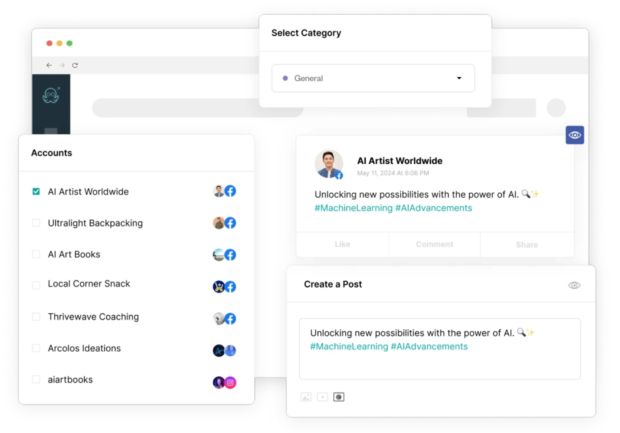
- Standout: Builds schedules around content categories (e.g., promotions, blog links, curated content), allowing users to define posting cadences for each. Automatically maintains a balanced content mix.
- Platforms: Facebook, Instagram, X, TikTok, YouTube, LinkedIn, Pinterest, Threads, Bluesky, Google Business Profile.
- Pricing (2026): Starts at $29/month. No free plan.
Platform-Specific and Niche Scheduling Tools: These tools cater to specific platforms, workflows, or ecosystems, often complementing a broader social media strategy.
-
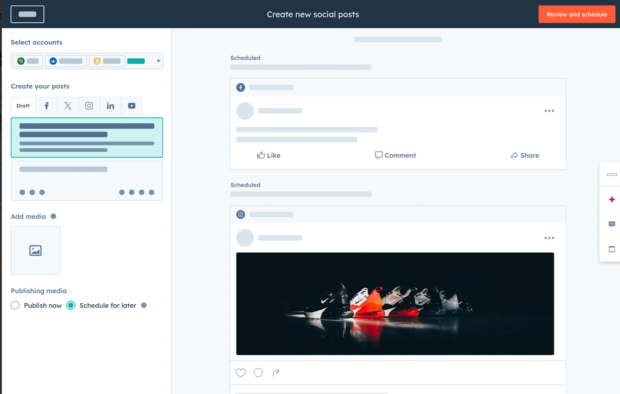
HubSpot:
- Best For: Marketing teams integrated into a CRM-based workflow.
- Standout: Part of HubSpot’s larger marketing platform, enabling social content management alongside CRM, email, and campaign data. Best suited as an add-on for existing HubSpot users.
- Platforms: Instagram, Facebook, X, LinkedIn.
- Pricing (2026): Marketing Hub Professional plan starts at $890/month (includes 3 seats). No free plan.
-
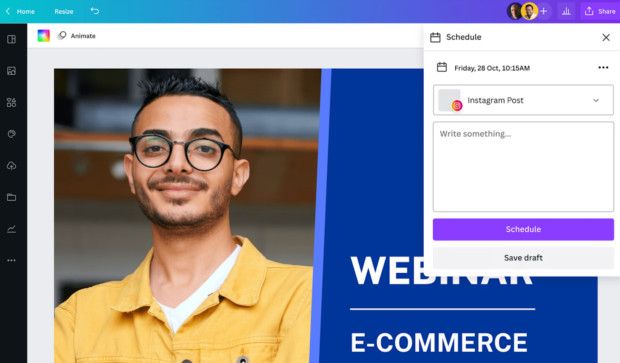
Canva:
- Best For: Design-led content teams.
- Standout: Allows users to design and publish posts within the same interface, streamlining the creative and distribution workflow. Primarily a design tool with integrated scheduling.
- Platforms: Facebook, Instagram, X, LinkedIn.
- Pricing (2026): Canva Pro pricing is available on their website. Limited free design-only plan available.
-
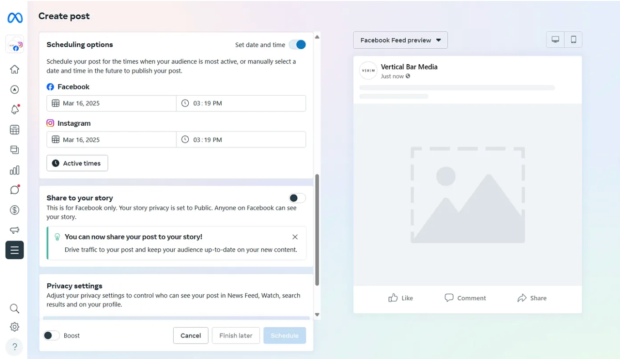
Meta Business Suite:
- Best For: Free, native Facebook and Instagram scheduling.
- Standout: A free tool provided by Meta for managing and scheduling posts specifically for Facebook and Instagram. Ideal for users whose social media efforts are confined to these two platforms.
- Platforms: Instagram, Facebook.
- Pricing (2026): Free.
-
Tailwind:
- Best For: Pinterest-focused scheduling and optimization.
- Standout: Offers robust features for Pinterest, including personalized schedules, interval planning, and multi-board scheduling. Also supports Instagram and Facebook.
- Platforms: Pinterest, Instagram, Facebook.
- Pricing (2026): Pin Scheduling & Creation plan starts at $29.99/month. Limited free plan available.
-
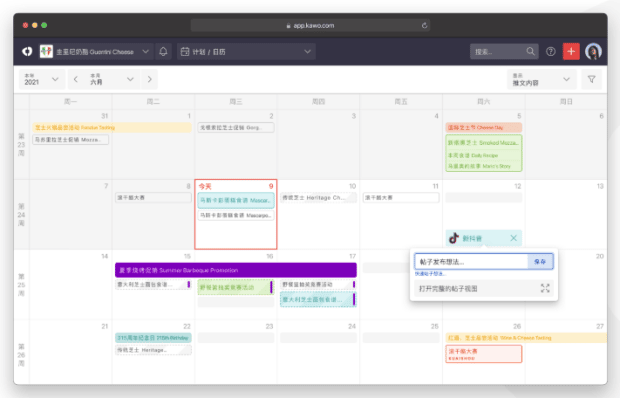
KAWO:
- Best For: Scheduling content on Chinese social media platforms.
- Standout: Specialized scheduler for WeChat, Weibo, Kuaishou, and Douyin, providing essential access to the Chinese digital market. Can be integrated with platforms like Hootsuite.
- Platforms: WeChat, Weibo, Kuaishou, Douyin.
- Pricing (2026): Plans start at $4,000/year. No free plan.
-
Airtable:
- Best For: Automation-driven scheduling and workflow management.
- Standout: Functions as a workflow engine that can trigger social posts. Teams plan, organize, and automate content creation and approval processes, then use Airtable to publish to platforms like X or Facebook when conditions are met.
- Platforms: Facebook, X; more via integrations.
- Pricing (2026): Team plan starts at $20/month per seat (billed annually). Limited free plan available.
The Mechanics of Social Media Scheduling: Behind the Scenes
Social media scheduling tools operate by establishing secure connections to each social network through their respective Application Programming Interfaces (APIs). An API acts as a digital handshake, enabling the scheduling tool to communicate with the platform, transmit content, and facilitate its publication on behalf of the user. This centralized control allows users to connect all their social profiles to a single platform, where content can be organized and scheduled according to a comprehensive social media content calendar. The user defines what to publish and when, and the tool ensures the content goes live at the precise scheduled time, enabling efficient batch-scheduling of content for days, weeks, or even months in advance.
The process typically involves:
- Connecting social accounts to the scheduling tool.
- Composing or importing content (text, images, videos).
- Customizing content for each platform (e.g., specific hashtags for Instagram, character limits for X).
- Selecting optimal publication times, often aided by the tool’s analytics.
- Scheduling the post for automatic publication.
For video platforms like YouTube, the process might involve uploading the video as private via the scheduling tool and then setting a specific time for it to go public, leveraging the platform’s API capabilities for video management.
A significant advantage of these tools is bulk scheduling. This allows users to upload a spreadsheet or CSV file containing multiple posts, complete with captions, media links, and scheduled times. The tool then processes this data and schedules all posts simultaneously, dramatically reducing manual effort.

Choosing the Right Tool: A Strategic Framework
Selecting the ideal social media scheduler requires a methodical approach that aligns the tool’s capabilities with the team’s specific operational needs. The process can be broken down into five key steps:
- Define Your Team’s Needs: Identify whether the primary requirement is simple scheduling, visual planning, comprehensive management with analytics, or advanced collaboration and governance.
- Audit Your Current Workflows: Analyze existing content creation, review, and publishing processes to pinpoint bottlenecks and areas where automation can provide the most value.
- List Must-Have Features: Create a checklist of essential functionalities, considering platform support, approval flows, AI integration, and reporting capabilities.
- Consider Budget and Scalability: Evaluate pricing models (per user, per channel, per workspace) and ensure the tool can scale with future growth.
- Test Drive Potential Solutions: Utilize free trials or limited free plans to experience the user interface, test key features, and assess ease of use within your team’s context.
Ultimately, the optimal tool is one that seamlessly integrates into existing workflows, addresses specific challenges, and offers a clear return on investment through time savings, improved efficiency, and enhanced social media performance.
The Transformative Impact of AI on Social Media Scheduling
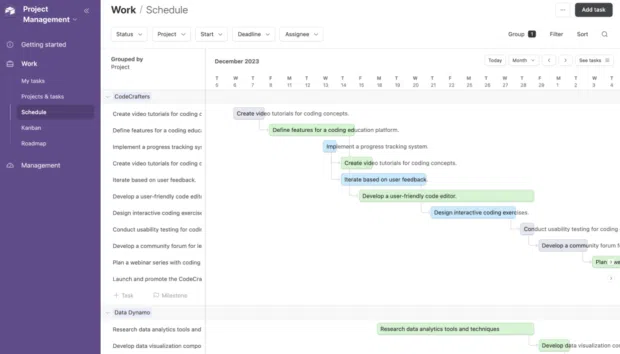
Artificial intelligence is profoundly reshaping the landscape of social media scheduling, moving it beyond a mere calendar management task to a sophisticated decision-making engine. Gartner projects AI-driven marketing automation to reach 36% by 2028, underscoring the accelerating shift towards intelligent systems. AI-assisted schedulers now actively contribute to decisions regarding what content to publish, when, and in what format, marking a significant evolution from traditional automation.
Four key changes underscore AI’s transformative role:
- AI-Assisted Content Creation: The integration of AI into content generation has become standard, with a Canto and Ascend2 survey indicating that 51% of content professionals leverage AI to expedite production. Tools can now convert brief prompts or existing assets into draft posts, which marketers then review and refine. This speeds up the initial content creation phase, providing a strong starting point for human creativity.
- Personalized Timing Recommendations: AI algorithms analyze an account’s historical data and audience behavior patterns to provide highly personalized recommendations for optimal posting times. This moves beyond generic industry benchmarks, offering insights into when a specific audience is most likely to engage, thereby maximizing reach and interaction.
- Faster Multi-Platform Adaptation: AI can intelligently reformat and adapt a single content idea to suit the unique requirements and best practices of different social networks. This eliminates the need to manually rewrite posts for LinkedIn, TikTok, X, and Instagram, ensuring content is optimized for each platform while maintaining message consistency.
- Integrated AI Workflows: AI is increasingly woven into the entire content workflow, rather than being confined to a single step. For instance, Hootsuite’s Wisdom AI operates within Perch, allowing teams to seamlessly transition from AI-generated prompts to draft content, to scheduled posts within the same calendar interface. This holistic integration means performance data can continuously feed back into the AI, informing future content strategy and optimization.
The shift towards AI-powered scheduling means that while human oversight remains crucial for creative refinement and strategic direction, the heavy lifting of content generation, optimization, and distribution is increasingly augmented by intelligent automation. This empowers marketing teams to be more agile, data-driven, and effective in their social media endeavors, ultimately leading to enhanced brand visibility and measurable business outcomes.

 rifanmuazin
 Pevita Pearce