Nila Kartika Wati
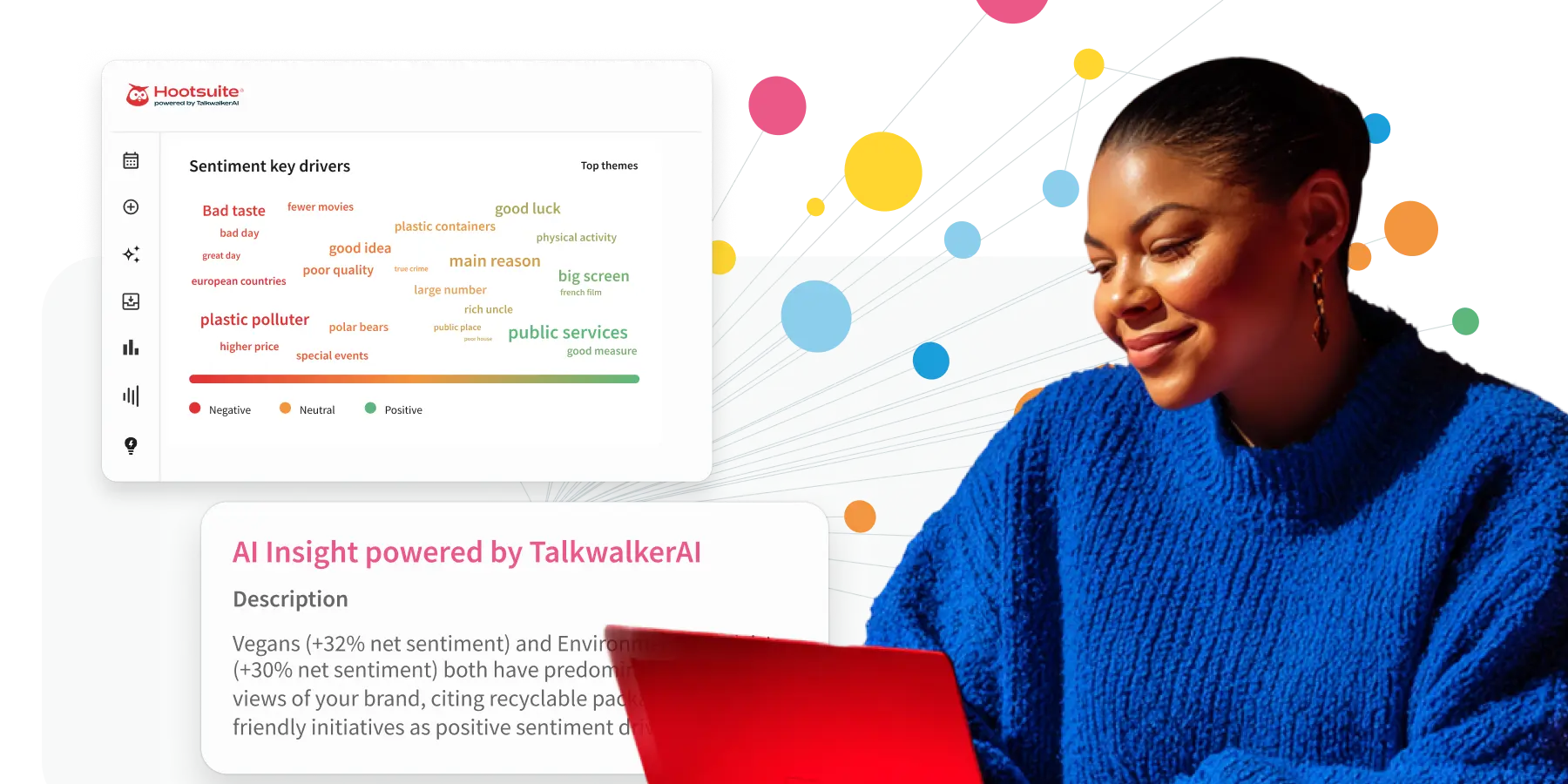
Social media customer service has transitioned from a supplementary channel to an indispensable pillar of brand reputation and consumer loyalty, encompassing all support or service interactions delivered via platforms such as Facebook, Instagram, TikTok, WhatsApp, X (formerly Twitter), and LinkedIn. This dynamic domain includes addressing customer inquiries in public post comments, resolving issues through private messages, and increasingly, leveraging artificial intelligence (AI) for instant support. A significant 75.1% of consumers now express a desire to communicate with businesses using the same messaging methods they employ with friends and family, underscoring the shift towards more direct and informal interaction channels.
A Paradigm Shift: From Reactive to Proactive Engagement

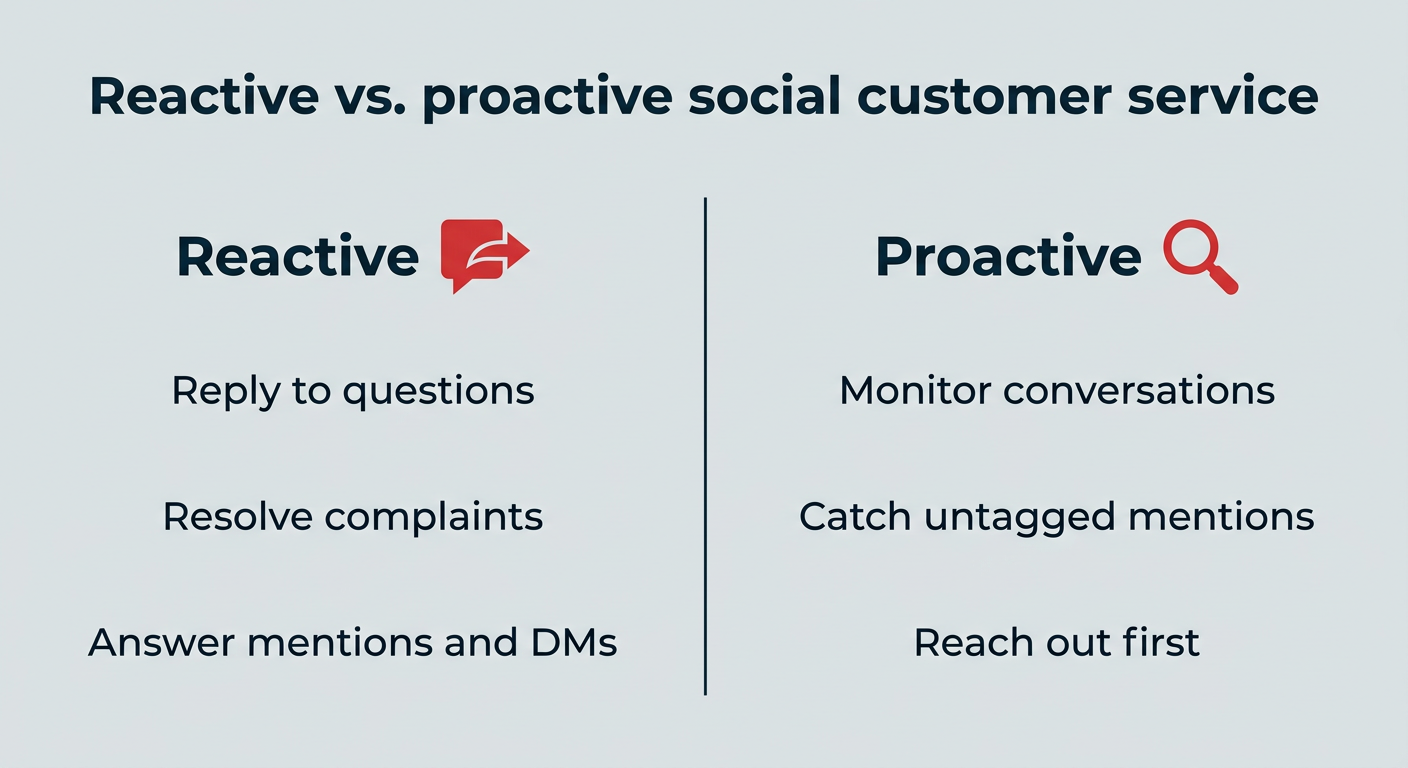
The evolution of social media customer service reflects a broader change in consumer behavior and technological capabilities. Initially, businesses primarily engaged in reactive social media customer support, responding to direct questions, complaints, and mentions that came to them. This often involved monitoring brand hashtags and mentions, then providing direct replies. However, the landscape has matured considerably. Modern strategies emphasize proactive social media customer care, which involves actively monitoring broader online conversations, identifying potential issues or untagged mentions, and reaching out to customers before their frustration escalates or before they even formally lodge a complaint. This anticipatory approach can transform a potential crisis into an opportunity for positive brand engagement.
The advent of AI has further revolutionized this field. Today, social media customer service often integrates AI-powered solutions, including sophisticated chatbot interactions capable of instantly answering frequently asked questions (FAQs), automated replies, and responses triggered by advanced social listening technologies. This integration blurs the traditional lines between marketing and support functions, as a publicly visible, effective resolution not only solves an individual customer’s problem but also serves as a powerful testament to the brand’s commitment to service, visible to a wider audience. In essence, social media customer service is now defined by its comprehensive ability to resolve customer issues across digital platforms, employing a strategic blend of human agents and intelligent AI, both reactively and proactively.
The Strategic Imperative: Why Social Customer Service Drives Value

The critical importance of social media customer care stems from evolving consumer expectations for rapid, transparent, and public-facing support. Brands that successfully deliver on these expectations consistently build stronger trust, foster deeper loyalty, and cultivate a superior brand perception. The benefits extend beyond intangible goodwill, translating directly into significant financial returns. Research indicates that companies effectively applying generative AI to customer-related initiatives can anticipate achieving 25% higher revenue after five years compared to competitors focusing solely on productivity enhancements.
Several consistent benefits underpin this strategic imperative:
- Meeting Unprecedented Customer Expectations: Consumers today demand immediate and seamless support. Integrating social media into customer service operations, often augmented by AI chatbots, enables businesses to respond instantly, keeping customers engaged and resolving problems efficiently. This responsiveness is crucial, especially as self-service and live chat functionalities are projected to surpass traditional channels like phone and email as primary customer service technologies by 2027.
- Building Trust and Fostering Long-Term Relationships: Prioritizing speedy and effective service is a foundational element in building trust with both prospective and existing customers. Tools for tracking brand sentiment provide a quantifiable measure of this trust over time. Exceptional service can even convert dissatisfied customers into loyal brand advocates. This cultivated trust generates a compounding effect: satisfied customers are more likely to make repeat purchases and recommend the brand to others, solidifying service quality as a key contributor to revenue growth, not merely a support cost.
- Enhancing Brand Visibility and Operational Efficiency: Every public interaction on social media serves a dual purpose. While resolving an individual customer’s issue, it simultaneously showcases the brand’s customer-centric approach to everyone observing the conversation. This public display of excellent service is a potent form of organic marketing, contributing significantly to brand awareness. For business-to-business (B2B) marketers, social media has emerged as a leading channel for customer acquisition, outperforming even digital advertising and email marketing. Furthermore, social customer service offers significant efficiency gains. A single agent can often manage multiple social conversations concurrently, and chatbots can preemptively address routine inquiries, reducing queue times and allowing the same team to handle a larger volume of interactions without requiring additional headcount. Proactive engagement also boosts overall social media engagement, which can positively influence organic post performance across various platform algorithms, particularly on Instagram, where past interactions enhance future content visibility.
Navigating the Challenges: Key Trade-offs for Brands
While social support offers unparalleled speed and reach, it also presents distinct challenges that require careful planning:
- High Volume and Velocity: Social channels can experience sudden spikes in message volume, especially during product launches, service disruptions, or major events.
- Public Scrutiny: All public interactions are visible to a broad audience, meaning errors or mishandling can quickly escalate into public relations issues.
- 24/7 Expectations: Customers expect near-instant responses, often regardless of business hours, necessitating round-the-clock monitoring or robust automated solutions.
- Channel Fragmentation: Managing inquiries across numerous platforms can be complex, requiring integrated tools to avoid missed messages or inconsistent responses.
- Tone and Brand Voice Consistency: Maintaining a consistent brand voice while addressing diverse customer issues across different social contexts can be challenging for multiple agents.
- Data Security and Privacy: Handling sensitive customer information in a public or semi-public forum requires stringent security protocols.
For most brands, the substantial benefits in speed, reach, and relationship building generally outweigh these trade-offs, provided a robust process is in place to effectively manage interaction volume and complexity.
Crafting a Multi-Channel Strategy: Platform Selection and Ownership Models

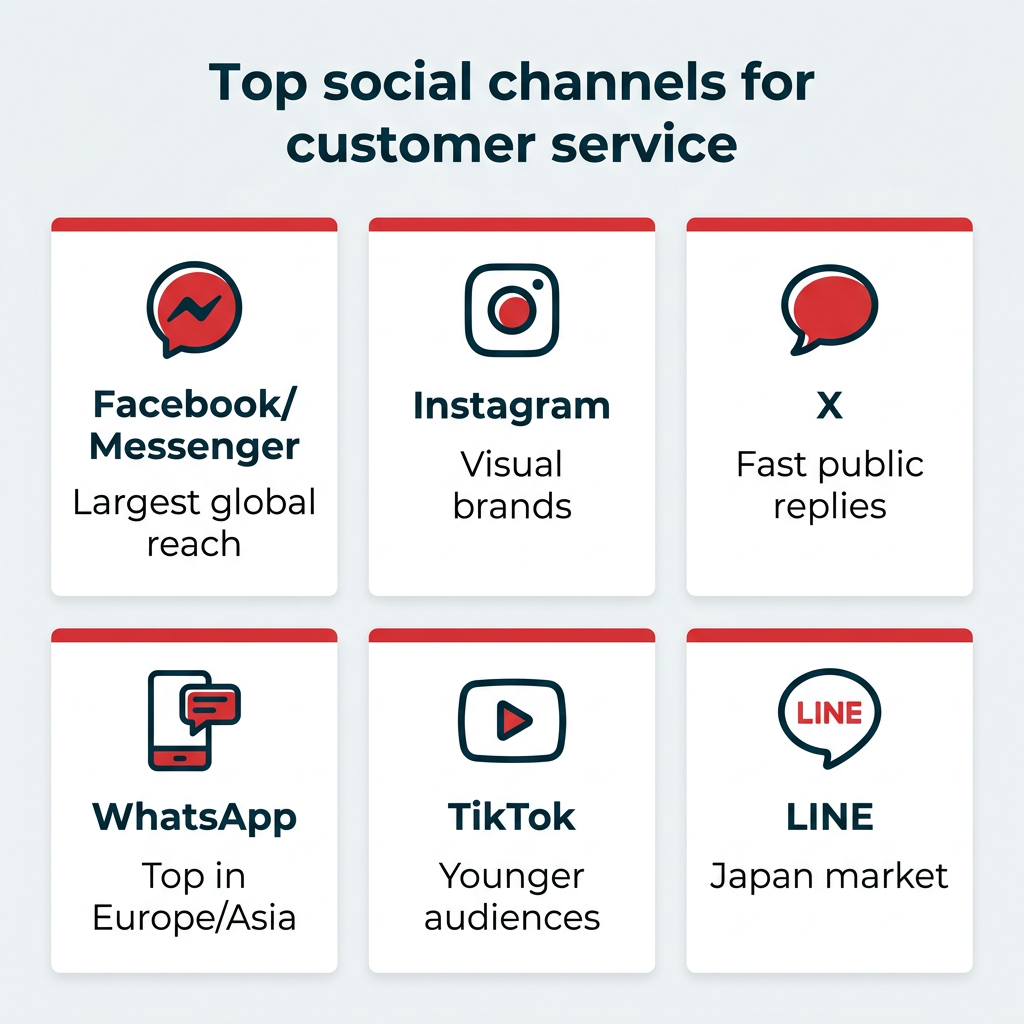
The optimal social media channels for customer service are dictated by where a brand’s target audience is most active, as preferences can vary significantly by region and demographic. In the U.S., for example, 71% of adults use Facebook, while 50% utilize Instagram. A strategic approach involves prioritizing platforms based on audience presence and the unique strengths of each channel:
- Facebook: Remains a dominant platform for general customer inquiries, boasting high user penetration and versatile messaging options via Facebook Messenger.
- Instagram: Ideal for visually driven brands, offering support through direct messages and comments, particularly effective for younger demographics.
- X (formerly Twitter): Excels in real-time, public resolution of urgent issues, often favored for quick responses and service announcements.
- WhatsApp: A global leader for private, messaging-based support, highly preferred by consumers for its convenience and familiarity.
- TikTok: Emerging as a customer service channel, particularly for Gen Z audiences, where short-form video responses can be effective for FAQs or demonstrations.
- LinkedIn: Primarily for B2B interactions, offering professional support for product inquiries, partnerships, or career-related questions.
- LINE: A popular messaging app in Asia, crucial for brands operating in those markets.
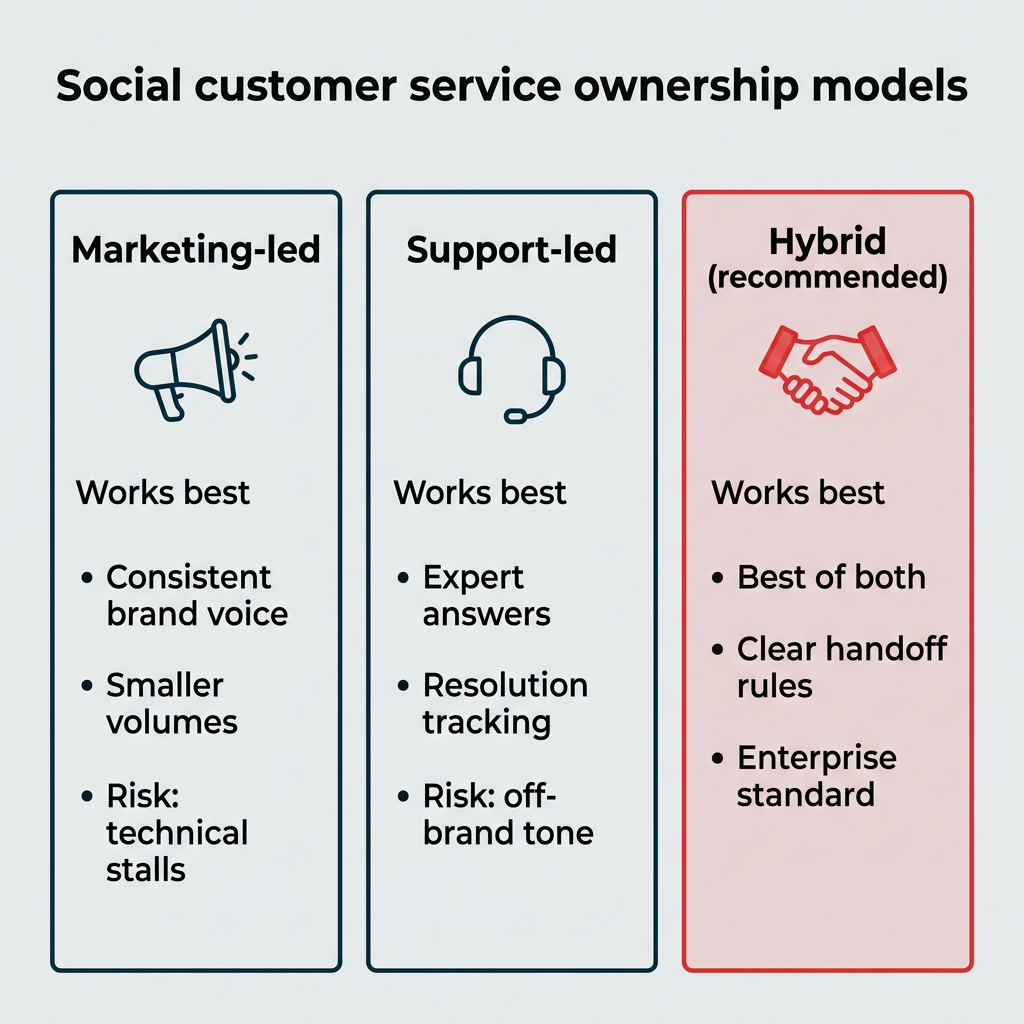
Once the primary channels are identified, the next critical decision involves determining the ownership model for social customer service. For most enterprise-level organizations, a hybrid model that shares responsibility between marketing and support teams typically yields the best results. This collaborative approach ensures a consistent brand voice while guaranteeing expert resolution and efficient issue tracking through predefined escalation paths.
The three common ownership models include:

- Marketing-Led: The marketing team manages all social interactions, prioritizing brand voice and public perception, often escalating complex issues to support.
- Support-Led: The customer support team handles all social inquiries, focusing on rapid resolution and integration with existing help desk systems.
- Hybrid Model: A collaborative effort where marketing manages general engagement and public brand perception, while support teams handle direct inquiries, technical issues, and escalations, leveraging a shared workspace for alignment.
Regardless of the chosen model, a unified workspace is essential for team alignment. Platforms like Hootsuite Social OS facilitate this hybrid approach by consolidating conversations, assignment rules, and approval workflows into a single, governed environment, enabling both marketing and support to view the same thread and coordinate responses seamlessly.
Best Practices for Excellence in Social Customer Service
Optimizing social media channels for support requires adherence to several key best practices:
- Respond Quickly: The modern standard for social media customer service dictates a response within the first hour, with 77% of customers expecting immediate interaction. Unified inboxes, such as Hootsuite’s Nest, streamline replies by centralizing comments and direct messages from all platforms. AI layers like Wisdom can further enhance speed by providing context and suggesting next steps.
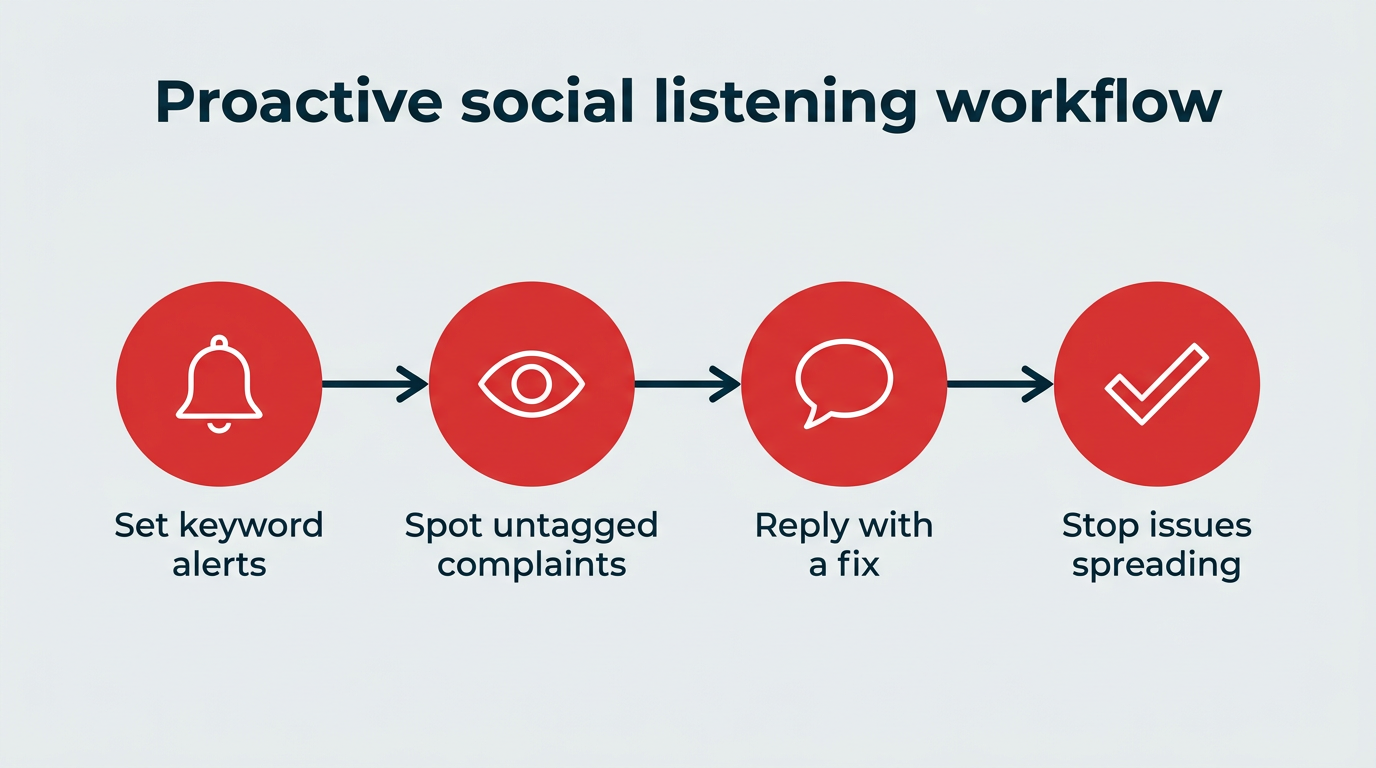
- Use Social Listening for Proactive Issue Resolution: Active listening is crucial for building trust. Social listening tools allow brands to monitor not just direct mentions but also broader online conversations, identifying untagged complaints, misspellings, or discussions about product issues. Proactive engagement, initiated by keyword alerts for common problems, allows brands to address issues when they involve a single customer, preventing them from escalating into widespread public concerns. Platforms like Hootsuite Lumen automatically scan billions of online sources, enabling brands to build relationships by interacting with relevant posts, even if they aren’t directly tagged.
- Set Expectations and Consider Dedicated Support Channels: For high-volume brands, creating separate customer service accounts (e.g., @BrandNameHelp) can help streamline inquiries. It is vital to clearly state response times, operating hours, and available languages in bios and auto-replies to manage customer expectations effectively.
- Personalize Every Response: Generic replies are easily discernible. Each response should ideally use the customer’s name, reference specific order details or mentions, and directly answer their query. Templates should serve as starting points, infused with personalized details to demonstrate genuine human engagement. Tools that surface past conversations, like Nest, enable agents to quickly gain context before responding.
- Reply to Every Comment and Message: A commitment to responding to all comments and messages is fundamental. Beyond being courteous and fostering relationships, consistent engagement can boost content visibility in social media algorithms, and publicly demonstrates a brand’s dedication to its customers.
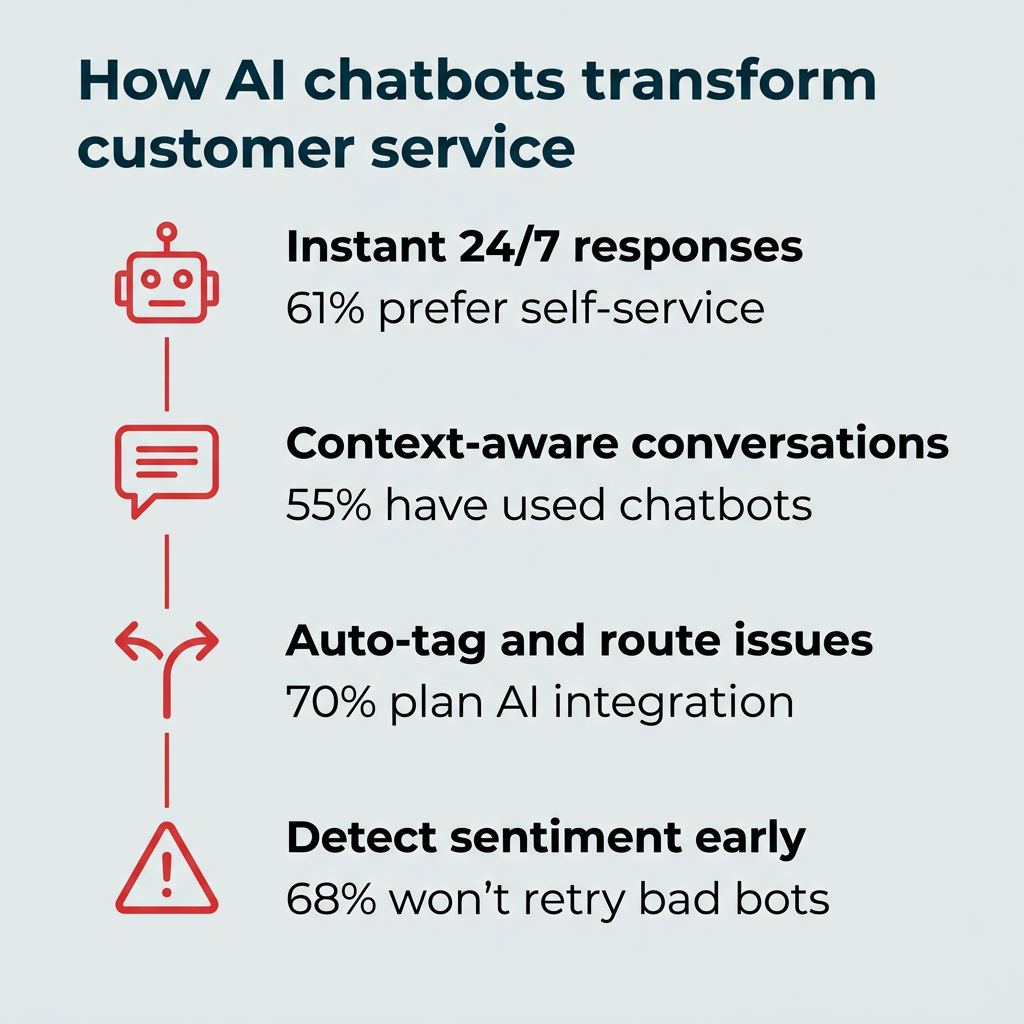
- Scale Up with AI and Chatbots: AI chatbots are integral to delivering personalized service at scale. With 61% of people preferring self-service for simple problems and 55% having used self-service chatbots, their adoption is soaring. 70% of CX leaders plan to integrate generative AI into customer touchpoints within two years. Modern chatbots transcend programmed responses, understanding context, retaining conversation history, and adapting language to provide clear, accurate, and empathetic replies. Beyond chatbots, AI can auto-tag, route conversations, suggest replies to human agents, and detect sentiment to flag emerging issues.
- Handle Negative Feedback Professionally: Negative comments require prompt and professional responses. The goal is to address the issue, prevent recurrence, and potentially turn the situation around. Differentiate between genuine feedback and malicious false statements; while legal action for defamation is rare, protecting brand reputation without escalating conflict is paramount. When responding to negative comments, remain professional, express empathy, offer to move the conversation to a private channel, and politely correct any factual inaccuracies.
- Make Human Support Accessible: While automation is crucial for speed and efficiency, human interaction remains indispensable for complex issues that require nuanced understanding and empathy. Brands should ensure clear pathways for customers to reach a human agent. Offering premium support options, such as faster access to human assistance, can also be a significant differentiator, as nearly half of customers are willing to pay more for superior customer service. When human agents engage, authenticity and a willingness to admit mistakes can significantly enhance customer satisfaction.
Illustrative Success Stories: Brands Leading the Way
Observing how leading brands implement these practices provides concrete examples:
- Chewy: Renowned for its hyper-personalized replies, Chewy’s social team consistently references specific pets and order details, fostering deep customer loyalty. Screenshots of these exchanges frequently go viral, creating organic brand advocacy. Their success lies in equipping agents with immediate access to relevant customer and order data.
- JetBlue: Utilizing X as a primary frontline support channel, JetBlue provides rapid public resolutions for travel disruptions, often within minutes, moving sensitive details to private messages. This speed is critical in the travel industry and publicly demonstrates responsiveness during crises.
- Wendy’s: This brand successfully balances a playful, distinctive social media personality with a robust support backbone. Humor is reserved for engagement, while genuine complaints receive direct, helpful responses and clear paths to resolution, demonstrating that personality can coexist with effective service.
- Adobe: Adobe’s support accounts proactively engage with users who haven’t directly tagged them, addressing issues like software crashes or licensing confusion discovered through social listening. This early intervention prevents small frustrations from escalating and provides valuable product feedback.
Avoiding Pitfalls: Common Mistakes to Sidestep
While striving for excellence, brands must also be aware of common missteps that can quickly erode trust:
- Ignoring Feedback: Failing to respond to comments or messages, especially negative ones, signals indifference.
- Canned or Generic Replies: Impersonal, templated responses make customers feel unheard and devalued.
- Slow Response Times: In a fast-paced digital world, delayed responses can exacerbate customer frustration.
- Being Defensive or Argumentative: Engaging in arguments or becoming defensive publicly can quickly damage brand reputation.
- Mixing Public and Private Issues Inappropriately: Discussing sensitive personal information in public forums is a major privacy breach.
The Technology Backbone: Essential Tools for Modern Social Care
Effective social media customer service relies on a robust technology stack that integrates various functionalities:
| Tool Category | What it does | What to look for |
|---|---|---|
| Unified Social Inbox | Consolidates comments and direct messages from all social platforms into one view, ensuring nothing is missed. | Assignment capabilities, alerts, saved replies, approval workflows, comprehensive conversation history. |
| Social Listening | Scans the web for mentions of your brand, products, competitors, and relevant keywords across various online sources. | Untagged mention detection, sentiment tracking, coverage of review sites, real-time alerting. |
| AI Chatbots | Handles routine questions 24/7, freeing human agents to focus on complex issues. | Context retention, seamless human handoff, multilingual support, auto-routing based on query type. |
| Analytics and Reporting | Measures key performance indicators such as response time, customer satisfaction (CSAT), and resolution rates. | Customizable reports, scheduled delivery, integrated CSAT surveys, team-level performance views, integration with broader business metrics. |
| CRM and Help Desk Integration | Connects social conversations to existing customer records and ticketing systems, providing a holistic view of customer interactions. | Two-way synchronization, direct ticket creation/updates from social threads, secure authentication, agent-side visibility of customer history, audit trails for governance. |
Hootsuite Social OS exemplifies this integrated approach, offering Nest as a unified social inbox with AI chatbots and CSAT surveys, Lumen for advanced social listening and insights, and Hootsuite Analytics for comprehensive reporting on social ROI. Enterprise solutions often prioritize seamless integration with existing CRM systems like Salesforce and Zendesk to ensure a complete customer record and consistent service delivery.
Measuring Impact: Key Performance Indicators for Success
Measuring the success of social media customer service involves tracking specific metrics that reflect the speed and quality of support. Beyond traditional marketing metrics like follower growth and engagement rates, focus on core customer service KPIs:
| Metric | Definition | Benchmark / Target |
|---|---|---|
| Average Response Time | The average duration customers wait for a reply after initiating contact. | Within 1 hour (leading brands aim for 15-60 minutes). |
| Customer Satisfaction Score (CSAT) | How satisfied customers are immediately after an interaction. | Higher is better; track trends over time for improvement. |
| Net Promoter Score (NPS) | The likelihood of customers recommending your brand after an experience. | Positive and showing an upward trend. |
| Message Volume | The total number of inbound messages received over a specific period. | Track for staffing needs, trend analysis, and resource allocation. |
| Resolution Rate | The percentage of customer issues successfully resolved. | Higher is better, indicating effective problem-solving. |
| Automated vs. Human Responses | The ratio of interactions handled by bots versus human agents. | Balance speed and efficiency with quality and complexity. |
Establishing a baseline from historical data for each channel is crucial before setting aggressive targets. Analyzing response times by message type (e.g., shipping inquiry vs. outage complaint) allows for more nuanced and realistic goal-setting. Comprehensive analytics platforms, such as Hootsuite Analytics, enable organizations to track these metrics, customize reports, and automate their delivery, facilitating a clear demonstration of how improved social customer service directly contributes to retention, repeat purchases, and enhanced brand sentiment, thereby proving its tangible return on investment.
Conclusion: The Future of Customer Engagement
Social media customer service is no longer merely an option but a strategic imperative for businesses aiming to thrive in the digital age. By embracing a proactive, AI-augmented, and human-centric approach, brands can not only meet but exceed customer expectations, transforming every interaction into an opportunity to build lasting relationships and enhance their market position. The continuous evolution of social platforms and AI technologies ensures that this domain will remain a dynamic and critical area for innovation in customer engagement.


 Pevita Pearce
 Nana