Basiran
A significant projection for email marketing in 2026 indicates that more brands will adopt dedicated email campaigns to promote their preference centers. This strategic shift is driven by an undeniable subscriber demand for greater control over their communication frequency and content relevance. When messages resonate with individual interests, recipients are demonstrably more likely to engage and open.
However, the current landscape presents a stark challenge. Research from Mailerlite reveals a concerning trend: year-on-year unsubscribe rates more than doubled from 2024 to 2025. This dramatic increase is largely attributed to recent modifications by major mailbox providers (MBPs), notably Gmail, which have significantly streamlined the unsubscribe process. The primary culprits cited for these opt-outs and spam complaints are "too many emails" and "messages not relevant." Paradoxically, a substantial portion of these departing subscribers would prefer to adjust their email frequency and content rather than sever ties permanently, if only they were presented with clear, accessible options.
The core of the problem lies in an awareness deficit. Many brands continue to relegate their preference center links to obscure, often tiny, text within email footers, severely limiting their organic discovery. Discussions with industry practitioners consistently highlight that low utilization of preference centers stems not from a lack of subscriber interest, but rather from a fundamental lack of awareness regarding their existence and functionality. This operational oversight requires immediate strategic correction.
The Evolving Landscape of Email Marketing and Subscriber Empowerment
The trajectory of email marketing has undergone a profound transformation over the past decade. Initially conceived as a mass-broadcast channel, it has steadily evolved into a sophisticated tool for personalized, one-to-one communication. This evolution has been propelled by several converging forces, including technological advancements, shifting consumer expectations, and an increasingly stringent regulatory environment concerning data privacy.
Regulatory Pressures and the Rise of Zero-Party Data:
The advent of comprehensive data protection regulations such as the General Data Protection Regulation (GDPR) in Europe (enacted 2018) and the California Consumer Privacy Act (CCPA) in the United States (effective 2020) fundamentally reshaped how brands collect, process, and utilize customer data. These regulations underscored the importance of explicit consent and transparency, compelling marketers to move away from opaque data acquisition methods. This paved the way for the prominence of "zero-party data"—information that customers proactively and intentionally share with a brand. Email preference centers are arguably the most direct and efficient conduit for collecting this valuable data, allowing subscribers to explicitly state their interests, preferred communication channels, and frequency.
Major Mailbox Provider (MBP) Shifts and Their Impact:
The actions of dominant MBPs like Google (Gmail), Apple (Mail), and Microsoft (Outlook) have historically dictated the operational parameters for email marketers. Recent changes have further amplified the urgency for robust preference center strategies.
- Apple Mail Privacy Protection (MPP): Introduced in September 2021, MPP fundamentally altered how email open rates are tracked. By pre-loading all email content, including tracking pixels, regardless of whether the user actually opened the email, MPP rendered traditional open rates unreliable. This forced marketers to pivot towards more robust engagement metrics like click-through rates, conversions, and direct feedback. Consequently, the ability to deliver hyper-relevant content—facilitated by preference centers—became even more critical to drive these measurable engagement signals.
- Gmail’s Simplified Unsubscribe Mechanism: In late 2023 and early 2024, Gmail rolled out significant changes, making it easier for users to unsubscribe from marketing emails with a single click directly from the inbox interface. This user-friendly feature, while beneficial for subscribers, directly contributed to the observed surge in unsubscribe rates reported by Mailerlite. This move by Google was a clear signal to brands: provide value and relevance, or face higher attrition. An email preference center, properly promoted, offers a critical middle ground, allowing subscribers to fine-tune their experience rather than opt out entirely.
- AI-Fueled Developments: The ongoing integration of Artificial Intelligence (AI) into MBP algorithms is poised to further scrutinize email relevance. AI systems are becoming increasingly sophisticated at identifying user preferences, detecting irrelevant content, and filtering out emails that consistently fail to engage. Senders with consistently low engagement rates or high complaint volumes are likely to face harsher deliverability penalties. This future-proofs the argument for preference centers as essential tools for curating highly engaging and personalized email streams, thereby improving sender reputation and inbox placement.
The Business Case for Preference Centers: Data and ROI
The tangible benefits of well-implemented preference centers are becoming increasingly evident. They are not merely a compliance tool but a potent engine for enhanced engagement and improved return on investment (ROI).
Single Grain published compelling research on an e-commerce client that deployed a tiered preference center. The results were striking: a 189% increase in email engagement and a significant 76% decrease in unsubscribes. This demonstrates a direct correlation between giving subscribers control and fostering a more active, loyal audience. Similarly, Oracle’s findings highlight the power of flexibility, reporting that senders who incorporated a "snooze" option into their email preference centers witnessed an average 82% reduction in unsubscribes. The ability to temporarily pause communications, rather than permanently opting out, proved to be a critical retention strategy.
These statistics underscore a crucial point: in a data-driven marketing landscape, preference centers serve as personalization engines, transforming passive recipients into active participants in their brand journey. They unlock zero-party data, providing direct insights into customer desires that are more reliable and privacy-compliant than inferred or third-party data. Industry analysts consistently emphasize that in an era of diminishing third-party data access, zero-party data gathered through preference centers is rapidly becoming the bedrock of effective, ethical, and highly personalized marketing.
The Awareness Gap: Why Brands Are Falling Short
Despite the clear benefits and mounting pressures, many brands continue to underutilize their preference centers. The consensus among email marketing professionals is that the problem isn’t a lack of subscriber interest in customizing their experience, but rather a profound lack of awareness that such options exist. Burying the preference center link in the footer of an email, often in small, grey text, is akin to hiding a valuable resource. This passive approach not only frustrates subscribers but also represents a missed opportunity for brands to gather invaluable data and cultivate deeper relationships. This needs to change. Email senders must become far more intentional about promoting their preference centers and actively encouraging subscribers to engage with them.
Strategies for Elevating Preference Center Engagement
Brands must adopt proactive and creative strategies to bring their preference centers into the spotlight. Here are ten proven tactics:
1. General Promotion:
The simplest step is often the most overlooked: explicitly tell subscribers about the preference center. Even a basic message highlighting its existence and location is a significant improvement over silence. Brands like Chanel keep it elegantly simple, explaining how the tool empowers subscribers to tailor marketing communications to their specific interests, thereby enhancing their brand experience. Beyond email, brands should consider promoting their preference centers on their website, in transactional emails, and even through social media posts to maximize visibility.
2. Welcome Email and Onboarding Series Integration:
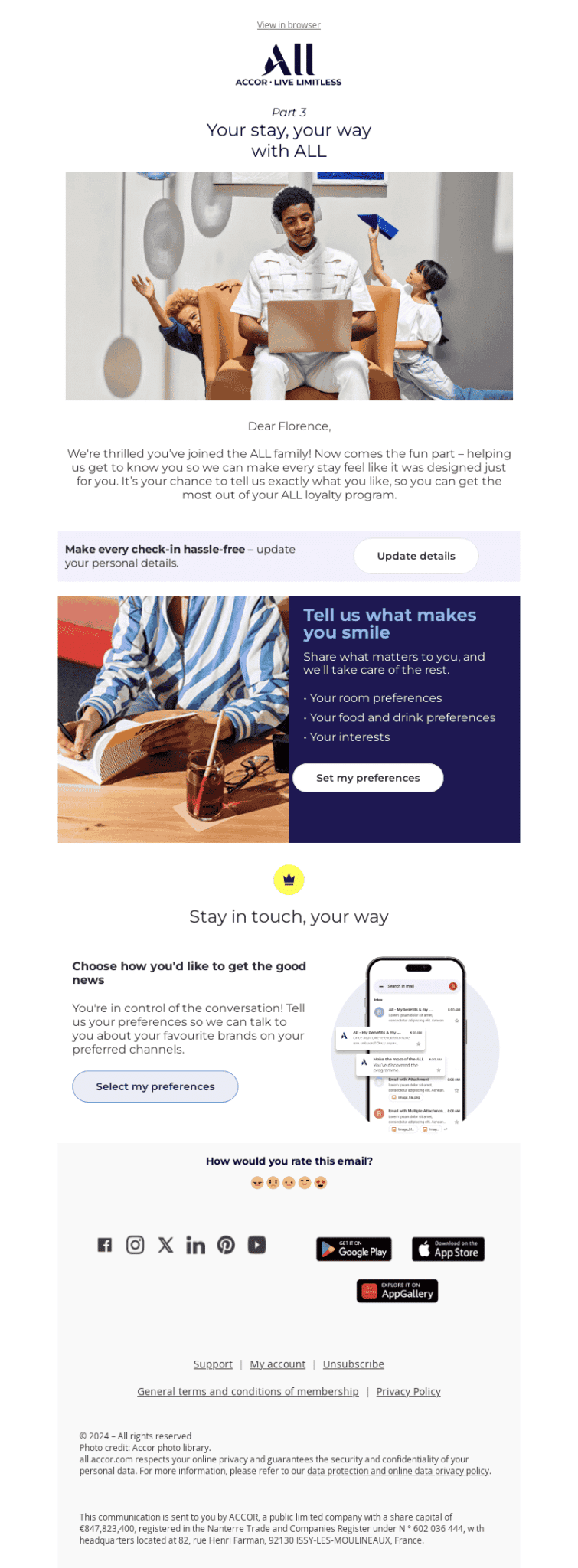
The welcome email, or an entire onboarding series, represents prime real estate for preference center promotion. New subscribers are at the zenith of their engagement and most receptive to shaping the brand relationship. Mizuno, a sports brand, leverages a clever subject line that resonates with its athletic audience, encouraging them to "be part of the first team, not the reserves" by setting their preferences. For brands running more extensive onboarding sequences, there’s ample opportunity to integrate preference setting naturally. Accor Hotels excels in this for new loyalty members, dedicating a message to how setting preferences can lead to "better check-ins, perfect rooms, and preferred communication channels," framing it as a direct benefit to the member’s travel experience.
3. Progressive Profiling:
This approach avoids overwhelming subscribers with a lengthy form upfront, which often leads to abandonment. Instead, customer profiles are built gradually over time. Brands start with essential information during initial signup, then periodically request richer data through targeted check-ins. The key is to prioritize data points most crucial for immediate relevance. Skyscanner, for instance, understands that a customer’s preferred airport is a gateway to highly relevant travel deals, making it an early and crucial data point to request. Another effective progressive profiling target is the date of birth. Most individuals appreciate a birthday surprise, and this data point offers brands a natural avenue to strengthen relationships while gathering valuable insights into age, life stage, and potential buying power without being intrusive.
4. Make it Interactive (Gamification):
Gamification is a powerful driver of engagement, and it can be effectively applied to preference capture. Oceania Cruises, for example, engages subscribers with a poll asking them to "Choose which destination interests you most," complete with a running counter displaying real-time results. This interactive approach not only makes the data collection process enjoyable but also continuously builds a rich repository of customer insights from each poll response, revealing collective and individual preferences.
5. Explain the Benefits Clearly:
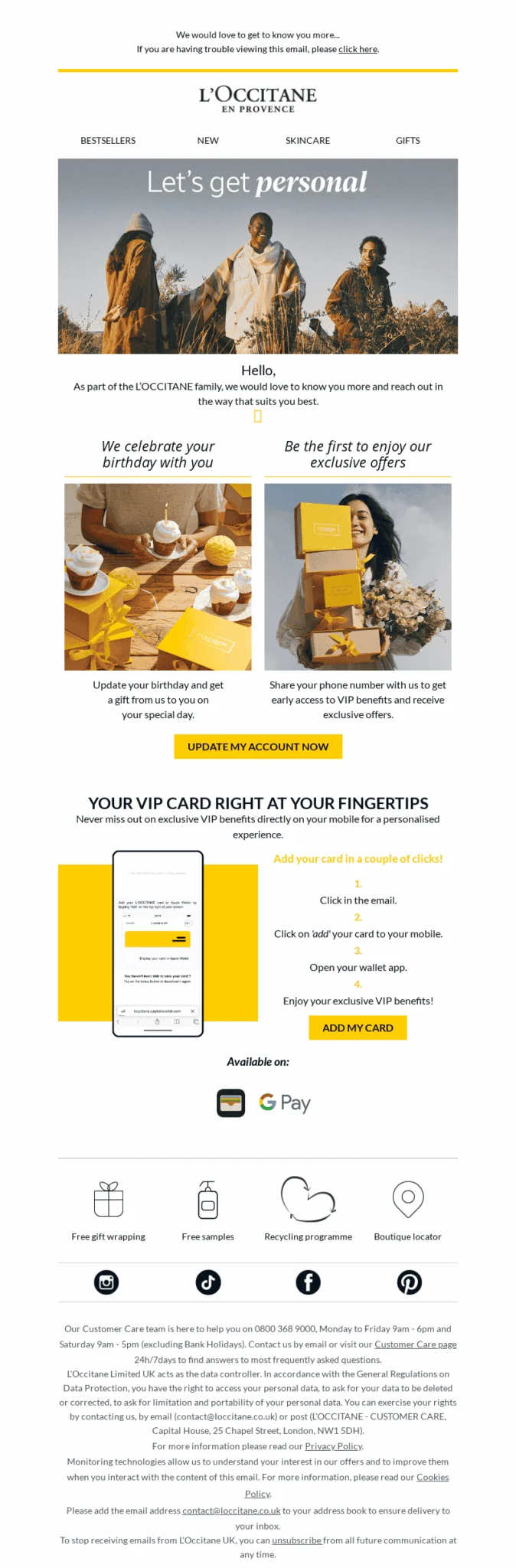
Subscribers are more likely to act when they understand "what’s in it for them." Brands must articulate the direct advantages of updating preferences. L’Occitane effectively communicates these benefits, promising "early access to exclusive offers" and a "birthday gift" for those who update their preferences. They also detail the types of content subscribers can expect, such as new products, personalized offers, and special events, along with options to switch communication channels to text, post, or WhatsApp, thereby enhancing convenience and control.
6. Provide an Incentive:
While "soft" benefits like early access are appealing, some subscribers require a more tangible reward for their data. They recognize the value of their information and expect something in return. A discount or a small gift works exceptionally well as an incentive. For instance, offering a percentage off their next purchase not only encourages preference updates but also directly drives sales, creating a win-win scenario for both the brand and the subscriber.
7. Offer Opt-Out from Special Events:
There has been a notable increase in emails inviting subscribers to opt out of emotionally sensitive dates like Valentine’s Day, Mother’s Day, or Father’s Day. While well-intentioned, the sheer volume of these standalone emails risks amplifying the very sensitivity they aim to mitigate. A more streamlined and empathetic approach is to integrate these as one-time options within the preference center. Some brands are already adopting this nuanced strategy. Interflora offers an opt-out for anniversary-related emails, Bloom & Wild allows subscribers to mute Grandparent’s Day promotions, and Hotel Chocolat enables customers to suppress alcohol-related marketing, demonstrating a deep understanding of diverse customer needs and sensitivities.
8. Holiday Season Snooze Option:
Major sales events like Black Friday and Cyber Monday are critical for revenue generation, but many subscribers would prefer to temporarily opt out of the intense promotional barrage rather than unsubscribe permanently. As Oracle’s research on snooze options confirms, a short-term pause is invariably preferable to a complete opt-out. Brands like Bvlgari effectively implement this, offering subscribers the ability to "snooze" holiday communications. Alternatively, the period leading up to major sales can be utilized as a relevance check. Spoonflower cleverly leans into this, stating, "no one likes a cluttered inbox!" and uses a smart call-to-action: "Curate My Content," empowering subscribers to manage their holiday influx.
9. Increased Visibility: Pre-headers and Content Blocks:
Beyond dedicated campaigns, every email should work harder to promote the preference center. Two tactical placements stand out:
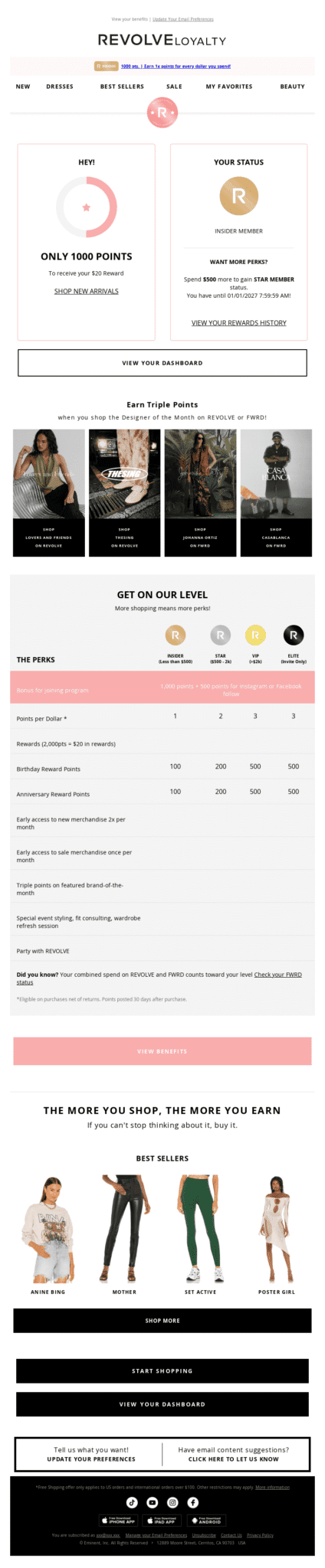
- Pre-header Text: For years, email marketers have been advised to include unsubscribe links in the pre-header for transparency and to reduce spam complaints. The same logic applies to preference centers. Placing a "Manage Preferences" or "Update Your Interests" link here builds trust and provides immediate access, as demonstrated by brands like REVOLVE.
- Dedicated Content Blocks: Integrating a consistent content block within regular emails ensures the message is continuously reinforced, rather than relying solely on standalone campaigns. Bloom & Wild effectively uses such a block, allowing responders to easily opt out of multiple events or update their preferences directly from within the email itself, making the process seamless.
10. Re-engagement Campaigns:
For subscribers showing signs of disengagement, promoting the preference center can be a crucial last resort in win-back campaigns. It offers an alternative to outright unsubscribing. CVS Pharmacy executes this well by restating the benefits of staying subscribed, soliciting feedback, and concluding with a call-to-action that signifies genuine commitment: "Yes, I still want emails." This approach provides a pathway back to relevance before a subscriber is lost forever.
Getting Started with Preference Centers: Implementation and Measurement
The journey towards leveraging preference centers effectively begins with a clear understanding of their potential as personalization engines and conversation starters for unlocking zero-party data.
Practical Techniques for Implementation:
- Audit Your Existing Preference Center: Begin by evaluating the current state of your preference center. Is it user-friendly? Does it offer meaningful choices? Is it easily discoverable?
- Map Subscriber Journeys: Identify key touchpoints in the customer lifecycle where preference center promotion would be most impactful (e.g., welcome, post-purchase, re-engagement).
- A/B Test Promotion Methods: Experiment with different subject lines, call-to-actions, and placement strategies to determine what resonates best with your audience.
- Regularly Review Collected Data: Analyze the preferences subscribers are setting. What are they interested in? What are they opting out of? Use these insights to refine your content strategy.
The Real Test of Success:
The ultimate measure of a preference center’s effectiveness is its direct impact on email marketing engagement. Brands must establish a clear link between preference center usage and improved key performance indicators (KPIs). If subscribers who actively manage their preferences consistently exhibit higher open rates, click-through rates, conversion rates, and ultimately, higher customer lifetime value (CLTV), then a strong case exists for continued investment in and optimization of your email program.

Platforms like Validity Engage offer advanced capabilities for email program optimization, serving as a valuable companion for creating exceptional subscriber experiences. These AI-powered tools, built on vast email data networks, help remove risk and boost performance, enabling marketers to achieve superior results more efficiently.
Broader Implications: The Future of Brand-Subscriber Relationships
The proactive management and promotion of email preference centers are not just tactical adjustments; they represent a fundamental shift in how brands approach subscriber relationships. This paradigm moves away from a broadcast mentality towards a dynamic, ongoing dialogue. By empowering subscribers with control, brands foster trust, build loyalty, and cultivate more sustainable email marketing strategies. In an increasingly privacy-conscious and AI-driven digital landscape, email will cease to be merely a messaging channel and evolve into a truly personalized media experience, curated by the individual.
The urgency for brands to adapt is undeniable. The data, the regulatory environment, and the evolving expectations of subscribers all point towards a future where the preference center is not a hidden utility but a central pillar of an effective and respectful email marketing strategy. Those who embrace this shift will forge stronger, more profitable connections with their audiences, securing their place in the inbox of tomorrow.

 Nila Kartika Wati
 Jia Lissa