rifanmuazin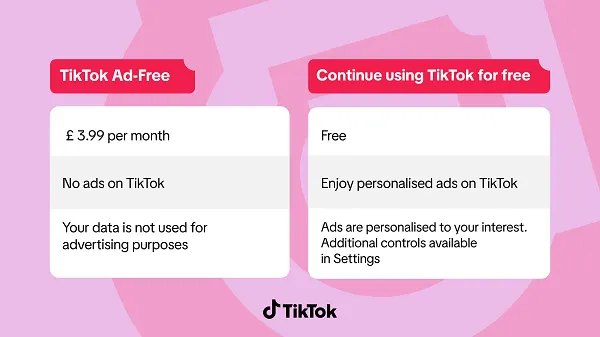
Following in the footsteps of Meta Platforms Inc., TikTok, the immensely popular short-form video platform, has announced the rollout of its own ad-free subscription offering in the United Kingdom. This strategic move, which allows users to pay for an uninterrupted viewing experience and enhanced data privacy, is a direct response to updated regulatory pressures concerning data permissions and usage in the region. The initiative signals a significant shift in the operational models of major social media platforms, driven by an increasingly stringent global data protection environment.
A New Era for User Choice and Data Control
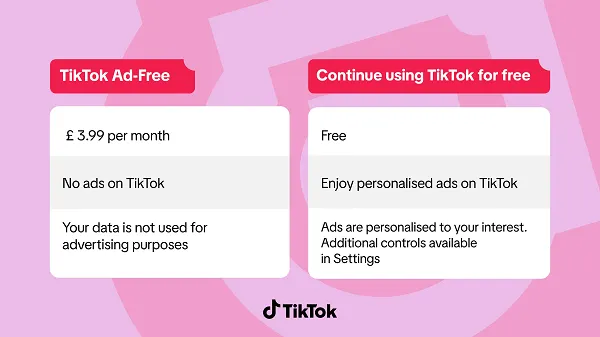
Starting with a gradual rollout over the coming months, TikTok will offer UK users the opportunity to subscribe to "TikTok Ad-Free" for £3.99 per month, which translates to approximately $5.44 USD. Beyond simply removing advertisements, this subscription tier will also empower users to switch off data tracking specifically used for ad targeting. This feature aligns directly with recent regulatory mandates in the UK, designed to grant individuals greater control over their personal information online.
While TikTok’s official communication frames this new offering as an enhancement of user choice and experience, emphasizing its commitment to "empower discovery, connection and inspiration" by offering "different ways to shape the For You feed" and "a wide range of user settings," the underlying impetus is undeniably regulatory compliance. The company stated, "We believe that giving our community choice over how they experience TikTok is one of the best ways to empower discovery, connection and inspiration." However, the timing and nature of this rollout, closely mirroring Meta’s similar offering, point to a proactive measure to conform with evolving legal frameworks rather than solely a product innovation driven by user demand for an ad-free experience.
For those who opt not to subscribe, the standard TikTok experience will remain unchanged, continuing to offer the app free of charge, supported by personalized advertisements. TikTok explicitly clarified that "the core TikTok experience won’t be impacted" for non-paying users, while subscribers will benefit from an ad-free feed and the cessation of personal data usage for ad targeting. This two-tiered approach underscores the delicate balance platforms must strike between maintaining their primary advertising revenue model and adhering to privacy regulations.
The Regulatory Impetus: A Deeper Dive into UK Data Laws
The genesis of these ad-free subscription models can be traced back to a series of evolving data protection laws, particularly in Europe and the UK, and significant legal challenges against tech giants. The UK’s data protection landscape, while initially closely mirroring the European Union’s General Data Protection Regulation (GDPR) post-Brexit, has seen its own distinct interpretations and enforcement actions. GDPR, implemented in May 2018, fundamentally reshaped how organizations handle personal data, introducing concepts like explicit consent, the right to access, rectification, erasure, and data portability. It also significantly increased fines for non-compliance, pushing companies to rethink their data practices.
The Landmark Meta Case and Tanya O’Carroll
A pivotal case that directly influenced the current situation involved Meta and a UK human rights campaigner, Tanya O’Carroll. In 2022, O’Carroll launched a High Court challenge against Meta, arguing that she possessed a legal right to object to the use of her personal data for direct marketing purposes, citing existing UK consumer laws. Her argument challenged Meta’s long-standing practice of collecting vast amounts of user data to power its highly lucrative targeted advertising model. Meta initially contended that its personalized ads did not strictly fall under the definition of "direct marketing" in the context of these laws. However, facing mounting legal pressure and the potential for a precedent-setting ruling, Meta ultimately chose to settle the case.
Part of this settlement process involved Meta negotiating a new agreement with the UK Information Commissioner’s Office (ICO), the independent body tasked with upholding information rights in the public interest. This agreement was crucial, as it mandated that Meta provide UK users with a viable option to opt out of the use of their personal data for ad targeting. This represented a significant concession for Meta, forcing a re-evaluation of its core business model in the region.
Meta’s Precedent-Setting Response in EU and UK
Meta had already encountered similar challenges and developed a response strategy in the European Union. Faced with increasingly strict interpretations of GDPR by various European data protection authorities, Meta had begun exploring an ad-free subscription model for EU users. This model was designed to comply with evolving EU data privacy laws, particularly concerning the legal basis for processing personal data for personalized advertising. The core idea was to offer users a choice: either consent to data processing for personalized ads (and use the platform for free) or pay a subscription fee to remove ads and associated data tracking. This "pay-or-consent" model aimed to allow Meta to continue generating revenue from users who opted out of personalized ads.
After extensive discussions and some back-and-forth with EU regulators, Meta eventually established an agreed-upon framework for this ad-free subscription in the EU, which launched in late 2023. Given the similarities in data protection philosophies and the direct legal challenge in the UK, it was a logical and indeed necessary step for Meta to extend this model to the UK. In September 2023, Meta officially announced its ad-free subscription package for UK users, ensuring compliance with the updated legal landscape. TikTok’s current announcement is thus not an isolated development but rather a direct consequence and replication of the path forged by Meta under regulatory duress.
TikTok’s Strategic Rollout and Stated Rationale
TikTok’s decision to follow Meta’s lead highlights the profound impact of data privacy regulations on the business models of global tech companies. The company’s public statement, while emphasizing user empowerment, carefully navigates the regulatory imperative.
Pricing and Features of TikTok Ad-Free
The £3.99 monthly fee for TikTok Ad-Free is positioned to offer a premium experience. For this price, users gain:
- Ad-Free Experience: The primary draw, removing all in-feed advertisements that typically interrupt the content flow.
- Cessation of Ad Targeting Data Tracking: Crucially, TikTok will stop using a subscriber’s personal data for the purpose of personalizing ads. This directly addresses the regulatory concerns around consent and data usage. While general data collection for app functionality and security will likely continue, the specific data streams feeding the ad engine will be severed for subscribers.
The gradual rollout, targeting "accounts aged 18 or over in the U.K.," suggests a phased implementation, allowing TikTok to monitor uptake, gather feedback, and ensure technical stability. This approach is common for significant platform changes, especially those with regulatory implications.
Official Statements and Community Empowerment Narrative
TikTok’s official statement, as cited in the original report, emphasizes choice and user experience: "We believe that giving our community choice over how they experience TikTok is one of the best ways to empower discovery, connection and inspiration. From different ways to shape the For You feed, to a wide range of user settings, we’re dedicated to building tools and features that help our community create the right TikTok experience for them."
This framing attempts to position the subscription as a value-added feature rather than a forced adaptation to legal constraints. However, industry analysts and privacy advocates generally view these moves as a direct consequence of legal battles and regulatory pressure. The messaging aims to soften the perception that platforms are being compelled to offer alternatives to their data-intensive advertising models.
The Broader Economic Landscape of Social Media
The introduction of ad-free subscriptions fundamentally challenges the long-standing economic model of "free" social media, which has been predicated on the exchange of user data and attention for advertising revenue.
The Dominance of Ad-Based Revenue
For years, platforms like Facebook, Instagram, and TikTok have thrived on an advertising-centric model. Advertisers pay to reach highly specific audiences, identified through vast amounts of user data, including demographics, interests, behaviors, and interactions. This precision targeting has made digital advertising incredibly effective and lucrative. The UK digital advertising market alone is a multi-billion-pound industry, with social media platforms accounting for a significant share. In 2022, digital ad spending in the UK was estimated to be around £26 billion, with social media platforms being key beneficiaries.
TikTok, in particular, has seen meteoric growth in its advertising business. As of 2023, TikTok boasts over 1.6 billion global users, with a substantial and highly engaged user base in the UK, estimated to be in the tens of millions. Its algorithm-driven "For You Page" is notoriously effective at delivering personalized content, making it an attractive platform for advertisers seeking to connect with specific demographics, especially younger audiences. The company’s revenue in 2022 was estimated to be over $9.4 billion globally, with a significant portion derived from advertising.
Both Meta and TikTok have consistently highlighted the value of their advertising models, not just for their own bottom line but for the broader economy. As TikTok stated, "Advertising investments on TikTok help UK SMEs generate hundreds of millions of pounds in revenue by reaching the right audiences at the right time, turning digital engagement into real-world growth. This also adds to overall UK GDP growth." This argument underscores the symbiotic relationship between platforms, advertisers (especially small and medium-sized enterprises), and the digital economy.
The Appeal of Subscription Models
While advertising has been the bedrock, subscription models offer an alternative revenue stream, albeit typically a smaller one for platforms built on "free" access. For users, the appeal lies in:
- Uninterrupted Experience: Freedom from intrusive ads.
- Enhanced Privacy: Reduced data tracking for advertising purposes.
- Perceived Premium Service: A sense of exclusivity and control.
However, the challenge for platforms is convincing a large enough segment of their user base to pay for something they previously received for free. The average revenue per user (ARPU) from subscriptions would need to either match or exceed the ARPU generated from advertising for the model to be equally profitable. For many users, the convenience and "free" nature of social media outweigh privacy concerns, or they simply aren’t willing to pay. This creates a ceiling for potential subscription revenue, meaning advertising will likely remain the dominant income source for the foreseeable future.
Potential Implications for Users and Advertisers
The rollout of ad-free subscriptions carries significant implications for various stakeholders in the digital ecosystem.
User Adoption and Value Proposition
The critical question is how many users will actually opt for the paid subscription. Historical data from similar offerings in other digital services suggests that while a segment of privacy-conscious users or those intensely annoyed by ads will subscribe, the vast majority will likely stick with the free, ad-supported version. The £3.99 price point, while seemingly modest, adds up over time and competes with a myriad of other subscription services (music, video streaming, news, gaming). For an app that many consider a casual pastime, justifying an additional monthly expense might be difficult.
User behavior studies often indicate a disconnect between stated privacy concerns and actual willingness to pay for privacy. Many users express discomfort with data tracking but are unwilling to sacrifice the convenience or cost-free access of ad-supported platforms. The "value proposition" of TikTok Ad-Free will hinge on how strongly users feel about privacy and ad interruption versus the cost. It is plausible that initial uptake will be modest, consisting primarily of early adopters and those with strong privacy convictions.
Challenges and Opportunities for Advertisers
For advertisers, the emergence of ad-free tiers presents both challenges and potential opportunities.
- Reduced Reach for Targeted Ads: If a significant number of users migrate to the ad-free tier, the total addressable audience for targeted ads will shrink. This could potentially drive up the cost per impression or click for advertisers, as the remaining ad-supported audience might become more competitive.
- Pressure on Ad Effectiveness: Platforms will be under increased pressure to demonstrate the effectiveness of ads shown to the non-paying audience, as this will remain their primary revenue driver. Innovation in ad formats that are less intrusive but still engaging will be crucial.
- Compliance and Trust: The move demonstrates compliance with regulations, which can indirectly build trust with users and regulators. A more trusted environment might, in the long run, benefit advertisers by fostering a healthier ecosystem.
- Data Implications: Advertisers will need to adjust to potentially less granular targeting data for the overall user base if more users opt out of tracking, even if they don’t subscribe. This could necessitate a shift towards more contextual advertising or broader demographic targeting.
The Future of the "Free" Internet Model
This trend towards "pay-or-consent" models raises fundamental questions about the future of the internet’s long-standing "free" model. For decades, the internet has largely been sustained by advertising, offering content and services at no direct monetary cost to the user. However, as privacy concerns escalate and regulations tighten, this model is being re-evaluated.
The emergence of ad-free subscriptions could lead to a two-tier internet: one where users pay for privacy and an uninterrupted experience, and another where they exchange their data and attention for free access. This could exacerbate digital divides, as those with fewer financial resources might be disproportionately exposed to ads and data tracking. It also puts pressure on other digital services that rely heavily on advertising to consider similar models, potentially reshaping the entire digital economy.
A Shifting Paradigm in Digital Privacy
Ultimately, TikTok’s introduction of an ad-free subscription in the UK is more than just a new product offering; it represents a significant marker in the ongoing evolution of digital privacy and the power dynamics between tech platforms, users, and regulators. The move underscores the increasing global commitment to user data protection, particularly in the UK and EU, and the willingness of regulatory bodies to enforce these protections, even against the largest technology companies.
While platforms like TikTok and Meta may publicly frame these changes as user-centric choices, their actions are largely reactive, compelled by legal challenges and the threat of substantial fines for non-compliance. This shifting paradigm suggests a future where users will have more explicit choices regarding their data, but these choices may come at a financial cost. The "free" internet, as we have known it, is slowly but surely undergoing a transformation, with privacy emerging as a commodity that users may increasingly need to pay for. The long-term impact on user behavior, platform economics, and the broader digital advertising industry will be a critical area of observation in the coming years.