
 rifanmuazin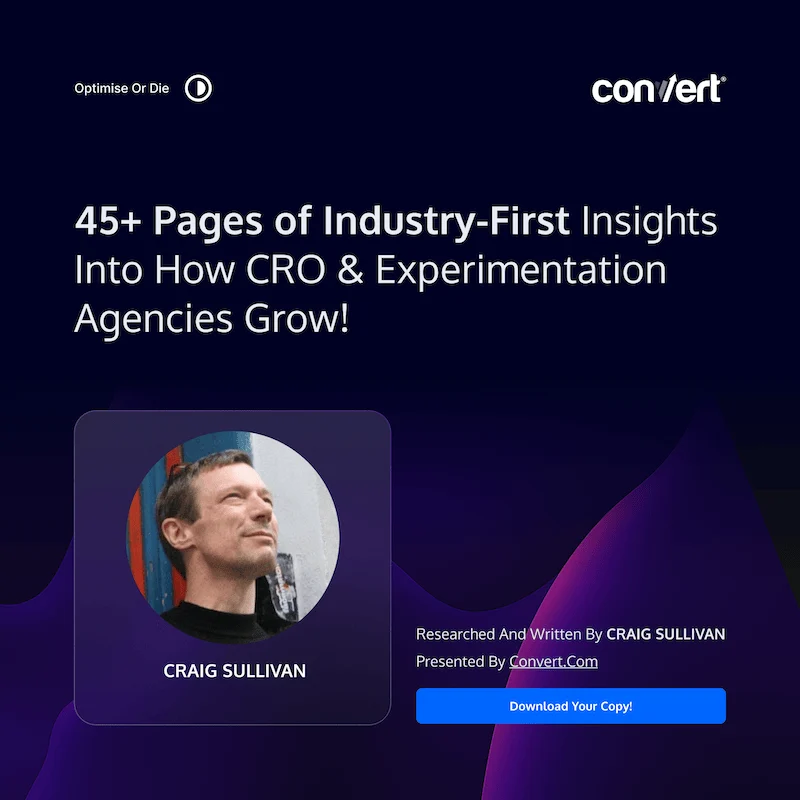
The global digital economy has reached a level of maturity where simple traffic acquisition is no longer sufficient for sustainable growth, leading organizations to increasingly prioritize Conversion Rate Optimization (CRO) and systematic experimentation. As businesses seek to extract more value from existing web traffic, a critical structural question arises: should the experimentation function be outsourced to an agency, managed by independent consultants, or built as an internal department? While many firms default to external agencies as a turnkey solution, industry analysis suggests that the optimal organizational design for CRO depends heavily on a company’s maturity, traffic volume, and long-term strategic goals. The fundamental challenge is not merely executing A/B tests but determining who owns the institutional knowledge and the resulting strategic insights.
The Evolution of Experimentation as a Corporate Capability
Conversion Rate Optimization has evolved from a tactical “growth hack” into a sophisticated discipline that blends data science, behavioral psychology, user experience (UX) design, and software engineering. In the early stages of the internet, optimization was often an ad-hoc task assigned to web developers or digital marketers. Today, however, experimentation is viewed as a core business capability that informs product development and corporate strategy.
The decision-making process regarding CRO resources often fails because companies frame it as a staffing issue rather than a strategic one. The central question is frequently “Who will run the tests?” when it should be “Who owns the learning?” When a company treats CRO as a service to be purchased, it risks creating a “black box” where results are delivered but the underlying logic and customer insights remain with the external provider. For experimentation to be truly effective, it must eventually be integrated into the organization’s DNA, influencing every department from marketing to product management.
Analyzing the Three Primary Operational Models
Organizations typically choose between three primary models, or a hybrid of them, to manage their optimization efforts. Each carries distinct advantages and systemic risks.

1. The Agency Model: Rapid Deployment and Specialized Skill Sets
Agencies are the most common entry point for companies scaling their optimization efforts. They offer an immediate “team in a box,” providing access to researchers, designers, developers, and analysts without the lead time required for individual hiring.
Advantages:
- Speed to Market: Agencies can launch programs within weeks, bypassing internal recruitment cycles.
- Proving the Concept: For organizations where leadership is skeptical of CRO, agencies can provide the early “wins” necessary to secure long-term budget.
- Breadth of Expertise: Agencies often work across multiple industries, bringing a “cross-pollination” of ideas that an internal team might lack.
Risks and Benchmarks:
Data from industry research conducted by Convert indicates a significant gap between agency marketing and delivery. While 90% of agencies claim to offer “strategy,” the definition of that strategy varies. Furthermore, approximately 60% of agency practitioners report running two or fewer tests per month. This low velocity is often a result of external friction, such as delayed client approvals or limited access to the client’s development environment. Lucia van den Brink, founder of The Initial, emphasizes that the most effective agencies are those that aim for their own obsolescence, focusing on internalizing experimentation as a capability within the client’s organization rather than fostering permanent dependency.
2. The Freelance and Consultant Model: Strategic Depth and Flexibility
Freelancers and independent consultants often serve as a middle ground, offering senior-level expertise without the overhead of a full agency.
Advantages:

- Embedded Partnership: Unlike agency account managers who may juggle a dozen clients, freelancers typically work with a small cohort, allowing for deeper integration into the client’s culture.
- Skill Gap Bridging: They are ideal for organizations that have an existing team but lack a specific high-level skill, such as experimentation statistics or behavioral design.
Strategic Utility:
Independent Experimentation and Decision Strategy Leader Ruben de Boer notes that freelancers are most effective when a company wants to build a capability rather than outsource a task. An experienced consultant helps teams improve their internal decision-making processes, ensuring that the momentum of experimentation continues long after the contract ends. However, the model has a single point of failure; if the freelancer leaves, the program may stall if documentation is poor.
3. The In-House Model: Long-Term Knowledge Retention
For mature organizations, bringing CRO in-house is often the ultimate goal. This model ensures that every insight gained from a failed or successful experiment remains within the company’s intellectual property.
Advantages:
- Contextual Compounding: Internal teams live and breathe the product. They understand the technical constraints and brand nuances that an external partner might miss.
- Velocity: Without the need for external briefings and agency-client feedback loops, in-house teams can often move from hypothesis to deployment much faster.
- Cultural Integration: Companies like Audible have made experimentation a core principle. Beatriz Tavares, Global Acquisition & Experimentation Manager at Audible, states that in-house investment allows the company to learn faster and apply those learnings directly to customer obsession goals.
Challenges:
The primary barrier to the in-house model is cost and talent acquisition. Building a full-stack CRO team requires significant capital for salaries, benefits, and specialized tooling (such as A/B testing platforms and session recording software).
Chronological Growth Stages and Resource Alignment
The “correct” choice is rarely static; it shifts as a company progresses through its lifecycle.

Phase I: Pre-Product-Market Fit
At this stage, formal A/B testing is usually impossible due to low traffic volume. The focus should be on qualitative research—user interviews, heatmaps, and session recordings. High-level CRO investment at this stage is premature.
Phase II: Early Growth and Traction
Once a model is proven but traffic is still limited, a freelance strategist can provide the most value. They can help set up a lightweight testing framework and identify “low-hanging fruit” without the commitment of an agency retainer.
Phase III: Scaling and Meaningful Traffic
This is the “pivot point” where the agency versus in-house debate is most relevant. Many companies use an agency to “kickstart” the program while simultaneously beginning the search for their first internal CRO lead. This hybrid approach ensures results continue to flow while the transition to internal ownership begins.
Phase IV: Maturity and Institutionalization
In mature organizations, experimentation is a core capability. The team is entirely in-house, though they may occasionally hire specialist freelancers for discrete, highly technical projects or to audit their existing processes.
Supporting Data and Economic Implications
The financial implications of these models are substantial. While an agency fee might seem high (often ranging from $5,000 to $20,000+ per month), the total cost of ownership for an in-house team—including a strategist, a front-end developer, and a UX designer—can easily exceed $350,000 annually in developed markets.

Furthermore, the “hidden costs” of outsourcing are often overlooked. These include:
- Communication Overhead: The time internal stakeholders spend managing the agency relationship.
- Tooling Redundancy: Agencies may require specific software that does not integrate with the company’s existing data stack.
- Learning Leakage: The intangible loss of “why” a test failed, which is often lost when an agency contract terminates and the Slack channels or project boards are closed.
Broader Impact and Industry Implications
The shift in the CRO landscape reflects a broader trend in the tech industry: the move away from “outsourced execution” toward “internalized intelligence.” As AI-driven tools begin to automate the more routine aspects of A/B testing—such as code generation and basic data analysis—the value of CRO professionals is shifting toward high-level strategy and organizational change management.
For modern enterprises, the goal of a CRO program is no longer just to “lift the conversion rate.” It is to create a reliable system for risk mitigation. Every product change is an experiment; by framing it as such, companies can avoid costly mistakes and double down on features that truly resonate with users. Whether this system is built by an agency, a freelancer, or an internal team is secondary to the requirement that the system must produce documented, accessible, and actionable learning.
In conclusion, the “bingo card” of experience—working across agency, freelance, and in-house roles—reveals that there is no universal winner. The most successful organizations are those that remain honest about their internal capabilities and choose a model that maximizes their “velocity of learning.” As digital markets become more competitive, the ability to experiment and adapt will remain the primary differentiator between market leaders and those left behind.








