
 rifanmuazin
The discipline of Conversion Rate Optimization (CRO) is undergoing a fundamental shift as B2B organizations move away from isolated tactical testing toward integrated revenue operations. In the 23rd installment of the CRO Perspectives series, Carlos Neto, a prominent growth strategist based in Brazil and currently a Growth Specialist at Benner, detailed a methodology that challenges the traditional boundaries between marketing, sales, and data science. Neto’s approach emphasizes that experimentation must not end at the point of lead acquisition but must instead permeate every stage of the buyer journey, including post-conversion activities such as trial activation and sales outreach.
The Evolution of the CRO Perspectives Series
The CRO Perspectives series has become a benchmark for industry practitioners, documenting the transition of experimentation from a niche web design function to a core business strategy. Over the past several years, the series has interviewed 22 previous leaders, tracing a trajectory from simple A/B testing of button colors to the current era of data-driven growth strategy. Carlos Neto’s entry marks a significant milestone in this chronology, focusing specifically on the B2B sector where longer sales cycles and multiple stakeholders create unique friction points that traditional B2C models fail to address.
A Triangulated Model for Friction Identification
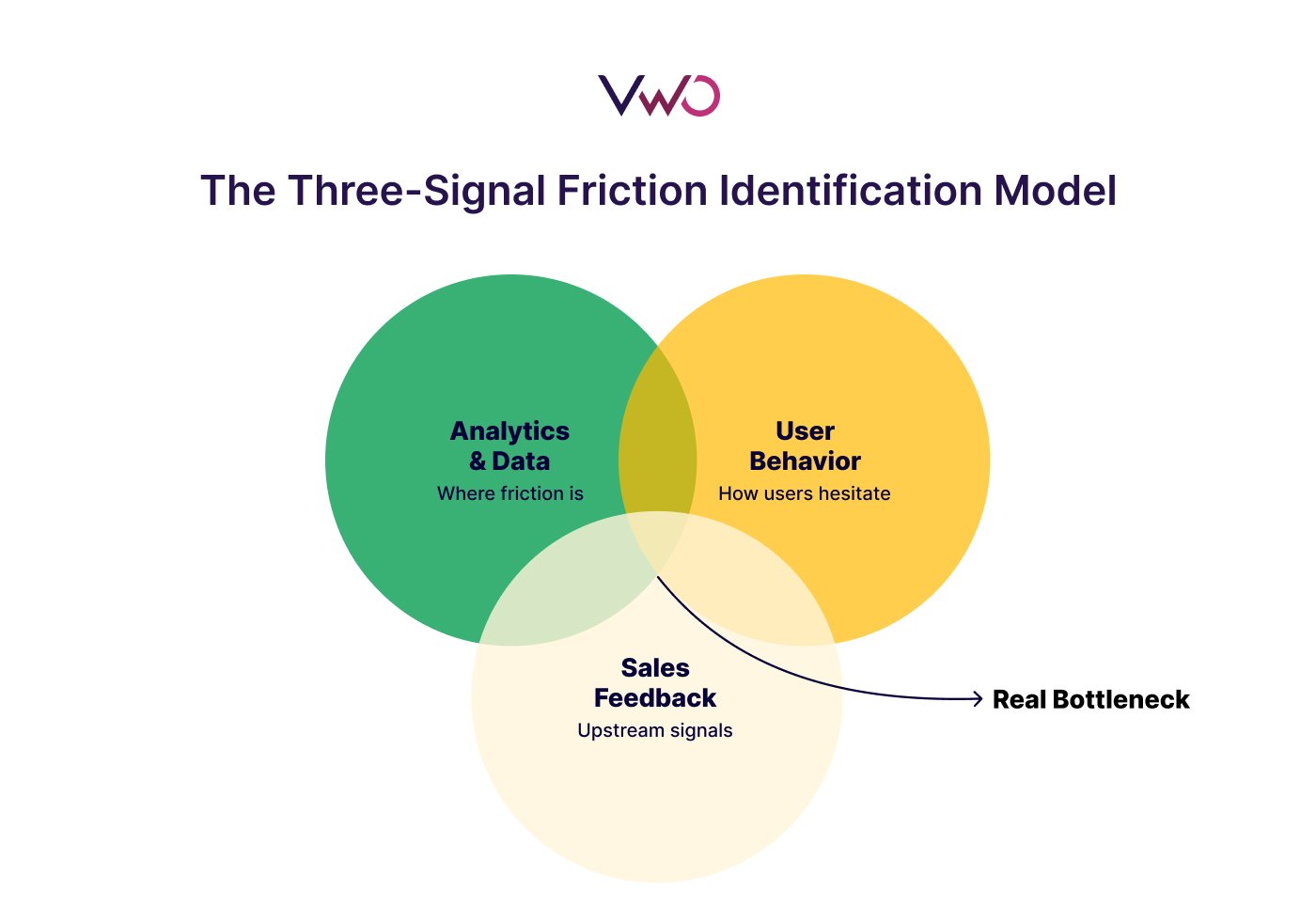
Neto identifies a recurring failure in B2B growth programs: the reliance on a single lens of analysis. To combat this, he proposes a “Three-Signal Friction Identification Model” that requires the synchronization of quantitative data, qualitative behavior, and frontline sales feedback.

- Quantitative Data: This involves mapping the funnel at an account level rather than an individual user level. In B2B environments, where the average buying group involves six to ten stakeholders, analyzing conversion by stage and time-to-close is essential for identifying macroscopic bottlenecks.
- User Behavior: Through the use of heatmaps, session recordings, and navigation analysis, strategists can pinpoint where the digital experience fails to meet user expectations. This often manifests as form abandonment or high-friction navigation on high-intent pages.
- Sales Feedback: Neto argues that recurring sales objections and low “show rates” for demos are symptoms of upstream marketing failures. By integrating sales feedback into the CRO process, teams can identify when acquisition strategies are attracting out-of-profile leads or failing to communicate value effectively.
Supporting industry data underscores the necessity of this integrated approach. According to recent Gartner research, B2B buyers spend only 17% of their total purchase journey meeting with potential suppliers. This means the vast majority of the “sale” happens through digital interactions, making the identification of digital friction a mission-critical objective for revenue teams.
Bridging the Gap Between Ads and On-Site Experience
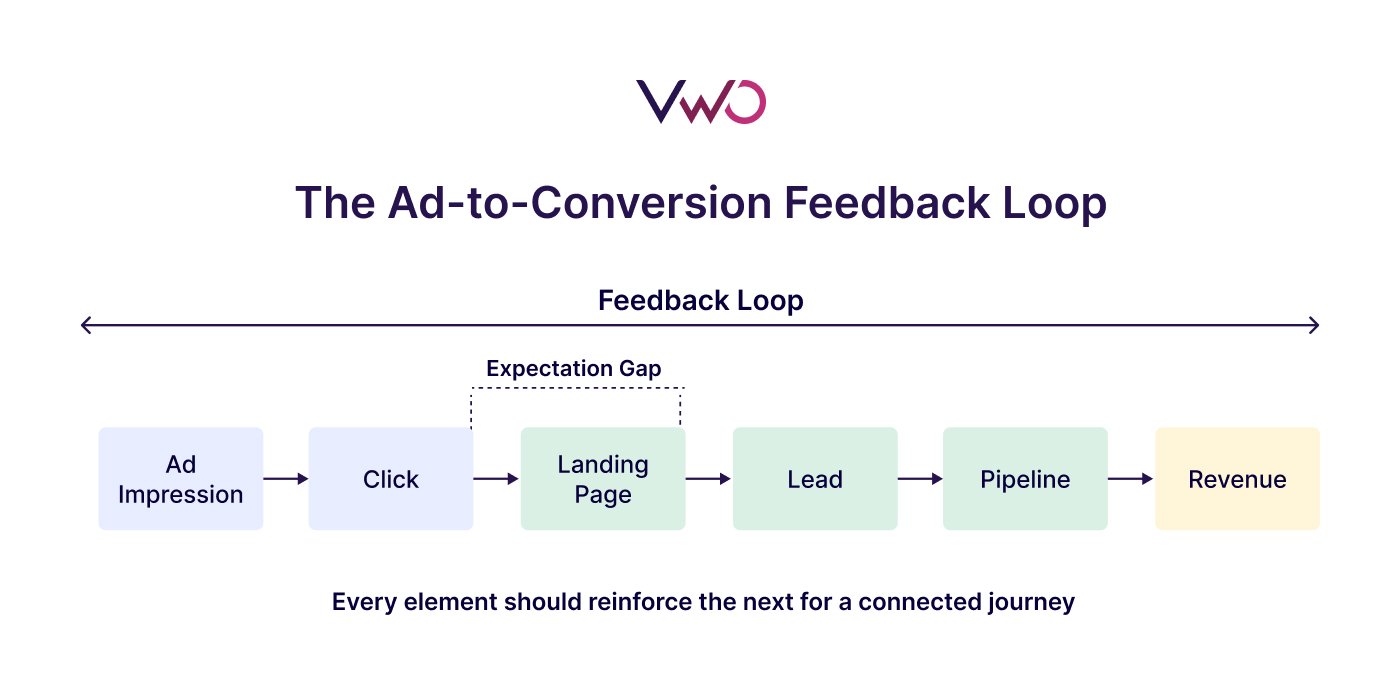
One of the most significant inefficiencies in modern digital marketing is the siloed operation of paid media and site optimization teams. Neto posits that these should be viewed as a singular, unified system. The “Ad-to-Conversion Feedback Loop” ensures that insights gained from high-performing ad creatives directly inform landing page headlines and value propositions.
When a disconnect occurs—such as high click-through rates (CTR) on ads but low conversion rates on-site—it indicates an “expectation gap.” Conversely, strong on-site behavior coupled with weak ad performance suggests a targeting or creative failure upstream. Neto advocates for full traceability via UTM parameters and CRM integration to ensure that every dollar spent on acquisition can be tracked through to the final pipeline impact.
Extending Experimentation Past the Lead
A core tenet of Neto’s philosophy is the refusal to stop experimenting once a lead is captured. In many organizations, marketing accountability ends at the “Submit” button, leaving the subsequent stages—response time, initial outreach messaging, and trial onboarding—to sales or product teams without the benefit of a testing framework.

Neto cites instances where the primary bottleneck in a revenue funnel was not the volume of leads, but the conversion of those leads into meetings. By applying experimentation to the “speed to lead” and the sequence of follow-up touches, growth teams can achieve higher leverage than they would through top-of-funnel A/B testing alone. In the context of SaaS, this extends to trial activation, where the goal of experimentation is to shorten the time it takes for a user to reach their first “Aha!” moment.
Addressing the Structural Challenges of B2B Testing
B2B experimentation faces inherent structural hurdles that Neto identifies as the “Time Mismatch” and the “Efficiency Trap.”
- The Time Mismatch: Unlike e-commerce, where a test result can be validated in days, B2B results often take weeks or months to manifest in revenue. This leads many teams to optimize for top-of-funnel metrics like Cost Per Lead (CPL), which can be misleading if those leads do not progress through the pipeline.
- The Efficiency Trap: A campaign may show improving CTR and declining CPL while simultaneously eroding lead quality. Without a hard connection to CRM outcomes, marketing teams may spend months scaling “successful” campaigns that provide zero business value.
To counter these issues, Neto suggests making the CRM the center of prioritization. When the target metric shifts from “leads” to “qualified pipeline,” the decision-making process naturally aligns with the business’s financial goals.
Metric Architecture and the North Star
While many companies track a “North Star” metric for strategic alignment, Neto warns that a single metric is insufficient for operational success. He advocates for a layered metrics architecture:
- Strategic Layer: The North Star metric (e.g., Qualified Pipeline or Annual Recurring Revenue).
- Operational Layer: Functional KPIs (e.g., CPL for marketing, Activation Rate for product).
- Shared Understanding: A clear mapping of how operational metrics influence the North Star.
As a company scales, this architecture must evolve. Early-stage companies require maximum focus on a few key metrics, while mature organizations need granular data at every stage of the funnel to identify marginal gains.
The Role of AI: Velocity vs. Judgment
The rise of Artificial Intelligence in marketing has introduced both opportunities and risks for CRO practitioners. Neto’s stance is that AI should own “execution velocity” while humans retain “judgment.”
AI is exceptionally proficient at generating copy variations, recognizing patterns in large datasets, and accelerating hypothesis generation. However, it lacks the deep business context required to understand why a specific segment behaves a certain way or how a test result aligns with long-term brand strategy. Neto cautions against measuring success by the volume of tests run, noting that speed without direction simply produces “noise at scale.” The human role is to filter AI-generated ideas through the lens of the Ideal Customer Profile (ICP) and strategic business objectives.
Brand Credibility as an Optimization Variable
In mature B2B markets, where conversion rates are already optimized, Neto suggests that the next frontier of experimentation lies in “Brand Credibility” and “Buyer Trust.” High-stakes B2B decisions are often stalled by perceived risk rather than a lack of information.
Experimentation at this level focuses on social proof, content depth, and transparency. By testing how authority signals and educational content reduce friction in the consideration phase, companies can build a “perception asset” that is difficult for competitors to replicate. This shift requires moving away from direct conversion metrics toward indicators of engagement and interaction quality, which serve as leading indicators of pipeline velocity.
Conclusion: Experimentation as Decision-Making Infrastructure
The interview with Carlos Neto highlights a broader trend in the tech industry: the professionalization of growth through rigorous experimentation. By integrating marketing, sales, and data into a single feedback loop, organizations can move from ad-hoc testing to a repeatable system for making smarter business decisions.
Neto’s insights suggest that the highest-leverage opportunities in B2B growth are currently found in the “gray areas” between departmental responsibilities. Those who can successfully apply the scientific method to the entire revenue funnel—from the first ad impression to the final sales close—will be the ones who achieve sustainable, predictable growth in an increasingly complex market. The through-line of the 23rd installment of CRO Perspectives is clear: experimentation is no longer a tactical tool for the web team; it is the primary infrastructure for modern business decision-making.








