For years, the prevailing wisdom in digital marketing has dictated that visually stunning email designs are paramount for capturing audience attention and driving engagement. This belief has fueled a relentless arms race among thousands of brands, each vying to outshine the competition with newsletters that resemble meticulously crafted works of digital art, all battling for precious screen real estate within increasingly crowded inboxes. However, a growing body of evidence and strategic insights suggests a counterintuitive truth: sometimes, standing out doesn’t require doing more; it demands doing less.
A plain-text email, stripped of complex graphics, intricate layouts, and embedded multimedia, inherently mimics the appearance of a direct message from a real person. This fundamental characteristic is precisely what grants it a distinct advantage in the modern digital landscape, often leading to higher open rates, deeper engagement, and a greater propensity for recipients to read and even reply. When executed thoughtfully, this minimalist approach can yield superior results compared to its elaborately designed counterparts, challenging long-held assumptions about effective email communication. This comprehensive analysis delves into the strategic scenarios where text-based emails excel, the common pitfalls that undermine their effectiveness, and the broader implications for contemporary marketing strategies.
The Evolution of Email Marketing Design Paradigms
To fully appreciate the resurgence of plain-text emails, it is crucial to understand the historical trajectory of email marketing design. In the early days of the internet, email was exclusively text-based, functional and direct. As technology advanced and web capabilities expanded, HTML (Hypertext Markup Language) revolutionized email, enabling rich formatting, images, tables, and eventually complex layouts and interactive elements. This shift ushered in an era where brands sought to replicate the visual richness of websites within email, believing that aesthetic appeal equated to professionalism and engagement.
The 2000s and early 2010s saw the widespread adoption of highly graphical HTML templates. Marketers invested heavily in design tools, professional designers, and sophisticated email service providers (ESPs) capable of rendering intricate visuals. The goal was to create immersive brand experiences directly in the inbox, often featuring product showcases, lifestyle imagery, and elaborate calls to action. However, this visual arms race inadvertently created a new problem: inbox fatigue. Users became desensitized to flashy designs, and the sheer volume of marketing emails often led to lower engagement rates, increased spam complaints, and a general erosion of trust.
The mid-2010s marked a pivot towards hyper-personalization and segmentation, driven by advancements in data analytics. While design remained a focus, the emphasis began to shift towards delivering relevant content to the right audience at the right time. It is within this context of overwhelming visual noise and the demand for genuine connection that the simplicity of plain-text emails began to regain traction as a powerful, yet understated, strategic tool.
Defining Text-Based Emails and Their Core Advantages
At its core, a text-based email is a simple message devoid of complex graphics, custom fonts, or elaborate layouts. It resembles a personal email sent from one individual to another, fostering a sense of intimacy and authenticity. While the term "text-based" might imply absolute plainness, modern interpretations allow for a degree of flexibility. Senders can still:
- Utilize basic formatting: Bold or italicized text can be used for emphasis, much like in a standard personal email.
- Include hyperlinks: Crucial for directing recipients to specific landing pages, product pages, or resources. These typically appear as underlined text rather than embedded in graphical buttons.
- Incorporate personalization tokens: Dynamic fields that pull in recipient-specific data (e.g., first name, company name) further enhance the personal feel.
The strategic benefits of embracing text-based emails are multifaceted and increasingly supported by empirical data:
- Enhanced Deliverability: Simpler emails are less likely to trigger spam filters, which often scrutinize HTML-heavy messages for suspicious code or image-to-text ratios. This significantly improves the chances of the email landing in the primary inbox.
- Faster Loading Times: With minimal code and no large image files, plain-text emails load instantly, a critical factor for mobile users or those with slower internet connections.
- Improved Mobile Responsiveness: Plain-text emails are inherently responsive. They adapt seamlessly to any screen size without the need for complex media queries or responsive design techniques, ensuring a consistent user experience across devices.
- Increased Authenticity and Personalization: The personal, one-to-one feel makes recipients more likely to perceive the message as genuine communication rather than a mass marketing blast. This fosters trust and encourages a deeper connection with the brand.
- Higher Open and Click-Through Rates (CTRs): By cutting through the visual clutter, these emails often stand out, prompting higher engagement.
- Greater Reply Rates: The personal tone encourages direct responses, opening a two-way communication channel invaluable for customer feedback and relationship building.
- Accessibility: Plain-text emails are more accessible to users with visual impairments who rely on screen readers, as the content is presented clearly without complex visual distractions.
Empirical Validation: The Data Supports Simplicity
The efficacy of text-based emails is not merely anecdotal; it is substantiated by rigorous testing. HubSpot’s A/B tests, widely referenced within the industry, provide compelling evidence. In multiple experiments comparing plain-text and HTML emails, the simpler version consistently outperformed its designed counterparts. For instance, a plain-text email achieved a remarkable 42% higher click rate than an identical email that included a GIF. Furthermore, an email built on an image-heavy HTML template saw a significant 51% reduction in clicks compared to its plain-text twin.
Beyond HubSpot, other industry reports and internal studies from major ESPs often corroborate these findings. A study by Campaign Monitor, for example, highlighted that emails perceived as "personal" tend to have higher engagement rates across various industries. While specific numbers vary, the underlying trend is clear: the psychological impact of a message that feels direct and human often outweighs the aesthetic appeal of a graphically rich email in terms of driving action. Industry benchmarks suggest that well-crafted plain-text emails can achieve open rates 10-20% higher and click-through rates 5-15% higher than their designed counterparts, particularly in highly targeted, relationship-building campaigns. Moreover, the lack of heavy design elements often translates to superior inbox placement, with fewer emails routed to spam or promotional folders.
Strategic Pitfalls: What NOT to Do with Text-Based Emails
While plain-text emails offer significant advantages, their effectiveness is highly dependent on strategic implementation. Missteps can quickly negate their benefits and damage sender reputation. It’s often more instructive to understand what to avoid:
-
Sending Too Frequently: The core strength of plain-text emails lies in their uniqueness and perceived authenticity. If they are sent with the same frequency as regular promotional campaigns, they lose their distinctiveness and quickly become just another mass message. Overuse dilutes their impact, making them blend into the background rather than standing out. Reserve them for specific, high-value communications that genuinely benefit from a personal touch.
-
Being Excessively Salesy: Plain-text emails are ill-suited for overt, aggressive promotional blasts. Their personal nature creates an expectation of genuine communication. If the content is purely a sales pitch devoid of personal context, valuable announcements, or relevant company news, it feels disingenuous. This approach can be likened to a door-to-door salesperson unexpectedly knocking on your door, immediate irritation and dismissal. The goal is to build a relationship, not just to sell.
-
Employing Aggressive Subject Lines: Subject lines are the gateway to the email. For plain-text messages, they must align with the tone of a personal communication. Phrases like "100% free," "Act now!", "Risk-free offer," or excessive use of exclamation points scream "marketing" and "spam." Such subject lines actively undermine the attempt to build a genuine relationship, immediately creating distrust and increasing the likelihood of the email being deleted unopened or marked as spam. A subject line for a plain-text email should reflect the direct, conversational tone of the content, for example, "A quick question about your recent visit" or "A note from [CEO’s Name]."
-
Writing Long Essays: While the goal is to be personal, real people typically keep their informal email communications concise and to the point. Sending a plain-text email that stretches into five paragraphs and 600 words attempting to share an entire brand story or evoke deep emotional connections will likely overwhelm the recipient. It loses the "personal touch" by demanding too much time and attention. Keep messages succinct, focused on a single objective, and easy to digest quickly. The aim is to convey authenticity and value efficiently.
Optimizing Plain-Text Campaigns: Strategic Applications
When used judiciously, text-based emails can be incredibly powerful across various marketing initiatives. They are particularly effective in two main categories: automated workflows and one-off campaigns.
Automated Workflows (Automations): These are triggered by specific user actions and benefit immensely from the personal touch of plain text.
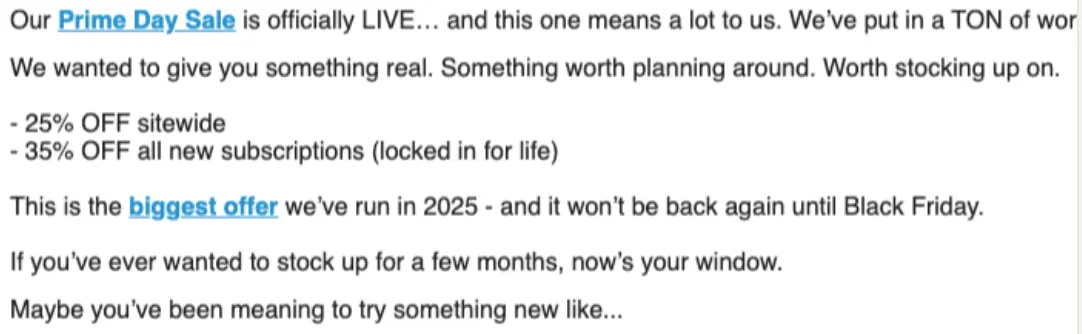
- Welcome Series: The first email in a welcome series, particularly one from a founder or CEO, can set a deeply personal tone. A plain-text message saying, "Hi [Name], just wanted to personally welcome you to [Brand] and share a bit about our mission…" can build immediate rapport.
- Abandoned Cart Recovery: Instead of a standard product reminder, a plain-text email asking, "Hey [Name], I noticed you left some items in your cart. Was there anything I could help with?" feels less like a sales pitch and more like a helpful inquiry, often leading to higher recovery rates.
- Customer Milestones/Anniversaries: A simple, heartfelt "Happy anniversary, [Name]! We appreciate your loyalty" can significantly enhance customer retention.
- Post-Purchase Follow-ups: A plain-text message checking in on a recent purchase, asking for feedback, or offering tips for product use can elevate the customer experience.
- Re-engagement Campaigns: For dormant subscribers, a plain-text email like, "It’s been a while, [Name]. We miss you! Is there anything we can do better?" can feel less intrusive and more sincere, encouraging them to reconnect.
Campaign Ideas: These are planned, broadcast messages that can leverage the authenticity of plain text for specific strategic objectives.
- Founder/CEO Messages: Direct communications from leadership regarding company updates, vision, or significant announcements lend themselves perfectly to a plain-text format, reinforcing transparency and human connection.
- Personalized Recommendations: Following a recent purchase or browsing activity, a plain-text email that says, "Based on your interest in [Product], I thought you might like [Recommendation]," feels genuinely helpful.
- Survey Invitations: A simple, direct request for feedback via a plain-text email often garners higher response rates because it feels like a personal appeal rather than a generic mass survey.
- Event Invitations/Reminders: For exclusive webinars, workshops, or in-person events, a plain-text invitation can convey a sense of exclusivity and personal outreach.
- Customer Service Follow-ups: After a support interaction, a plain-text email from the support agent checking in or confirming resolution builds trust and demonstrates attentive service.
Technical Implementation: Creating a Plain-Text Email in Omnisend
Creating a text-based email in modern Email Service Providers (ESPs) like Omnisend is designed to be straightforward, allowing marketers to quickly deploy these impactful messages. The process typically involves selecting a specific template type:
- Navigate to the Email Creation Interface: Within the Omnisend dashboard, go to the "Campaigns" or "Automations" section and choose to create a new email.
- Select the "Plain Text" Template: Instead of choosing a pre-designed HTML template or starting from scratch with a drag-and-drop editor, look for an option explicitly labeled "Plain Text" or "Simple Text."
- Enter Your Content: A minimalist editor will appear, allowing you to type your message directly. You can use basic formatting options like bolding or italics if the platform supports it (many do, rendering them as asterisks or underscores in the final email).
- Add Hyperlinks: Insert URLs where necessary. The system will typically display these as raw links or formatted as underlined text.
- Personalize: Utilize personalization tags (e.g.,
contact.first_name) to dynamically insert recipient data, enhancing the personal feel. - Review and Send/Schedule: Preview the email to ensure the formatting and content are as intended, then proceed to send or schedule it within your campaign or automation workflow.
The same template functionality is available within automation workflows. When editing an email inside a sequence, marketers can simply choose the "Plain Text" template instead of a designed one, ensuring consistent application of this strategy across both broadcast and automated communications.
Broader Implications and the Future of Email Marketing
The strategic re-evaluation of plain-text emails underscores a broader shift in digital marketing towards authenticity, personalization, and customer-centricity. In an era of increasing data privacy concerns and digital fatigue, brands that prioritize genuine connection over flashy aesthetics are likely to build stronger, more resilient customer relationships.
This trend has several implications:
- Sender Reputation: By fostering higher engagement and fewer spam complaints, plain-text emails can positively impact a sender’s reputation, improving deliverability for all email types.
- Content Strategy: Marketers are compelled to focus more on the quality and relevance of their message rather than relying on design to carry the weight. This demands stronger copywriting skills and a deeper understanding of audience needs.
- Accessibility Standards: The inherent accessibility of plain-text emails aligns with growing demands for inclusive digital practices, ensuring messages reach a broader audience.
- Hybrid Approaches: The future likely lies in a hybrid approach, where brands strategically mix designed HTML emails for broad promotional campaigns with targeted plain-text messages for critical, personal communications. This balance allows brands to leverage the strengths of both formats.
- AI and Hyper-Personalization: As AI tools become more sophisticated, they can assist in crafting highly personalized, context-aware plain-text messages at scale, further blurring the lines between automated communication and genuine human interaction.
Wrapping Up
The enduring effectiveness of text-based emails lies in their ability to emulate human communication. They work precisely because they feel like a message written by a person, for a person. This powerful illusion of direct, one-on-one interaction is fragile and must be preserved through judicious and strategic application.
To maximize their impact, plain-text emails should be used sparingly and purposefully. Each message should have a clear, genuine objective: a helpful question in an abandoned cart flow, a heartfelt note from the founder, a thank-you that doesn’t implicitly ask for anything in return, or a crucial update that requires direct attention. Crucially, they should always be sent from a real name, further reinforcing the personal connection.
When strategically integrated into a broader email marketing strategy—interspersed among more visually elaborate designed campaigns—plain-text emails serve as one of the most effective and authentic ways to remind your audience that there are real people, genuine intentions, and a human connection behind the brand. They represent not a regression in marketing, but a sophisticated evolution towards more meaningful and impactful digital communication.