

This week’s installment of e-commerce innovations reveals a dynamic sector brimming with new products and services designed to enhance everything from customer engagement and lead generation to content creation and operational efficiency. The latest wave of launches spans sophisticated popup analytics, integrated AI-powered site builders, dynamic livestreaming sales tools, advanced AI marketing solutions, generative AI for visual content, and immersive virtual try-on experiences, alongside breakthroughs in drone delivery and specialized marketplace solutions. These developments signal a continued push towards leveraging artificial intelligence and data-driven insights to streamline operations and elevate the customer journey in the competitive online retail space.
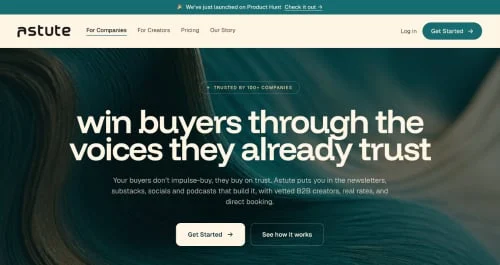
For businesses looking to capture valuable customer data and drive conversions, several new tools offer enhanced capabilities. Optinify has rebuilt its popup app for Shopify stores from the ground up, focusing on delivering deeper analytics for high-growth businesses. This revamped offering allows merchants to meticulously monitor popup views, conversion rates, and the revenue directly attributable to campaign interactions. Optinify’s platform is designed to provide detailed metrics for every campaign, empowering sellers to conduct rigorous A/B testing on headlines, offers, designs, and messaging to optimize engagement and maximize lead generation for email and SMS lists. The emphasis on granular data analysis underscores a growing industry trend towards data-informed decision-making in customer acquisition strategies.
In the realm of website development and online presence, Hostinger has launched its AI Builder, a comprehensive platform that merges its existing website builder and horizons tools. This integrated solution goes beyond basic site design and generation, incorporating essential e-commerce functionalities such as account sign-in, data storage, and email marketing. Hostinger’s AI Builder aims to simplify the process of launching an online store, enabling businesses to create a fully operational e-commerce site, set up user accounts, provision databases, and seamlessly connect marketing tools, all within a unified environment. This move reflects a broader industry shift towards providing end-to-end solutions that democratize access to sophisticated web development and e-commerce capabilities.

The fusion of social media and e-commerce continues to evolve with Tilt’s introduction of Clips, a feature designed to facilitate shoppable videos within its live-selling app. Clips allows users to buy or sell products through a scrollable feed of short videos, eliminating the need to wait for a scheduled livestream. For merchants, this means unsold inventory can continue to generate sales even after a live event concludes, or independently of any livestream. The process is streamlined: merchants simply hold an item to the camera and describe it, with AI automatically logging product details such as category, brand, size, and condition, thereby extending the sales potential of existing product inventory.
Meta is also enhancing its support for small businesses by integrating new AI features across its platforms. These AI capabilities are designed to work in conjunction with Instagram and Facebook accounts, Meta ad campaigns, and Google Workspace. Businesses can leverage Meta AI to generate various marketing and operational documents, including presentations, spreadsheets, and other content, by providing their specific information and allowing the AI to access and process data from the web. This initiative signifies Meta’s commitment to providing accessible AI tools that can significantly boost productivity and marketing effectiveness for small and medium-sized enterprises.
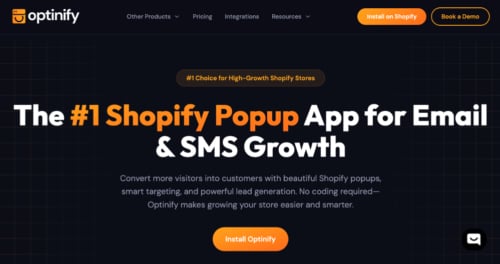
Subscriber growth, a critical component of e-commerce marketing, is being addressed by Attentive with the launch of AI Grow. This new offering from the omnichannel marketing platform is engineered to supercharge list and revenue growth by analyzing real-time browsing and shopping behavior. AI Grow identifies the optimal moments to present email and SMS sign-up invitations to both identified and logged-out visitors. Attentive emphasizes that every deployment of AI Grow is rigorously measured through A/B testing against a brand’s existing setup, ensuring demonstrable improvements in subscriber acquisition and subsequent revenue generation. This data-centric approach highlights the increasing importance of personalized and timely customer engagement strategies.
Content creation for e-commerce is being revolutionized by a surge of AI-powered tools. Designkit has launched an AI platform capable of transforming product photos into ready-to-use marketing videos. These videos are optimized for various platforms, including TikTok, Instagram, YouTube, and e-commerce storefronts, bridging the gap between static product imagery and dynamic visual content. Similarly, Sell The Trend has introduced AI Ads Blueprint, an ad creation tool designed to help e-commerce sellers rapidly develop campaign-ready advertisements from their product ideas. Merchants can select advertising formats, and the AI will generate creative assets and accompanying copy. The platform allows for iterative refinement of messaging and creative direction without requiring a complete overhaul of an ad, streamlining the entire process from product selection to final ad download.
The broader e-commerce media landscape is also seeing significant advancements. GrowthLoop is expanding its composable commerce media network by integrating new capabilities from adtech partners like The Trade Desk, Moloco, and Audience Acuity. This network is designed to empower retail and commerce teams to build and scale their own media networks, combining onsite and offsite activation with enhanced audience intelligence and closed-loop measurement. GrowthLoop’s solution operates on robust data clouds such as Google BigQuery, Snowflake, and Databricks, offering a comprehensive tech stack for advanced media strategies.
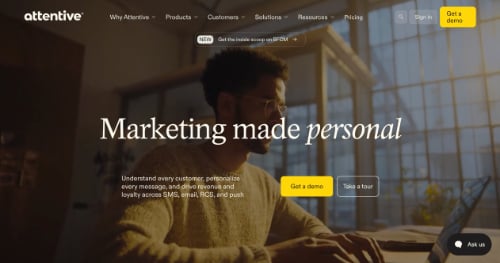
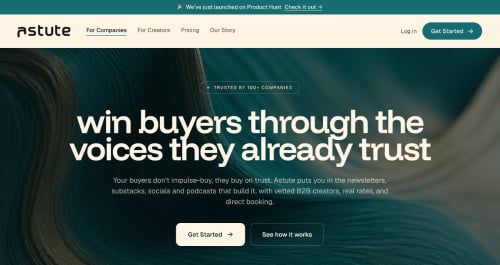
In the burgeoning creator economy, Astute has secured $1.2 million in pre-seed funding to launch its B2B media platform. The platform aims to assist B2B companies in managing partnerships with newsletter, podcast, and social media creators. Astute seeks to simplify the process of identifying and engaging with relevant influencers in a fragmented media environment, offering a centralized solution for managing creator collaborations. This funding round, backed by prominent investors, underscores the growing strategic importance of influencer marketing and creator partnerships for businesses.
Logistics and delivery are also experiencing a technological leap. Uber and Zipline, a leader in drone delivery systems, have partnered to expand drone delivery services across the United States. Uber is also investing in Zipline, with the ambitious goal of achieving one million daily drone deliveries by the end of 2029. Initial deployments are slated for later this year, allowing Uber Eats customers to receive orders within minutes via Zipline’s autonomous drone network. This partnership represents a significant step towards integrating drone technology into mainstream e-commerce logistics, promising faster and more efficient delivery for consumers.
Marketplace acceleration is another key area of innovation. BPMS, a media and marketing agency, has launched Bloom, a marketplace growth accelerator designed to help consumer brands launch, manage, and scale their presence on major e-commerce marketplaces, including Amazon, Walmart Marketplace, Target Plus, and TikTok Shop. Bloom offers comprehensive support throughout the marketplace lifecycle, from initial setup and catalog management to ongoing optimization and growth strategies, encompassing services like marketplace analysis, category mapping, search optimization, and review management.
Alipay, the payment service from Alibaba Group, has introduced an AI commerce platform tailored for merchants. This platform offers a suite of AI tools that can be used individually or in combination, enabling businesses to convert pages, products, and service workflows into agent-ready skills and tools. For merchants already utilizing AI services, Alipay’s platform facilitates AI agent creation, skill orchestration, task execution, and operations management, aiming to enhance the efficiency and intelligence of merchant operations.
Reputation management in the age of AI is addressed by ShouldEye’s new B2B platform. This tool allows businesses to monitor their reputation and visibility across various AI models. ShouldEye’s platform provides insights into how AI models describe, evaluate, and recommend companies, identifying inconsistencies, missing information, and potential areas that could influence customer perception. Participating businesses can also display ShouldEye’s trust badges and widgets on their digital properties, bolstering credibility and transparency.
The customer experience is being significantly enhanced by advancements in virtual try-on technology. Remark, a commerce platform specializing in the luxury market, has launched a real-time virtual try-on tool that dynamically adapts to user movements. This tool can be seamlessly integrated into product pages without requiring app downloads or installations. Shoppers can virtually try on items live, with the garment rendering instantly and continuously updating as the user moves, all in high definition and at real-time frame rates. Remark emphasizes that these renderings are built using the brand’s own imagery and product data, ensuring an authentic representation.
In Canada, a new marketplace, Shoppa.ca, has been launched by Buy Canadian Group Inc., specifically for Canadian-owned businesses. This platform serves as a discovery engine for Canadian products, clearly labeling them as “Canadian-Owned” or “Made in Canada” to enable consumers to support local businesses. This initiative reflects a growing consumer demand for locally sourced and produced goods.
The creation of visual content for e-commerce is being democratized by AI. LibAI Lab has launched NewFace, an AI image and video creation platform aimed at e-commerce sellers, agencies, and creators. Users can articulate their vision in plain language, and the NewFace agent will build the project on a single canvas, preserving the brief, references, and prior decisions. This allows for granular control, enabling users to approve each change, let the agent operate autonomously, or intervene at any stage of the creative process.
Koozee, developed by Australia-based Starii Tech Pty Ltd, offers an all-in-one AI visual production platform for apparel e-commerce. Merchants can upload garment images to generate AI-model images, with options to change the model, scene, pose, or angle. The platform can also create main product images, flat lays, detail shots, ghost mannequin images, and listing-page assets. Furthermore, it can produce dynamic lookbook and fitlog videos from apparel images and replicate new versions using the merchant’s existing apparel assets, significantly streamlining visual content production for fashion brands.
These diverse innovations underscore a pivotal moment in e-commerce. The increasing integration of AI, coupled with advancements in logistics and customer experience technologies, is creating a more efficient, personalized, and engaging online retail environment. Businesses that effectively adopt these new tools are poised to gain a competitive edge, optimize their operations, and better connect with their target audiences in the evolving digital marketplace. The rapid pace of development suggests that this trend of technological infusion will only accelerate, reshaping the future of online commerce in profound ways.








