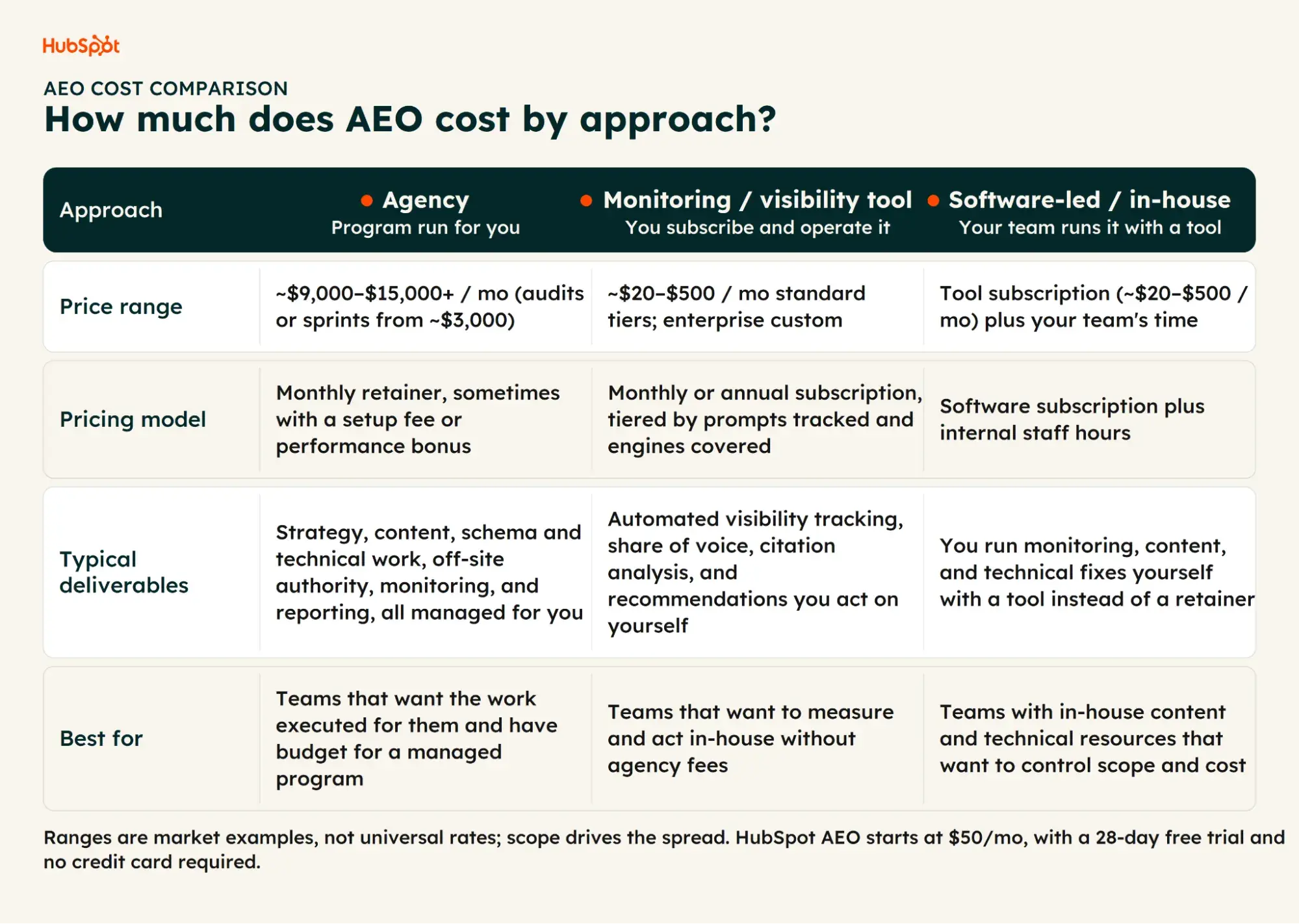
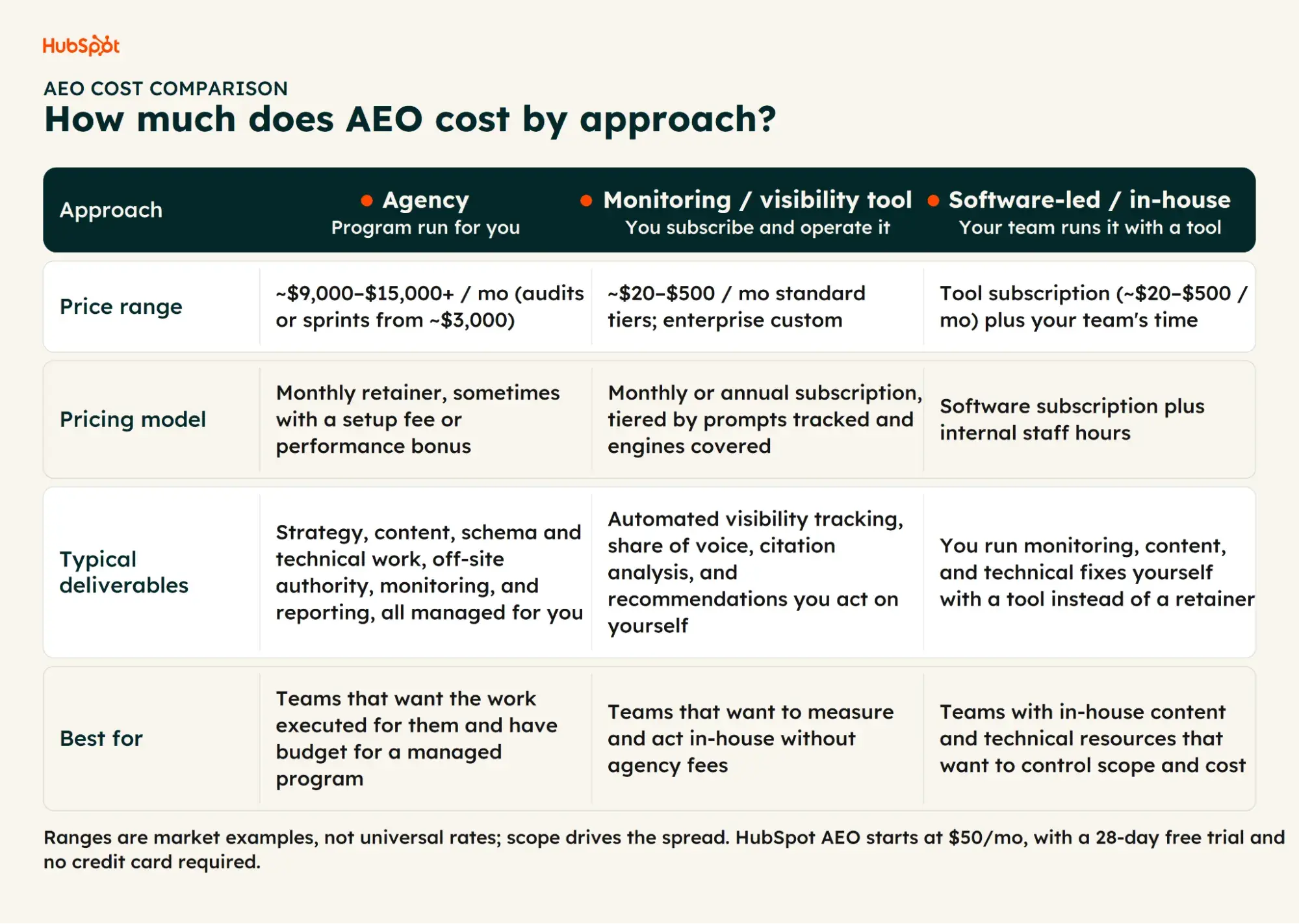
The burgeoning field of Answer Engine Optimization (AEO) presents a dynamic and often complex challenge for businesses seeking to maintain digital visibility in an increasingly AI-driven search landscape. While the precise investment varies significantly, initial estimates suggest AEO costs can range from approximately $30 per month for a basic self-managed monitoring tool to upwards of $15,000 per month for a comprehensive, full-service agency program. This vast differential underscores the customizable nature of AEO strategies, where the scope of work—from mere monitoring to full content creation and authority building—is the primary determinant of financial outlay. As AI continues to reshape how users find information, understanding these cost structures is critical for organizations looking to strategically allocate resources and adapt their digital marketing efforts.
Understanding AEO: A New Frontier in Digital Marketing
The digital ecosystem is undergoing a profound transformation, driven by the rapid advancements in generative artificial intelligence. Traditional search engine results pages (SERPs), once the undisputed gatekeepers of online information, are increasingly being augmented or even replaced by AI-generated answers, rich snippets, and conversational interfaces. This paradigm shift has necessitated the emergence of Answer Engine Optimization (AEO), a specialized discipline focused on optimizing content to be cited, summarized, or directly answered by these sophisticated AI systems.
Unlike traditional Search Engine Optimization (SEO), which primarily aims to rank web pages in search results and drive clicks, AEO’s objective is to ensure a brand’s presence and authority within the concise, often synthesized responses provided by AI. This means crafting content that is not only discoverable but also credible, factual, and structured in a way that AI models can readily interpret and trust as a source. The "why now" for AEO is undeniable: industry analysts, reflecting trends observed in late 2024 and early 2025, indicate a significant surge in AI referral traffic, with some reports suggesting a tripling of such traffic within a single year. While still representing a smaller fraction of overall referral traffic, this exponential growth signals a fundamental shift in user behavior and content consumption, making AEO an indispensable component of a modern digital strategy.
Chronology: The Rise of AI in Search and AEO’s Emergence
The journey towards AEO began subtly but accelerated dramatically with the mainstream adoption of large language models (LLMs).
- Early 2010s: Search engines like Google began experimenting with "answer boxes" and "featured snippets," signaling a move towards providing direct answers within the SERP, rather than just links. This was an early precursor to AEO, emphasizing structured data and clear content.
- Mid-2010s: Voice search gained traction, requiring content to be optimized for spoken queries and concise, direct responses. This further pushed the agenda for answer-focused content.
- Late 2010s – Early 2020s: The development and refinement of advanced AI models and natural language processing (NLP) capabilities laid the groundwork. Semantic search became more sophisticated, allowing AI to understand context and intent more deeply.
- Late 2022 – Present: The public release of powerful generative AI tools like ChatGPT marked a watershed moment. Suddenly, sophisticated AI answers became widely accessible, prompting major search engines to integrate similar capabilities. This directly ignited the need for AEO, as brands realized their online presence could be summarized or omitted entirely by these new systems.
- 2023-2024: Dedicated AEO tools and agency services began to emerge, initially focusing on monitoring brand mentions in AI answers, then expanding to include optimization strategies, content adjustments, and technical enhancements specifically for AI visibility. This period saw a rapid iteration of methodologies and a growing understanding of the unique requirements of AI content consumption.
Deconstructing AEO Costs: A Multi-Tiered Approach
The broad cost spectrum for AEO reflects the diverse needs and internal capabilities of businesses. Categorizing AEO solutions into tiers helps elucidate what an organization receives for its investment.
Tier 1: Foundational Monitoring and Self-Service Tools (~$29-$489/month)
At the entry level, businesses can opt for specialized monitoring or visibility tools. These platforms typically offer automated tracking of a brand’s appearance within AI answers, provide share-of-voice analysis against competitors, and identify key citations. Tools such as HubSpot AEO, which starts at $50/month, track visibility across multiple AI engines like ChatGPT, Gemini, and Perplexity. Other options, like Profound (starting at $99/month for ChatGPT tracking, with multi-engine plans at $399/month) or Peec AI (from $95/month), offer similar capabilities. This tier is ideal for small teams, startups, or in-house marketers who possess the internal resources and expertise to act on the insights provided by the software. As a digital strategy consultant, who requested anonymity due to ongoing client engagements, recently noted, "For many businesses, getting started with a monitoring tool is the essential first step. It allows them to understand their current AI footprint without committing to a full-scale agency engagement."
Tier 2: Hybrid Models and Software-Led Initiatives (Tool Subscription + Internal Team’s Time)
This approach combines the cost-effectiveness of monitoring tools with the hands-on control of an in-house team. Businesses at this tier subscribe to AEO software but dedicate internal staff to execute the recommended optimizations. This includes content creation or repurposing, technical schema implementation, entity optimization, and the meticulous process of ensuring content aligns with AI readability standards. For instance, HubSpot AEO, which is included in Marketing Hub Professional and Enterprise subscriptions, allows teams to integrate AI visibility recommendations directly into their existing content workflows and CRM data, leveraging their current investment. This model suits mid-sized businesses with established marketing departments and technical capabilities that prefer to retain control over their digital assets and strategically manage their spend. The primary costs here are the software subscription and the salaries or allocated hours of internal personnel.
Tier 3: Comprehensive Agency Programs and Managed Services (~$9,000-$15,000+ per month)
At the highest end of the spectrum are full-service agency programs, which provide end-to-end AEO management. These programs are designed for organizations that either lack the internal expertise and resources or require accelerated, strategic results. Agency services typically encompass a holistic suite of offerings:
- Strategy Development: Crafting a bespoke AEO roadmap aligned with business objectives.
- Content Production: Creating new content or optimizing existing assets specifically for AI citation.
- Technical AEO: Implementing advanced schema markup, refining entity graphs, and ensuring site architecture supports AI crawling and understanding.
- Off-Site Authority Building: Engaging in digital PR, link building, and brand mentions to enhance credibility, a crucial signal for AI systems.
- Continuous Monitoring and Reporting: Providing in-depth analytics, performance tracking, and actionable insights.
Agencies may offer one-time audits or sprints starting around $3,000, but ongoing programs typically range from $9,000 to $15,000 or more monthly, often structured as retainers with potential performance-based incentives. A leading marketing agency CEO, speaking on background, emphasized, "Agencies offer a strategic partnership, bringing specialized knowledge and execution power that can be critical for complex brands navigating this new frontier. Our clients are looking for a fully managed solution that removes the operational burden and delivers measurable impact." This tier is best suited for large enterprises, highly competitive industries, or companies seeking to rapidly establish a dominant position in AI-driven search.
Key Drivers of AEO Pricing Variation
The significant range in AEO costs is not arbitrary but directly linked to several fundamental factors:
- Scope of Services: The most significant determinant. Basic monitoring is inexpensive, but adding content strategy, creation, technical optimization, and off-site authority building scales costs dramatically.
- Content Volume and Complexity: The number of web pages, articles, and digital assets requiring optimization, as well as the technical depth and niche specificity of the content, directly impacts labor and tool requirements.
- Technical Implementation: Advanced schema markup, knowledge graph optimization, and other technical adjustments require specialized skills and can be time-intensive, contributing to higher costs.
- Off-Site Authority Building: Building domain authority and brand credibility through digital PR, strategic link building, and consistent brand mentions is crucial for AI systems to trust and cite a source. This often involves sustained outreach efforts and significant investment.
- Reporting and Analytics Depth: The level of detail, customization, and frequency of performance reports, including competitive benchmarking and trend analysis, influences pricing.
- Number of AI Engines Monitored: Tracking visibility across a single AI engine is less complex and costly than monitoring multiple platforms (e.g., ChatGPT, Gemini, Perplexity, Claude, etc.) simultaneously, each with its unique nuances.
AEO Pricing Models: An Overview for Decision-Makers
Understanding how AEO services are typically billed helps in comparing proposals and budgeting effectively.
- Subscription-Based Tools: This model involves predictable monthly or annual fees for access to AEO software. Costs are often tiered based on features, number of prompts tracked, or AI engines covered. It’s a cost-effective choice for teams managing AEO in-house.
- Project-Based Engagements: Suited for specific, time-bound tasks like an initial AEO audit, a content optimization sprint for a defined set of pages, or a one-time schema implementation. These are usually quoted as a fixed fee.
- Retainer Models: The predominant model for agency services, where a client pays a fixed monthly fee for ongoing AEO strategy, execution, monitoring, and reporting. Retainers ensure continuous support and strategic evolution but require a higher recurring budget commitment.
The Crucial Interplay: AEO vs. SEO
It is imperative to understand that AEO complements SEO rather than replacing it. Both disciplines share a common foundation: the need for clear, credible, and technically sound content on a well-structured website. However, their primary objectives and measurement metrics diverge significantly.
- SEO’s Focus: Aims to rank web pages in traditional search results, driving organic traffic through clicks. Metrics include keyword rankings, click-through rates (CTR), impressions, and conversion rates from organic search. SEO caters to users who scan lists of links.
- AEO’s Focus: Seeks to ensure a brand’s information is cited, summarized, or directly incorporated into AI-generated answers. Metrics include brand mentions, share of voice within AI responses, and direct citations. AEO content must satisfy the AI engine’s criteria for accuracy, authority, and conciseness before it even reaches a human reader.
The synergy between AEO and SEO is undeniable. Pages that achieve strong organic rankings in Google are often the same authoritative sources that AI answer engines pull from for their citations. Therefore, strategically reducing SEO efforts to fund AEO can be a detrimental mistake, potentially weakening the very foundation that feeds AI visibility. User behavior data from January to December 2025, as reported by Search Engine Land, indicates that while AI referral traffic has roughly tripled, it still represents less than 2% of total referral traffic in the analyzed datasets. This highlights that buyers continue to use both traditional search and AI answers, necessitating a dual, integrated strategy.
Navigating the Landscape: Red Flags and Best Practices

As AEO is a relatively nascent field, standardization in pricing and service promises is still evolving. Businesses must exercise caution to avoid misdirection and ensure their investment is genuinely productive.
AEO Pricing Red Flags to Avoid:
- Guaranteed Top AI Citations: AI models are non-deterministic and constantly evolving. No legitimate vendor can guarantee specific citation outcomes. Focus on strategies that improve the likelihood of citation.
- Generic SEO Repackaged as AEO: Some unscrupulous vendors may simply relabel traditional SEO services as AEO without offering any specialized AI-centric optimization. Scrutinize statements of work (SOWs) for specific AEO deliverables like entity optimization, prompt engineering considerations, and multi-engine tracking.
- Lack of Transparency: Vague service descriptions, unclear metrics for success, or a refusal to detail methodologies should raise concerns.
- Proprietary "Black Box" Methods: While some proprietary tools are legitimate, be wary of agencies that cannot explain their AEO processes in understandable terms. Understanding the approach is crucial for long-term success.
- Long-Term Lock-ins for Pilot Programs: A pilot’s purpose is to test efficacy. Agencies demanding extended contract terms for an initial, exploratory engagement are often prioritizing their revenue over your validation needs.
Best Practices for Engagement:
- Demand Clear Deliverables: A robust SOW should explicitly state what will be done, how many prompts will be tracked, which AI engines are covered, the scope of content production/rework, technical adjustments, off-site activities, and reporting cadence.
- Prioritize Transparency: Choose partners who openly discuss their strategies, tools, and expected outcomes.
- Start with a Pilot: This is the most effective way to de-risk your investment.
Strategic Pilot Programs: De-risking AEO Investment
Before committing significant resources, a well-structured AEO pilot program is essential. Its primary objective is to answer a single question: Can AEO demonstrably move the needle for your brand’s visibility in AI answers? A 60-to-90-day window is typically sufficient to gather early signals and build a compelling business case for broader investment.
Key Principles for an Effective AEO Pilot:
- Start Lean, Not Broad: Anchor the pilot on a foundational tier. This means subscribing to a reliable monitoring tool (e.g., in the $30-$50/month range) and, optionally, commissioning a one-time diagnostic audit. Avoid large-scale content production or extensive off-site authority building in the initial phase, as these are long-term investments that won’t show significant returns within a short pilot window.
- Prioritize for Small Teams: If your team is lean, focus your efforts strategically:
- Phase 1 (Weeks 1-4): Monitoring and Baseline Establishment. Set up your chosen AEO monitoring tool. Define your key metrics (brand mentions, share of voice, citations) and establish a clear baseline of your current AI visibility.
- Phase 2 (Weeks 5-8): High-Value, Low-Cost Fixes. Address immediate, impactful gaps. This could involve ensuring consistent entity recognition across your digital properties, optimizing existing high-performing content with AI-friendly schema markup, or clarifying answers to frequently asked questions on your site.
- Phase 3 (Weeks 9-12): Targeted Content Updates. Based on pilot insights, make small, targeted adjustments to critical content pieces identified as having the highest potential for AI citation.
- Measure What AEO Actually Measures: Focus on core metrics directly relevant to AI visibility: brand mentions, share of voice against key competitors, and specific citations by AI engines. Due to the non-deterministic nature of AI answers (meaning the same prompt can yield slightly different responses), it’s crucial to track trends over time rather than relying on single snapshots.
- Budget-Friendly Entry Points: Leverage free trials offered by AEO tools. For instance, HubSpot AEO provides a 28-day free trial that tracks 25 prompts across ChatGPT, Gemini, and Perplexity, requiring no credit card. This can cover a substantial portion of a short pilot’s monitoring needs at zero cost. Even after the trial, its $50/month subscription makes a three-month pilot highly affordable at approximately $100 out-of-pocket, providing continuous, comprehensive insights into your brand’s AI presence.
Upon successful validation of the pilot, AEO efforts should be integrated into your ongoing SEO and broader digital marketing budget planning, moving beyond an experimental phase to become a core strategic initiative.
Case Study: HubSpot AEO as an Integrated Solution
Once an AEO pilot demonstrates clear value, the recurring challenge for businesses is effective measurement and actionable insights. How can an organization consistently track its visibility, identify where competitors are gaining citations, and ultimately connect AI visibility to tangible marketing ROI? This is precisely the gap that a robust, software-led approach aims to fill.
HubSpot AEO is designed to provide comprehensive brand visibility tracking across leading AI engines, including ChatGPT, Gemini, and Perplexity. It not only highlights where a brand appears but also critically flags instances where competitors are winning citations that a brand might be missing. Furthermore, the platform analyzes which domains and content types are most frequently cited within a specific category, generating a prioritized list of recommendations for optimization. This measurement-first methodology was developed and validated internally by HubSpot, whose team documented its full three-pillar rollout and the resulting impact in a detailed CRM AI-search case study.
Available as a standalone product at $50 per month, HubSpot AEO offers core functionalities such as visibility tracking, citation analysis, competitor benchmarking, and actionable recommendations. For existing users of HubSpot’s Marketing Hub Professional or Enterprise, AEO is seamlessly integrated at no additional cost, linking its recommendations directly with CRM data and existing content tools, thereby streamlining the optimization process and enhancing strategic alignment. This integration underscores the growing imperative for connected marketing platforms that can adapt to the evolving demands of AI-driven search.
Frequently Asked Questions About AEO Cost
Is AEO different from SEO, and do I need both?
Yes, AEO and SEO are distinct but complementary disciplines. SEO focuses on ranking web pages in traditional search results and driving clicks, while AEO aims to get your brand cited within AI-generated answers. Both rely on a foundation of credible, structured content. Most teams need both because strong Google rankings often contribute to AI citations, and users continue to engage with both traditional search and AI answers. Neglecting one can weaken the other.
Can I do AEO myself with just monitoring tools?
Partly. A monitoring tool like HubSpot AEO can effectively show where your brand appears in AI answers, highlight gaps, and provide actionable recommendations. However, the tool itself doesn’t execute the fixes. Your internal team would still be responsible for content optimization, schema markup, technical adjustments, and off-site authority building. For full execution without an agency, you’d need a skilled in-house team to act on the insights.
How long until I see results from AEO?
You should expect to see early signals and movement in visibility and share of voice within the first 60 to 90 days of a focused pilot program. However, more substantial results, particularly from content creation and off-site authority building, compound slowly over time. Because AI answer engines can be non-deterministic (providing varied responses to the same prompt), it’s crucial to track trends and aggregate data rather than relying on single snapshots.
What should be included in an AEO statement of work (SOW)?
A clear AEO SOW should detail specific deliverables rather than vague promises. Look for explicit inclusions such as the number of prompts to be tracked, which AI engines will be monitored, the quantity of pages to be produced or reworked, specific schema and entity optimization tasks, any off-site authority building scope, and the frequency and format of reporting. It’s also wise to confirm the contract term length, as some agencies require a three-month minimum.
How do I budget for AEO if I’m a small team?
Start lean. Begin with a monitoring subscription, which can range from the low tens to $50 per month. You might also consider a one-time diagnostic audit. Prioritize high-value, low-cost fixes first, such as optimizing existing content for AI readability and schema. Avoid committing to high-volume content production or extensive off-site work until you have clear signals that your initial AEO efforts are yielding positive results. Many tools, like HubSpot AEO, offer free trials (e.g., 28 days for 25 prompts across major AI engines) that allow you to validate the approach before incurring costs.
Conclusion: The Future of Brand Visibility in the AI Era
The advent of AI-driven search marks a significant inflection point in digital marketing. Answer Engine Optimization is no longer an optional add-on but a strategic imperative for businesses aiming to maintain and grow their online presence. The costs associated with AEO are as varied as the needs of the businesses implementing it, ranging from accessible self-service tools to comprehensive agency partnerships. The key lies in understanding the scope of services required, aligning investment with strategic objectives, and adopting a phased approach, starting with lean pilots to validate efficacy. By carefully navigating the cost landscape, avoiding common pitfalls, and integrating AEO with existing SEO strategies, organizations can effectively adapt to the AI era, ensuring their brand remains visible, credible, and influential in the rapidly evolving digital conversation.