rifanmuazin
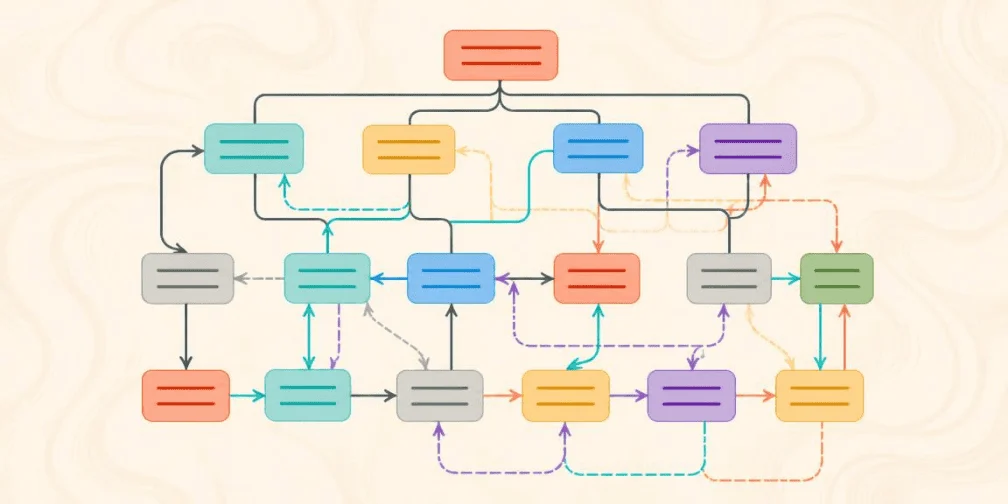
The days of predictable B2B buyer journeys, where prospects moved linearly from initial awareness to a decisive purchase, are rapidly fading into the past. Today’s B2B marketing landscape is characterized by a far more intricate and fragmented discovery process, demanding a fundamental shift in how businesses engage with potential clients. This evolution, underscored by extensive research, reveals that buyers are no longer content with a single path to understanding; instead, they engage across an average of ten distinct channels, meticulously gathering information and building confidence over time and across diverse digital and physical environments.
This transformation signifies a departure from the era of "first impressions" as the primary driver of B2B engagement. Instead, the modern buyer journey is a continuous process of validation and comparison. As buyers encounter a brand’s narrative repeatedly, across public forums, through various voices, and under different forms of scrutiny, the resilience and consistency of that message become paramount. The challenge for B2B marketers lies not in simply being present, but in ensuring their core thinking remains coherent and credible wherever and however buyers choose to seek information.
The Demise of the Linear Funnel: A Fragmented Discovery Process
The traditional B2B sales funnel, once a widely accepted model for understanding buyer behavior, has become increasingly anachronistic. Buyers no longer progress neatly through distinct stages of awareness, consideration, and decision. Instead, their discovery process unfolds organically across multiple, often disconnected, environments, frequently lacking a clearly defined starting point. Each of these environments serves a unique purpose, contributing to a cumulative understanding rather than carrying the entire weight of the purchasing decision.
Artificial intelligence (AI)-driven tools, for instance, often provide an initial orientation, enabling buyers to quickly frame their challenges and identify potential solutions. Search engines then become crucial for validation, allowing prospects to cross-reference claims, compare disparate perspectives, and scrutinize information. Peer-driven communities offer invaluable lived experiences and authentic testimonials, while expert voices and proprietary brand content provide deeper insights and practical evaluations of an idea’s viability. These interactions are not mutually exclusive; they are additive, each contributing to a more nuanced and comprehensive understanding.

The underlying intent of B2B buyers has not changed; they remain committed to making informed and sound decisions. What has shifted dramatically is their approach to mitigating uncertainty. In an environment where information is abundant and diverse, buyers increasingly rely on the triangulation of signals across multiple touchpoints to build confidence. This reliance on distributed validation means that visibility alone is no longer sufficient. If a brand’s messaging or core value proposition falters, contradicts itself, or loses clarity as buyers transition between different channels, trust erodes, and opportunities are lost. Consequently, multi-channel discovery is evolving from a focus on sheer reach to one of continuity, ensuring that the fundamental message remains intact and reassuring, regardless of where buyers seek it.
Research Illuminates the Complexities of Multi-Channel Discovery
The challenges and opportunities presented by this evolving B2B discovery paradigm are clearly articulated in recent industry research. A comprehensive study, "The State of B2B Thought Leadership in 2026," conducted by TopRank Marketing in collaboration with Ascend2, surveyed 797 senior B2B marketers, highlighting the pervasive nature of fragmentation as a significant hurdle. The findings reveal that one-third of these marketers struggle with limited visibility into the performance of their efforts across the entire buyer journey, while another third report an over-reliance on a select few channels. These statistics underscore a critical disconnect: while marketers acknowledge the proliferation of buyer touchpoints, many lack the integrated strategies and structures necessary to effectively support these interactions in a cohesive manner.
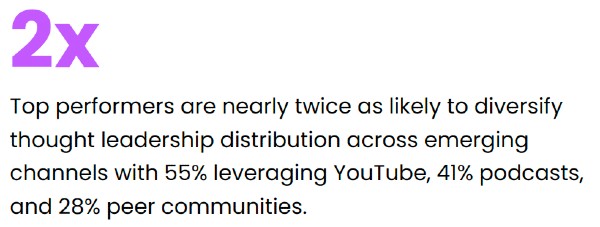
The research also points to a significant decentralization of influence. Top-performing B2B organizations are demonstrably more likely to diversify their thought leadership distribution strategies, extending their reach beyond a narrow set of established platforms. This includes a more pronounced adoption of emerging channels such as video content, podcasts, and online peer communities. These environments are particularly conducive to buyers revisiting complex ideas, interpreting subtle nuances, and validating perspectives over extended periods, fostering a deeper level of engagement and trust.
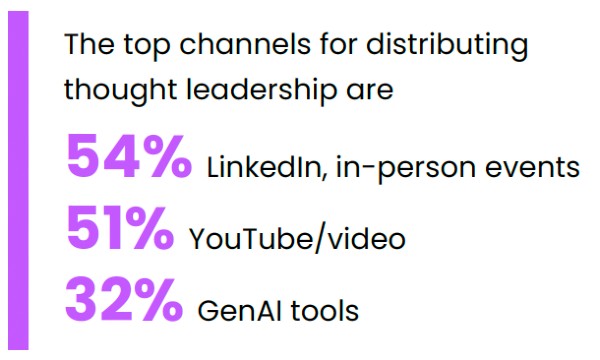
A notable observation from the report is the growing divergence between how B2B marketers disseminate thought leadership and how buyers actually discover it. While platforms like LinkedIn and traditional in-person events continue to hold significant sway, video content has emerged as an increasingly vital component of the discovery process. Furthermore, a substantial segment of buyers, nearly one-third, are now leveraging Generative AI tools for thought leadership discovery – a channel that many marketers are still treating as a secondary consideration, despite its rapidly growing influence.
The implications of these findings are clear: the central challenge for B2B marketers is not merely about selecting the "right" channel. It is about ensuring that the core underlying thinking and value proposition are consistently presented across all environments where buyers seek to validate, compare, and ultimately build confidence in their purchasing decisions. This requires a strategic approach that prioritizes narrative coherence and proof-based credibility over disparate channel-specific tactics.
Buyers Leverage Diverse Channels for Risk Mitigation
As the B2B buyer’s discovery process expands across a multitude of digital and physical environments, a subtle but significant shift in how these channels are utilized becomes apparent. Buyers begin to rely on each touchpoint for a specific form of reassurance, transforming each interaction from a simple message delivery mechanism into a critical component of risk reduction. Understanding the unique function that each channel serves is crucial for marketers aiming to optimize their engagement strategies.
For instance, AI-driven tools and search engines are often the initial port of call for problem framing and initial information gathering. They provide a quick, often broad, overview that helps buyers define their needs and explore potential solutions. This stage is about initial orientation and hypothesis generation. Following this, peer communities and social media platforms come into play, offering invaluable social proof and real-world validation. Here, buyers seek authentic experiences, unfiltered opinions, and evidence of successful implementation by others facing similar challenges. This phase is critical for building trust through shared experiences.
Expert analysis, white papers, and in-depth owned content from brands then serve to provide deeper insights and technical validation. This is where buyers delve into the specifics, evaluating the merits of proposed solutions against their unique requirements and comparing different approaches. This stage is about detailed evaluation and technical understanding. Finally, direct engagement with sales representatives or customer success teams often serves as the ultimate validation point, where buyers can clarify remaining doubts, negotiate terms, and confirm the practical application of a solution. This final stage is about commitment and personalized reassurance.
Crucially, the sequence of these interactions is highly variable and can differ significantly from one buyer to another. What remains constant, however, is the underlying function each channel serves in the buyer’s cumulative journey. Buyers are not simply consuming information; they are incrementally building confidence. Each channel answers a specific question or addresses a particular aspect of uncertainty, and collectively, these interactions determine whether an idea or solution is perceived as reliable enough to warrant action and investment.
High-Performing B2B Brands Cultivate Multi-Channel Discovery Through Consensus
In navigating the complexities of modern B2B buyer discovery, high-performing marketing teams recognize a fundamental truth: they cannot control where buyers will encounter their brand’s narrative. Prospects will discover ideas in disparate locations, at unpredictable times, and often outside the structured confines of a specific marketing campaign. Consequently, the focus for these leading organizations shifts from achieving channel dominance to cultivating consensus around a consistent and compelling brand narrative. This entails striving to be the "Best Answer" in a meaningful and trustworthy way, wherever buyers are actively seeking information, trust, and influence.
Rather than planning their channel strategies in isolation, top-tier B2B marketers begin with a clearly defined point of view. They then meticulously ensure that this core perspective is consistently supported by credible proof and unwavering authority across all potential buyer touchpoints. The language, the evidence presented, and the overall framing of their message remain aligned, whether that message appears within an AI-generated summary, a search engine result, a peer-to-peer discussion, or a comprehensive piece of owned content. This commitment to narrative continuity, bolstered by tangible proof, forms the bedrock of what is known as the "Best Answer Marketing" system. This approach also resonates strongly with emerging concepts like LinkedIn’s "Buyability," which emphasizes the importance of being discoverable and influential at the critical moments of buyer decision-making.
These strategically focused B2B marketers also understand that repetition is not a sign of inefficiency; it is a critical element of building confidence. Buyers increasingly expect to encounter the same core ideas multiple times throughout their journey. When strategically designed, each exposure adds valuable context, reinforces understanding, and significantly reduces the cognitive load required for buyers to develop trust in what they are seeing and hearing. This iterative reinforcement ensures that the brand’s message remains top-of-mind and credible.
Most importantly, high-performing marketers base their discovery strategies on an accurate understanding of actual buyer behavior. They anticipate that buyers will engage in comparative analysis, actively seek external validation, and revisit information as their purchasing decisions evolve. By structuring information and the discovery process with these inherent buyer behaviors in mind, organizations not only enhance their appeal to human decision-makers but also improve their visibility and relevance to AI-driven search and recommendation engines. The ultimate objective is not to impose a rigid, linear path, but to simplify each evaluation point by ensuring consistency and clarity in the underlying message and proof points.
Multi-Channel Discovery Rewards Narrative Coherence and Trust
The contemporary B2B buyer discovery process, characterized by its expansive and multi-faceted nature, does not necessitate that brands be omnipresent. Instead, it demands that they be consistently reliable and trustworthy wherever buyers choose to engage. As discovery increasingly occurs across AI tools, search engines, online communities, and owned media channels, the competitive advantage shifts away from mere channel mastery and towards the cultivation of narrative coherence.
Buyers do not forge their decision confidence from a series of isolated touchpoints. Instead, they build it when an idea or solution remains steadfast under scrutiny, when the supporting evidence does not waver across different channels, and when the guidance provided feels cumulative and progressively reassuring. In this context, the often-unseen objective of multi-channel discovery transcends mere reach; it is fundamentally about building deep-seated confidence.
B2B companies that truly grasp this principle move beyond the superficial goal of simply being seen. They aspire to be believed, positioning themselves as "Best Answer Brands." This requires a strategic commitment to presenting a unified, credible, and consistently reinforced message across the entire buyer journey, ensuring that trust is earned through reliability and clarity at every point of engagement.
The implications of this shift are profound for the future of B2B marketing. Brands that can effectively manage and orchestrate their presence across these diverse channels, ensuring a cohesive and trustworthy narrative, will be best positioned to capture the attention and confidence of modern buyers. This requires a strategic evolution from channel-centric tactics to a more holistic, narrative-driven approach that prioritizes consistency, credibility, and the continuous building of buyer trust.
To gain a deeper understanding of how to leverage proof to build consensus and ascend to the status of a Best Answer Brand, the report "Answer Engine: The State of B2B Thought Leadership in 2026" offers invaluable insights. This comprehensive research details how leading B2B marketers are strategically designing for multi-channel discovery and effectively building consensus in the spaces where buyers are actively seeking solutions. Downloading the PDF of this report provides actionable strategies and data-driven guidance for navigating the complex, yet opportunity-rich, landscape of modern B2B buyer discovery.