Nana Wu
The landscape of digital marketing, particularly within the realm of paid search, has undergone a profound transformation over the past decade. What began as a domain primarily focused on precise keyword matching has evolved into a sophisticated ecosystem driven by artificial intelligence and a deep understanding of user intent. This shift is exemplified by the increasing adoption and impact of tools like Google’s AI Max, which represents a significant departure from traditional search advertising methodologies. Industry veterans observe that while AI Max promises enhanced growth and revenue, its success hinges critically on strategic account management, moving the locus of control from granular bidding to higher-level strategic input.
For over ten years, the paid search industry has witnessed a dramatic evolution. Initially, the cornerstone of any successful campaign was the meticulous selection and management of keywords. Advertisers invested heavily in keyword research, aiming to capture every relevant search query. This was followed by the integration of audience segmentation, enabling advertisers to target specific demographics, interests, and behaviors. Remarketing campaigns allowed businesses to re-engage users who had previously interacted with their website, further refining targeting capabilities. The advent of advanced targeting options, incorporating detailed demographic data and sophisticated behavioral analytics, allowed for a more personalized approach to reaching potential customers. However, the current trajectory points towards a more fundamental paradigm shift: intent-driven search, powered by advanced artificial intelligence. This new era emphasizes understanding the underlying motivation behind a search query rather than simply matching keywords.
AI Max, a suite of AI-powered capabilities within Google’s Search campaigns, is at the forefront of this transition. Its definition is continuously evolving, but in essence, it consolidates various AI-driven features designed to optimize search advertising performance. These capabilities can include expanding query matching beyond exact or phrase match, dynamically customizing ad text to align with user intent, and intelligently directing traffic to the most relevant landing pages. The core principle behind AI Max is its ability to analyze a broader spectrum of signals beyond just the keywords entered by a user. It leverages insights from creative assets, landing page content, and contextual cues to identify opportunities that might have been missed by human-led optimization alone. This broader approach creates significant potential for incremental growth, but it also carries the inherent risk of wasted spend if not managed with precision and strategic oversight.
The divergence in outcomes among advertisers utilizing AI Max is not solely attributable to the technology itself, but rather to the quality of account management surrounding it. When implemented within a well-structured and strategically sound account, AI Max can indeed amplify growth and revenue. Conversely, poorly managed accounts can see AI Max automation inadvertently expand targeting to irrelevant or unprofitable traffic, leading to diminished returns. This underscores a crucial point: AI Max and other forms of search automation do not eliminate the need for strategy; they merely elevate its importance and shift its focus. Advertisers must adapt by developing a more sophisticated, upstream strategic approach to their campaigns.

What AI Max Actually Does: Beyond Keywords
AI Max’s primary function is to harness artificial intelligence to uncover new opportunities within search campaigns. It operates by analyzing a wealth of data points that go beyond the explicit keywords a user types into a search engine. These signals include:
- User Intent: AI Max attempts to understand the underlying goal or motivation behind a search query. Is the user looking to learn, compare, or purchase? This deeper understanding allows for more tailored ad delivery.
- Creative Assets: The effectiveness of ad copy, headlines, and descriptions is analyzed to determine what resonates best with specific audiences and intents. AI Max can even assist in generating or customizing ad text.
- Landing Page Relevance: The system evaluates the content and structure of landing pages to ensure they align with the user’s search query and intent, thereby improving the user experience and conversion rates.
- Conversion Signals: Robust conversion tracking provides the essential feedback loop for AI Max to learn and optimize. The accuracy and comprehensiveness of these signals are paramount.
The fundamental shift is that AI Max looks beyond the keyword itself, recognizing that a single keyword can have multiple intents and that users often search using longer, more conversational phrases. By integrating these diverse signals, AI Max aims to create more relevant ad experiences and drive higher-quality traffic. This proactive approach to identifying opportunities is what creates the potential for incremental growth, but it also necessitates a vigilant approach to managing potential downsides, such as increased expenditure on less profitable segments of traffic.
AI Max Amplifies Your Account: The Input-Output Equation
The performance of AI Max can be analogized to an amplifier or a variable within a complex formula. Its effectiveness is directly proportional to the quality of the inputs it receives. When integrated into a well-structured and strategically managed account, AI Max can deliver scaled performance and revenue. However, if the underlying account structure is weak, conversion data is unreliable, or landing pages are suboptimal, AI Max will not magically fix these issues. Instead, it will amplify them, potentially leading to more significant mistakes and increased wasted spend.
The basic equation for success with AI Max can be simplified as:
High-Quality Inputs x AI Max Automation = Scaled Performance OR Scaled Revenue

This equation highlights the critical dependence on the quality of the inputs. Factors such as:
- Conversion Data/Signals: Accurate and comprehensive tracking of user actions is the bedrock of AI Max’s learning process. Inaccurate or incomplete data will lead to flawed optimization.
- Landing Page Effectiveness: Landing pages must be relevant, user-friendly, and optimized for conversion. A poor landing page experience can negate the benefits of highly targeted traffic.
- Account Structure: A well-organized account with clear campaign objectives, focused ad groups, and appropriate keyword matching provides AI Max with clear direction. Overly complex or poorly structured accounts can confuse the automation.
- Exclusions and Negative Keywords: While AI Max expands targeting, a robust strategy of exclusions remains vital to prevent the system from pursuing irrelevant or low-value traffic.
The disparity in results seen by different advertisers using the same AI Max features stems from these differing operational environments. Account A, characterized by clean conversion signals, focused campaigns, strong landing pages, and diligent exclusion lists, will naturally yield superior results compared to Account B, which may fail on one or more of these criteria. Therefore, the strategic imperative for advertisers is to build and maintain an account structure that maximizes the utility and effectiveness of AI Max.
The AI Max Operating Framework: A Structured Approach to Automation
Simply activating AI Max features and stepping back is a recipe for potential disaster. A more effective approach involves a structured, six-stage framework designed to guide advertisers through the implementation and ongoing management of these AI-powered tools. This framework, visualized as a mountain to be scaled, emphasizes deliberate action and continuous refinement.
1. Onboard Deliberately: Strategic Feature Selection
The initial pitfall many advertisers encounter is the temptation to enable every available AI Max feature without careful consideration. It’s crucial to adopt a selective approach, starting with the capabilities that align most closely with an account’s specific industry, goals, and current performance.
- Search Term Matching and Text Customization: These features can be highly beneficial for expanding reach and improving ad relevance. They leverage AI to identify broader search queries and tailor ad copy dynamically, enhancing the likelihood of capturing user interest.
- Final URL Expansion: This feature requires more careful consideration. While it can direct users to the most relevant page on a website, it necessitates robust conversion tracking and a well-organized site structure to ensure accuracy. The question advertisers should ask is, "What additional freedom can this account safely handle?" This prompts a risk assessment based on the account’s maturity and data integrity.
The optimal setup is not one-size-fits-all; it is contingent upon the unique characteristics and objectives of each individual account.

2. Set Guardrails: Budgetary Control and Risk Mitigation
While AI Max is designed to explore new opportunities, advertisers must maintain control over their budget and mitigate unnecessary risks. This involves establishing clear boundaries and monitoring mechanisms. The AI Max system often progresses through three distinct stages:
- Exploration: The initial phase where AI tests various queries, traffic segments, and potential opportunities.
- Learning: As patterns emerge, the system begins to refine its approach based on performance data.
- Optimization: The system actively works to maximize performance within the defined parameters.
Essential guardrails include:
- Budget Caps: Setting daily and campaign-level budgets to prevent overspending.
- Target CPA/ROAS: Defining clear performance targets to guide the automation.
- Bid Limits: Establishing maximum bid amounts to control costs on individual auctions.
- Exclusion Lists: Continuously refining negative keyword and audience exclusion lists to prevent targeting irrelevant segments.
These guardrails serve as critical defenses against uncontrolled or wasteful expenditure, ensuring that the AI’s exploration remains within financially viable limits.
3. Give the System Time to Learn: The Crucial Learning Period
One of the most common errors in implementing AI Max is premature optimization. Interfering with the system’s learning process before it has gathered sufficient data can severely hinder its chances of success. AI Max, like any learning algorithm, requires a dedicated period to analyze patterns and adapt. This learning process typically unfolds over several weeks:
- Week 1: Exploration: The AI actively tests a wide range of queries, traffic sources, and potential ad placements to gather initial data. Performance may be erratic during this phase.
- Weeks 2-3: Learning and Improvement: As data accumulates, distinct patterns begin to emerge. Performance becomes more predictable, and the AI starts to identify more effective strategies. This is a critical phase for observing trends rather than making hasty adjustments.
- Weeks 3-4: Refinement and Scaling: With a clearer understanding of what works, the AI refines its approach. Advertisers can begin to make more confident decisions about scaling investment in areas showing promising results.
The exact timeline can vary based on account volume and complexity, but the principle remains consistent: avoid judging the system too quickly. The goal is to differentiate genuine performance issues from the normal fluctuations of an AI’s exploration phase. Stepping back and looking for overarching trends, rather than reacting to day-to-day variations, is essential. Google’s AI Max experiments offer a valuable tool for this process, providing a controlled environment to compare AI-driven features against existing search setups.

4. Train Through Feedback: Shifting from Optimization to Training
This represents a significant paradigm shift for paid search managers. The traditional role involved meticulous manual adjustments to bids, keywords, and match types. The modern AI Max operator, however, focuses on managing more advanced inputs that actively train the AI:
- Audience Signals: Providing detailed information about target audiences, their behaviors, and preferences.
- Asset Groups (for Performance Max): Curating high-quality creative assets (images, videos, text) that the AI can use to construct ads.
- Product Feeds: For e-commerce businesses, a well-structured product feed is crucial for AI to understand offerings and match them to user queries.
- Conversion Tracking: Ensuring the highest possible accuracy and granularity in conversion measurement.
- Performance Goals: Clearly defining what constitutes success (e.g., specific ROAS targets, lead quality).
By actively managing these inputs, advertisers are not just optimizing; they are training the AI to achieve the greatest possible outcomes. This alters the weekly routine, incorporating not only tweaking settings but also reviewing search terms, evaluating auto-generated assets, and measuring performance against other campaign types. The focus shifts to empowering the AI to improve its own performance through superior guidance.
5. Scaling Winners: Prioritizing Profitability Over Volume
By this stage, advertisers should have identified specific areas where AI Max is demonstrating success, whether in terms of targeting, auto-created assets, or overall performance. However, simply increasing spend does not automatically guarantee profitable growth. A more strategic approach to scaling is necessary:
- Scale Selectively: Focus investment on campaigns, ad groups, or audience segments that are delivering demonstrably profitable results.
- Tiered Scaling: Implement different scaling strategies based on the profitability of products or services. High-margin products might support a higher Target ROAS (TROAS) approach, while lower-margin items may require a more conservative efficiency target.
- Beyond Traditional Metrics: Look beyond standard metrics like CPA, ROAS, CTR, and conversion volume. Consider business-critical outcomes such as incremental revenue, profit margin, and customer lifetime value.
This nuanced scaling approach ensures that increased investment directly contributes to meaningful business value. Google’s recommendation to pair AI Max with Smart Bidding and emphasize accurate conversion measurement further supports this objective. The mantra here is: "Scale winners, not spend."
6. Build Feedback Loops: Continuous Refinement and Input Quality
The most successful AI Max accounts share common characteristics, primarily revolving around a commitment to ongoing refinement and a focus on input quality.

- High-Quality Conversion Signals: Maintaining accurate and comprehensive conversion tracking is paramount.
- Strong Landing Pages: Continuous optimization of landing pages ensures a seamless user experience post-click.
- Relevant Ad Creatives: Regularly updating and testing ad copy and visuals keeps campaigns fresh and engaging.
- Strategic Account Structure: Periodically reviewing and refining the account structure ensures it remains aligned with business objectives.
- Defined Business Goals: Always keeping the overarching business objectives at the forefront of campaign management.
When performance begins to decline, the first step should be to meticulously review these inputs rather than immediately attributing the issue to the automation itself. A robust feedback loop operates as follows:
Better Signals → Better Decisions → Better Traffic → Better Results → Better Optimization
Conversely, poor signals can initiate a downward spiral: poor decisions lead to poor traffic, resulting in weaker outcomes, which in turn can lead to incorrect optimizations and even worse signals.
A simplified weekly checklist for AI Max management can help maintain this focus:
- Review Search Term Reports: Identify new opportunities and areas for negative keyword expansion.
- Analyze Performance Trends: Look for consistent patterns in conversion rates, CPA, and ROAS.
- Assess Asset Performance: Identify high-performing ad components and areas for improvement.
- Evaluate Landing Page Performance: Ensure post-click experiences are optimized.
- Check Budget Pacing and Guardrails: Verify that spending is within defined limits and targets are being met.
- Review Audience Insights: Understand which audiences are performing best and identify new targeting opportunities.
These questions help maintain a focus on the overall quality and effectiveness of the system, rather than getting bogged down in micromanaging individual auction-level decisions.

Who Is AI Max For? Identifying the Ideal Use Case
While AI Max offers significant advantages, it is not a universal solution for all paid search accounts. Certain account characteristics may make it a less suitable fit:
- Limited Conversion Volume: AI Max relies heavily on conversion data to learn. Accounts with very low conversion volumes may struggle to provide enough data for effective optimization.
- Inaccurate Conversion Tracking: If conversion tracking is flawed or incomplete, AI Max will learn from incorrect data, leading to suboptimal performance.
- Poorly Structured Accounts: Accounts lacking clear segmentation, focused ad groups, or a logical hierarchy can confuse AI Max and hinder its effectiveness.
- Limited Budget: While AI Max can optimize within budgets, very small budgets may not provide enough room for exploration and learning.
- Highly Niche or Complex Product/Service Offerings: If the product catalog or service offerings are extremely complex and difficult to categorize, AI might struggle to find relevant matches without significant manual input.
AI Max is best suited for accounts that possess strong measurement capabilities, reliable conversion signals, disciplined operators, and sufficient volume to support a robust learning process. Ultimately, the success of AI Max is more closely tied to account maturity and a commitment to data-driven discipline than to the technology itself.
Five Principles for Running AI Max Successfully
Through the practical application of the AI Max operating framework, five core principles emerge that are critical for achieving success:
- Signals Beat Keywords: As automation increases, the quality and relevance of the data signals fed into the system become more important than the granular control over individual keywords.
- Control Beats Freedom: While AI Max requires room to explore, defining clear boundaries and guardrails is essential for managing risk and ensuring alignment with business objectives.
- Structure Beats Automation: Automation is most effective when it operates within a well-organized and logically structured account that provides clear direction and context.
- Training Beats Monitoring: The focus should shift from passively monitoring AI performance to actively training it by providing superior inputs and strategic guidance.
- Profit Beats Volume: The ultimate measure of success is not simply more clicks or conversions, but rather the generation of meaningful business value and profitability.
AI and Automation Move Your Role Up the Funnel
The introduction of AI Max fundamentally reshapes the role of the paid search manager. The emphasis is shifting away from granular, tactical control over every auction and bid to a more strategic, high-level management of the inputs that shape automated decision-making. The opportunity lies in providing AI Max with superior inputs—through meticulous account structure, optimized landing pages, compelling creatives, and precise signals—to enable performance to scale effectively.
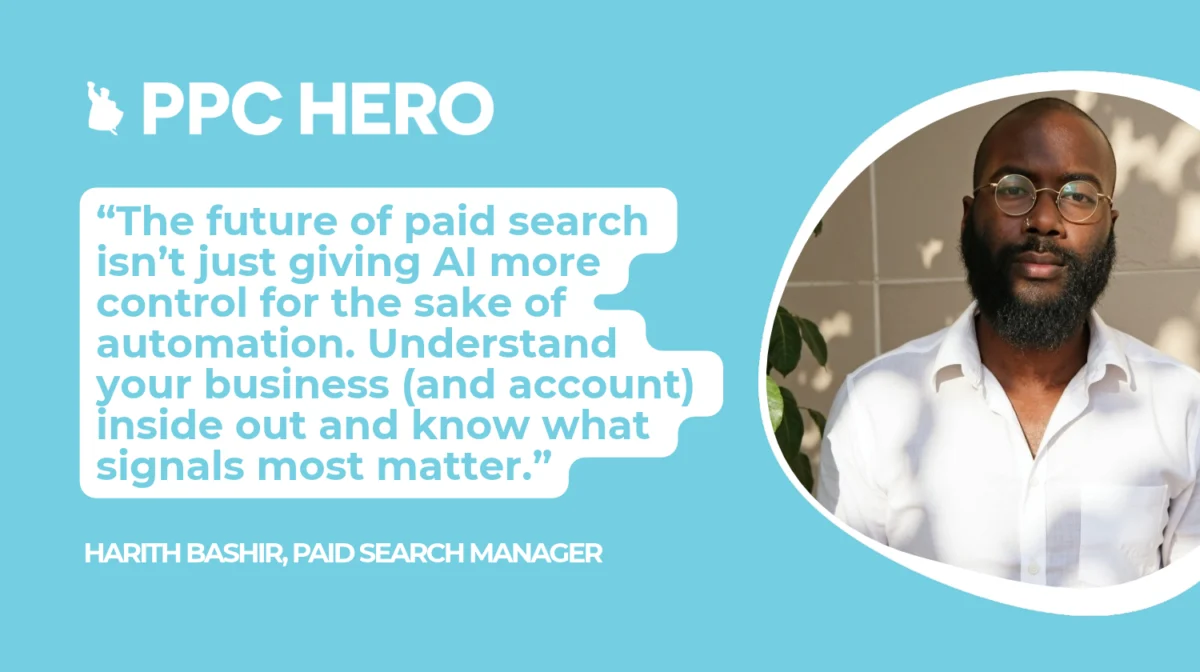
The future of paid search is not merely about relinquishing control to automation for the sake of efficiency. It is about gaining a profound understanding of one’s business and account from the inside out, identifying the signals that matter most, and then leveraging AI Max to create an environment where it can thrive. This approach allows advertisers to retain the most significant control over their accounts and, ultimately, their business outcomes, by strategically guiding the intelligence rather than being dictated by it. The strategic imperative is clear: master the inputs, and you will master the automated outputs.


 Asro
 Ali Ikhwan