
 rifanmuazin
The landscape of digital marketing is undergoing a fundamental shift as organizations move away from traditional, isolated A/B testing in favor of a continuous, evidence-based methodology known as iterative testing. This transition marks a departure from the “hit-or-miss” campaign culture that has dominated the industry for decades, replacing it with a rigorous cycle of small, data-driven improvements designed to adapt to rapidly changing consumer behaviors. Industry experts and recent performance data suggest that this evolution is not merely a trend but a necessary response to rising customer acquisition costs and the diminishing effectiveness of static marketing assets.
Iterative testing is defined as a process where marketing assets are repeatedly tested, measured, and refined based on the cumulative insights of previous experiments. Unlike traditional A/B testing, which often concludes after a single winner is declared, the iterative approach treats every result—whether a success or a failure—as a foundational data point for the next hypothesis. This methodology, rooted in the “Agile” software development principles that have governed the technology sector for over twenty years, is now being adopted by high-growth marketing teams to plug the “slow leaks” in their conversion funnels.
The Historical Context and Chronology of Marketing Optimization
To understand the rise of iterative testing, one must look at the chronology of marketing measurement. In the mid-20th century, direct response pioneers like David Ogilvy utilized coupon tracking to measure the effectiveness of print advertisements, a precursor to modern testing. However, the feedback loops were slow, often taking months to yield actionable results.

The advent of the internet in the late 1990s introduced real-time tracking, leading to the birth of the A/B test. Google famously tested 41 different shades of blue for its toolbar links in the early 2000s, proving that even minor aesthetic changes could impact user behavior. Despite this, for much of the 2010s, A/B testing remained a luxury for enterprise-level companies with massive traffic. Smaller firms typically relied on “best practices” or infrequent overhauls of their landing pages.
By 2020, the democratization of testing tools and the surge in digital competition forced a change. Marketing budgets became tighter, and the “big launch” strategy began to show its flaws. Teams realized that waiting months for a major redesign often resulted in missing market windows. Consequently, between 2022 and 2025, the industry saw a pivot toward the iterative model—prioritizing speed, incremental gains, and the compounding effect of small wins over the “home run” campaign.
Supporting Data and Industry Benchmarks
Recent data underscores the financial and operational necessity of this shift. According to the 2024 Conversion Benchmark Report, the complexity of communication has become a primary driver of conversion success. The report found that landing pages written at a 5th-to-7th-grade reading level convert at a rate of 11.1%, which is more than double the conversion rate of pages utilizing professional-level or academic writing. Furthermore, a negative correlation of -24.3% was identified between word complexity and conversion rates, suggesting that technical jargon acts as a significant barrier to entry for the modern consumer.
The importance of device-specific iteration is also highlighted by current traffic trends. Data indicates that while 83% of all landing page visits now occur on mobile devices, desktop traffic continues to convert 8% better on average. This discrepancy presents a clear opportunity for iterative testing: rather than applying a universal design, successful marketers are using iterative cycles to bridge the “mobile conversion gap” through device-specific messaging and UI refinements.

Further evidence from the Unbounce Conversion Toolkit suggests that high-performing teams are moving away from massive sample sizes. Tools like Smart Traffic now allow for optimization to begin after as few as 50 visits. This capability enables marketers to run rapid experiments even on low-traffic niche campaigns, reducing the time-to-insight from weeks to mere days.
The Strategic Framework for Iterative Implementation
The transition to an iterative model requires a structured six-step process that emphasizes clarity and repeatability.
- Hypothesis Formulation: Marketing analysts argue that the most common failure in testing is the “kitchen sink” approach—changing multiple variables simultaneously. Iterative testing demands a laser-focused hypothesis, such as “Simplifying the headline to focus on a single benefit will increase click-through rates by 10%.”
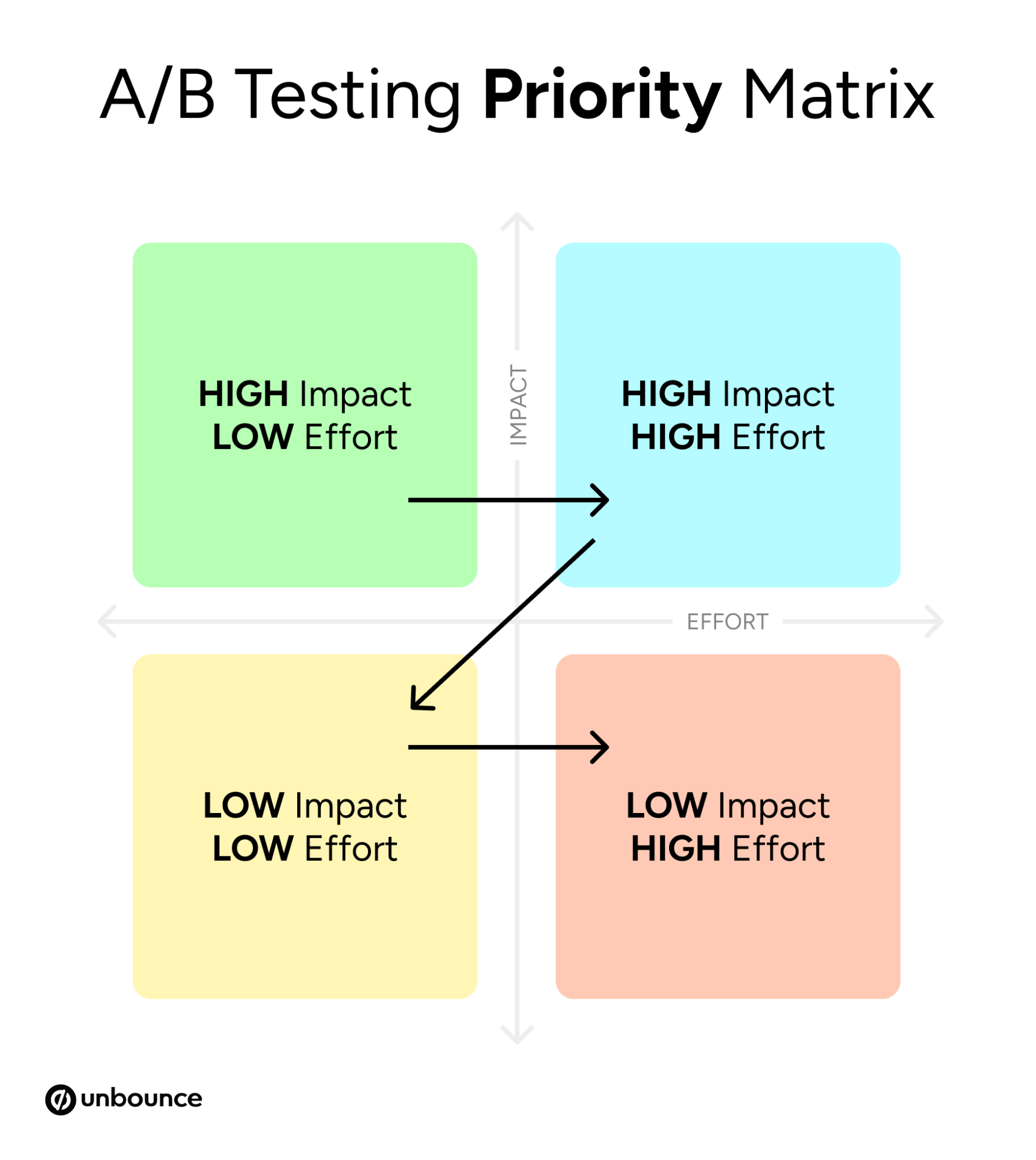
- Impact-Effort Prioritization: Organizations utilize a prioritization matrix to rank experiments. High-impact, low-effort changes (such as CTA button text or headline clarity) are prioritized to build momentum and deliver immediate ROI.
- Minimal Testable Variations: Rather than a full redesign, teams create “minimal viable tests.” This involves duplicating a control page and changing a single, isolated element to ensure that the resulting data is clean and actionable.
- Data Collection and Statistical Rigor: A critical component of the process is achieving statistical significance. Journalistic analysis of recent marketing failures shows that “pulling the plug” too early on a test leads to decisions based on random variance rather than true user preference.
- Insight Extraction: Beyond identifying a “winner,” iterative testing seeks to understand the “why.” If a simpler headline wins, the insight is not just about the text, but about the audience’s preference for clarity over cleverness.
- Scaling and Expansion: Successful learnings are not kept in isolation. A win on a landing page is immediately scaled to email subject lines, social media ad copy, and even broader brand voice guidelines.
Professional Responses and Organizational Impact
The move toward iterative testing has elicited various responses from stakeholders across the corporate spectrum. Chief Marketing Officers (CMOs) have generally welcomed the shift, citing it as a method to de-risk marketing spend. By testing small changes before scaling, departments can avoid the “sunk cost fallacy” associated with expensive, untested creative campaigns.
Data analysts and CRO (Conversion Rate Optimization) specialists have noted that this methodology improves organizational culture. “When you move to an iterative model, the ‘highest-paid person’s opinion’ (HiPPO) carries less weight than the data,” notes one industry consultant. This democratizes the creative process, allowing junior staff to propose hypotheses that can be objectively validated.
However, the transition is not without challenges. Creative directors have occasionally expressed concern that a pure focus on data-driven iteration could lead to “local maxima,” where a page is optimized to its limit but fails to innovate in a way that creates a brand breakthrough. To counter this, many firms are adopting a “70/20/10” rule: 70% of resources go to iterative testing, 20% to expanding successful iterations, and 10% to “moonshot” experiments that break the mold entirely.
Broader Impact and Future Implications
The long-term implications of iterative testing extend into the realm of Artificial Intelligence and machine learning. As marketing platforms become more sophisticated, the “iteration” is increasingly being handled by AI-driven algorithms that can test thousands of permutations in real-time. This shift suggests that the role of the human marketer is moving away from manual test execution and toward high-level strategy and hypothesis generation.
Furthermore, the iterative mindset is reshaping the relationship between brands and consumers. In an era of “banner blindness” and ad fatigue, consumers are more likely to engage with experiences that feel tailored to their immediate needs. Iterative testing allows brands to stay in sync with shifting cultural nuances, ensuring that messaging remains relevant even as consumer sentiment evolves.
In conclusion, the rise of iterative testing represents the professionalization of digital marketing. By moving away from one-off experiments and embracing a cycle of continuous improvement, marketing teams are achieving more predictable results, higher ROI, and a deeper understanding of their target audiences. As the digital marketplace becomes increasingly crowded, the ability to learn and adapt faster than the competition through iteration may become the single most important competitive advantage for modern enterprises. The evidence suggests that the era of “guessing” in marketing is over; the era of the perpetual experiment has begun.








