

The landscape of digital experimentation is undergoing a fundamental transformation as practitioners move away from traditional academic statistical models toward more pragmatic, business-centric decision frameworks. Andrea Bronzini, the founder of Confident Story and a prominent figure in the conversion rate optimization (CRO) sector, recently shared insights into the mechanics of data-driven decision-making, the hidden dangers of statistical noise, and the disruptive role of artificial intelligence in modern testing workflows. As organizations grapple with the complexities of scaling their experimentation programs, the focus is shifting from simply seeking "statistical significance" to managing a complex balancing act between different types of experimental errors.
The Subjectivity of Objective Data
For years, the promise of A/B testing and CRO has been the ability to make purely objective decisions based on hard data. However, Bronzini argues that the concept of objectivity in testing is often an illusion. The parameters of an experiment—the chosen significance threshold, the minimum sample size, and the duration of the test—are all human judgment calls that occur before the data is even collected. These choices fundamentally shape the eventual results, meaning that the "objective" outcome is often a byproduct of subjective settings.

Bronzini’s transition into the world of optimization was fueled by this realization. He posits that while most of the industry focuses on "the signal"—the lift or the conversion rate—the true protagonist of every experiment is "the noise." Stochastic noise, or the random variation inherent in any data set, can either illuminate a genuine improvement or completely obscure it. Understanding how to model and account for this noise is what separates high-growth teams from those that run endless cycles of tests without seeing a corresponding impact on their bottom line.
The Role of Artificial Intelligence in Reducing Implementation Friction
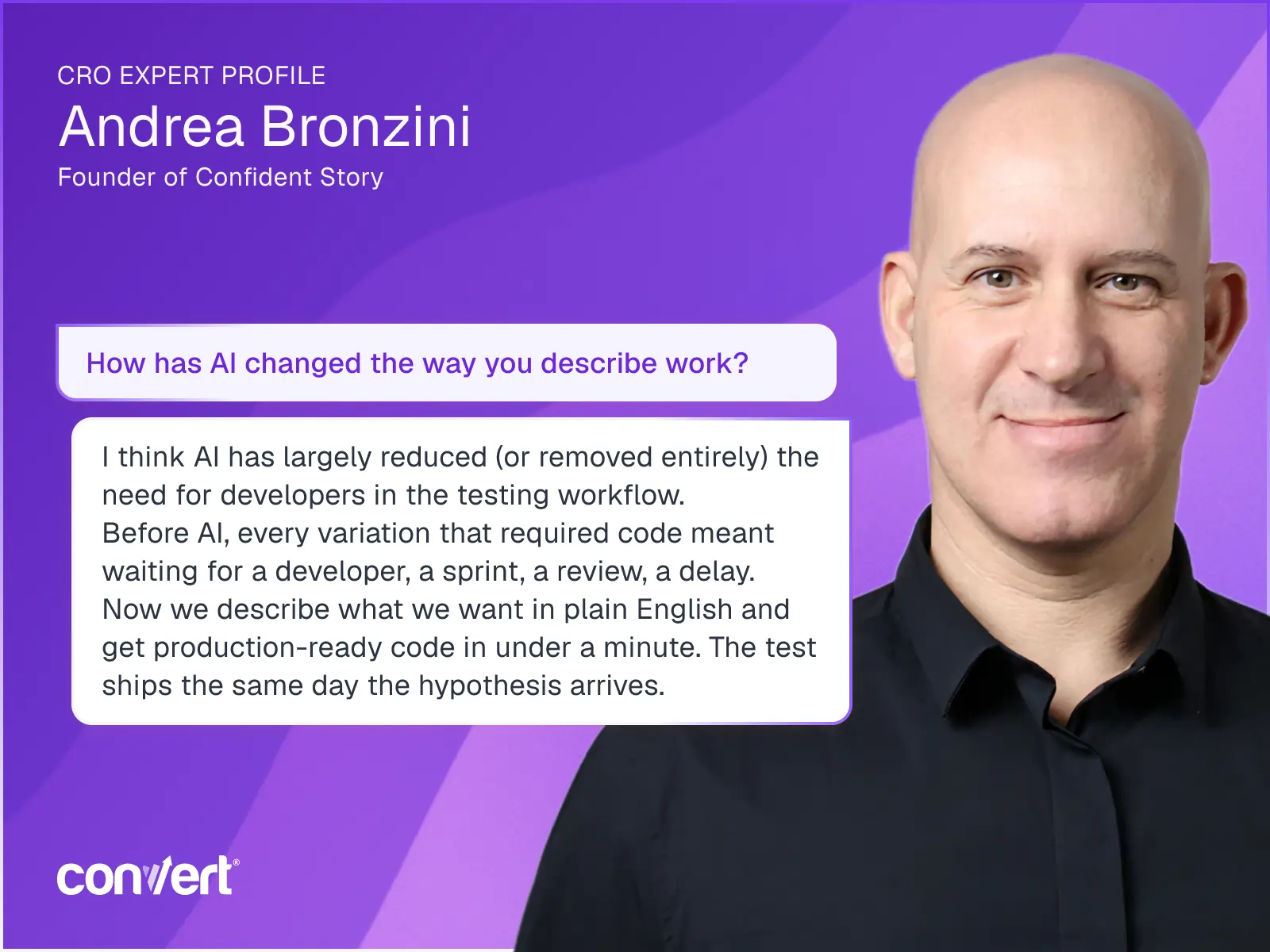
One of the most significant shifts in the day-to-day operations of experimentation is the integration of generative artificial intelligence. Historically, the "sprint cycle" was the primary bottleneck for CRO programs. Even a simple hypothesis required a developer to write code, a quality assurance (QA) process to verify it, and a deployment schedule to make it live. This friction often led teams to favor "safe," easy-to-implement changes—such as minor copy tweaks or button color changes—over bold, structural hypotheses that might have a greater impact.
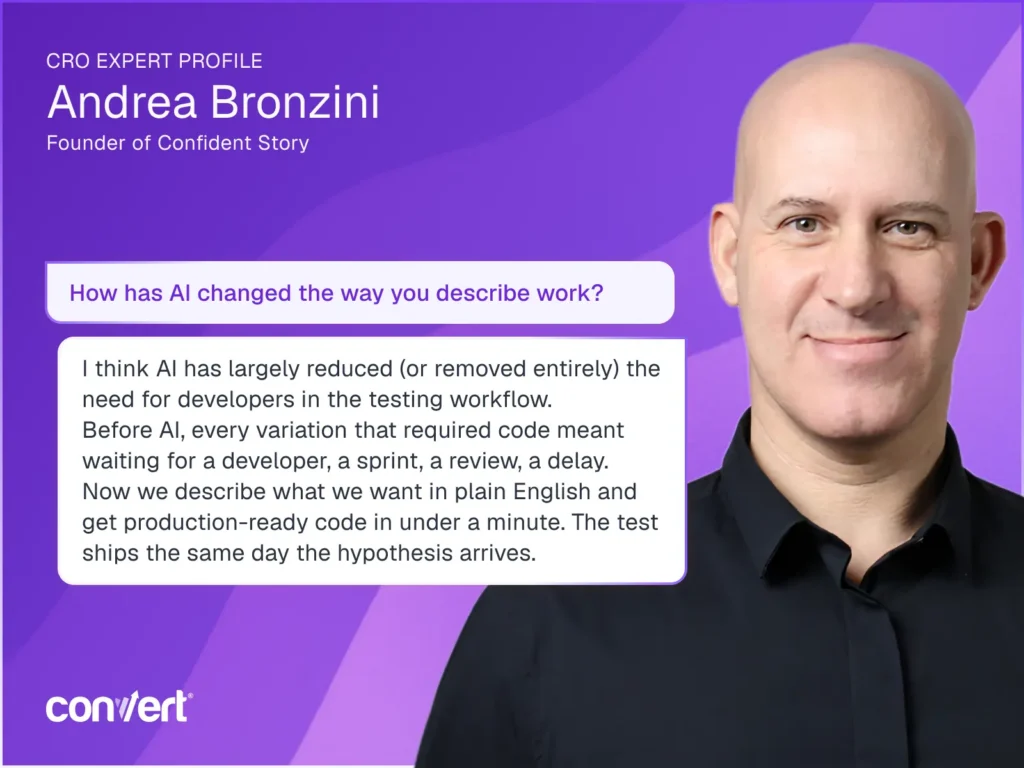
Bronzini notes that AI has effectively removed the developer from the standard testing workflow. By using AI to generate production-ready JavaScript variations from plain-English descriptions, teams can now deploy complex tests within minutes of conceiving a hypothesis. This reduction in friction does more than just increase velocity; it changes the psychological approach to testing. When the cost of implementation drops to near zero, teams are more willing to test radical ideas and structural changes that would have previously languished in a backlog for months.

A Statistical Paradigm Shift: Beyond 95% Confidence
The experimentation industry is currently at an inflection point regarding its reliance on academic statistical standards. Most CRO tools and practitioners have traditionally relied on a 95% confidence threshold, a standard inherited from academic research where the primary goal is to prevent false positives in published literature. However, Bronzini argues that this focus is often detrimental to business growth because it ignores the other ways an experiment can fail.
In a professional journalistic analysis of the current state of CRO, three distinct failure modes emerge:
- The False Positive (Type I Error): This occurs when a team calls a "winner" that is actually just a result of random noise. While statistical significance is designed to prevent this, a strict adherence to high thresholds creates other problems.
- The Missed Winner (Type II Error): This occurs when a change produces a genuine improvement, but the results do not cross the 95% threshold. In many corporate environments, these tests are labeled "inconclusive" and discarded. For companies with limited traffic, the sample size required to reach 95% confidence is often unattainable, meaning they are systematically ignoring real growth opportunities.
- The Inflated Winner (The Winner’s Curse): This is perhaps the most overlooked failure mode. When a team only ships results that cross a very strict threshold, they are often shipping "noise-amplified" versions of the truth. If the true lift of a change is 3%, but it only becomes "significant" when the noise pushes the measurement to 12%, the team will forecast based on that 12% figure. When the results inevitably regress to the mean after launch, stakeholders often blame implementation or seasonality, unaware that the initial measurement was a statistical outlier.
Supporting Data: The Meta-Experiment Simulation
To illustrate these points, Bronzini conducted a meta-experiment—an experiment about experiments. Using a simulator, he replayed the same test 5,000 times under identical conditions: the same traffic, the same conversion rate, and a known "true lift" of 3.2%.
The results were revealing. Using a standard 95% two-tailed confidence interval, only 12 out of every 100 runs were flagged as "significant." The remaining 88 runs were labeled inconclusive, despite the fact that a 3.2% lift was actually present in every single one. More importantly, the 12 "winners" showed an average measured lift of 9% to 14%.
This data provides a factual basis for why many CRO programs struggle to see their experimental gains reflected in their annual revenue. By requiring high confidence levels, they are filtering for the luckiest runs of their experiments, resulting in "winners" that appear far more successful on paper than they are in reality. This simulation highlights the necessity of "decision-policy thinking," where the goal is not to find a "true" number, but to make the most profitable decision given the available data and the specific constraints of the business.
From Significance-Seeking to Decision-Policy Thinking
The future of experimentation lies in moving away from fixed defaults and toward custom decision rules. Instead of asking "Is this significant?", Bronzini suggests that teams should ask: "Given our traffic levels, our typical effect sizes, and our tolerance for different types of errors, what decision rules should we enforce?"
This approach treats the confidence threshold as a variable rather than a constant. For a high-risk, high-cost implementation, a 95% or even 99% threshold may be appropriate. However, for a low-cost CSS change, a 70% or 80% confidence level might be more than enough to justify the deployment. By "pulling the blanket" to cover different types of errors based on the specific context of the test, organizations can capture more "winners" and build a more resilient growth engine.
Chronology of CRO Methodology Evolution
To understand the weight of these insights, it is helpful to look at the timeline of digital experimentation:
- 2000s – The Early Web: Testing was rare and mostly limited to large tech companies like Google and Amazon. Methods were rudimentary and implementation was entirely manual.
- 2010-2015 – The Tooling Explosion: The rise of "What You See Is What You Get" (WYSIWYG) editors like Optimizely and VWO democratized testing. The focus was on ease of use and "quick wins."
- 2015-2020 – The Statistical Awakening: As programs matured, the industry realized that many "winners" weren’t holding up. There was a push toward more rigorous frequentist and Bayesian statistics to combat false positives.
- 2020-2023 – The Scalability Crisis: Many teams reached a plateau. They found that strict statistical rigor often led to a "sea of inconclusive results," stifling innovation.
- 2024 and Beyond – The AI and Policy Era: The current era is defined by the automation of execution via AI and a shift toward decision-policy thinking, as championed by experts like Bronzini.
Official Responses and Industry Impact
The shift toward Bronzini’s philosophy is gaining traction among senior experimentation leaders at major global firms. While traditional statisticians may argue that lowering confidence thresholds increases risk, business leaders are increasingly prioritizing "winner capture"—the ability to identify and deploy as many positive changes as possible.

The broader implications of this shift are profound. As AI begins to handle the repetitive tasks of insight generation, hypothesis prioritization, and code deployment, the role of the human optimizer is being elevated. Practitioners are moving from being "tool operators" to being "strategic architects" who design the decision policies that govern the AI’s actions.
Broader Impact and Future Implications
The integration of AI into the CRO workflow is already moving toward fully autonomous loops. Bronzini describes workflows where AI examines a webpage, generates insights based on user behavior data, prioritizes hypotheses, creates the test variations, deploys the experiment, analyzes the results, and automatically pushes the winner to production.
While this level of automation is technically possible today, it places a premium on human judgment at the start of the process. The "work that actually matters" is shifting toward understanding the deeper psychological needs of the user and asking the right questions. If the underlying hypothesis is flawed, an AI can run a million tests without producing a meaningful business result.

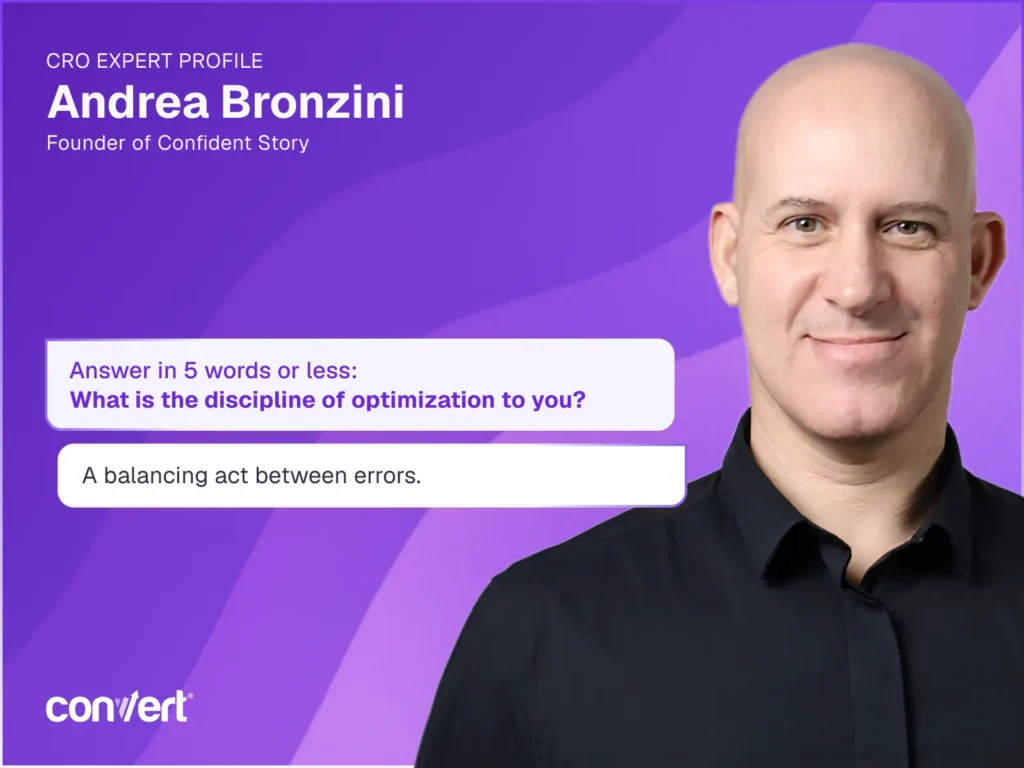
In conclusion, the discipline of optimization is evolving from a rigid statistical exercise into a nuanced balancing act. By embracing the reality of noise, leveraging the speed of AI, and adopting flexible decision policies, organizations can move beyond the limitations of traditional A/B testing. The goal is no longer just to find a "significant" result, but to build a system that consistently makes the best possible decisions in an uncertain environment. As Bronzini’s "meta-experiment" proves, the teams that will win in the next decade are those that understand that a "missed winner" is just as costly as a "false positive."







