

The digital marketing landscape has undergone a radical transformation over the last decade, transitioning from generalized web portals to highly specialized, conversion-oriented environments. Central to this evolution is the landing page, a standalone web entity designed with the singular purpose of driving user action. As of early 2026, industry data suggests that the difference between a "polished" professional landing page and a standard corporate homepage can represent a swing of up to 200% in conversion efficiency. Marketing analysts Luke Bailey, Colin Loughran, and Paul Park have released a comprehensive study of 40 market-leading landing pages, identifying the specific "x-factors" that define success in an increasingly crowded digital marketplace.

The Strategic Foundation of High-Converting Pages
A landing page differs fundamentally from a traditional homepage by eliminating navigation-related friction. While a homepage serves as a general directory, a landing page is the terminal point for a specific marketing or advertising campaign. Visitors typically arrive via targeted links in emails, social media advertisements, or search engine results.
The core principle driving modern design in 2026 is "Clarity over Creativity." Analysis of top-performing pages reveals that the most successful marketers prioritize immediate value communication. According to industry benchmarks, the average user forms an opinion about a page’s relevance within 50 milliseconds. Consequently, the "above the fold" content—the portion of the page visible without scrolling—has become the most valuable real estate in digital commerce.
Chronology of Landing Page Development (2010–2026)
The trajectory of landing page optimization reflects broader shifts in consumer psychology and technological capabilities:

- 2010–2015: The Rise of Standalone Architecture. Marketers began moving away from directing ad traffic to homepages, recognizing that too many options resulted in "decision paralysis."
- 2016–2020: The Mobile-First Revolution. With mobile traffic surpassing desktop, landing pages were redesigned for vertical consumption, emphasizing fast loading speeds and thumb-friendly Call-to-Action (CTA) buttons.
- 2021–2024: The Integration of AI and Personalization. Platforms like Unbounce introduced AI-driven "Smart Traffic" tools, allowing pages to automatically adjust their content based on the visitor’s past behavior and demographic profile.
- 2025–2026: The Era of Polished Professionalism. Current trends emphasize high-resolution video backgrounds, minimalist aesthetics, and deep psychological triggers such as social proof and radical transparency.
Sector-Specific Analysis: SaaS and Entertainment
The Software as a Service (SaaS) and entertainment sectors continue to set the standard for minimalist conversion. Netflix and Spotify remain the primary case studies for this approach. Netflix’s 2026 landing page utilizes a "zero-distraction" model, featuring a high-contrast background and a singular input field for an email address. This strategy leverages the brand’s near-universal recognition to bypass the need for extensive product education.

Similarly, Spotify’s landing page focuses on "Immediate Utility." By removing descriptions of how the service works—assuming the visitor already knows—the page moves directly to the streaming experience. This reduction in cognitive load is a hallmark of mature brands that have achieved market saturation.

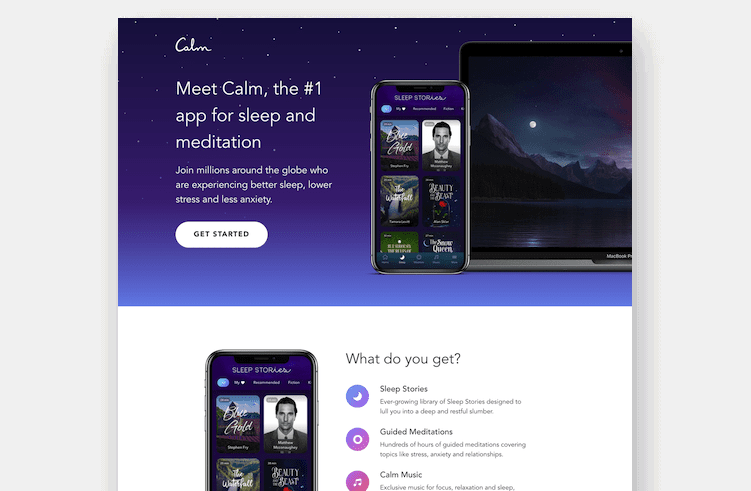
In the wellness space, the app Calm uses a different psychological lever: atmospheric alignment. The page’s design reflects the product’s core benefit—tranquility—through muted color palettes and serene imagery. Analysts suggest that this "experiential preview" allows the user to feel the product’s value before even initiating a free trial.

The Impact of Visual Data and Multimedia
One of the most significant findings in recent conversion research is the quantifiable impact of video content. Statistics indicate that landing pages incorporating video elements can increase conversion rates by as much as 86%. This is particularly evident in the "Rory Sweater" campaign by Woolx, which uses high-resolution video backgrounds to demonstrate the texture and movement of its Australian Merino wool products.

In the professional services sector, LinkedIn Premium’s landing page utilizes visual hierarchy to segment its audience. By highlighting specific benefits for job seekers—such as the ability to "stand out" in a competitive market—the page addresses specific pain points rather than offering a generic list of features.

Emerging Trends in Niche Markets and Ecommerce
The 2026 analysis highlights several innovative approaches in specialized industries:

Pet Services and Social Commerce
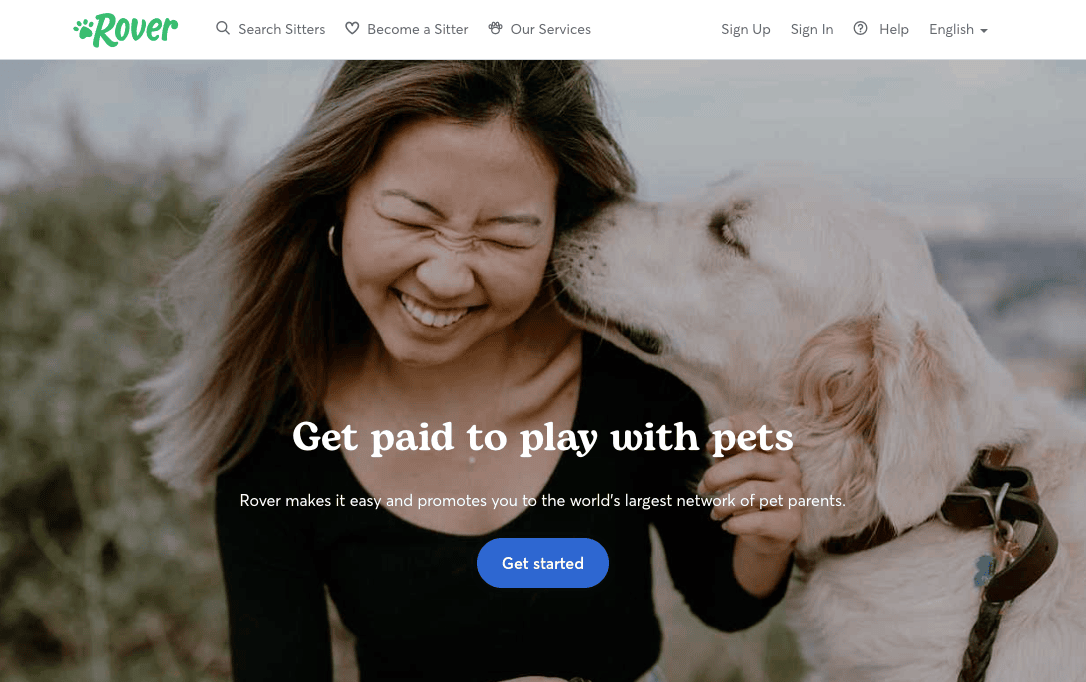
Rover and Snackpass have successfully integrated "Trust Architecture" into their pages. Rover’s sitters-wanted page uses authentic photography and clear benefit-driven headings to build a sense of community. Snackpass, targeting the "Quick-Serve Restaurant" (QSR) market, employs a heavy social media aesthetic, recognizing that its primary audience—Gen Z and Millennial consumers—values "Instagrammable" content and streamlined mobile ordering.

Real Estate and Finance
Companies like Sundae and Panda7 are revolutionizing high-friction industries by reducing the perceived complexity of transactions. Sundae’s real estate page focuses on the "Speed of Sale," addressing the anxieties of homeowners with damaged or dated properties. Panda7 simplifies the car insurance process by offering a comparative quote engine that promises results within minutes, effectively positioning itself as a time-saving utility rather than a traditional service provider.

Education and Distance Learning
Athabasca University and Class Creator demonstrate how landing pages can be used for "Lead Segmentation." By creating dedicated pages for specific certificate programs, Athabasca can tailor its messaging to the unique career aspirations of different student demographics, a task that would be impossible on a singular, generalized university homepage.
Quantitative Benchmarks and Official Responses
Data from the Unbounce Conversion Benchmark Report provides a glimpse into the performance metrics required for success in 2026. The average conversion rate across all industries hovers between 3% and 5%, but "elite" pages—those in the top 10th percentile—frequently see rates exceeding 20%.
Luke Bailey, a senior content strategist, emphasized the importance of the "starting principle" in a recent briefing. "A polished, professional landing page is no longer a luxury; it is a fundamental requirement for ROI," Bailey stated. "The data shows that even minor ‘messiness’ or lack of visual cohesion can trigger a bounce response in modern users who are conditioned to expect high-end digital experiences."
Colin Loughran, an expert in digital marketing grammar and structure, noted that the "Copy-to-Design" ratio is shifting. "We are seeing a move toward ‘scannable’ copy. Users don’t read landing pages; they skim them. If your value proposition isn’t clear in a three-second skim, you’ve already lost the conversion."
Common Pitfalls and Strategic Recommendations
The 2026 analysis identifies several recurring mistakes that continue to plague marketing campaigns:

- Multiple Calls to Action: Pages that ask users to do more than one thing (e.g., sign up for a newsletter AND buy a product) see a significant drop in completion rates.
- Unclear Value Propositions: Failing to answer the user’s primary question—"What’s in it for me?"—within the first two seconds.
- Mobile Friction: Forms that are too long or difficult to fill out on a touchscreen device.
- Slow Load Times: Even with 5G and fiber-optic standards, every 100-millisecond delay in page load time can result in a 7% reduction in conversions.
To combat these issues, experts recommend a "testing-first" mindset. A/B testing, where two versions of a page are shown to different segments of an audience, remains the gold standard for optimization. By testing headlines, button colors, and image placements, marketers can move from speculation to data-driven certainty.
Broader Implications for the Future of Digital Marketing
The shift toward high-performance landing pages represents a broader move toward "Micro-Funneling." As the cost of customer acquisition (CAC) continues to rise, businesses can no longer afford to waste traffic on non-optimized pages. The integration of AI will likely further refine this process, leading to "Dynamic Landing Pages" that rewrite themselves in real-time to match the specific psychological profile of each individual visitor.

Furthermore, the rise of the "Agency Model"—exemplified by firms like MuteSix, Webistry, and J7 Media—suggests that landing page optimization is becoming a specialized discipline. These agencies are increasingly using "Swipe Files" of successful elements to build high-converting assets for their clients, emphasizing that while the products change, the psychological triggers of conversion remain constant.
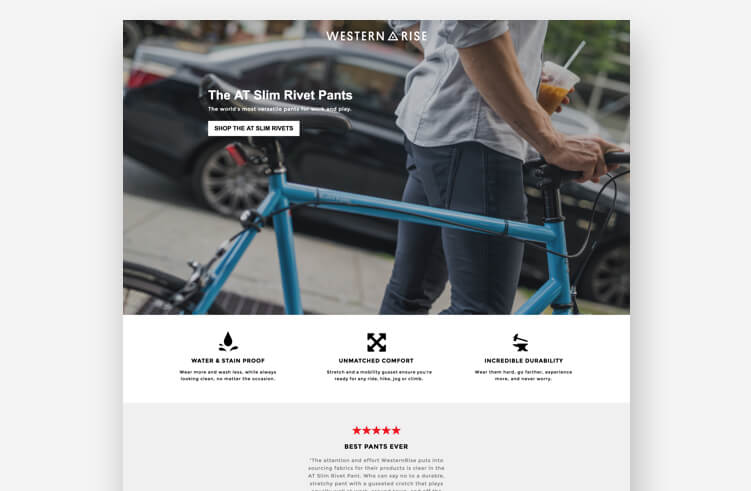
In conclusion, the landing page has evolved from a simple contact form into a sophisticated psychological tool. Whether through the minimalist efficiency of Netflix or the visual storytelling of Western Rise, the most successful brands in 2026 are those that respect the user’s time, address their specific anxieties, and provide a frictionless path to a clear solution. As the digital space becomes even more saturated, the ability to create a "polished and professional" destination will remain the primary differentiator between market leaders and their competitors.







