Asro

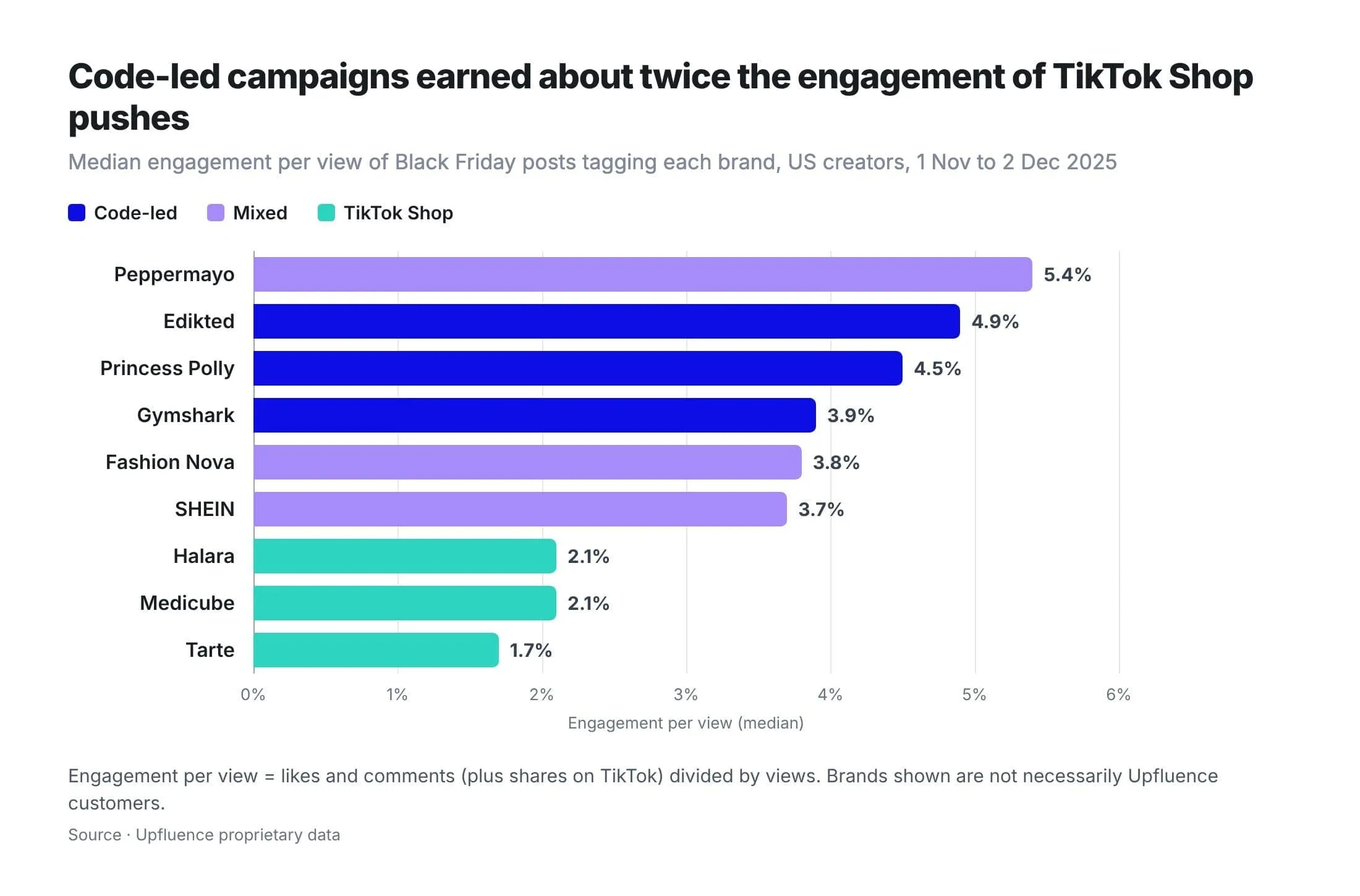
The landscape of holiday retail has undergone a seismic shift as digital-first fashion brands redefine the mechanics of seasonal success through highly targeted creator partnerships. Recent data analyzing the most successful Black Friday campaigns reveals a clear trend: engagement is no longer a byproduct of massive reach, but rather a result of authenticity, niche community trust, and specific content formats. While fast-fashion giant SHEIN dominated the season in terms of sheer volume, smaller fashion labels like Peppermayo, Edikted, and Princess Polly emerged as the strategic victors, achieving engagement rates between 4.5% and 5.4%—significantly higher than the industry average.
According to a comprehensive study of approximately 508,000 Black Friday posts by U.S.-based creators across Instagram, TikTok, and YouTube, the most effective strategies shared two distinct characteristics. First, brands prioritized "micro" and "mid-tier" creators with fewer than 100,000 followers. Second, the content moved away from static deal announcements toward dynamic, utility-driven formats such as try-on hauls, outfit styling, and unboxing videos. This shift suggests that modern consumers are seeking "social proof" and styling inspiration rather than just price-point notifications during the crowded Black Friday, Cyber Monday (BFCM) period.
Statistical Overview of the 2025 Seasonal Performance
The scale of the recent Black Friday period was unprecedented in the creator economy. Analysis of over 1.2 million worldwide posts—with a specific focus on the 508,000 posts generated by U.S. creators between November 1 and December 2—provides a granular look at brand performance.
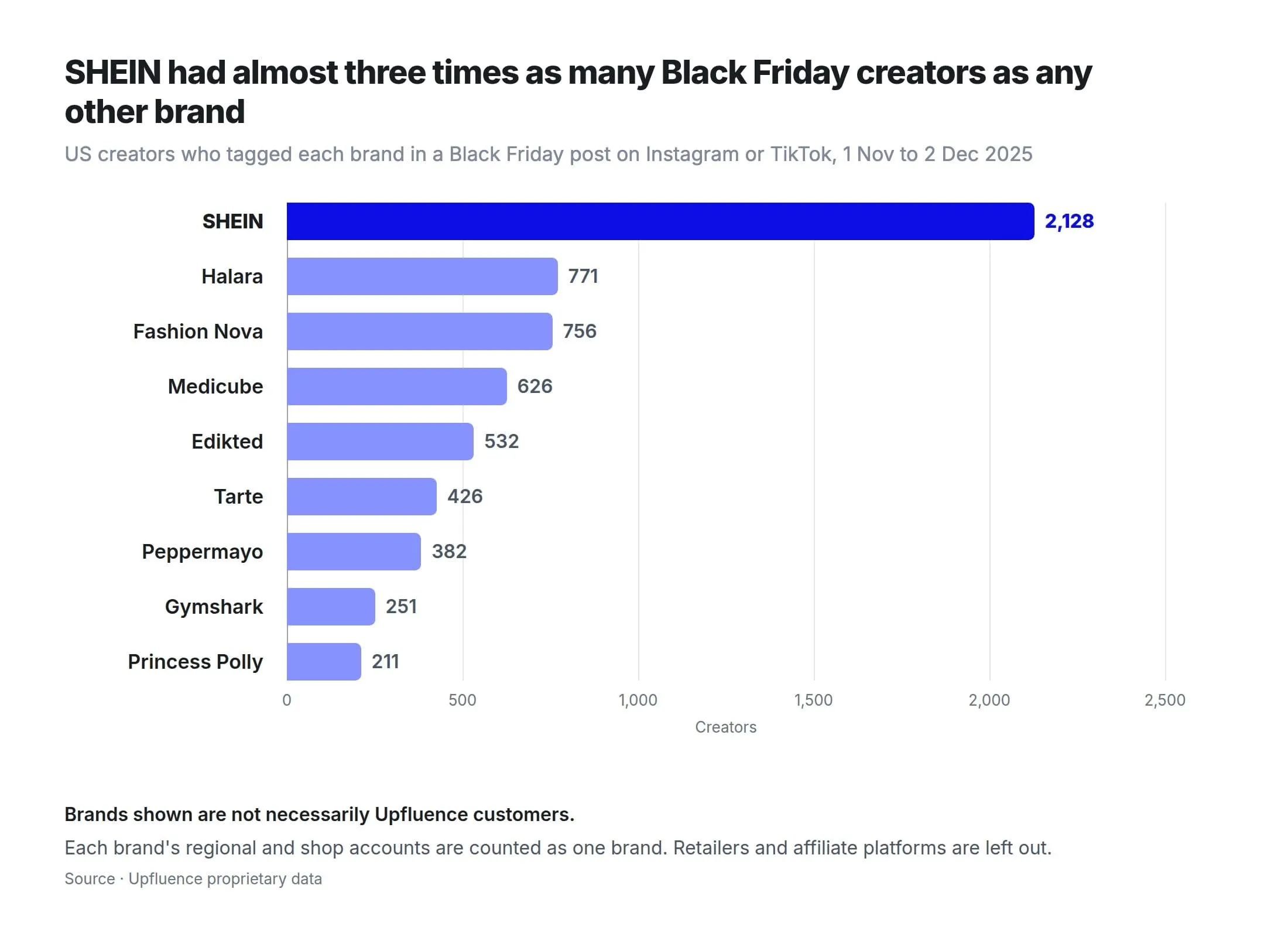
SHEIN led the market in creator recruitment, with 2,128 U.S. creators tagging the brand in Black Friday-related content. This was nearly three times the volume of its closest competitor, Halara, which engaged 771 creators. Other major players included Fashion Nova (756 creators), Medicube (626), and Edikted (532). However, the data highlights a sharp disconnect between reach and engagement. While SHEIN achieved massive visibility, its median engagement per view sat at 3.7%. In contrast, Peppermayo, which utilized only 382 creators, saw a median engagement rate of 5.4%.

The discrepancy is largely attributed to the size of the creator’s following. For SHEIN, creators with fewer than 100,000 followers earned 1.7 times the engagement per view compared to those with larger followings. This phenomenon was mirrored across the industry, with 82% of the creators posting for top-performing brands Peppermayo and Edikted falling into the under-100,000 follower category.
Chronology of the Black Friday Creator Cycle
The 2025 season demonstrated that timing is a critical variable in campaign success. The promotional cycle was roughly divided into three phases:
- The Early Tease (November 1–15): Brands like Tarte and SHEIN initiated their campaigns early to build "mental availability." Tarte utilized a "holiday challenge" format to encourage repeat posting before the peak shopping week.
- The Momentum Phase (November 16–24): This period saw the rise of the "Gift Guide" and "Ambassador" posts. Princess Polly and L’Occitane leaned heavily into this window, using ambassadors to curate personalized picks.
- The Peak Push (Black Friday Week): Brands like Edikted opted for a "late push" strategy, with only 19% of their content going live before Black Friday week. This created a sense of immediate urgency, supported by personalized discount codes that were mentioned in 63% of their posts.
Analysis of Content Formats: Why "Hauls" Win
The data confirms that how a product is presented is just as important as who is presenting it. Traditional advertisements and TikTok Shop listings, while effective for direct sales attribution, often struggled to maintain viewer attention.
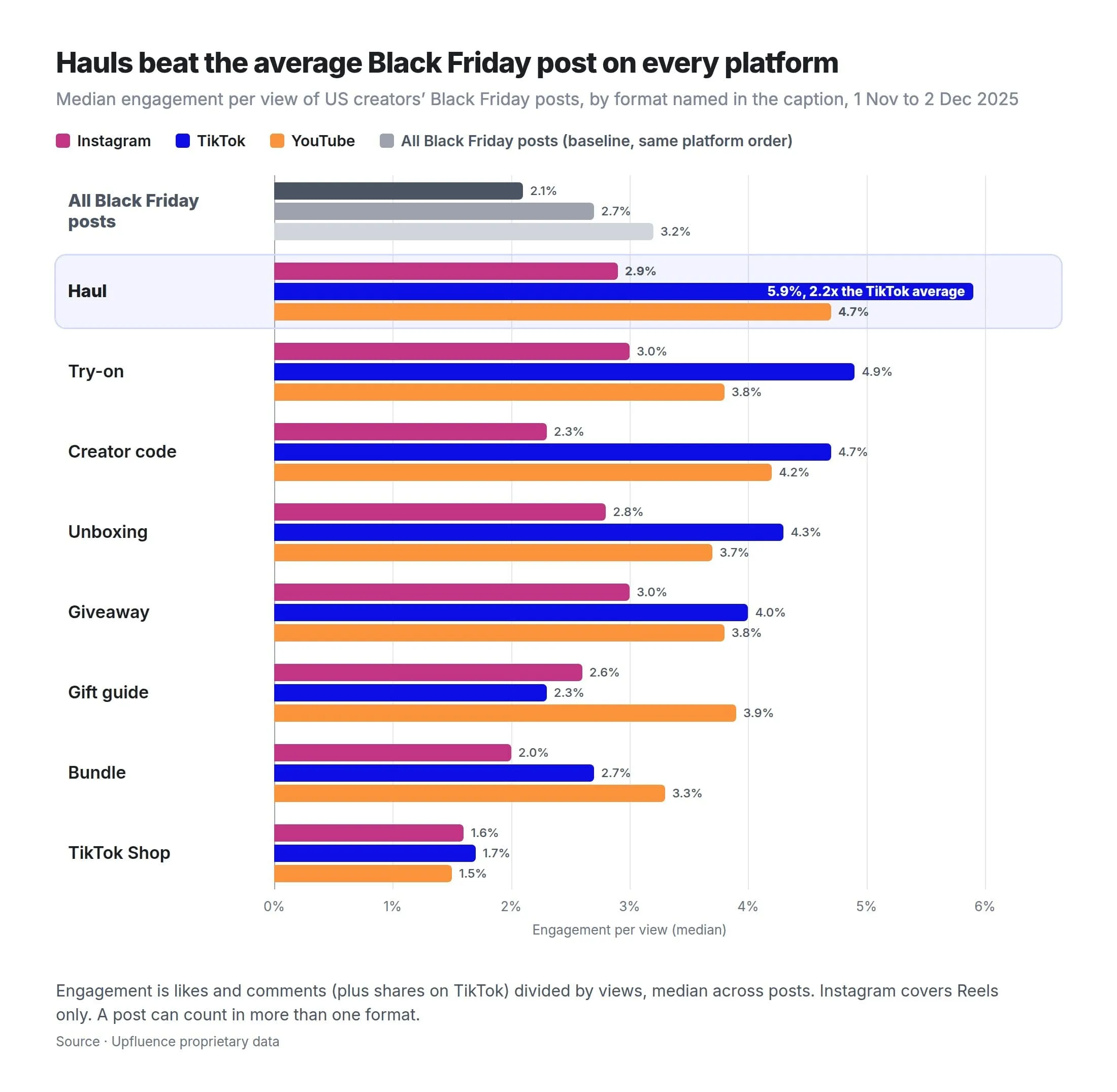
Haul videos emerged as the gold standard for engagement, particularly on TikTok, where they achieved a median engagement per view of 5.9%. YouTube hauls followed at 4.7%, while Instagram hauls reached 2.9%. Try-on videos and unboxings also performed well, consistently beating platform averages. On TikTok, try-ons saw 4.9% engagement, while unboxings maintained a 4.3% rate.
In contrast, posts explicitly designed as TikTok Shop listings saw the lowest engagement across all platforms, averaging between 1.5% and 1.7%. This suggests a level of "ad fatigue" among users when content feels overly transactional. Successful brands bypassed this by asking creators to show the product in use—worn, tested, or styled—rather than simply pointing to a shop link.
Case Studies in Strategic Execution
Several brands provided blueprints for how to navigate the competitive holiday landscape.
SHEIN’s Hashtag Ecosystem: SHEIN implemented a rigorous hashtag strategy to ensure campaign discoverability. Of its nearly 5,000 Black Friday posts, 93% used the #sheinbigsale tag. By standardizing these tags in every influencer brief, the brand created a searchable library of content that persisted throughout the season.
Princess Polly’s Ambassador Model: Rather than one-off sponsorships, Princess Polly utilized its existing ambassador program. This allowed for a more authentic connection, as 77% of posts used the #pp_partner tag. This transparency, combined with a high density of personal discount codes (found in 74% of posts), drove a 4.5% engagement rate.
Tarte’s Gamified Engagement: Tarte’s "Holiday Challenge" gave creators a reason to post multiple times. By framing the promotion as a challenge rather than a sale, the brand integrated its products into the creator’s natural content flow. Although its engagement rate was lower at 1.7%, the volume and early start date ensured the brand remained top-of-mind.
Dior’s Luxury Approach: In a departure from the discount-heavy strategies of fast-fashion brands, Dior focused on product exclusivity. By having creators like Léna Situations unbox the "Le 30 Montaigne Advent Calendar," Dior sold the "experience" of the brand rather than a slashed price. This strategy proved that unboxings remain a high-value format for premium sectors, maintaining 4.3% engagement on TikTok.
The Role of Attribution and Tracking
The 2025 season underscored the importance of clear attribution. Two primary models emerged: the "Code-Led" model and the "Affiliate-Link" model.
Brands like Edikted and Princess Polly favored personalized discount codes. This method not only incentivized the creator’s audience with an exclusive deal (often "stackable" on top of existing sales) but also provided the brand with clear data on which creators were driving actual revenue. Posts featuring a creator code saw a median engagement of 4.7% on TikTok, significantly higher than the 2.7% average for all Black Friday posts on the platform.
Conversely, brands like Halara and Medicube relied heavily on TikTok Shop affiliate links. While this model facilitates a seamless checkout experience, it often resulted in lower engagement (2.1%). Marketing experts suggest that the most robust strategy for the upcoming 2026 season will likely involve a hybrid approach: using TikTok Shop for scale and "top-of-funnel" reach, while employing a core group of code-led ambassadors to drive high-engagement "mid-funnel" consideration.
Compliance and Ethical Standards
As influencer marketing matures, regulatory compliance has become a non-negotiable element of campaign management. The Federal Trade Commission (FTC) in the United States has increased its scrutiny of social media disclosures. The data shows that brands are taking this seriously; 75% of Black Friday posts tagging SHEIN included the #ad disclosure. Industry analysts note that clear disclosure does not appear to negatively impact engagement, provided the content remains high-quality and authentic to the creator’s voice.
Broader Impact and Future Implications
The results of the recent Black Friday season signal a "flight to quality" in the creator economy. The success of Peppermayo and Edikted demonstrates that a smaller, more engaged roster of micro-influencers can often outperform a massive, decentralized army of creators if the content focus remains on utility and aesthetics.
For the 2026 and 2027 seasons, retailers are expected to move further away from "deal-centric" messaging. Instead, the focus will likely shift toward:
- Hyper-Personalization: Giving creators more autonomy to style products according to their unique brand.
- Extended Timelines: Starting "challenges" in October to secure audience attention before the November "noise" begins.
- Diversified Platforms: While TikTok remains the leader for viral hauls, YouTube’s higher average engagement for unboxings (3.7%) and gift guides (3.9%) makes it an essential platform for high-consideration purchases.
In summary, the most recent Black Friday data serves as a reminder that in the digital age, consumers do not just want to be told about a sale—they want to see how that sale fits into their lives. Brands that brief for content quality, prioritize creator-audience trust, and utilize transparent tracking mechanisms are the ones that will continue to lead the retail pack.


 Evan Lee Salim

 Nana Wu